

13 Sweet Snacks From The '70s That Time Forgot
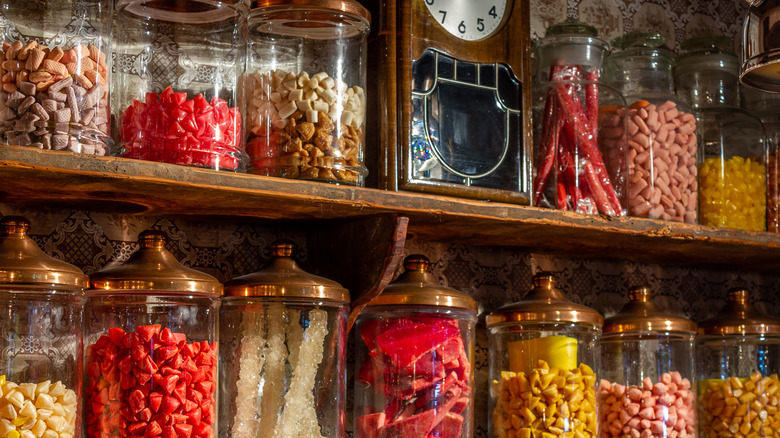
When you think of the 1970s, there are probably a few key things that come to mind: Disco, bellbottoms, vivid 70s kitchen design trends, and — if you're anything like us — forgotten snacks. Okay, maybe that last one is a bit more specific, but it was definitely a decade where snacks, specifically sweet ones, came into their own somewhat. The '70s saw an increased ambition in the food world, and convenient, pre-packaged foods became more popular than ever before — so it was probably no wonder snacks followed suit, with candy and chocolate producers rushing to outdo each other, resulting in a wave of new options.
As is always the case in a time of innovation, though, a lot of those products weren't destined to stick around forever. Snacks like Oompas, Dynamints, and No Jelly have subsequently become relics of the 1970s, discussed fondly by the few who still remember them, but largely forgotten about by the masses. Others, like Betty Crocker Snackin' Cakes, stuck around for far longer once the decade was out, but were ultimately discontinued. Ready to revisit what the snack landscape looked like a half-century ago? We've put together our favorite lost treats from the '70s. We hope you're hungry.
Super Skrunch
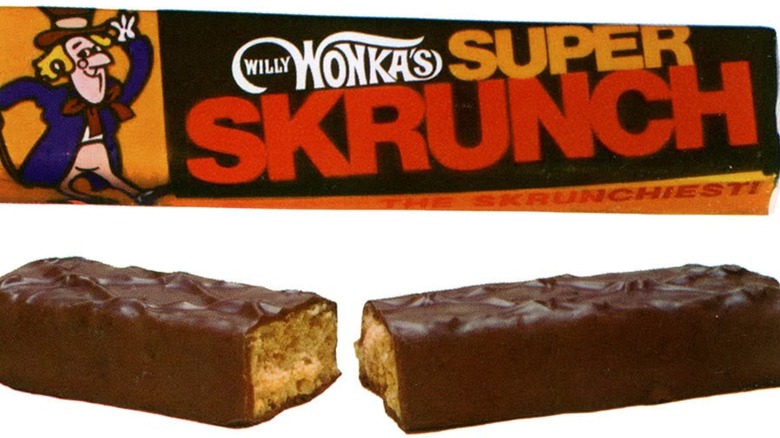
When you think of Wonka candies, you might think of the nostalgic Wonka bar, which makes sense, given its prominent role in 1971's "Willy Wonka and the Chocolate Factory." However, the chocolate bar was just one in a line of Wonka products that hit shelves in the '70s, and there were a couple of products that came out before the brand's iconic item was ever released. One of them was Super Skrunch, a candy bar that arrived in the early 1970s. Super Skrunch was a chocolate-coated bar with a peanut butter and crispy rice center, which seems to have been intended to capture the maximalist spirit of the film and of Wonka's creations.
Released alongside Wonka Oompas, Super Skrunch was a mainstay of the Wonka family in the 1970s. Towards the end of the decade, it was revamped to be even bigger, and once the '80s hit, it was renamed just "Skrunch" — but neither of these things was enough to save it. Super Skrunch was ultimately discontinued, only to be sold under a new name later down the line. This time, it was called the Peanut Butter Bar, which we can all agree has slightly less flair to it.
Choco'Lite
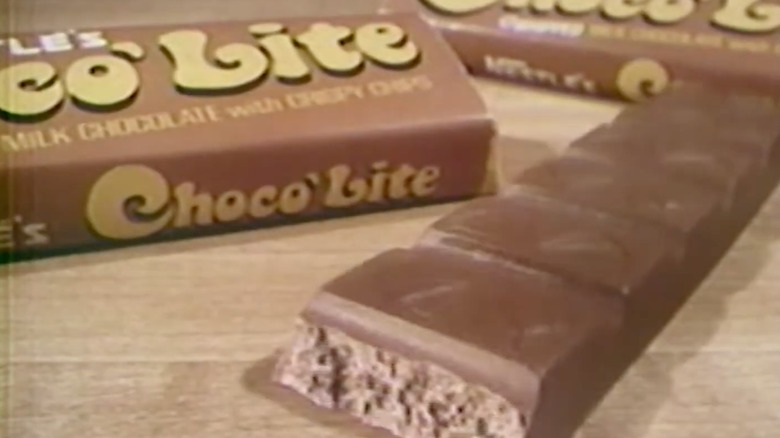
Bubbly, aerated chocolate is slightly less commonplace in the U. S. than it is in the rest of the world, with brands like Aero leading the charge in countries like the United Kingdom and Canada. It wasn't always this way, though: Back in the 1970s, one bar was determined to give customers an airier feeling. That bar was Nestlé's Choco'Lite, which dropped in 1972 and lasted a full decade before it disappeared. Nestlé leaned heavily on the lighter nature of this bar in its ad campaign for the candy, with one featuring a cartoon child floating away while holding onto a chocolate balloon, seemingly after having eaten a Choco'Lite.
Choco'Lite was far from the first candy bar to have air bubbles in it; Nestlé had been producing them since the 1930s, with its Bubblo bar coming out in the U.K. decades before this new product appeared. The Bubblo contained honey, though — and the Choco'Lite was chocolate with crispy chips. Nestlé clearly invested quite heavily in its Choco'Lite throughout the rest of the '70s, but it ultimately disappeared before being replaced by the Aero in the early 1990s. This, too, was discontinued in the U.S.
Snik Snak
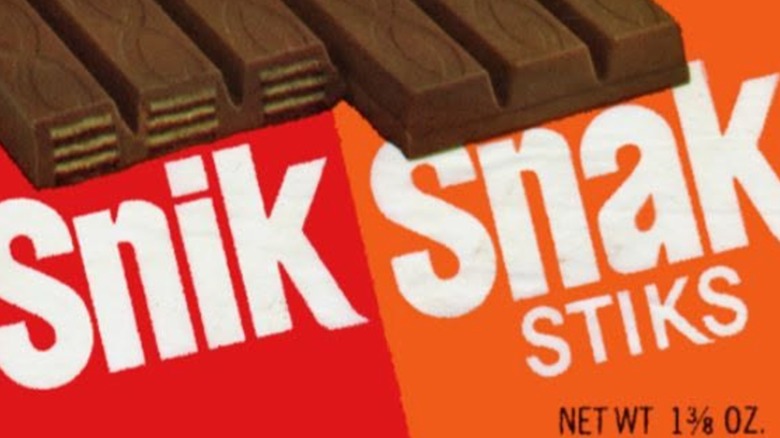
These days, we're quite used to food dupes coming out that feel eerily similar to other products (all you have to do is shop at Aldi to see that in action). Back in the 1970s, though, they somehow felt a little more flagrant. They did when they were as obvious a dupe as the Snik Snak, at least. The Snik Snak was M&M/Mars' version of a Kit Kat, and not only did it mimic Kit Kat's unique name, but it looked almost exactly the same. Arriving in 1973, Snik Snaks were parallel sticks of chocolate with layered wafers in each one, sold in the same rectangular packages as the candy it imitated. Amazingly, they were even marketed with almost the same catchphrase: M&M/Mars adorned ads for the candy with the words "take a break, take a Snik Snak."
Given the thorny nature of copyright law, it's amazing the company got away with this product. However, ultimately, it didn't manage to beat the competition. The Snik Snak bar only lasted for around five years or so before it was discontinued, while the Kit Kat remains a favorite to this day. You could call that karma in action.
Oompas
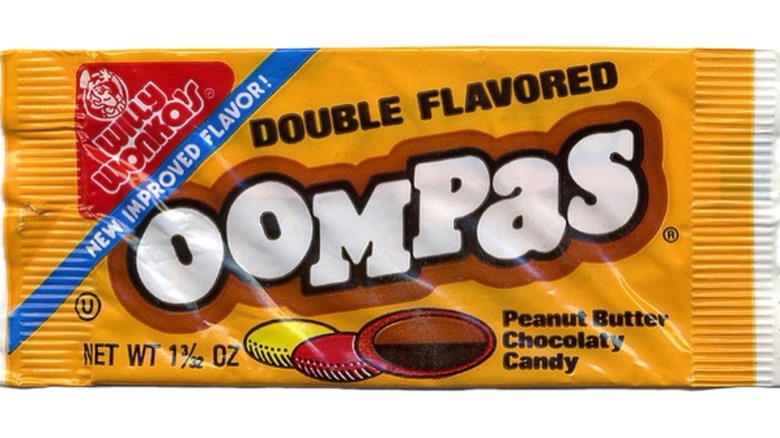
Along with Super Skrunch, Oompas were one of the two flagship candies brought out by the Wonka brand in the early 1970s. Unlike the Super Skrunch, though, Oompas were a little more bite-sized. This sweet treat had a similar vibe to M&M's (although slightly bigger), and each pack had a bunch of candy-coated pieces filled with peanut butter and chocolate créme. When they launched, they retailed at a very reasonable 10 cents per pack, and they remained on sale through the whole of the '70s, as other Wonka products joined the family.
In the late '70s, Oompas were updated slightly, with Wonka apparently amping up the peanut butter and including more pieces per pack. This move was followed by a strawberry version of Oompas in 1980, which didn't last very long. After this, neither did Oompas; they were discontinued in the early 1980s. Interestingly, the Wonka brand reused the name to launch a different version of the candy in the 2000s, which consisted of fruity chews instead of chocolate and peanut butter. As with the original Oompas, though, these eventually disappeared.
Sprint Bars
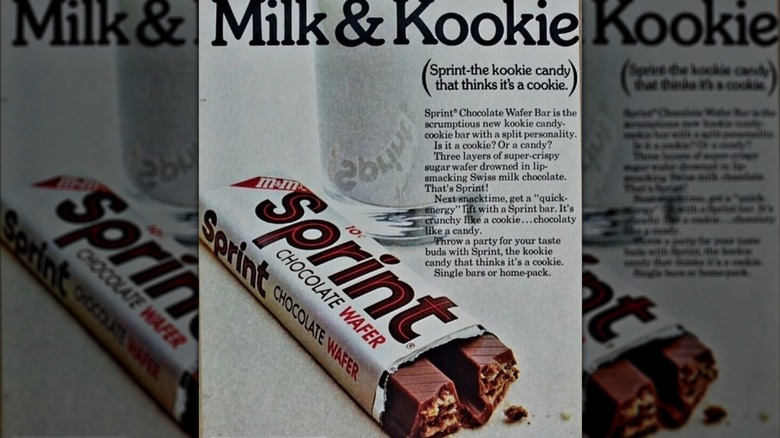
Some sweet snacks from the 1970s came and went in the blink of an eye — and in doing so, had a nature that reflected their very name. We're talking about the Sprint Bar here, which ran through grocery stores at the speed of light before shooting off into the distance. Sprint Bars actually launched in the late '60s, and were very similar to both the Kit Kat and the Snik Snak (which, like Sprint, was made by M&M/Mars, and which was an even more obvious attempt to replicate Kit Kat's success). It was at the start of the '70s, though, that it started to establish itself, and throughout 1970 and 1971 it was firmly in the M&M/Mars line-up.
It's unclear why Sprint Bars disappeared, only to be replaced by the Snik Snak just a couple of years later. Sprint was a thinner version of the concept, with each bar containing just two wafers, so it could have been that M&M/Mars wanted a bulkier, more generous snack. Whatever its reasoning, by 1972, Sprint bars seemed to have gone the distance and were no more.
Summit Bars
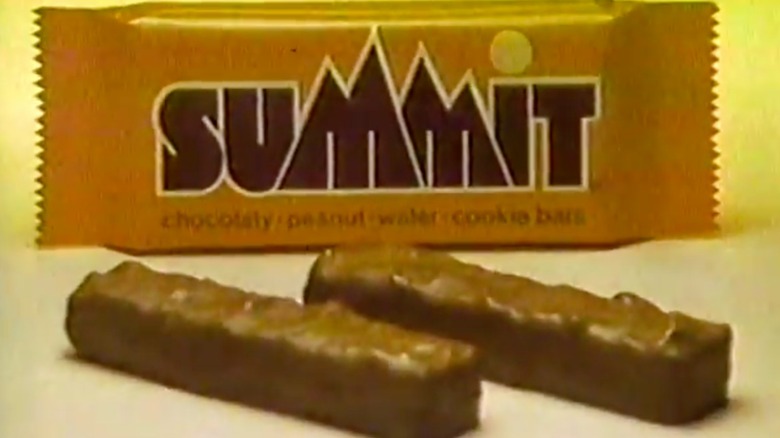
M&M/Mars seemed to be in the habit of going through new products at the speed of light back in the 1970s. It proved this yet again with the release, and subsequent discontinuation, of its Summit Bar. Summit Bars came out towards the end of the decade, and they were one of the briefest entrants into the prolific candy company's portfolio. Between the name and the commercials, which featured sporty young people taking a break while munching on the bars, the candy was marketed as a choice for those with an active lifestyle.
Sadly, though, Summit Bars weren't quite as satisfying as the company made them out to be. This is because they were plagued by a bunch of problems from the get-go. First was their construction: Summit Bars would melt very quickly, meaning they weren't quite as suitable for outdoor activities as their marketing made out. Conversely, when they were too cold, they were virtually inedible. M&M/Mars tried to address this by changing the recipe and introducing more chocolate, but that was immediately disliked by customers, who preferred it as it was before. This bar was doomed, and soon, M&M/Mars gave up the ghost.
Dynamints
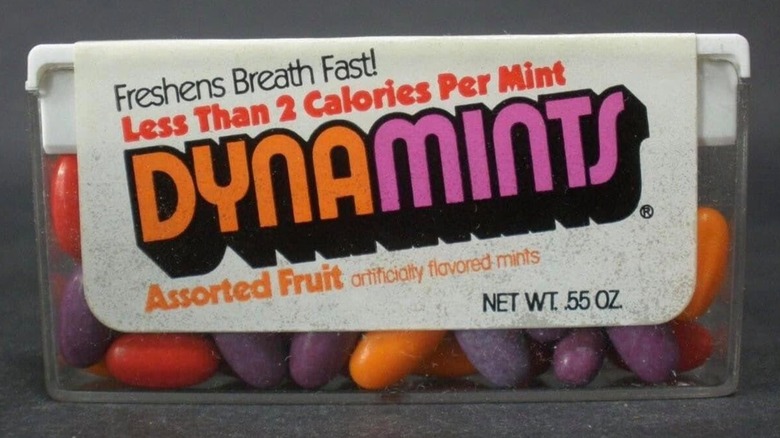
It's fair to say candies made by chewing gum companies never really have the same impact as their core product — especially when said product has connotations of being somewhat medical, and when the candy in question is a fairly obvious dupe of a more successful snack. Dynamints were just that. Created by Dentyne, Dymamints were very obviously an imitation of Tic-Tacs. They had the same pellet shape and came in a bunch of fruity flavors (including lemon-lime, orange, cherry, and grape) as well as minty ones (spearmint and peppermint). The main difference between the two brands was Dynamints came in a rectangular box with a landscape orientation, as opposed to Tic-Tacs' portrait orientation.
Interestingly, when Dynamints first appeared in the mid-1970s, they briefly stole Tic-Tacs' thunder, gaining a bigger market share of the mint candy space. After that initial burst of enthusiasm, though, it seems customers turned back to the product they knew and loved before. Dynamints stuck it out through the rest of the '70s, but by the start of the 1980s, they were discontinued.
Marathon Bar
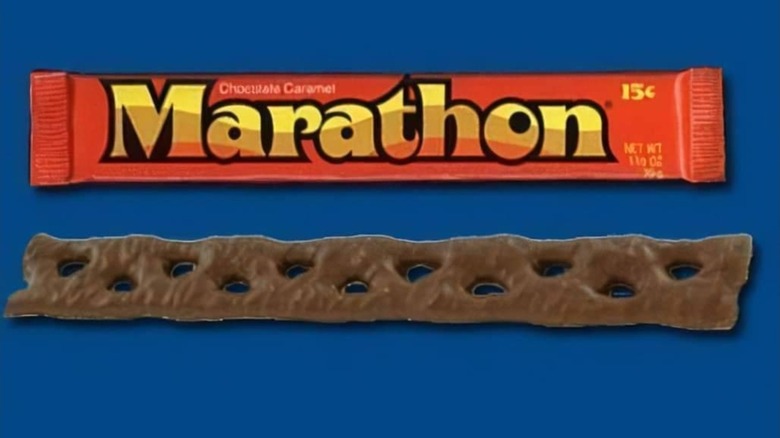
Back in the 1970s, there was a candy bar released that was so iconic that people still mourn it to this day. The Marathon Bar was introduced in the first half of the decade and was an immediate hit due to its massive proportions and its unique construction. The candy consisted of a braid of caramel covered in chocolate, which was significantly longer than the average bar. It was so large it had to be displayed on its own, as it couldn't fit in the standard shelf dimensions that housed other chocolate bars.
Amazingly, though, despite its individual nature, the Marathon Bar never earned quite as much in sales as its creator, M&M/Mars, had hoped. There was also an aspect of name confusion at play; the candy company made a different Marathon Bar for the U.K. candy market at the time, which it subsequently renamed "Snickers." Thus, in 1981, the Marathon Bar was discontinued in the U.S., leaving behind a legion of fans who remember it as one of their all-time favorites.
No Jelly
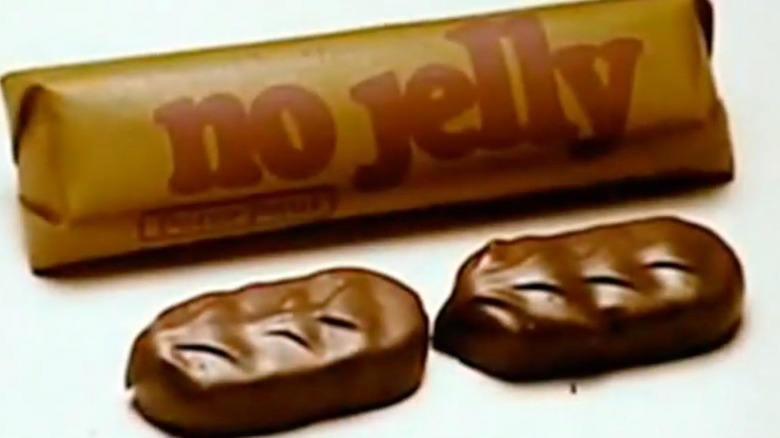
What's the key to making a candy bar appealing? We're not marketing experts, but if you asked us, it's probably not by marketing it by what it's lacking. Strangely enough, though, that's the approach the Peter Paul Company took back in 1972, when it released its No Jelly bar. This was a peanut butter chocolate bar containing crispy rice pieces, but which, as its name suggested, had no jelly inside.
It was an odd move from the company, which heralded its decision to call its bar No Jelly as a stroke of marketing genius. It advertised the candy with a very tongue-in-cheek commercial, in which two actors, named "Peanut Butter" and "Jelly," auditioned to be part of the candy bar, only for one of them to make the cut (three guesses as to which one!). No Jelly had an early burst of success, but after this, it seemed as though the core concept didn't have as much staying power as the Peter Paul Company had hoped. No Jelly was discontinued towards the end of the decade, and hasn't come back since. Maybe taking out that jelly wasn't such a good idea after all.
Nestlé Go Ahead
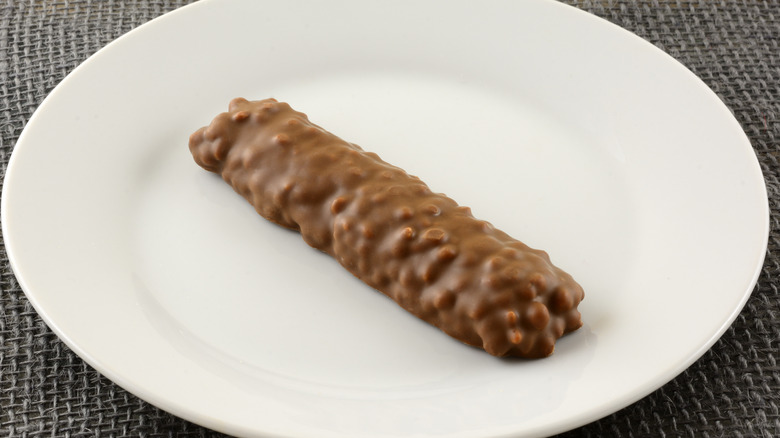
You'd have to have a pretty good memory to remember Nestlé's Go Ahead bar, given it was barely around to begin with. Okay, maybe that's slightly hyperbolic: It lasted a couple of years, at least. The Go Ahead bar first landed in 1977, and like so many others in the decade, it was centered around peanut butter, with a milk chocolate coating studded with crispy rice pieces. Where it stood out from the pack, though, was in its nutritional content: Nestlé promoted it as having 19 essential vitamins and minerals, which seemed to make it a touch more wholesome than others.
That might be a little bit of a stretch, since the Go Ahead was still a candy bar, through and through. It also seems as though customers weren't that excited about the prospect of another peanut butter bar, especially when it was slightly more expensive than others, perhaps due to its fortification with vitamins and minerals. As a consequence, the Go Ahead bar lost its spark, and although it saw it through to the 1980s, it didn't live very long into the new decade.
Betty Crocker Snackin' Cake
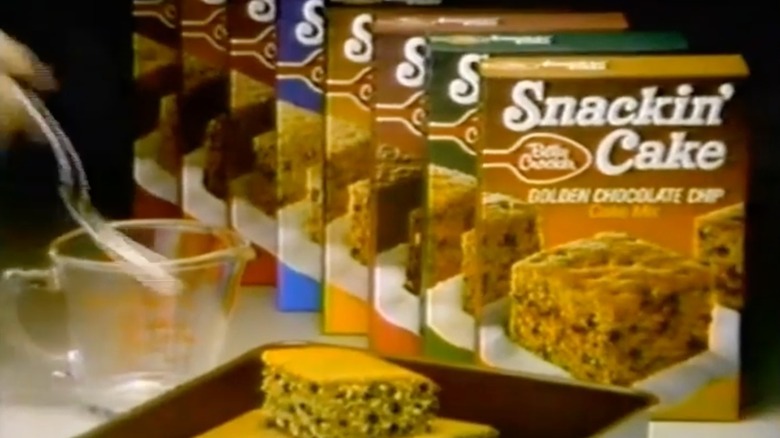
You probably don't have to cast your mind too far back to remember Betty Crocker Snackin' Cakes. This Betty Crocker cake mix was discontinued relatively recently, in 2012, surviving through four decades before it disappeared. However, even well into the 21st century, it felt indisputably '70s. Snackin' Cakes were invented in 1972, and the idea behind them was to cut all of the fuss out of baking, even more so than using a typical boxed cake mix. Prep took just two minutes, with no eggs or oil required, and after some baking time, you were rewarded with a delicious cake you could eat pieces of on the go.
Snackin' Cakes came in a couple of different flavors, and they were also versatile and adaptable, which added to their appeal. What slightly hindered the product, though, was also what gave it its appeal. Betty Crocker's ready-to-bake cake that required no additional ingredients felt a little artificial for some customers, who preferred the feeling of putting actual eggs in their cakes. Despite this, Snackin' Cakes remained on sale for a long time, but it's fair to say they slightly faded into the background compared to Betty Crocker's other products. Eventually, they were discontinued for good.
Rally Bar
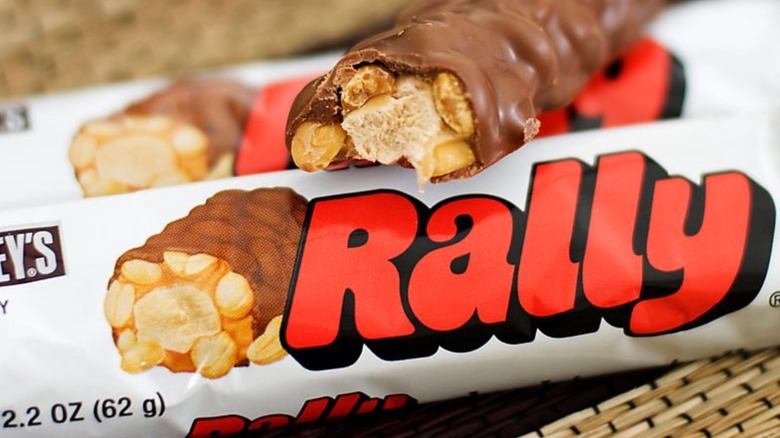
The thing about the Rally Bar is it could come back at any moment. That's what it feels like, at least. This candy bar first debuted in 1970, and it enjoyed its heyday throughout that decade. Made by The Hershey Company, it could set you back a mere 15 cents, and for that price, you'd get a combination of caramel, fudge, and peanuts, all coated in a layer of chocolate. It's certainly the kind of thing that could help you rally in the middle of a long day (we're not sure whether that's how it got its name, but you can have that one for free, Hershey's!).
The Rally Bar disappeared, but it's made a couple of comebacks since — and it's not entirely clear whether it's been officially discontinued, or if it's just taken extended hiatuses. The Hershey Company brought it back in 2004, and then again in 2008 and 2013. Since then, it doesn't seem to have reared its head, so it could be that it finally bit the dust. Maybe, though, The Hershey Company is just biding its time until the next drop.
Mr. Bones
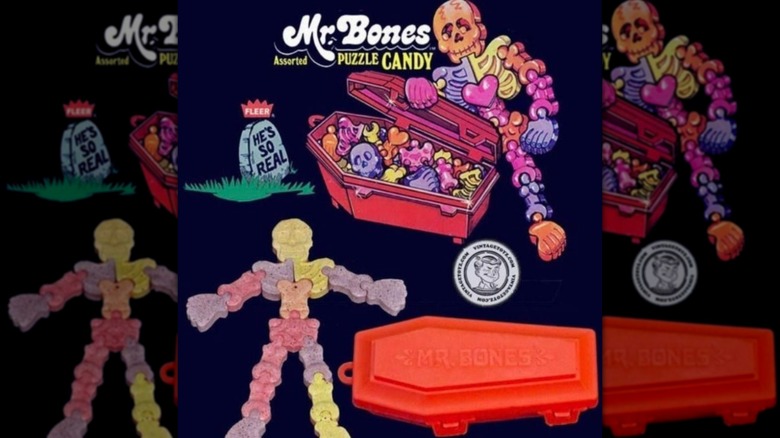
In our humble opinion, there should be more candies out there today like Mr. Bones. This was a fun and somewhat spooky sweet snack that first appeared in the late 1970s. Mr. Bones was half snack, half puzzle; the candy itself was secondary to the fact it came in a plastic coffin, and each piece was shaped like a part of the skeleton. The idea was to put them all together and create Mr. Bones himself — or at least you could, if each coffin had all of the candy pieces it was meant to have inside.
It's probably no shock that Mr. Bones was a popular Halloween candy choice, but there's also no denying it was a novelty item. The candy itself was also nothing to write home about; this snack was all about the skeleton shape. Novelty has a way of sticking around, though, and Mr. Bones remained in production until the 1990s, when it was finally discontinued. Now, it's just another one of many old-school Halloween candies that you won't see passed out anymore. An online petition to bring Mr. Bones back sadly went nowhere, and it looks as though it's now buried in the snack graveyard. Get it?