

10 Canned Drinks That Were Popular In The '70s
There's something pretty iconic about foods from the 1970s. The dishes that defined the disco era are etched into our memories, and not always for positive reasons: The likes of tuna casserole, stuffed celery, and Watergate salads may be tasty crowdpleasers, but they also have a kitschy quality that leads people to appreciate them almost ironically. What people were drinking when they were eating these dishes, though, feels a bit less vivid. We can all envisage the retro cocktails everyone would drink at a dinner party, but people weren't reaching for the booze all the time. Like us today, they'd often be consuming canned drinks.
Which canned drinks were most popular during the 1970s? As it turns out, some of the options with the widest appeal are still around today. The likes of Mr. Pibb, Mello Yello, and V8 are still very much available, although they're far less popular than they used to be. Others, though, like Aspen, Rondo, and Quirst, have gone to the great canned drinks graveyard, never to be revived again. Thirsty for some drinks nostalgia? Let's dive into what your grandparents were drinking more than a half-century ago.
Aspen
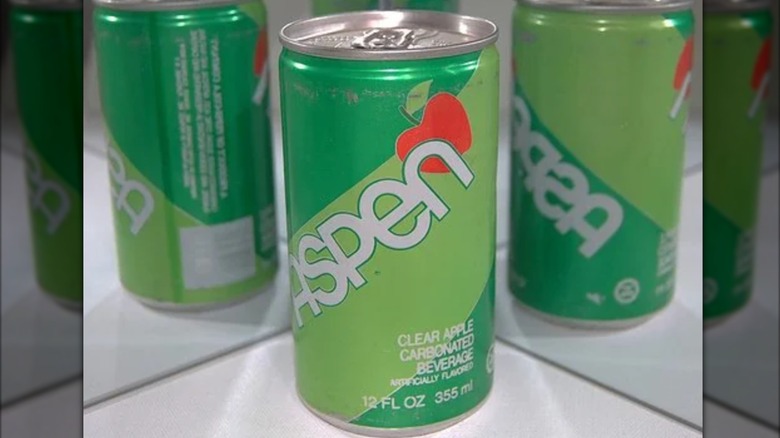
If you wanted a touch of class back in the late 1970s, Aspen might have been the drink you reached for. This soda stood apart from the competition thanks to its flavor: The somewhat mature apple-flavored drink gave it a sense of sophistication in a market crowded by lurid, sugary, fruity soda pops. PepsiCo, which launched Aspen, leaned into this sophisticated vibe. When Aspen was released in 1978, it brought with it a debonair image, with its marketing (and its name) attempting to capture the elegance of a fancy ski weekend in Colorado.
All of this, however, wasn't quite enough to keep its sales strong long-term. Aspen was released with significant fanfare, and it enjoyed a brief burst of popularity around the country, but it almost immediately lost its appeal. PepsiCo tried to bolster sales with buy-one-get-one-free offers, but this did little to permanently shift the needle. In 1982, Aspen was discontinued and was unofficially replaced by Slice in PepsiCo's lineup.
Tab
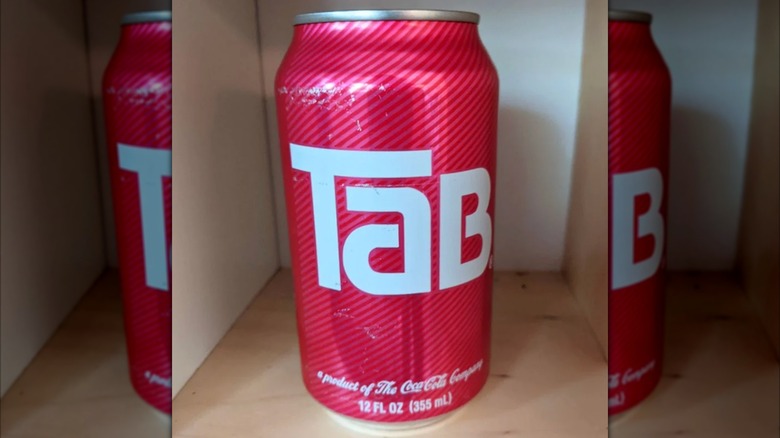
Tab isn't strictly a '70s drink: It was released in the 1960s, but its popularity in the subsequent decade and elevation to near-iconic status cements its popularity as one of the go-to drinks of the disco era. When it was launched in 1963, it was Coca-Cola's first (and only) diet soda. A predecessor to Diet Coke, it was launched to compete with the likes of Diet Rite and Patio Diet Cola — and almost as soon as it was released, it was a hit.
Tab's popularity grew throughout the 1960s and into the '70s, and became a cultural titan (if, at times, a slightly controversial one, given its risqué marketing). The 1970s brought its own challenges to the drink, however. Tab was originally made with cyclamate, an artificial sweetener that was banned in the United States in 1970 due to research linking it to cancer. The drink switched to using saccharin, but this too was linked to cancer risk, leading Coca-Cola to put health warnings on its cans. Despite all this, and Diet Coke unofficially replacing it, Tab remained in production until 2020, when it was finally discontinued.
Rondo
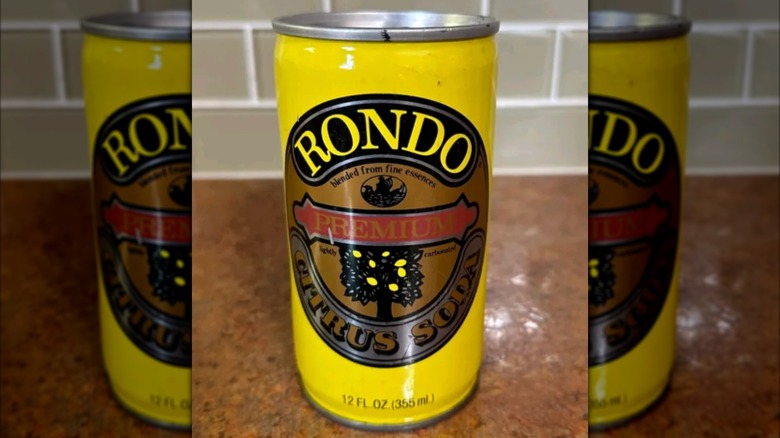
If you were experiencing a need for hydration in the late 1970s, there was only one thing for it: A can of Rondo. Well, that's what the drink wanted you to think, at least. Rondo was released in 1978 by Cadbury Schweppes, and it came with the somewhat brazen slogan, "The Thirst Crusher." The idea was that this citrus-flavored soda would deliver you from a parched mouth more efficiently than any other option out there, thanks in part to its lower carbonation, so you could drink it more quickly.
It was a confident ad campaign but, sadly, it wasn't enough to keep Rondo around. The drinks market was particularly crowded in the 1970s, and citrus sodas were pretty common. This beverage (which apparently tasted like a cross between 7-Up and Squirt) just couldn't compete, and eventually, it was discontinued. It didn't help that the drink's can design felt slightly dated, even in the 1970s, with a strangely ornate feel that made it seem a few decades older than it was. Rondo did make a surprise comeback in 2023 in limited markets, but it was a flash-in-the-pan return, and it didn't stick around for long.
Mr. Pibb
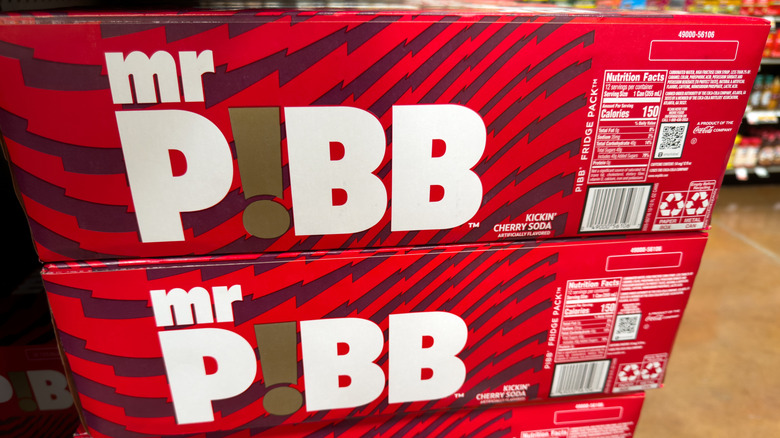
Ah, Mr. Pibb. We've been through a lot together, huh? This quintessentially 1970s beverage is perhaps the most prominent drinks brand that's made it to the modern day, with a recent re-release of the iconic Mr. Pibb confirming its appeal to customers craving a bit of nostalgia. Back in the day, though, this drink felt pretty different — not least because it had a different name in the beginning. Mr. Pibb was originally released as Peppo, but in 1972 it was forced to change its name after a lawsuit filed by Dr. Pepper stated it was too similar to the already-existing drink. Mr. Pibb was born, and it enjoyed a multi-decade run before being rebranded as Pibb Xtra in 2001, with a stronger cinnamon note to go with it.
The 1970s were undeniably the heyday of this drink, though. Mr. Pibb offered a punchier, more peppery note than Dr. Pepper, making it feel almost like the bolder sibling of the drink (which was, and is still, more popular). Its youthful marketing also gave it a sense of newness and life, and the drink garnered a cult following. It's unclear how long it'll be around this time, but we love to see a 1970s drink that still exists today.
Pepsi Light
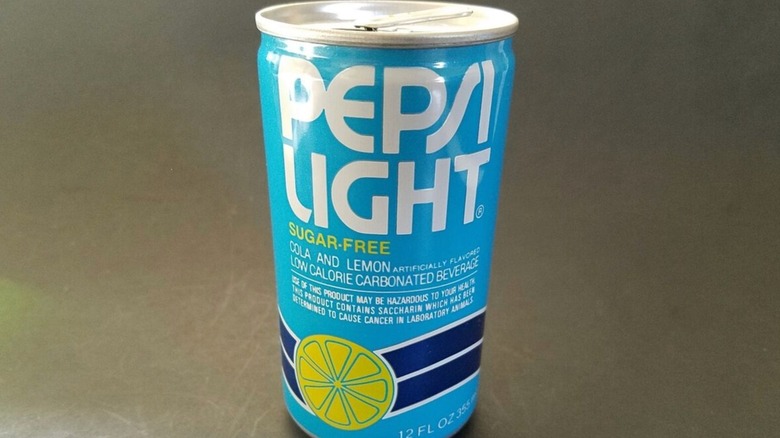
Pepsi Light is a drink that had a long history and a relatively short life. This rather confusingly named drink was a lemon-flavored, one-calorie Pepsi, which bore a resemblance to Diet Pepsi in its lack of sugar, but was designed to be a distinct product. It took PepsiCo a whopping seven years to develop Pepsi Light, with the drinks company discovering that adding lemon flavors to Pepsi wasn't as simple as it seemed. Eventually, though, it cracked it, and Pepsi Light was released in 1975, heralding the arrival of a new drink to beat in the canned soda space.
Eventually, though, it was rendered defunct. One of the reasons Pepsi Light contained lemon flavors was for them to mask the taste of saccharin, the artificial sweetener used both in the drink and in Diet Pepsi, which had a bitter aftertaste. It achieved this well enough, but in 1984, PepsiCo removed saccharin from its drinks entirely, replacing it with NutraSweet. This basically meant Pepsi Light no longer had any real purpose, and when the company decided to remove the lemon taste from the drink, it quickly lost all its popularity. Pepsi Light was no more.
Quirst
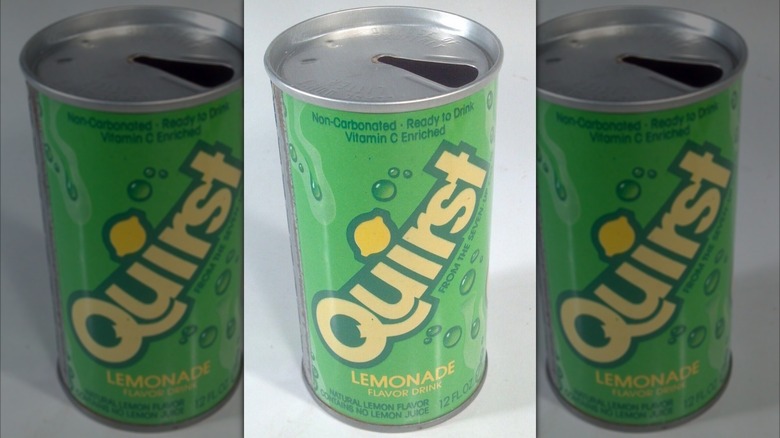
We love a canned soda name that feels ever-so-slightly bizarre. We got that in Quirst, a 1978 drink that came courtesy of the 7 Up Company, and which was a simple lemonade soda that perhaps should have stuck around longer than it did. A big reason why it didn't was due to Quirst's proximity to another drink. Apparently, the name Quirst (which we assume was a portmanteau of "quench" and "thirst") was too similar to Squirt, another citrus soda.
The closeness of the names was enough for Squirtco to file a lawsuit against the 7 Up Company, claiming copyright infringement. This lawsuit put 7 Up in a tricky position: Did it persist with Quirst and try to find a different name for the drink, or did it pull it from the market altogether and start fresh? The solution, apparently, was the latter: Quirst disappeared after just a few years, and was never to be seen again. Given the 7 Up Company already had a flagship citrus drink, perhaps it decided it didn't need to try and push this one any longer, leaving Quirst to join 7 Up's other discontinued sodas in our memories.
Mello Yello
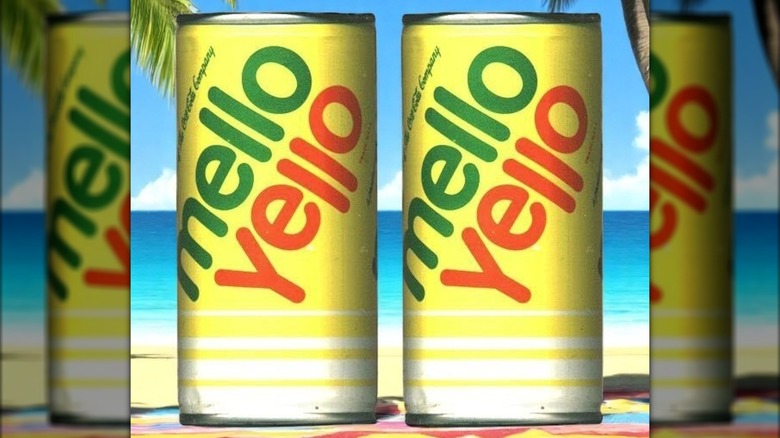
The '70s were a big time for citrus sodas, and all the big manufacturers were getting involved. That included Coca-Cola, which decided, at the end of the decade, that it would bring out a citrus option to rival Mountain Dew. Mello Yello was launched in 1979 as a direct competitor to the already popular drink, and it was positioned as a smooth-tasting alternative with a laid-back feel. The bright yellow color scheme was eye-catching, helping it to stand out.
Mello Yello became prominent fairly quickly (undoubtedly thanks to being made by one of the biggest drinks companies in the world), but over time, it began to fade from prominence. Mountain Dew remained the citrus soda to beat, it seemed — and despite becoming a pop culture phenomenon, it always felt like a secondary option to some. That said, Mello Yello has clung to enough popularity to stick around to this day, although now the drink feels pretty different from what it used to, with an updated, more angular, arguably less charming design.
Teem
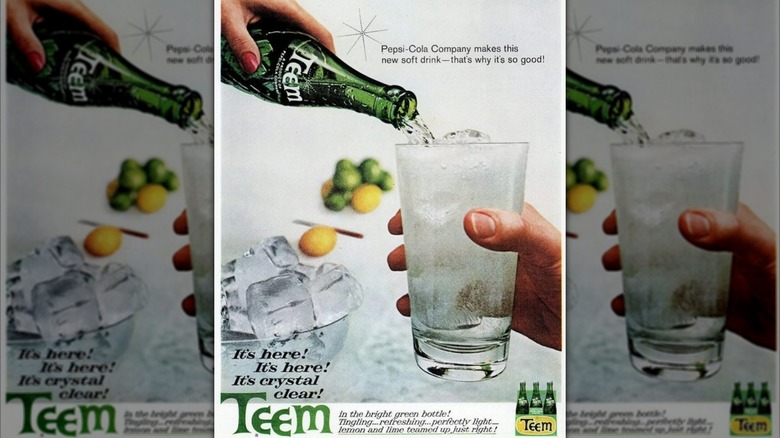
Another lemon-lime soda that was popular throughout the 1970s, Teem had a longer lifespan than some of its competitors. The drink was initially launched in 1960 (although its advertising campaign started the previous year), and it was billed as PepsiCo's response to 7 Up. It had a similar feel to the drink, with a green bottle, a clear color, and a refreshing flavor, which was captured in an equally refreshing-feeling ad campaign.
When it first dropped in the early 1960s, Teem made a big splash and enjoyed strong sales figures, and these continued throughout the rest of the decade and into the 1970s. Customers from the time recall it fondly, but once the '70s were out, Teem started to fall into decline. The market had just become too crowded: Teem was usurped by the other citrus-flavored drinks that came along after it, and it could no longer hold its own. It can still be found today in some South American countries, but in the United States, it's been off shelves for decades.
Fresca
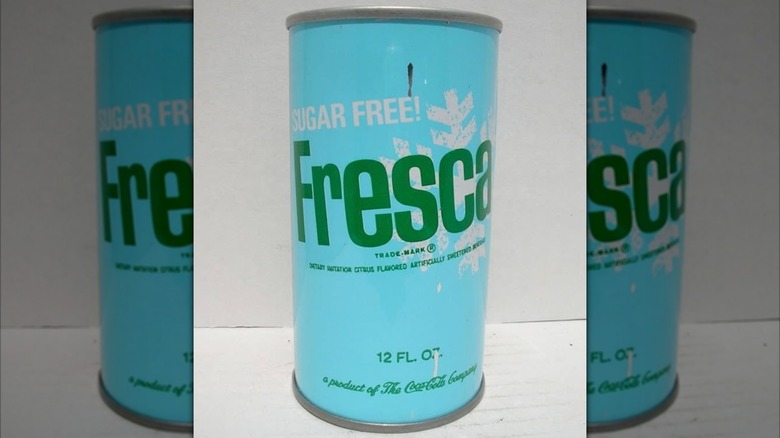
Does any soda feel as '70s as Fresca? Perhaps not. Fresca was released in 1967 after several years of being tested, and arrived, coincidentally, in the midst of a winter storm in New York City. The Coca-Cola Company and the advertising agency it was working with jumped on this as a marketing opportunity, giving the drink a flashy entrance into the national market.
By the 1970s, it was firmly established — although not universally loved. Fresca's tart, sweet, somewhat bitter grapefruit flavor divided opinion, but for some, it was a sophisticated option that stood apart from the endless parade of lemon-lime sodas out there. This niche meant that while it wasn't totally popular, it did enjoy a fanbase that was wholly its own and almost a cult status. These days, Fresca is still around, although it's arguably lost some of the pizzazz it was launched with. The brand today feels mature and subtle, but not altogether bold. Regardless, it's definitely outlived a lot of other citrus-flavored canned drinks that have come and gone, and for that, we have to respect it.
V-8
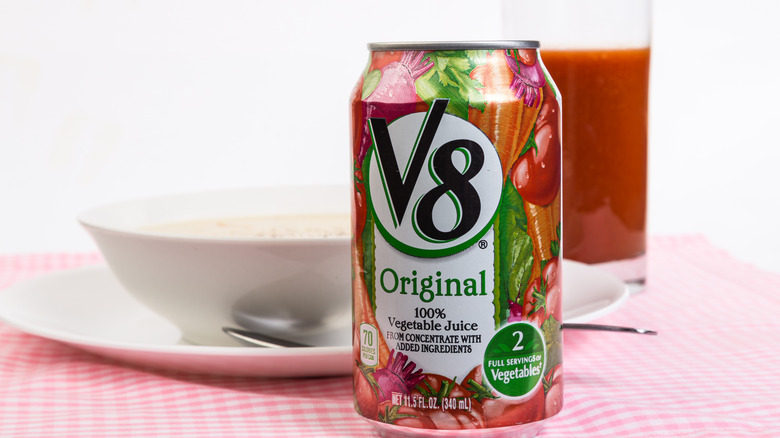
Who'd have thought vegetable juice would be one of the most popular drinks of the 1970s? We certainly didn't, but that's exactly what happened, thanks to V-8. The drink was first created in 1933, and over the years, it steadily gained more and more fans, thanks both to its promises of vitamins, minerals, and nutrition in every glass, and its high-profile endorsements from the likes of Ronald Reagan (before he was president). It retained its appeal throughout the '70s, too, when V-8 (which hadn't yet lost its hyphen and been rebranded to V8) was advertised as a go-to canned option with a knack for promotional tie-ins. In 1971, for instance, a fun-car named the "V-8 Roadster" was created to advertise the drink, alluding, of course, to the engine with the same name.
V-8 Vegetable Juice benefited from feeling distinct from a lot of other canned drinks on the market. It wasn't trying to be syrupy and sweet (if anything, it was a bit too salty), and although it was an acquired taste, it had a uniqueness to it. That uniqueness has allowed it to stick around to this day, and while it's never going to be as popular as Coca-Cola or Sprite, it still has some throwback charm.