

White Vinegar Vs White Wine Vinegar: What's The Difference?
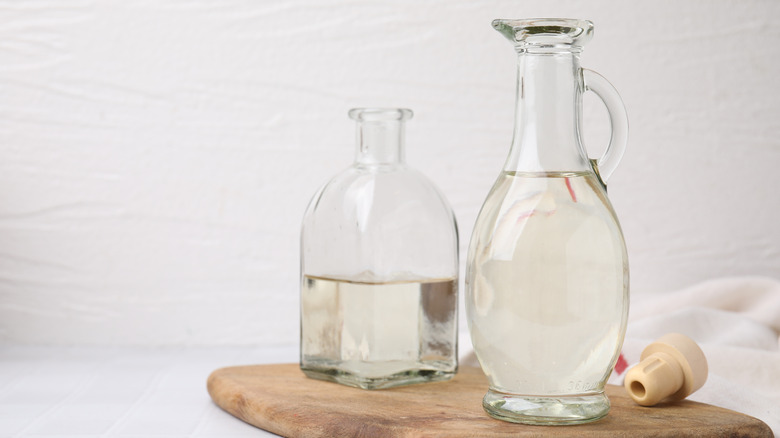
Vinegar is one of the most versatile products ever accidentally discovered: A cask of wine soured past its prime, hence the name deriving from the French term "vin aigre," meaning "sour wine." Used as a health drink, preservative, and cooking ingredient, vinegar has truly ancient origins that began more than 10,000 years ago. By 2000 B.C.E., commercial vinegar production was already underway, and its variety has expanded ever since. Despite that, white vinegar and white wine vinegar remain two different types of vinegar that have their own uses.
The wide range of vinegars available on the market today is essentially made through a two-stage fermentation process. While the first stage involves using yeast to convert a starchy or sugary food or liquid into ethanol (alcohol), the second involves using bacteria (often Acetobacter) and oxygen to turn that ethanol into acetic acid. The differences between white vinegar and white wine vinegar start from the very beginning of this process. Since they aren't made from the same ingredients, their flavor profiles and unique properties influence dishes in distinct ways. Let's delve deeper into each of these vinegars and how to use and substitute them in a pinch.
White vinegar
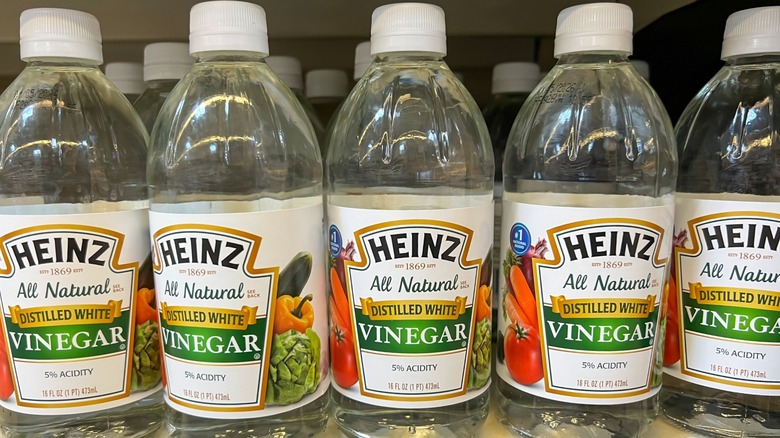
The first thing you should know about white vinegar is that the base ingredient can vary. However, it generally starts with a grain, such as barley malt or corn, which is fermented into distilled alcohol. After that's fermented into acetic acid, the liquid is diluted with water for a final product that contains 5%-10% acidity. It has a clear appearance and a neutral flavor, which makes it great for adding to certain recipes without altering the taste. However, it has the sharpest bite of all the vinegars.
One of the best uses for white vinegar is pickling vegetables. It's worth noting that the FDA's minimum acidity requirement for vinegar is 4%, but a "5% acidity" is the vinegar label to watch out for when making your own pickles because less acidity than that can cause microbial growth and spoilage. Aside from pickling, white vinegar is used with baking soda for leavening in baked goods, altering milk proteins to make cheese, and adding pizzazz to marinades, salad dressings, and sauces. Also of note is that the acidity is why vinegar is such a good kitchen cleaner and capable of killing some (but not all) household bacteria and viruses without using toxic chemicals.
When you don't have white vinegar for a recipe that calls for it, though, you need a substitute with a similar sharpness, such as apple cider or malt vinegars. Lemon or lime juice can even work well, and bottled is better than fresh-squeezed simply for consistency's sake. Although lemon juice is slightly more acidic, it doesn't change the flavor as much and is safe to substitute in equal amounts, especially in recipes like salsa.
White wine vinegar
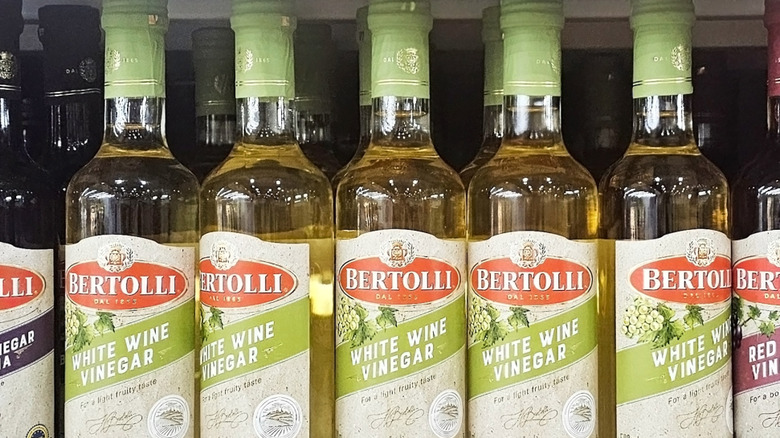
Since a soured cask of wine is what led to the discovery of vinegar so long ago, white wine vinegar is among the most ancient kitchen staples. Of course, it starts with white grape juice that's fermented into wine and then fermented again to get the acetic acid. It's then diluted with water to reach an acidity that typically falls between 5% and 7%. High-quality, specialty white wine vinegars are usually fermented in wood casks for months to years, but many commercial brands accelerate the process in stainless steel vats to reduce the fermentation to shorter than a day.
Compared to white vinegar, white wine vinegar has a much more subtle sharpness and a slight fruity aroma and flavor because of the grape base. It's also more delicate and lighter than red wine vinegar and doesn't change the color of dishes. Because of its flavor profile, it's ideal for dressings, marinades, and sauces that pair well with fish, meat, and salads. White wine vinegar is great for making rich dishes brighter and for braising as well.
Rather than purchasing white wine vinegar at the store, some people enjoy doing it like the ancients by making homemade vinegar from leftover wine. It's just a more time-consuming process — taking at least a month — and may require a mother (an extracellular cellulose with a layer of Acetobacter bacteria). If you run out and need a substitute for a recipe, though, one of the best replacements for white wine vinegar is rice vinegar because of its similar slightly sweet flavor profile. Other good options, though, include champagne, red wine, and sherry vinegars, as well as lemon juice.