

5 Kitchen Safety Tips You Should Know

The kitchen is an essential part of the home, but the very items used to make a delicious meal can also be very dangerous if handled improperly. Some basic safety rules minimize the inherent danger of a fully stocked and well-used home kitchen, particularly in homes with small children.
There are plenty of essential food safety rules to know as well, from frequently washing your hands to proper refrigerator and cooking temperatures and more. But these kitchen safety tips have more to do with kitchen tools and items than the food itself. Naturally, maintaining a safe working environment is important for preparing good food.
Some of these basics cover perhaps the most obviously dangerous kitchen items: knives. But it's not just sharp blades that a responsible home cook should be aware of. Pots and pans, power cords for appliances, and even the kitchen itself can all present undue hazards if not correctly handled.
Proper knife storage
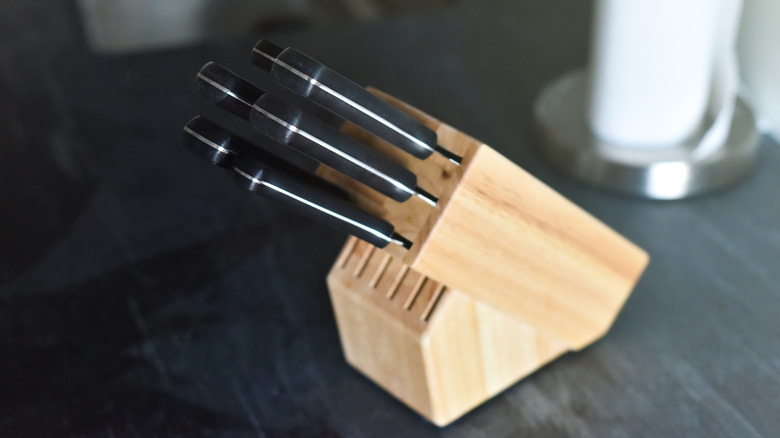
A good kitchen knife is a tool worth splurging on because good knives tend to keep their sharp edges better, and cutting ingredients with a sharp blade is actually much safer than the opposite. A dull knife blade requires too much pressure when cutting, which can easily lead to bad accidents. But sharp knives carry an obvious risk of their own.
It's important to keep all kitchen knives properly stored before and after use. It's too easy to absentmindedly prick your hand reaching for something, or knock the blade into the floor toward your feet, or perhaps a child sees the shiny metal while your back is turned for just a second. Keeping knives in a knife block or sheath — or for a professional flair, a knife roll – until needed minimizes the chances of such accidents.
This extends to recently cleaned knives, which should be washed by hand, immediately hand-dried, and then put in their proper place. This is the best way to care for high-quality knives, which also eliminates the clear risk posed by sharp, pointy edges in a dishwasher utensil basket.
Cut away from yourself

There's another literally vital safety tip about knife use: always cut with the blade facing away from you. Use a cutting board for whatever ingredients possible, pointing the edge down and away from you. Any potential slips of the knife will go harmlessly into empty board space, instead of your stomach.
There may be some cases in which cutting toward yourself is difficult to avoid, as in this instructional video from celebrity chef Gordon Ramsay on chopping bell peppers. Cut as gently and intently as possible, move your opposite hand away from the blade when needed, and stop chopping before you reach your fingertips. Do not point the sharp end of the knife toward you.
Included in this safety tip is never slicing something that you hold in your hand. Even something simple, like slicing one Roma tomato, which already fits so well in the opposite hand, is worth mildly dirtying a cutting board for. It's much better than potentially bleeding all over the kitchen.
Pay attention to power cords
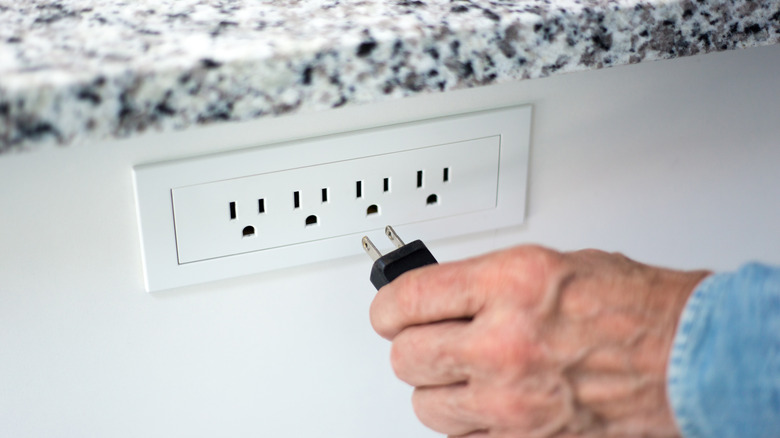
Trip hazards can be just as dangerous as improperly stored knives or careless cutting. Even if no one is harmed, they still have the potential to ruin a meal or break something expensive. It's an easy rule to overlook, but always be mindful of power cords — especially those for small appliances.
Appliances that live on the countertop usually don't have this problem, but ones brought out for a specific use can leave cords strewn about the kitchen. Don't get a full measuring cup caught in an air fryer cord and spill all over the counter. That's why you'll want to bunch or bundle the cord as out of the way as you can.
Some kitchen islands may have outlets on the cabinet sides below the countertop, intended for exactly such small appliance use. But cords here are so commonly snagged and tripped over in a busy kitchen that, as of 2023, side-mounted kitchen island outlets are no longer considered up to electrical code. If you have one in your home, you can still use it, just be extra careful not to get caught on any dangling cords.
Turn cookware handles inward
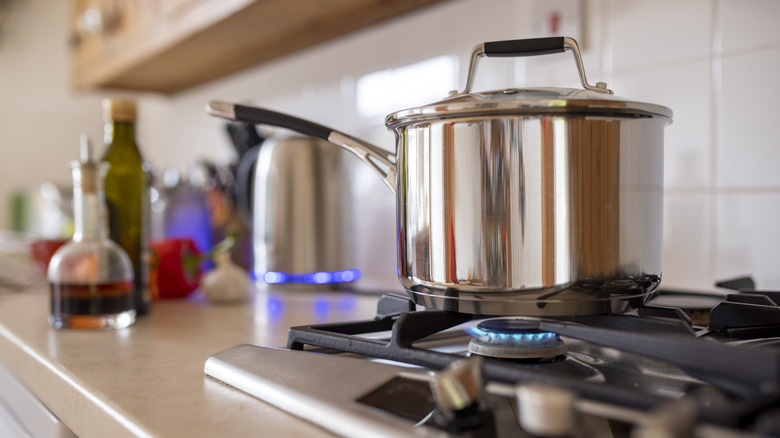
Unfortunately, this safety tip is an easy one for even the most careful home cooks to overlook. Handles on pots, pans, or other cookware should never hang over the stovetop or countertop edges. It's another major trip hazard: You probably won't fall over from walking into a frying pan's handle, but the pan might.
Knocking over a full pot of food is a culinary disaster. Dinner is ruined, there's a massive mess to clean up, and you may even burn yourself or others with boiling hot food. If you knock over a particularly important piece of cookware, like the thrift store crown jewel that is a vintage Le Creuset pot, you could cause irreversible damage to a rare and valuable piece.
Always make sure cookware handles are completely clear of any walkways. Turn them inward enough that not only will nobody walk into them, but neither will your clothing as you tend to other pots and otherwise use the space.
Regularly clean the kitchen
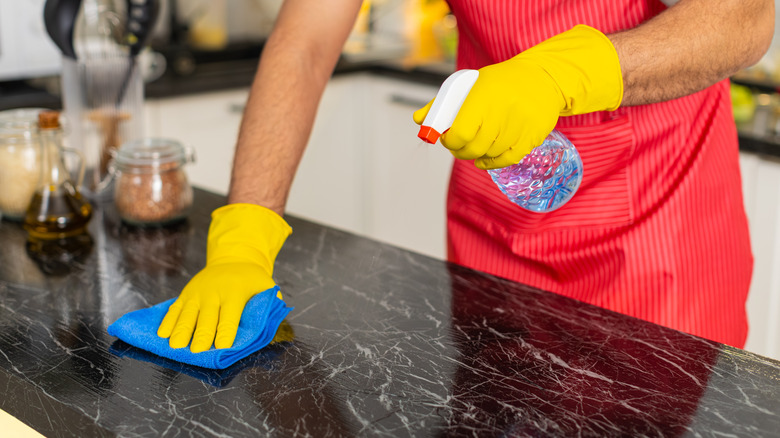
The final kitchen safety tip is an all-encompassing one that covers both food safety and basic kitchen safety: It has to be clean. Different kitchen areas need to be cleaned on different schedules, with countertops and stovetops ideally cleaned after each use, sinks and microwaves weekly, ovens and dishwashers monthly, and refrigerators three or four times a year. All this prevents buildup of dangerous germs and flammable grease, among other hazards and unpleasantness.
It's also important to clean spills as soon as possible, especially if you are currently in the kitchen. Don't slip in a puddle of spilled oil when you could have quickly wiped it up right after it happened. Don't forget to clean often-neglected areas, either. Kitchen light switches are hubs for bacteria and grime if not regularly cleaned. Shut off the power and spray a microfiber cloth with a bit of cleaning solution to wipe them down. Another kitchen spot people always forget to clean is the utensil drawer. Clear out any dust or debris periodically and give the drawer a fresh wipe down and dry job before putting everything back.