
11 Fried Food Myths You Need To Stop Believing
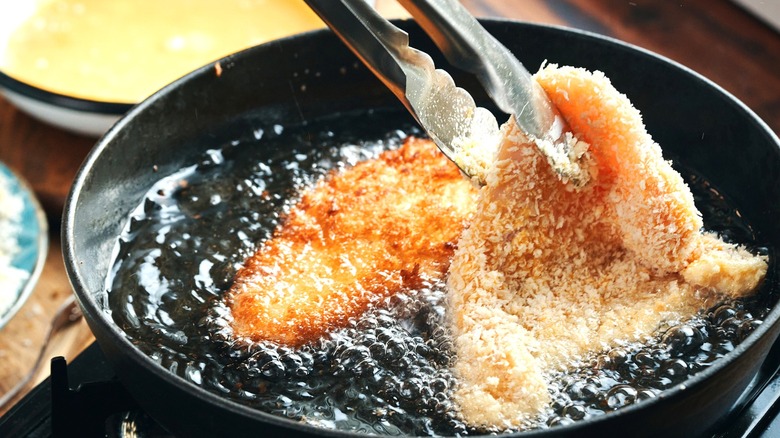
What's easier, or more satisfying, than a fry-up? Nothing, until you fish out your sweet potato fries from the deep fryer, only to be greeted by a soggy mess instead of the crisp perfection you were expecting. The truth is, there are plenty of rules to take note of if you're keen on achieving a perfect fry. That said, there are also plenty of myths that have been debunked or are completely unsupported by evidence.
Sadly, these can actually stop us from achieving that ideal outside crunch and inner fluff. We're talking unproven theories, like the one that says you can't use olive oil for frying, or that there's no avoiding the grease in fried food.
We've taken a deep dive into the online world of culinary masters to get the information straight from the experts' mouths. We reached out to Matthew Cutolo – Executive Pastry Chef at Gargiulo's and content creator — as well as Dale Talde, Executive Chef and Owner of Goosefeather, TV personality, and cookbook author. Each chef shared their tips on how to fry food at home and what myths to quit believing about fried food. We also researched what other experts have to say on the topic of fried food myths, and we've got all the intel so you never have to look at a soggy chip or piece of chicken ever again.
Myth: Fried food is greasy by definition
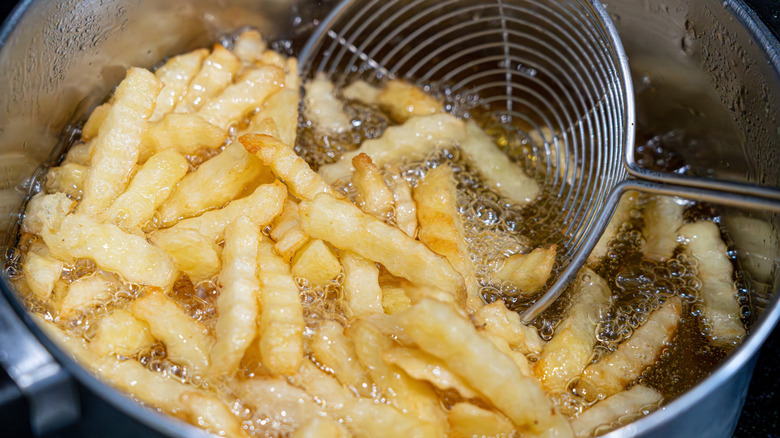
When we picture fried food, we always imagine our fingers covered in grease. There's no getting away from it; more often than not, being in the mood for a fry-up also means accepting that oily film coating our food and everything it touches. After all, oil is greasy by definition, right?
Not quite. Matthew Cutolo explains that when food is fried properly it shouldn't feel greasy at all. "If it does, the oil was usually too cool, the pot or pan was overcrowded, or the food wasn't drained properly after frying," he explains, adding that when you master the right technique, you can expect a crispy, light exterior as opposed to an oily one.
Dale Talde agrees: "Proper technique, temperature, and ingredients make the food less greasy." So what are the culprits behind that greasy film? According to the Shay Spence, of the Institute of Culinary Education, if the oil temperature is too low, that's when you can expect greasy, soggy food.
Myth: The hotter the oil, the better the fry
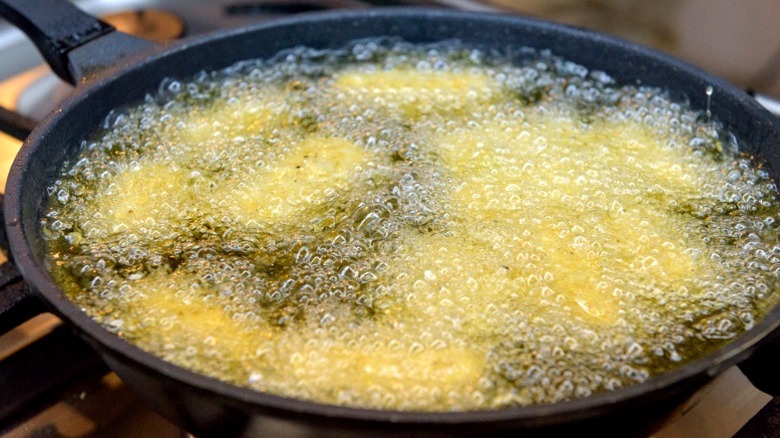
While it's true that too low a temperature can yield a bad case of the soggies, this doesn't mean that you should overdo the heat, either. Matthew Cutolo acknowledges that this is one of the misguided beliefs about frying food that many people hold, thinking that as long as the oil is hot enough, the crispness will follow — but it's not that simple.
"In reality it's all about controlling the temperature of your oil. Oil that's too hot burns the exterior before the interior is fully cooked," he says. The best approach? You'll need to keep to what he refers to as the sweet spot, which falls between 350 and 375 degrees Fahrenheit. This is when you're most likely to get that perfectly balanced crisp and golden crust, contrasting nicely with an evenly cooked interior.
When talking heat, we've got another temperature trick for the crispiest home fries: Double-frying is the secret hack you didn't know you needed. The first one partially boils the potatoes, and the second go delivers the crunch.
Myth: Overcrowding the pan doesn't affect taste or texture
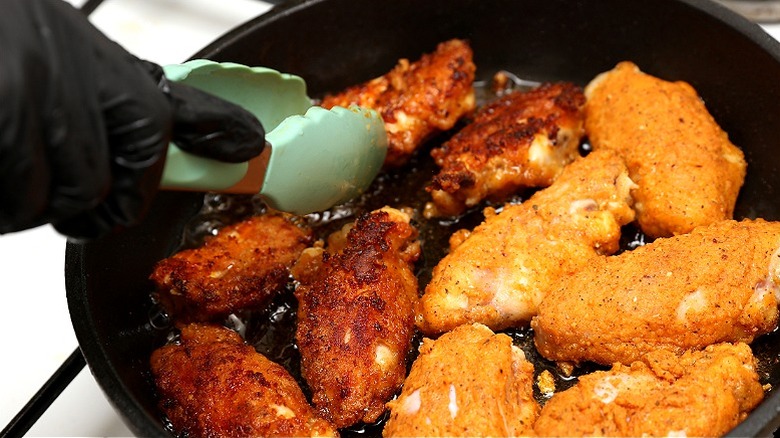
Here's a fun fact we rarely stop to think about: Every time you add something to the frying pan, the temperature of the oil is going to drop. This, in turn, affects everything from cooking time to taste and texture. It doesn't matter what you're frying, or whether you're aiming for crispy chicken or the best and fluffiest donuts. In other words, if you thought that the idea that you can overcrowd your frying pan is a myth, think again.
In fact, Matthew Cutolo goes as far as to say that this is the biggest mistake he sees people make, trying to put too much stuff into the frying pan all at once. "Overcrowding the pan causes the oil temperature to crash, which is the fastest way to end up with soggy, greasy food." He cautions that a good fry-up is not about speed, but about keeping the oil temperature steady. "Fry in smaller batches and let the oil return to the correct temperature before adding the next batch."
A dropping temperature isn't the only side effect of overcrowding. Cutolo explains that it also causes steam to get trapped between pieces of food. The problem with this? It creates excess moisture — in other words, sogginess. "Giving each piece enough space allows hot oil to circulate freely and lets moisture escape," he adds.
Myth: Any cooking oil will work for frying
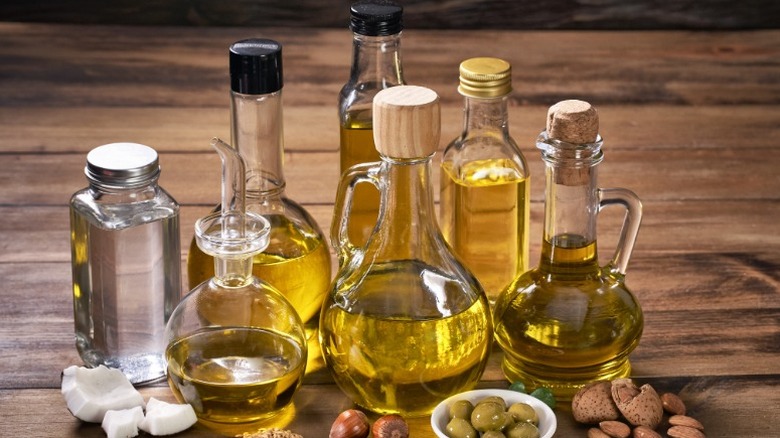
Look, if it didn't really matter what type of oil you use, then online culinary school Rouxbe wouldn't have gone to the trouble of compiling an entire frying oil guide to explain exactly why your choice of oil matters. So what's the rule of thumb here? There isn't quite one, but it's safe to start from an obvious truth: Some oils just don't mix very well with particular food types. Infused and flavored oils, for instance, can be overpowering, so you should avoid these oils when frying eggs.
When choosing the best frying oil, King Arthur Baking recommends using refined, neutral oils that can withstand frying temperatures, and cites canola as being especially appropriate due to its high smoke point. The smoke point does exactly what it says: It's the temperature at which an oil starts to smoke. Heating an oil past this point can affect the taste and even lead to the release of harmful chemicals.
Myth: Olive oil should never be used for frying
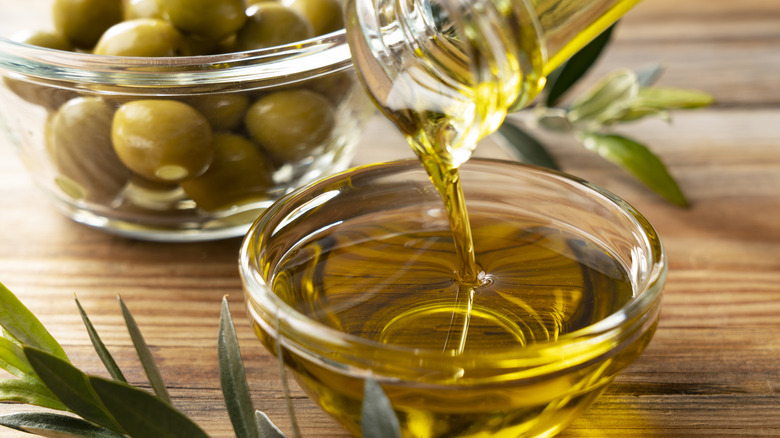
What about all those repeated admonishments that using olive oil for frying spells disaster both for the environment and for your health? Dale Talde assures us that if you add olive oil to your frying pan, your food won't catch fire. In fact, even the USDA Food Safety and Inspection Service now lists olive oil among high-smoke-point oils recommended for deep frying. There are plenty of mistakes people make when cooking with olive oil – but, it turns out, putting it into the frying pan is not one of them.
Matthew Cutolo confirms that the olive oil-frying myth is well and truly debunked. That said, he still prefers to use a more neutral oil like canola or vegetable for deep frying. These, he says, "offer a little more flexibility with temperature, and are much more cost-effective when you're using large amounts." He adds that he prefers to save extra virgin olive oil for uses where he will actually taste its flavor. So it still pays to skip the olive oil for fried chicken, especially as the quantity required probably makes it too expensive.
Myth: You need a deep fryer to fry food properly
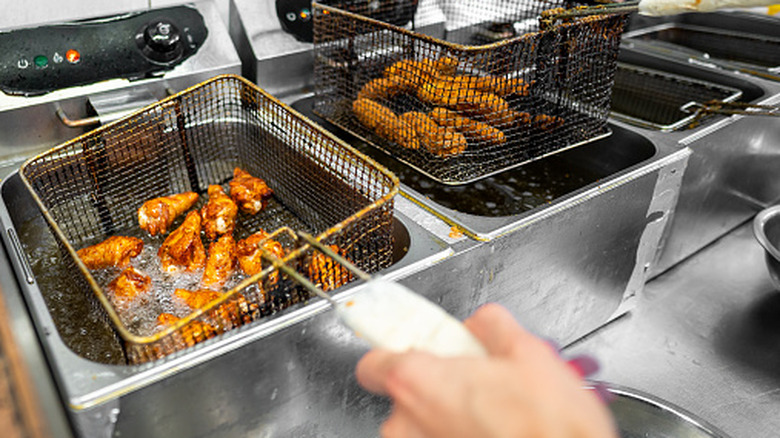
Hands up those of you who get a touch scared of a proper home fry-up. We feel you. The mere thought of oil spatters is enough to make most of us want to rush for cover, and the only thing that prevents this without any question is a deep fryer. Or, at least, that's what we thought. The thing is, purchasing a deep fryer for that occasional foray into the world of fried fare isn't necessarily feasible for everyone. The good news? It's not a prerequisite, not for safety or for flavor. After all, the difference between pan and deep frying is related to technique, as opposed to success.
What if you have a recipe that requires deep frying, but no access to an actual fryer? The Culinary Institute of America has this to say: "It is also possible to deep-fry foods in a pot on the stovetop." The one thing to bear in mind is that it's always a good idea to choose a pot with high sides, as this prevents fat from foaming over or splashing out. The technique even has Gordon Ramsay's seal of approval. In his recipe for arancini, the celebrity chef suggests filling a large saucepan up to one-third full with oil.
Myth: Frozen fries should be thawed before frying
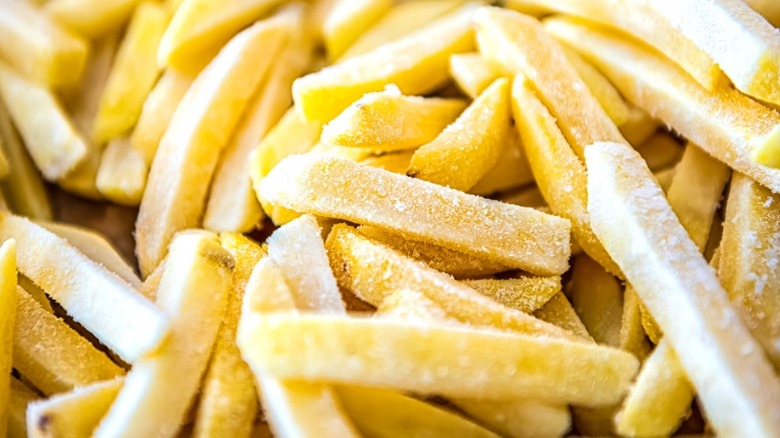
There's no denying it: Dumping foodstuffs straight from the freezer into the pan just feels weird. Nonetheless, don't fall into the trap of thawing your fries — you'll only end up ruining them. We have it straight from McCain Foods, which specializes in frozen fries: Cook your fries straight from frozen and deep fry them at 350 degrees Fahrenheit. Why? Not everything needs to be brought to room temperature before cooking, and thawing frozen french fries will only serve to ruin their texture. In other words, if the instructions don't call for defrosting, then skip this part.
There are plenty of other mistakes to avoid when cooking frozen fries, and not preheating your oil before throwing them into the deep fryer is one of the most common. It's the heat that helps them cook evenly and quickly, leading to that crunchy bite that makes a good fry so moreish.
Myth: A golden brown outside means it's fully cooked
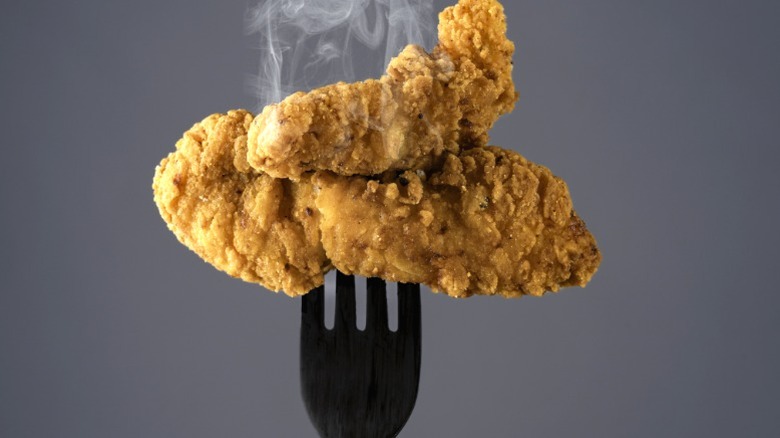
Used to be a time when, as soon as the outside got that golden brown hue, the frying pan was quickly whisked off the heat in the belief that the food was perfectly done. Nowadays we know enough about food hygiene to recognize this for the myth that it is. Matthew Cutolo is emphatic on this point. "A golden brown crust doesn't necessarily ensure the center has reached a safe temperature, especially with larger pieces of chicken." The only way to be sure it's well-cooked, he says, is by using a digital thermometer to make sure the inside has reached the proper temperature.
Dale Talde echoes his words, exhorting home cooks to "always cook poultry to the proper internal temperature." What if the outside of your fried chicken looks well and truly golden, but the thermometer tells a different tale? Leaving it in the fryer will likely lead to a burned exterior. Gordon Ramsay has a practical solution for this one; all you need to do is place the undercooked pieces on a baking sheet and throw them in the oven for a few minutes until they finish cooking safely.
Myth: Paper towels are the best way to drain fried food
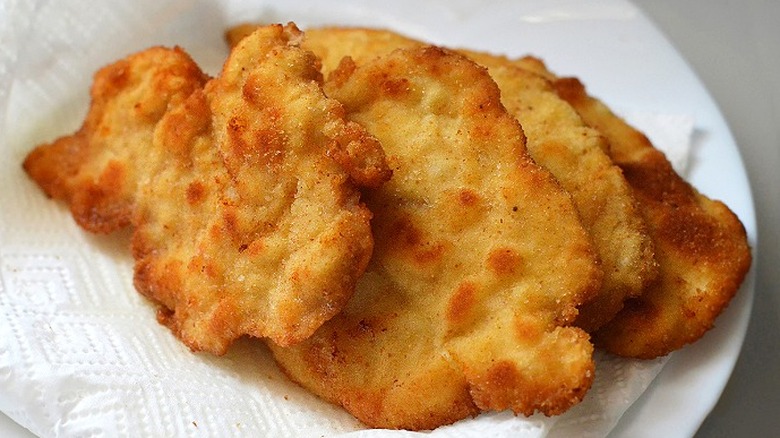
Wave goodbye to another time-honored ritual — and myth, as it turns out — that invariably closes any frying session. We're talking about that part where our food gets to roll around in paper towels in a most undignified manner, all in the name of removing as much grease as possible.
This technique may lead to a satisfyingly greased-up paper towel, but is it really the best way to wipe off excess oil from our fries or chicken? Not really, according to Matthew Cutolo. The reason is that, in reality, food absorbs grease not while it's cooking, but right after frying, as it cools — which makes the paper towel technique rather counterproductive.
So what's the solution? "Draining it immediately on a wire rack helps excess oil run off while keeping the crust crisp, instead of soggy," he says. It's a method that TV chef Alton Brown emulates, as he invariably picks wire racks set over sheet pans or paper towels in his recipes for draining fried foods.
Myth: Air frying is basically the same as deep frying
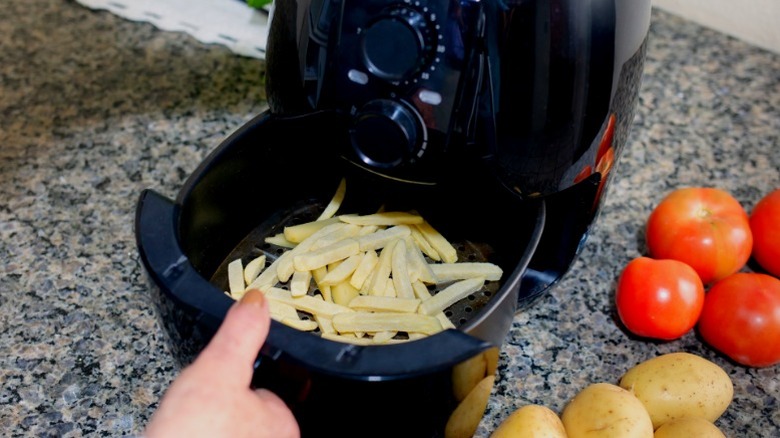
When kitchen equipment includes the word "frying" as part of its name, you'd be forgiven for believing that it pretty much does everything that a deep fryer is meant to. After all, it's in the name. However, successful deep frying depends on using a decent amount of frying oil which, needless to say, an air fryer doesn't do.
The bad news, if you were hoping to get your fry-up fix without the actual frying? You probably can't. In 2021, PJ Hamel (the owner of King Arthur Baking) ran a test to compare the flavor and texture of air-fried donuts versus deep-fried donuts. She found significant differences. The deep-fried version rose about 50% higher, while the air-fried batch failed to replicate the crunchy exterior of fried donuts. Her overall verdict on the air-fried donuts was more of "a soft dinner roll dipped in a sugar glaze."
This is probably not quite what we're after when jonesing for a donut or three. The reason behind these differences can be blamed on science. Most air fryers use hot air with very little to no oil at all, which results in a completely different texture to what we're used to. Because of this, some fried foods shouldn't be cooked in an air fryer at all.
Myth: You have to throw frying oil away after one use
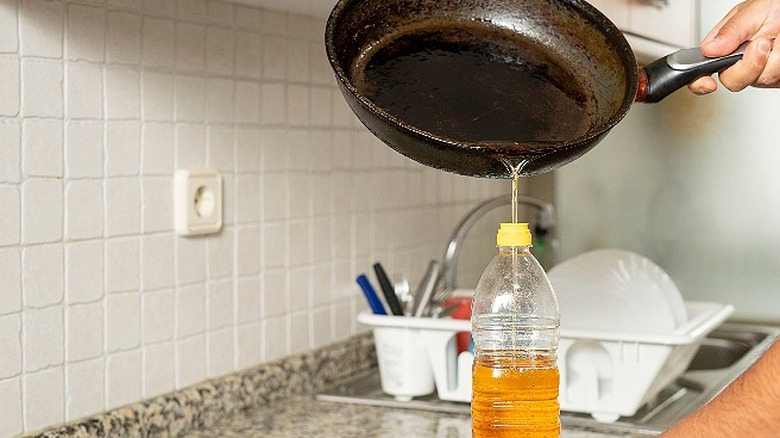
There was a time when various health authorities advised against the reuse of oil. Now that we know a bit more about the science of how cooked oil behaves, that advice has changed. You can reuse oil judiciously. "Home cooks often don't realize how much longer frying oil lasts if it's properly cared for. After frying, let the oil cool, then strain it to remove any food particles before storing it in a sealed container," Matthew Cutolo says. "Those leftover crumbs are what cause oil to go bad faster."
How many times is it okay to reuse the oil? There's no hard-and-fast rule, and it really depends on whether you follow the above steps after frying. "If you strain it, store it properly, and don't overheat it, you can typically reuse it a couple of times," Cutolo says. Things to watch out for include a burned odor, smoking at normal frying temperatures, excessive foam, or a thick and syrupy texture. If any of these happen, he says it's time to chuck it out. Dale Talde, on the other hand, doesn't reuse oil more than five times, but adds that it depends on the food. "Fish is different, because the flavor stays in the oil," he adds.