

7 Kitchen Design Trends From The '70s That Deserve A Revival
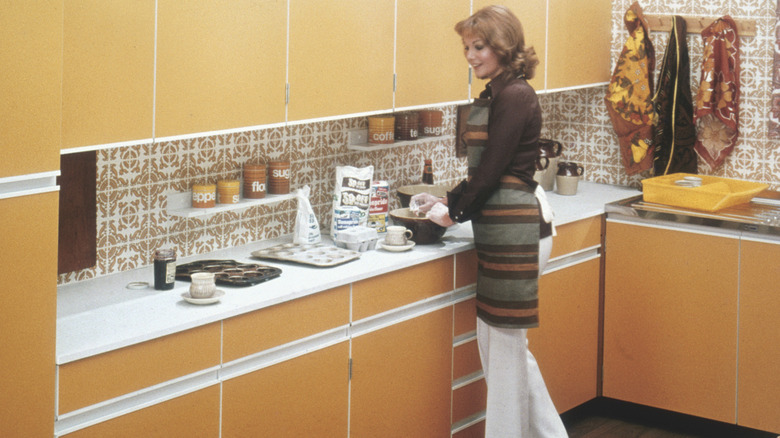
If there's one thing you can say about design in the '70s, it's that it was distinctive. That doesn't mean that it was always successful. The decade of disco was defined by some seriously out-there trends and choices, and for every tasteful decision or lean towards earthy tones or natural materials, there was an inclination towards more, shall we say, niche tendencies like patterned shag carpeting or lava lamps. Nowhere did that clash of sensibilities come together as much as in the kitchen, a space that's meant to be functional, but which was often rendered impractical or ugly by some of the design choices made in that decade.
As a result, it's no wonder that we've left a lot of those choices behind (and we're glad to see the back of carpeted kitchen floors, to be honest). However, we've also lost some nifty design trends that we honestly think are ripe for a comeback now, as '70s kitchen decor is becoming popular again. From the return of metal edging to our love of wet bars, we're here to highlight the best '70s design trends that time has forgotten about — and to hopefully persuade you to give them a try. Grab your bell-bottom jeans, and let's dive in.
1. Wood veneers and panelled walls
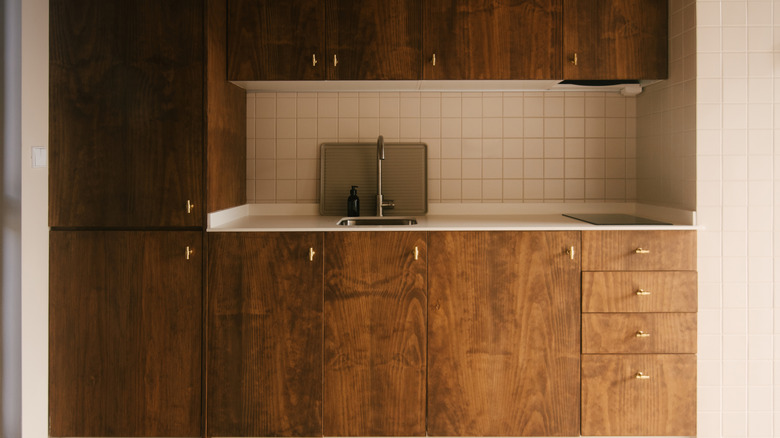
Back in the 1970s, wood was everywhere in kitchens, and not just for furniture. Wood veneers and wood-panelled walls were a common feature, with veneers often found on the kitchen cabinets that people would store all of their '70s kitchen treasures in. This would give kitchens of the time a natural feel, which would help to offset the somewhat harsh look of a lot of the appliances. Plus, wood veneers were especially useful for keeping costs down: Not everyone could afford solid oak cabinetry, but most people could achieve the effect with veneer coverings.
Sadly, though, this last, budget-focused reason is also perhaps the reason that wood veneers eventually disappeared. Over time, they started to feel a little tacky and flimsy, while fully wood-clad kitchens could also be let down by their ability to suck light out of a space. Well, we think it's time to have a rethink. These days, it's entirely possible to find wood veneers that look just as expensive as the real thing, and advances in lighting mean that kitchens are brighter than ever. Why not give yours a homely feel with some wood on the walls?
2. Macrame decorations
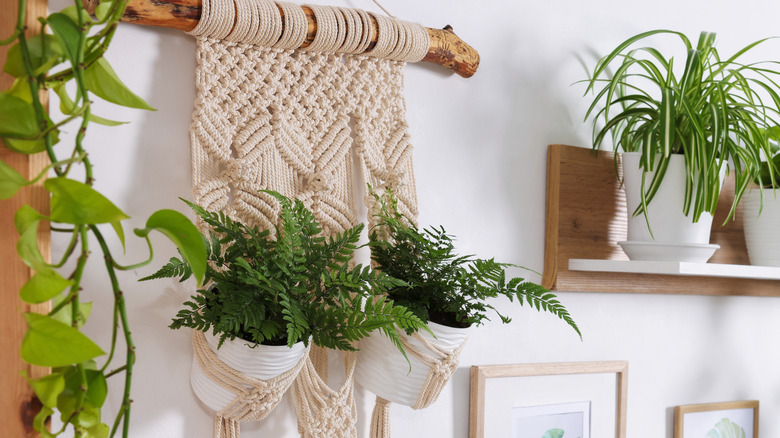
Okay, so we're just going to preface this by saying that we know how kitschy macrame can be. Big in the '70s, macrame was everywhere for a minute, and the knotted design could be used for anything and everything in a home. The kitchen was no exception: It wasn't uncommon to find macrame hanging planters adorning the walls, macrame place mats under each plate, and even macrame spice racks, which would dangle above your stove and keep your seasonings safe (and would eventually absorb all of the smells in your kitchen — okay, now we kinda get why this went out of fashion).
Macrame had a brief burst of popularity once more towards the end of the 2010s, but it's a stretch to say that it's made a full comeback. It still feels somewhat too retro for that. However, when handled tastefully, macrame can bring a sense of natural life to a kitchen. Macrame hanging planters look as good as ever, and they soften a space instead of making it feel harsh, while pairing very gracefully with the plants themselves. Macrame heat mats, meanwhile, can be a fantastic way to stop your surfaces from becoming scalded or burnt (they were popular when people were cooking 1970s boxed dinners, after all), and they're easy to roll up after you've used them. Plus, macrame is undeniably budget-friendly — let's face it, times are tough for a lot of people out there.
3. Wet bars
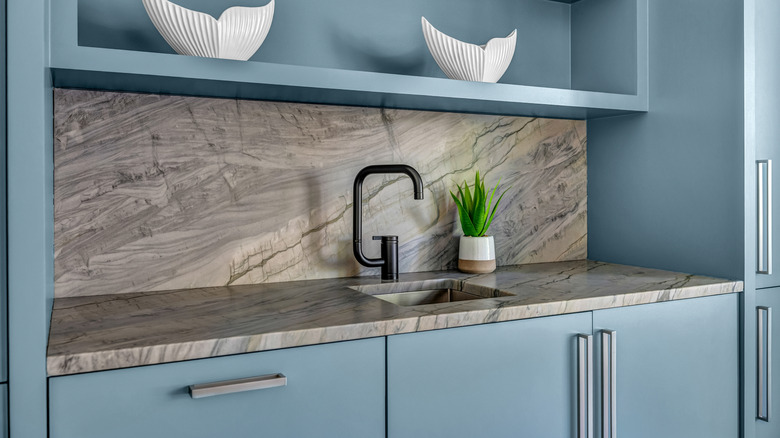
Frankly, we think a wet bar comeback is more than overdue. Back in the '70s, these were fixtures of kitchens everywhere and served as a way to bring a classy bar vibe into the comfort of your very own home. Cooking spaces could come equipped with bar set-ups, complete with working sinks to rinse and wash up glassware, and they were places where you could mix up a tropical '70s cocktail for your guests before sitting down to an evening meal.
Over time, though, wet bars came to be seen as less of a necessity and more of a hindrance. They took up too much kitchen space that could be better used in other ways, and while some folks have sought to bring them back to their current cooking spaces, they feel very much like a relic of the past — a hangover from the times when people had more space and more cash.
Wet bars still have a space in modern kitchens, though, even in the smallest ones out there. You can make a wet bar virtually anywhere, provided that you have a water source and some storage. This can be as simple as dedicating one of the cabinets near your sink to liquors and glassware, and hey presto, you've got a hospitable zone in your kitchen that's ripe for entertaining.
4. Geometric flooring
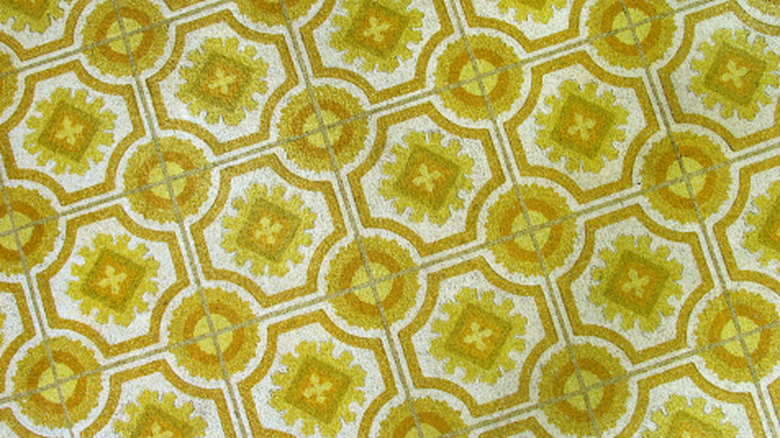
It's fair to say that the '70s were a lively time, as far as kitchen floors were concerned. Not only were carpeted kitchen floors not uncommon, but patterned flooring was also very in vogue — and geometric designs ruled over them all. 1970s kitchens were frequently decked out with linoleum floors that would have a funky geometric tile design printed on them, which added visual interest and brought nice pops of color to the room. These were frequently chosen to match the cabinets and geometric tiling on walls or backsplashes. Oranges, greens, browns, and muted blues often dominated the color scheme of these patterns, but they could also be a little lighter and brighter.
Both geometric flooring and linoleum flooring have fallen out of favor in recent years, and we can understand the latter. In some people's eyes, linoleum has become a byword for "cheap" or "tacky," and people tend to favor stone or natural tiled floors over plastic overlays. However, when styled right, geometric flooring patterns can still make a kitchen feel lively without dipping into kitschy territory. It's a good idea, though, to opt for high-quality linoleum or real ceramic tiles for the best effect.
5. Metal edging
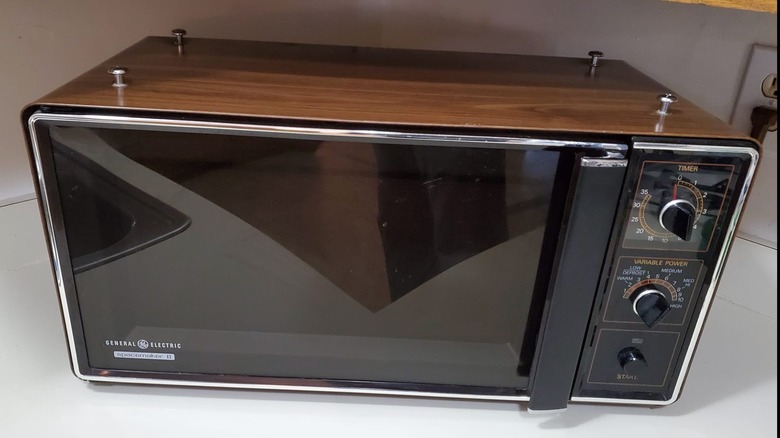
Back in the '70s, metal edging was all the rage in kitchens. Cooking spaces these days tend to embrace a sleek, seamless design, but 50 years ago, appliances and cabinetry would often be adorned with a metal trim around the edges of panels or doors. This gave kitchens a touch of visual texture and a kind of futuristic dynamism in their aesthetic. On cabinets, it also usefully flagged where the handles were, which was doubtless a bonus in dimly lit kitchens. It also helped that metal edging was easy to wipe clean, helping everything stay shiny and fresh-looking.
There's been a wide move away from metal edging as a design feature, both in kitchens and elsewhere, and we can understand why. At its worst, it can look like it's been stuck on without a second thought, and disrupt the aesthetic of an appliance or a piece of furniture. However, the removal of metal edging from kitchens has also sucked some of the character out of them, and left modern cooking spaces (particularly those clad in all-white) feeling flat and boring. When done right, metal edging can give kitchens a midcentury, retro feel, without feeling too nostalgic. Sit back, munch on an old-school '70s dessert, and gaze upon your metal trims with glee.
6. Avocado everywhere
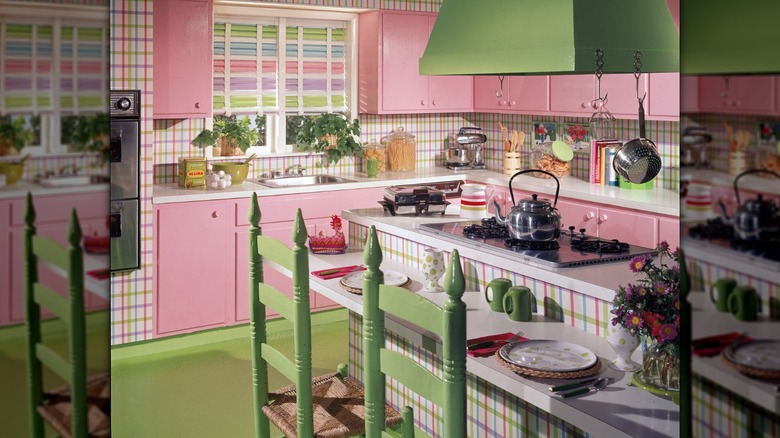
If there's one color that summed up kitchen design in the 1970s, it'd be avocado. This muted mid-green was absolutely everywhere in kitchens back in the day, and would be used on everything from the stoves used to prepare forgotten 1970s casseroles to cabinets and cooker hoods. Avocado sat within the broader color palette of earthy tones that defined the era perfectly, and it could bring warm color to a cooking space without being too intrusive. It felt bright, but not garish; natural, but not flat. It was a hit.
Unfortunately, the overuse of avocado likely led to its downfall, with people tiring of the shade and experimenting with other greens and colors. It subsequently became almost synonymous with the '70s, and now, seeing avocado in a kitchen can feel like a strange throwback. It doesn't need to be that way, though. Avocado hasn't entirely disappeared, but we think it deserves a second spin for its ability to create a sense of calm in kitchens. When used as an accent color, as opposed to the primary tone, it can create depth and comfort without being too overbearing.
7. Ornate, stained glass lampshades
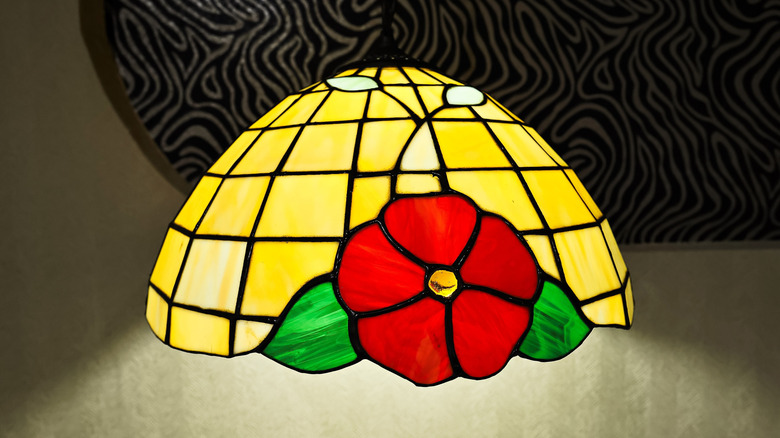
The '70s were a big time for left-field lighting choices — you only have to look at the mass popularity of lava lamps to see that. There was a different lighting choice that was more prevalent in kitchens, though, which has since gone firmly out of fashion. We think that should change. We're talking, of course, about ornate, stained-glass, Tiffany lampshades: The type that would be composed of several colors in a floral or patterned design, and which would allow the light to peek through the panels while the bulb lit up the space. These were a step up from the general trend of hanging lamps and light fixtures in kitchens that were prevalent during the decade, and gave kitchens a warm, colorful feel.
Unfortunately, though, stained glass lampshades started to feel almost immediately dated once the decade was up. Now, they're more likely to remind you of your grandma's house than feel like a trendy contemporary design feature. However, when styled right, they can feel elegant and modern, and also have a handmade feel to them that's a nice touch in a world of identical, mass-produced light fixtures. Plus, they give kitchens some much-needed color.