

Beyond Frosting: Decorate Your Cakes With These 12 Underrated Toppings
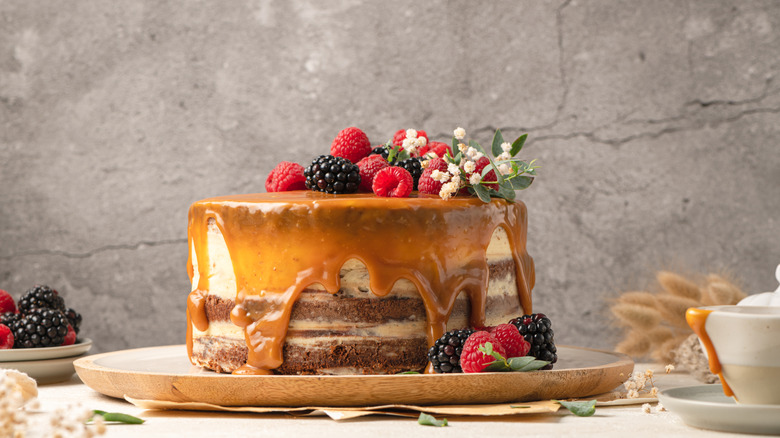
Is it really possible to enjoy any sort of celebration without a cake? Unless you're someone who detests the thought of sweet treats, your answer to this question has got to be a big no. This crowd-pleasing dessert usually consists of four elements, which are the filling, frosting, decorations, and the cake itself. All of them contribute to its overall flavor, and the frosting and decorations also make cakes look beautiful.
But if you've just started preparing homemade cakes, you probably find it difficult to frost them. Truthfully, it does take time to learn the ropes, as there are plenty of cake decorating tips that every beginner needs to keep in mind. Luckily, though, you don't need to rely on frosting to make your cakes look pretty, because there are several other ways to decorate them. And trust me, you won't even miss the frosting.
I have to confess that even though I'm a pastry chef with over five years of professional experience, there are times when I just can't be bothered to make frosting to decorate cakes. On those days, I rely on the amazing underrated toppings that I'll be sharing in this story. I'll also be diving into what sort of cakes each topping pairs well with, so by the time you're done here, you'll be on the path to making beautiful homemade cakes without any frosting.
1. Powdered sugar
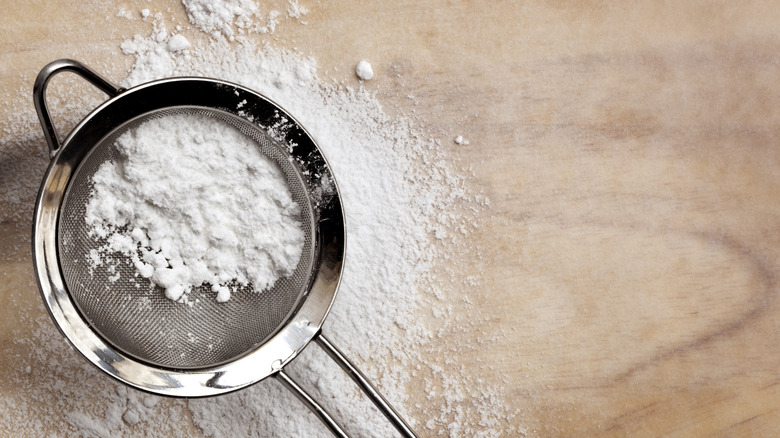
Starting with the easiest option out of the lot, powdered sugar can definitely be relied on when you want to decorate a cake with something other than frosting. All you'll need to do is sift some using a fine-mesh sieve over your cake after you've layered, filled, and chilled it, and the dessert will be good to go.
I'd like you all to keep a few things in mind here, because although it's easy to decorate a cake with powdered sugar, things can still go wrong if you aren't careful enough. First, it's important that you top the right cake with it, as some cakes are naturally dry, and powdered sugar won't provide the moisture that frosting usually does. With that in mind, I'd recommend going for cakes that are dairy-rich or use oil as the fat rather than butter.
You can also decorate a flourless chocolate cake or lava cake with powdered sugar. That said, let these cakes, or any similar unlayered cake, cool down completely before sprinkling the sugar on top, as it will melt over a warm cake. Lastly, try decorating your cake with powdered sugar right before serving it so that the topping doesn't attract moisture.
2. Candied fruits
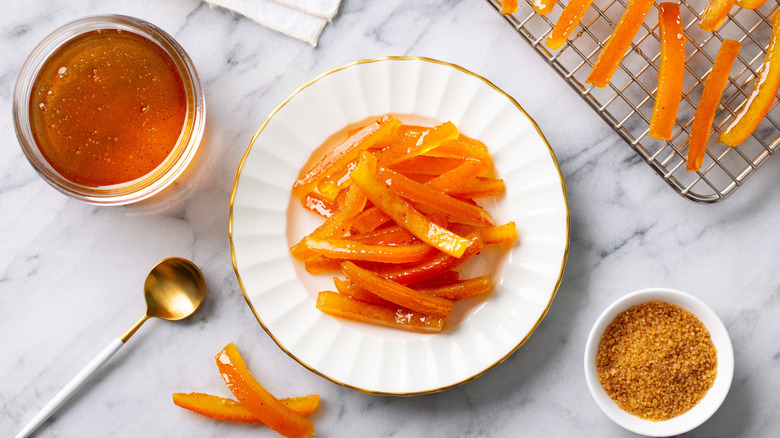
Sure, you can top your cake with a variety of fresh fruits. But the problem with many of these fruits is that they start oxidizing if you leave them out for too long, and after that, they just don't look too nice. I've got an easy solution for this problem: Use candied fruits instead. Along with not turning brown, they'll also make your cakes look a lot more elegant.
Candied fruits are dry (and a bit sticky), so you'll have to use them to decorate cakes that are naturally moist. If you'd like to make the cake extra moist, brush it with some sugar syrup or concentrated fruit juice before topping it with candied fruits. Another thing worth bearing in mind is that it's best to use candied fruits as a topping for fruit-flavored or nut-based cakes, or at most, a simple vanilla cake. I'd skip decorating chocolate or coffee-flavored cakes with them, unless you're specifically using candied oranges or cherries. And be wary of the texture of these fruits, as some of them are really chewy, so you might want to chop them before decorating your cake, because that will make them easier to eat. Don't go overboard with these fruits, either — they'll overpower the cake's flavor and can make it look too crowded.
3. Ganache drizzle
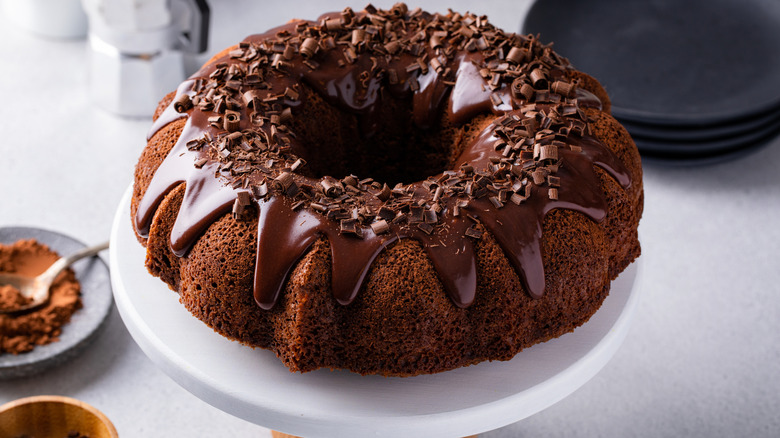
Chocolate ganache is usually used to fill and frost cakes. But if you don't want to bother icing your entire cake with a thick ganache, you can go for the easier option and turn it into a drizzle, then use that to decorate the sweet treat. Ganache drizzles are also very forgiving, because you can be as messy as you'd like and the cake will still look good.
You can turn dark, milk, or white chocolate ganaches into a drizzle by melting them with a little added cream until they have a runny consistency. It's possible to do the same with ganaches that are made with fancier varieties of chocolate, like ruby chocolate or blonde chocolate, too. This decoration is great for chocolate, vanilla, and marble cakes, or even certain fruit-flavored cakes, depending on the type of chocolate used to make the ganache.
You don't necessarily need to brush the cake with sugar syrup before decorating it with a ganache drizzle, but there's no harm in doing so either if you'd like to keep it extra moist. Also, a pro tip – consider making your chocolate ganache with sour cream rather than heavy cream for a little tang that balances the sweetness.
4. Sweetened mascarpone
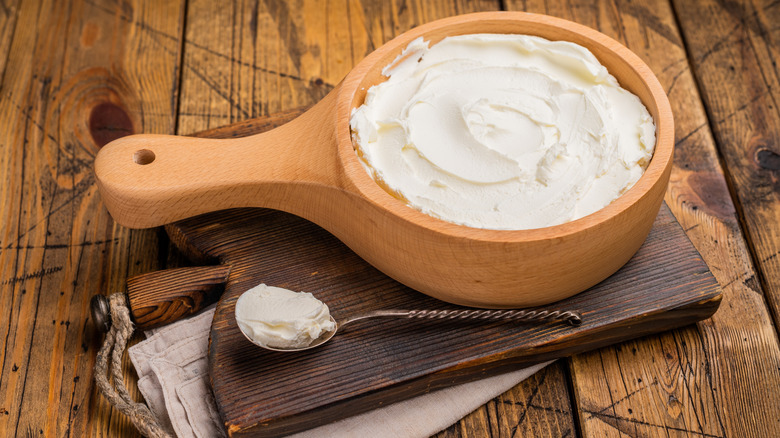
It's easy to think that sweetened mascarpone is the same, or at least somewhat similar to cream cheese frosting, but that isn't the case. Yes, different kinds of cheeses are used to make both these options, but apart from that, what sets sweetened mascarpone apart is that you won't need a bunch of added ingredients (other than the sweetener, of course) to make it. Plus, it's a lot quicker to whip up.
All you'll need to do is soften the mascarpone cheese and add in any sweetener of your choice. Stick to caster sugar if you'd like to keep it basic, or try using brown sugar for a malty finish. Consider using honey or maple syrup for a slightly earthy flavor. Once the sweetened mascarpone is ready, spoon some over your cake, and flatten it lightly with the back of the spoon to create patterns if you'd like it to look fancy. If you're feeling extra adventurous, you can also pipe dollops on top of your cake.
As for what kind of cakes this option works best for, truthfully, I always love pairing it with a rich coffee-flavored cake, as the sweet treat ends up tasting like tiramisu. That said, sweetened mascarpone works well with chocolate cakes, nut-based cakes (especially those with almonds and hazelnuts), spice-heavy cakes, and berry-flavored cakes, thanks to its mild flavor and creamy finish.
5. Poached fruits
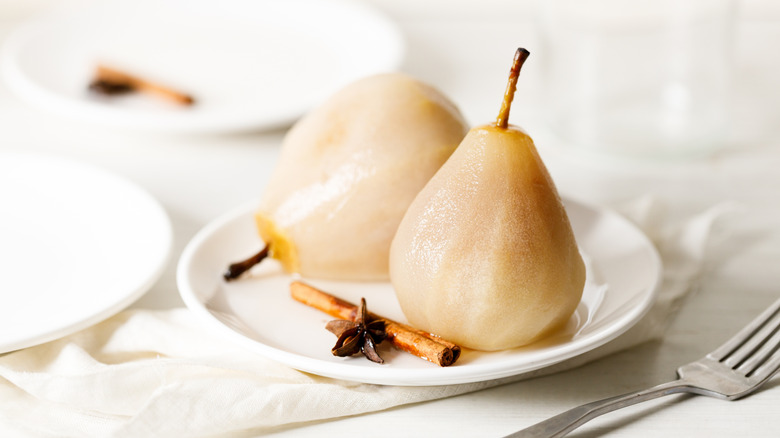
As noted earlier, candied fruits are a great option to decorate your cakes. At the same time, I also know that a lot of people don't particularly like their chewy texture. In that case, you'll probably prefer using poached fruits to decorate your cakes, as they are softer. An added bonus with them is that you can pour some of the poaching liquid on top of the cake to keep it moist and also make it taste better.
The options are limitless when it comes to poached fruits. Poached pears, apples, peaches, plums, figs, and cherries are all great options. Usually, these fruits can be paired with a variety of cakes. You'll just need to figure out the best flavor pairing. For instance, if you're looking to decorate a nut-based cake, poached pears would be my first pick. Similarly, poached apples are the best option to decorate spiced cakes, and poached cherries can complement the flavor of chocolate cakes.
Most types of poached fruits can work exceptionally well with vanilla and dairy-rich cakes, as both have a subtle flavor. You can lay whole fruits on top of your cake for a rustic finish, or slice them up and place them in a circular pattern (or on one side) if you'd like.
6. Roasted or candied nuts
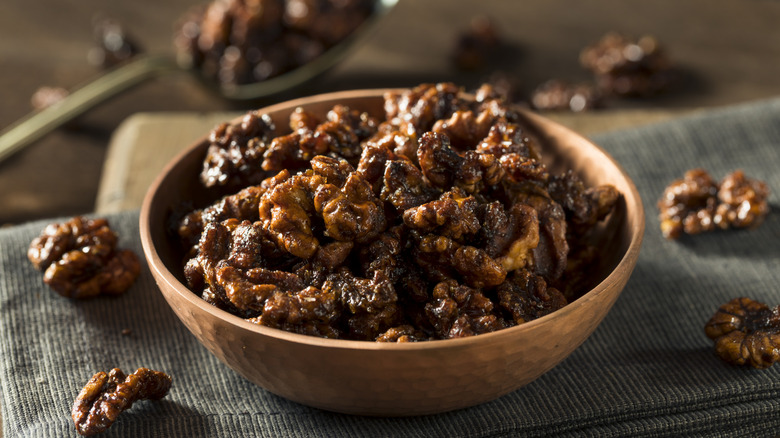
I love both roasted and candied nuts, so I couldn't help but add these options to this list. But setting my liking for them aside, roasted and candied nuts are also a great option for decorating your cakes if you are tired of frosting them.
The only downside is that they're dry — maybe a bit too much. So, you can't decorate your cake with them unless it's already really moist, or you've brushed it with a generous amount of sugar syrup or concentrated fruit juice. Some naturally moist cakes that you could decorate with these toppings are olive oil-based and yogurt-based cakes. Banana cake and chocolate cakes are also good options.
With that out of the way, there's one thing I'd like you to be very careful about, and that is not overloading your cake with too many nuts, even if it's moist. In addition to making your cake taste extra dry (yes, even a moist one), too many nuts can throw off the flavor balance. I recommend placing a few whole roasted or candied nuts on top of your cake, or chopping them up and laying them out to create a border for a cleaner look and to keep the flavor and texture balanced. Also, here's something worth trying – soak your candied nuts in bourbon to give them a nice boozy flavor before using.
7. Coconut cream
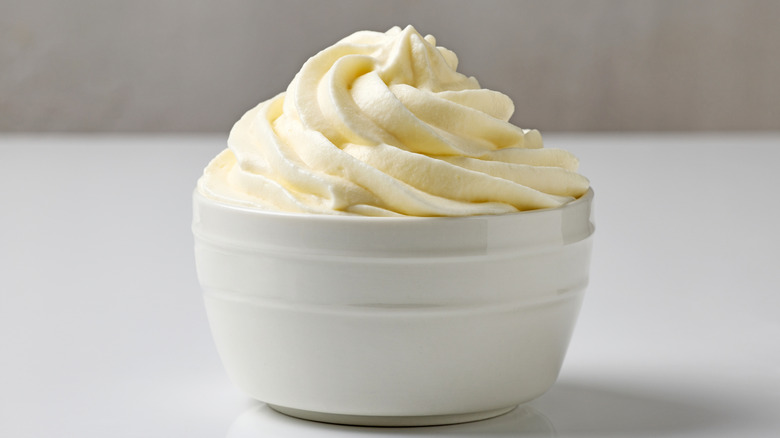
Coconut cream is an excellent option for decorating your cake since it works just like frosting. It will keep all sorts of cakes moist, and will also give them a mildly nutty flavor and a creamy finish. All you need is canned coconut milk to whip up some delicious cream. First, place the can of coconut milk in the fridge for at least a few hours, or preferably overnight. Once you open the can after chilling it, you'll see that the cream has separated on top. Take that out carefully, transfer to a chilled bowl, then start whipping it with a hand mixer. Add some powdered sugar to sweeten it, and whip until it forms medium to stiff peaks.
Once the cream is ready, you can either spoon a generous amount on your cake and let it be, or spread it out with the back of the spoon or a palette knife for a cleaner look. Piping dollops is also an option. I suggest covering the sides with the cream as well for a more pronounced flavor, but it isn't necessary.
You can also sprinkle coconut flakes on top if you'd like your cake to taste richer. Coconut cream will pair well with coconut cake for sure, but besides that, you can also decorate pineapple, mango, and almond cakes with it if you're looking to experiment a bit.
8. Dulce de leche
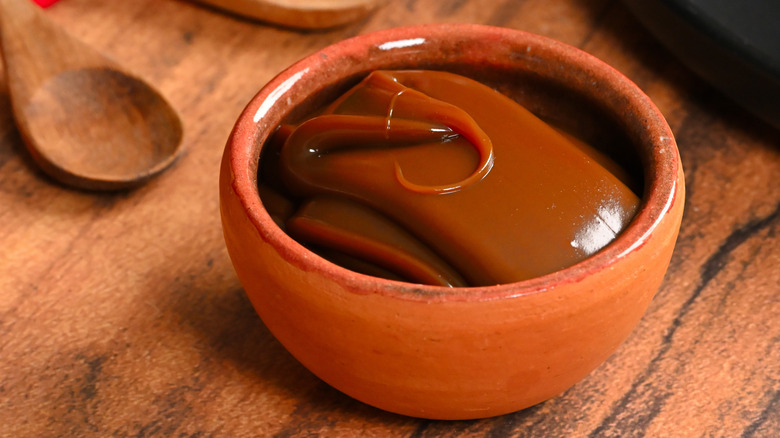
Most people use dulce de leche as a filling for cakes, and truth be told, it does make a great one. However, when it comes to decorating cakes with it, many pastry chefs and home bakers usually mix it with whipped cream or American buttercream frosting first and then go about the process. Using it as-is, unfortunately, isn't as common as it should be. It's high time we turn that around, because dulce de leche can make a variety of cakes taste wonderful and look pretty, thanks to its rich flavor and thick, spreadable, and pipeable consistency.
For those of you who don't know what dulce de leche is, it's basically made by heating sugar and milk until the mixture is thick and has a caramel-like texture and color. It can work really well with spice-heavy cakes, apple and banana cakes, and regular vanilla cake. Since it has a thick consistency, you can simply spread it on top of the cake and the sides with a palette knife or an offset spatula, or go for a simpler approach and use a spoon. If its consistency allows, you can also pipe dollops or swirls of dulce de leche on your cake. Melting it and using it as a drip is also an easy, fuss-free way to decorate your cake.
9. Meringue
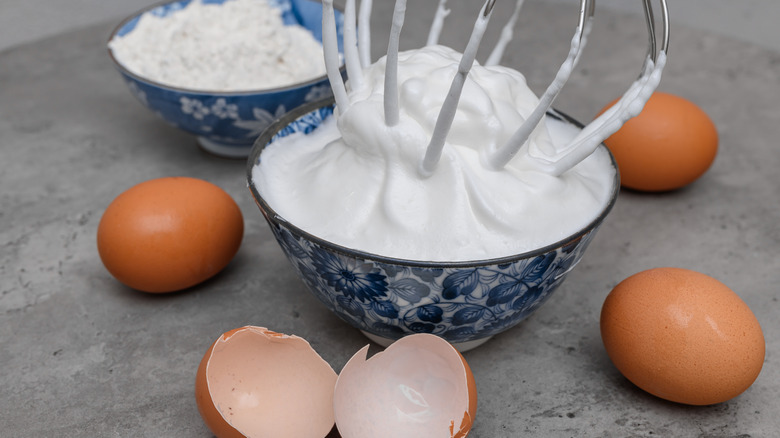
You'll need to use Italian meringue to decorate a cake as it's more stable than other types, but the downside is that it's trickier to prepare. If you're willing to put in a little elbow grease, though, it's worth giving it a go — even more so when you're making a citrus, berry, or coconut-based cake.
To make the perfect meringue, you'll need to pay attention to the bowl you're using, as that's one way to help it rise well. Make sure the bowl is completely dry and doesn't have a speck of water (or even fat, for that matter). Also, be careful when you're separating egg whites and yolks, as even a little yolk can prevent the whites from rising properly.
Once you have the whites ready, start whipping them at a low speed, preferably using a stand mixer, because that will make the process easier. In the meantime, heat caster sugar and water in a saucepan until it reaches 240 F, then pour it into the egg whites in a thin stream. After a while, you'll see that the whites have turned glossy and have started forming stiff peaks. That's a sign that the meringue is ready and can be used to decorate your cake. Pipe dollops or rosettes all over the top and sides, or spread it using a spoon or offset spatula. Don't forget to torch the meringue lightly with a blowtorch to give it a toasty finish.
10. Simple glazes
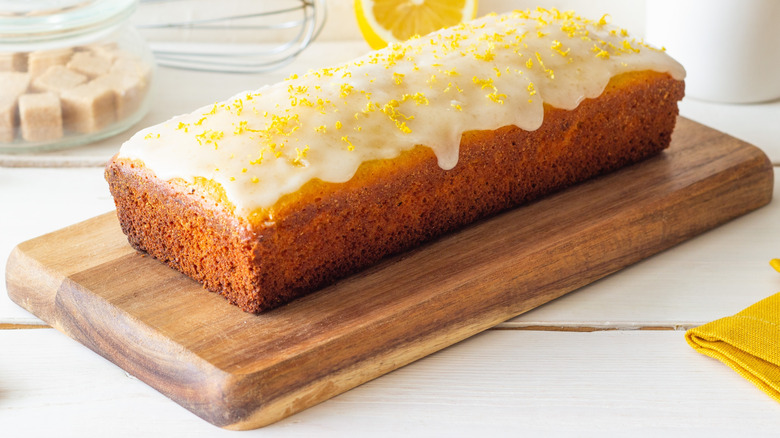
Glazes are a pretty underrated option because folks mostly stick to topping pound and mousse cakes with them, even though they can work equally well for other types, too. They don't take too long to prepare and are very beginner-friendly as well. And you can make a variety of flavors using the same recipe, so that's another plus.
You'll just need powdered sugar, a liquid, and an extract for your glaze. If you'd like to make a simple vanilla glaze, whip up powdered sugar with some milk until it has a thin, pourable consistency, and add in a few drops of vanilla extract. This glaze can be used to decorate almost all kinds of cakes, as it has a very neutral flavor. Just pour the glaze on top of your cake, and it's ready.
To make other flavors, you can either replace the vanilla extract with the flavor you'd like or use a different liquid. For instance, if you're making a lemon glaze, use lemon extract in place of vanilla, or use lemon juice instead of milk. The same goes for other fruit-flavored glazes. When making a chocolate glaze, you can add 1 teaspoon of sifted cocoa powder to the vanilla glaze. Similarly, if you're making a coffee glaze, replace the milk with espresso. The possibilities are limitless with this one. Be sure to pair each glaze with the right cake so that the sweet treat doesn't taste weird.
11. Chocolate decorations
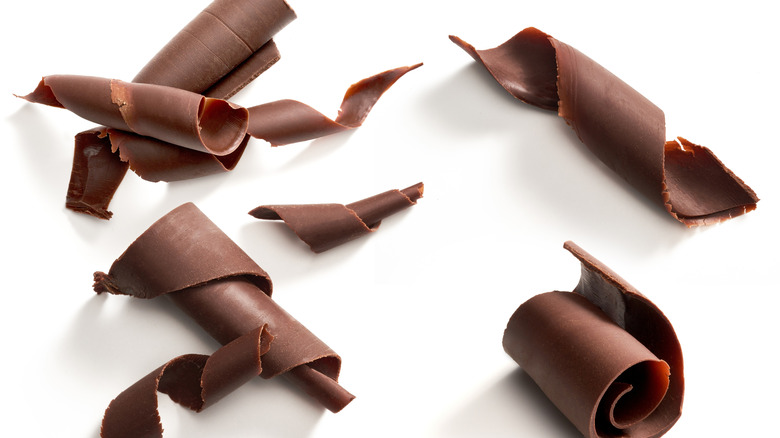
Very few things can beat chocolate for me, and hence, I had to add chocolate decorations to this list. They're fun to prepare, and you can use any chocolate you like to make them. The only slightly complicated bit about using chocolate decorations without frosting is that they won't add any moisture, as you probably already know. Luckily, there is a way to work around this by making sure the cake is already really moist.
I suggest using chocolate decorations for chocolate mud cake, flourless chocolate cake (yes, those are really fudgy), or other similar cakes. In case you want to decorate other flavored cakes with these toppings, they should be made with oil and not butter, and they need to have a dairy-rich ingredient in them, like yogurt. You could pair the decorations with fresh berries to further prevent dryness. Also, try not to use chocolate decorations for pound cakes.
Before you begin making these decorations, you'll need to temper the chocolate and not just melt it. Tempering involves melting and cooling the chocolate at certain temperatures to give it a shiny appearance and make it snap rather than bend. After you've tempered it, you can spread the chocolate out on acetate sheets and cut out shapes. Or simply roll the sheet up, let it set, and then open it for chocolate shards. Both options will look nice, as long as you don't go overboard.
12. Fruit curds and compotes
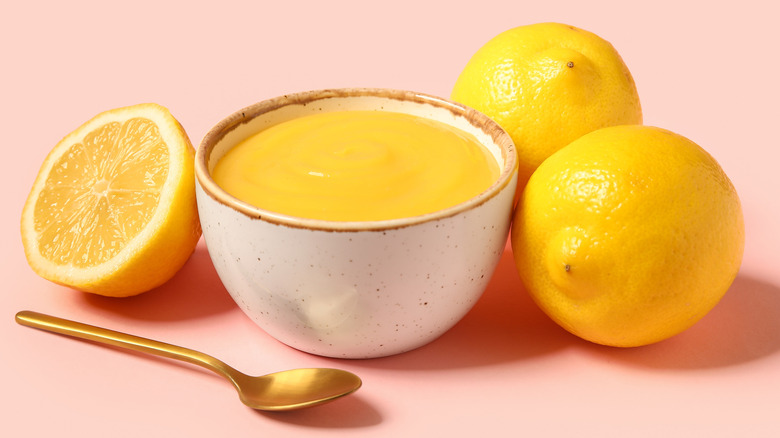
It's very common to use fruit curds (like this classic lemon curd) and compotes as fillings. But decorating cakes with them is usually overlooked. Despite that, it's a good idea to use either of these options to decorate your cake, as they will make it look good and will also keep it from tasting dry.
If you're an absolute beginner, I'd suggest using a compote (remember that it has a chunky texture) rather than a fruit curd, as making it is a lot simpler. Having said that, there's no rocket science involved in making the latter, but you'll need to be careful when tempering the egg yolks and cooking the curd. If you cook it for a bit longer than needed, it will turn lumpy rather than having a smooth consistency. It's best to follow the recipe you're using to a T to make it properly.
After you've prepared your fruit curd or compote, you can drop spoonfuls on top of your cake. As far as flavors go, compotes are usually a good option to decorate a plain vanilla, chocolate, or almond cake. Curds, on the other hand, can be paired with many types of cakes, depending on what fruit you've made them with. However, if you want to be absolutely safe, vanilla cake is the way to go.