

4 Creative Ways To Use Fruit Peels In Your Vegetable Garden
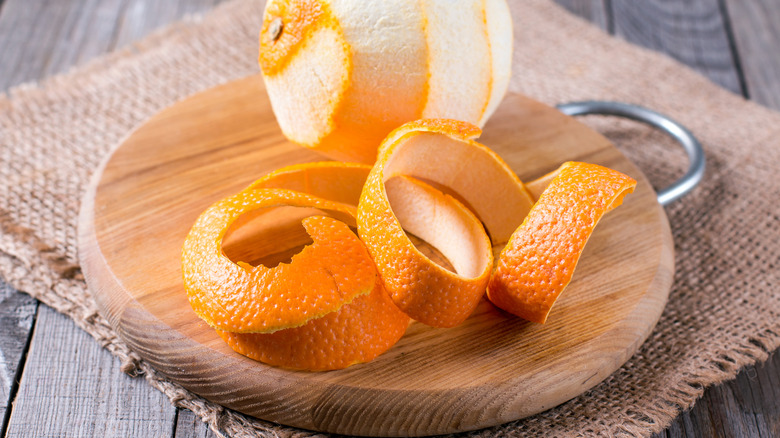
After eating what you can from a fruit with a rind, it's probably second nature to toss the peel and whatever else is left over into the trash. If you have your own vegetable garden, though, throwing out the rind is a missed opportunity. That's because you can use fruit peels in creative ways to make your plants flourish and grow excellent produce.
Since cultivating your own fruits and vegetables in a home garden is one of the best ways to get a variety of fresh, nutrient-rich foods for meals, you want to do all you can to facilitate the plants' growth and health. So rather than disposing of leftover fruit rinds (or eating the peels for their additional vitamins and minerals), consider repurposing them in your garden as biodegradable starter pots, a compost nutrient booster, a liquid fertilizer, or a natural pest deterrent. Let's dive into the benefits of each of these tips and how to implement them into your vegetable garden.
Biodegradable starter pot for seeds
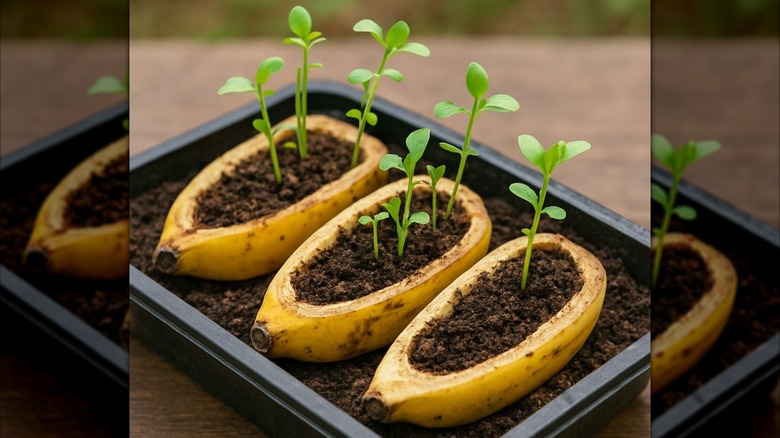
You may have heard of using a lemon rind to amp up how you serve ice cream and sorbet, but did you know that preserving the peel is also a clever trick for creating a biodegradable starter pot for seedlings? By using the peel, the starter pot is not only sized just right but also will eventually give your plant extra nutrients after transplantation. Some of the best fruit rinds to use are those from grapefruit, oranges, pomelos, and tangerines, but you can use bananas, lemons, or limes as well.
Although it takes a little forethought, you can use an orange peeling trick that perfectly preserves the peel. Just use a paring knife to create a shallow score around the fruit's center, being careful not to puncture the flesh. Then, wiggle the handle of a spoon into the cut and up underneath the rind, gently working it around the entire fruit to create separation and remove the peel intact. Don't forget to poke a hole in the bottom for proper water drainage.
Then, you can treat the rind like any other planter. Fill each half with potting soil and a few small seeds (like herbs), and water as directed. Keeping the prepared starter pots in a tray until the seeds sprout will offer them some protection from tipping over. Once the plants have grown enough, you can transplant the entire starter pot into the ground or larger containers. The peel will release nutrients, such as nitrogen and potassium, into the soil as it decomposes.
Nutrient booster in compost
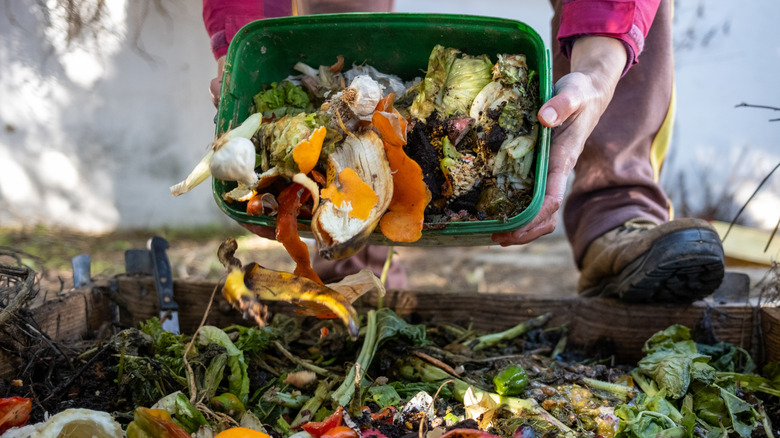
By diverting food waste from incinerators and landfills, composting allows leftovers to transform into a nutrient-rich product that enhances the fertility, water absorption, and retention, and beneficial microbes in your vegetable garden's soil. Citrus rinds and banana peels are just a few examples of kitchen scraps that help tomatoes flourish, as well as any other plants. Plus, you can boost your garden's growth by saving your avocado skins, pits, and unusable flesh for the compost pile.
There's more to composting fruit peels than just throwing them onto a pile, though. Since it can take a long time for them to break down in composting soil, you can speed up the process by cutting the rinds into small pieces. Add these peel pieces as close to the middle of the compost as possible because this warmer area will accelerate the deterioration. If you're starting with a fresh compost bin, consider layering the rinds with worm castings (earthworm feces), one of the most micronutrient and microbiologically-rich organic soil additives you can use.
Mixing the compost pile a few times each week will also keep it warm throughout and will prevent the growth of penicillium mold, which prefers room-temperature and cooler environments. Because citrus peels are rich in nitrogen, combining carbon-rich waste, such as fall leaves, with them will provide a nutrient balance. You'll know that your compost is ready to use in your vegetable garden when it has shrunk to about half its original volume, you can no longer recognize the rinds and other materials, and it smells earthy and looks dark and crumbly.
Liquid fertilizer tea from compost
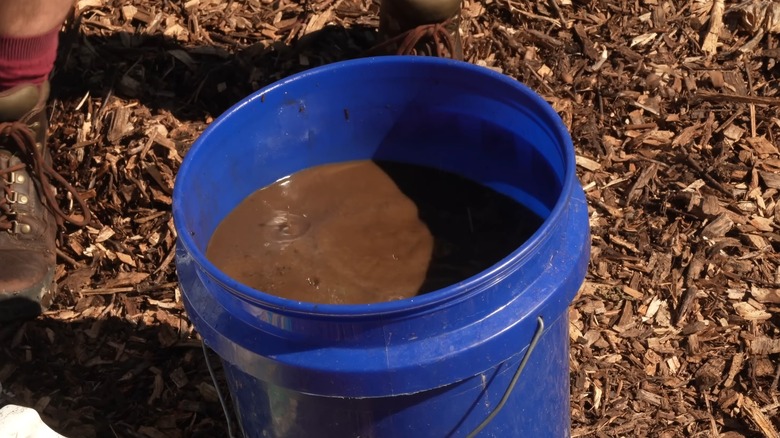
While the most common way to use compost made from fruit peels in a vegetable garden is to add it to the existing soil, a more creative option is to create a fertilizer tea with it. Compost tea is basically compost steeped in water to extract the beneficial microorganisms and nutrients. As a liquid fertilizer, it can boost plant growth, promote larger and stronger roots, and even make plants produce more vegetables. The brew can improve soil structure and help plants naturally resist diseases, too.
If you're already incorporating fruit rinds in homemade compost, you're halfway to making compost tea. The simplest, non-aerated technique is very similar to steeping and infusing tea to drink. You put about 1.5 cups of compost in a mesh bag or nylon stocking, hang the bag in a 5-gallon bucket, pour 1 gallon of non-chlorinated water over it, and stir it well. If you don't mind getting a little dirty, put your hand into the mesh bag to work the compost between your fingers while it's submerged. Doing that breaks down the particles as small as possible to get more nutrients and organic matter into the water. For seven to 10 days, store the brew in a cool place with little to no light, stirring once or twice a day.
The aerated method of using an aquarium bubbler is a quicker alternative — taking just two days — because it churns the water and increases oxygen in the mixture to allow microbes to flourish. However, there's no guarantee that a higher microbial count is better for a vegetable garden. In either case, you can pour the compost tea into the soil or spray it directly on your plants once a week.
Natural pest repellent and trapper
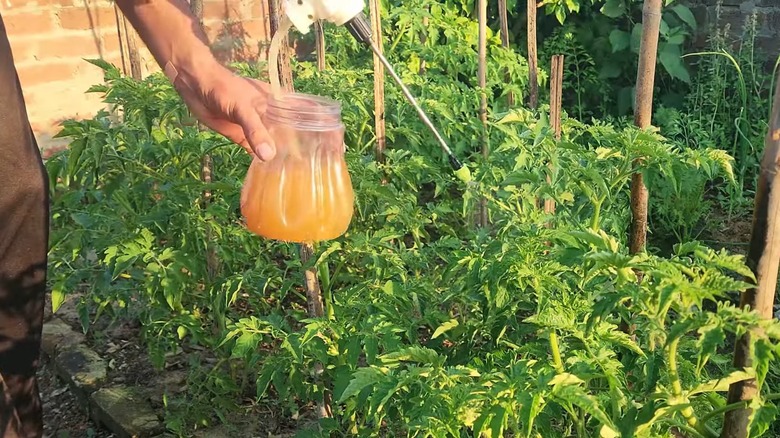
While you could purchase diatomaceous earth as a non-toxic pest control method for your home and garden, you can save money by using the fruit rinds you already have in your kitchen. Citrus peels specifically contain limonene, a strong-smelling compound that sensitive insects don't like — such as ants and flies, as well as mealybugs and scale insects in concentrated amounts.
All you have to do is spread the rinds around the corners or edges of your garden, and the natural oils will do the work for you. However, be careful to remove every bit of flesh to avoid attracting larger pests, like raccoons and rats. Also, laying the peels near newly transplanted vegetables is particularly beneficial for masking the stress signals the plants emit that draw in insects. If you see pill bugs in your garden, though, leave some of the citrus flesh on the rinds. This tactic will lure the pill bugs away and trap them so that they don't attack your vegetable plants.
When anthills near your garden are a problem, you can take a more direct approach by blending the rinds with 1 cup of warm water and pouring the slurry onto them. Another option is to process the peels into a powder and mix 5 tablespoons with about 4 cups of warm water. Then, pour the mix into a bottle to spray on your plants every few days. It's particularly effective against aphids, fruit flies, and slugs. As an added benefit, rubbing the peels on the plant leaves and spraying the citrus solution around your garden's perimeter can keep cats from eating your plants and using your garden as a litter box.