

11 Best Boomer Meals That Could Feed The Whole Family
We may receive a commission on purchases made from links.
Boomers grew up during a time of evolution in home cooking. With parents who had navigated food scarcity during the Great Depression and WWII, meals at home were often created with economy in mind, but were also the product of new conveniences in food preservation. Industrially canned foods were all the rage in postwar society, and many of these defined the popular recipes that boomers grew up with. In the United States, Carnation condensed milk and Campbell's cream of mushroom soup made appearances in many new and adapted recipes, completely changing how home cooks went about preparing meals for their families.
While convenience cooking was trendy during the postwar push for all things modern, this same spirit of efficiency became essential for boomers' own cooking tactics when they began having families of their own. With women joining the workforce en masse in the 1970s and '80s, there was little time for elaborate meals. Many of the hearty midcentury one-pot or one-dish recipes that boomers grew up with consequently became staples that they prepared themselves. Among these classics, boomers mastered the casserole and often opted for hearty fare that could stretch meat further if necessary, feeding families easily on a budget. From tuna noodle casserole to Salisbury steak, here is a list of iconic boomer meals that could feed the whole family. Some of them may now be considered vintage, but others are timelessly comforting.
1. Tuna noodle casserole
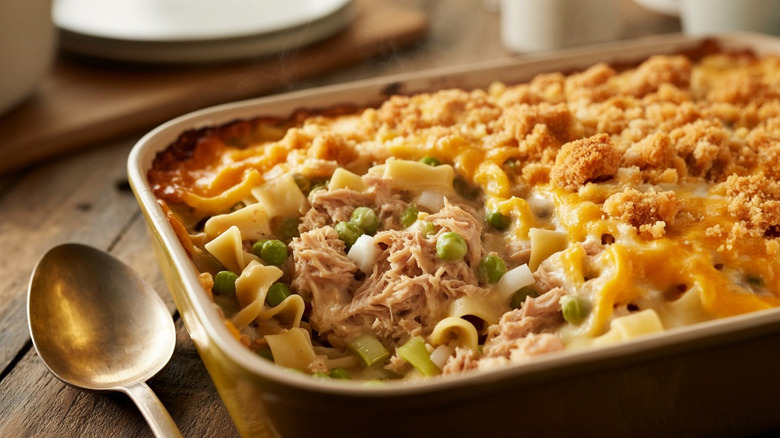
Though it's come to be associated with the midcentury Midwest, this casserole was popularized in the Pacific Northwest in the 1930s. It has been a divisive dish since then, with culinary purists belittling it for its simplicity. But this is the same quality that has made it a historic favorite among many home cooks. Calling for noodles, canned tuna, canned peas, and cream of mushroom soup, with corn flakes scattered on top, this casserole consists entirely of shelf-stable pantry items, save for the cheese that gets sprinkled over everything before it goes in the oven. While some might find this combination of ingredients peculiar, it has all the necessary food groups baked into one casserole dish.
What helped propel the tuna noodle casserole into widespread popularity was the invention of Campbell's condensed cream of mushroom soup in 1934. This was the magic ingredient that ensured even the sauce could be prefabricated for an even simpler meal. Picking up popularity in the Midwest in the 1950s, this casserole's shelf-stable ingredients made it a quick and easy go-to when time or money was tight. The boomers who grew up eating, and then later preparing, this dish invented unlimited variations. Some households opted for crushed chips instead of cornflakes sprinkled on top, while others supplemented the cream of mushroom soup with a can of tomato sauce. Hearty, filling, and full of flavor, the tuna noodle casserole is one boomer dish that comes packed with nostalgia.
2. Beef Stroganoff
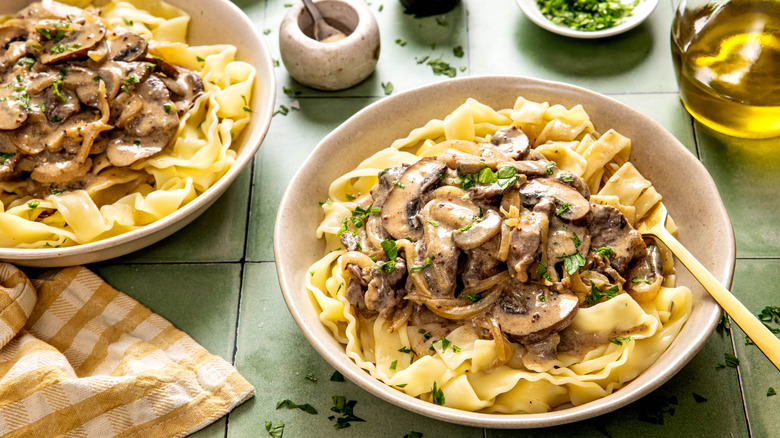
Popularized in 19th-century Russia, Beef Stroganoff is named for a Russian count but might have been inspired by French cuisine. Consisting of beef and onions cooked in cream, with some recipes calling for mushrooms, this dish is typically served over buttered noodles. Popularized outside Russia by the many expats who fled the Bolshevik Revolution in 1917, Beef Stroganoff eventually transformed from an elegant upper-class dish into a midcentury comfort classic.
The count after whom this dish was named might have been scandalized by the simplification of Beef Stroganoff once it reached middle-class America, but the base ingredients are highly adaptable — something home cooks have not shied away from modifying. Beef Stroganoff's midcentury heyday in the U.S. fell comfortably into that category of meals boomers grew up with, which could be simplified by reimagining pantry staples.
Opting for ground beef and supplementing crème fraîche or sour cream for a can of cream of mushroom soup made this meal even easier and more economical to whip up. Depending on the cut of beef that was available, Beef Stroganoff could be jazzed up or dressed down, but the versatility kept families preparing this protein-rich staple regularly. It remained a popular dish in boomers' meal rotations well into the 1960s.
3. Liver and onions
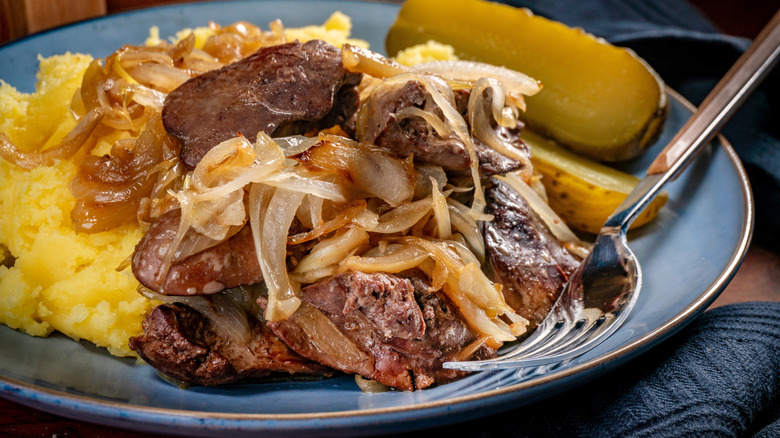
Liver and onions is another quintessential boomer food that many look back on with either fondness or dismay. Popularized during WWII as an affordable, nutrient-rich meal that wouldn't let any part of the animal go to waste, liver and onions were one of the few examples of organ meats that stayed mainstream well after the years of war rationing. A working-class staple while boomers were growing up, this combo appeared often on dinner tables and diner counters. Though liver and onions might never have been considered a luxury food, it was guaranteed to be a nutritious, protein-rich meal.
Boomers' children and grandchildren who've sampled this passed-down staple have admitted that the flavor isn't necessarily an issue, though it can be a bit pungent. Mixed with the trusty onion pairing, liver's flavors generally neutralize to something quite palatable. For many, it's more the texture that can make liver a little bit unsavory, but for those willing to give it a try, there are ample reasons to bring liver back as a popular food. It's loaded with iron and vitamins A and B, and it boasts a very high amount of protein. All of these have gained this organ meat the status of an underrated superfood. Though liver dishes might not be as popular as they once were, the liver and onions combo is so full of nutrients, in fact, that it might have a new generation reconsidering its merits.
4. Shepherd's pie
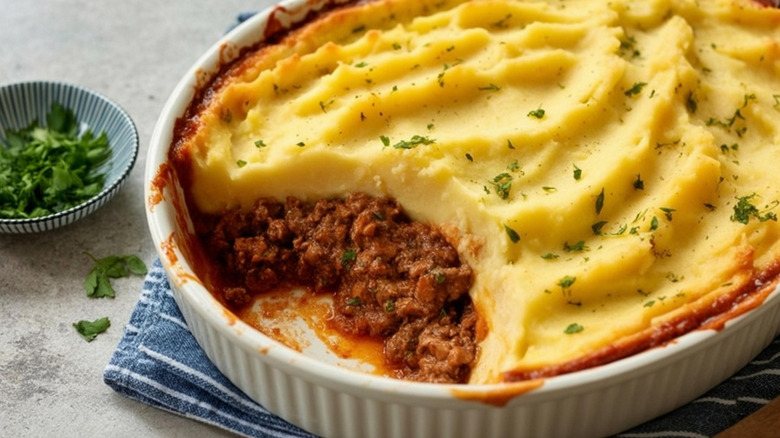
Dating back centuries to the British Isles, shepherd's pie is a hearty dish that's especially ideal for winter weather. Traditionally prepared with lamb, the dish was an economical way to stretch meat further or simply use up leftovers. In its most recognizable form today, it consists of ground lamb cooked with onions, peas, and carrots into a thick stew, which then gets topped with mashed potatoes, all of which is baked together in a casserole dish.
Though consisting of all the right ingredients to be timelessly comforting, shepherd's pie was another dish that had a resurgence in the 1950s. This might have been in part due to its fitting into the category of casseroles, which had been growing in popularity since WWII, and which boomers themselves later embraced for their convenience as hearty, one-dish dinners. Nevertheless, riding the coattails of wartime rationing, this "pie" was a convenient way to stretch a bit of meat into something tasty and filling that would keep the whole family satiated.
While home cooks in midcentury America might have prepared their shepherd's pies with lamb on occasion, beef remained the more accessible form of ground meat in the U.S., which aligned with a middle-class budget. Though often advertised under the same name, a shepherd's pie made with beef is technically a cottage pie. Either way, both are satisfyingly savory, and though less of a mainstay in weekly meal planning, they still have a timeless, craveable appeal that makes them worthy of a comeback.
5. Swedish meatballs
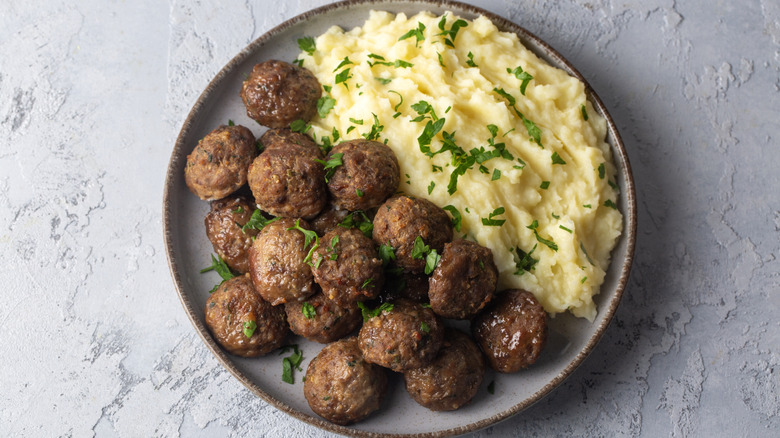
Though the name would suggest Scandinavian origins, Swedish meatballs have roots in Turkish cuisine, but were popularized in early 18th-century Sweden when King Charles XII returned from a tour of the Ottoman Empire and some unsuccessful conquest efforts. 200 years later, this savory meat dish became a phenomenon in midcentury America, a slightly less well-documented aspect of the meatballs' multinational popularity.
Part of a greater trend in the 1950s towards Nordic culture, Swedish meatballs appeared on many a dining table that also embraced the midcentury modern Scandinavian design. It made a regular appearance on dinner tables well into the 1970s, often featuring as part of the then-popular smorgasbord buffets which defined many restaurants and parties of the era.
Swedish meatballs' versatility made them another convenient recipe that could be simplified depending on the resources or time available. While growing up, boomers might have enjoyed variations made with all manner of different meats. From pork to beef to lamb, the recipe itself could make use of different meat cuts, something which would not have gone unappreciated for households trying to stretch their grocery budget. Boomers eventually developed their own hack to simplify the recipe further, using a handy can of cream of mushroom soup as a ready-made sauce. Though Swedish meatballs might have become less of a novelty since being relegated to the IKEA food court, they are crowd-pleasingly nostalgic, and just as good an appetizer as a main course.
6. Meatloaf
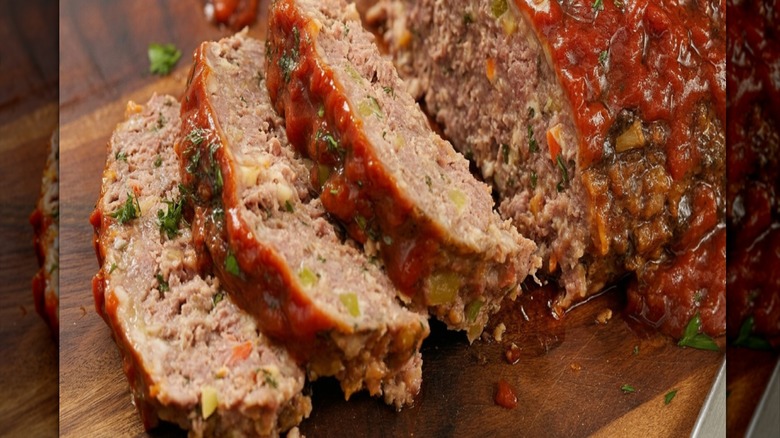
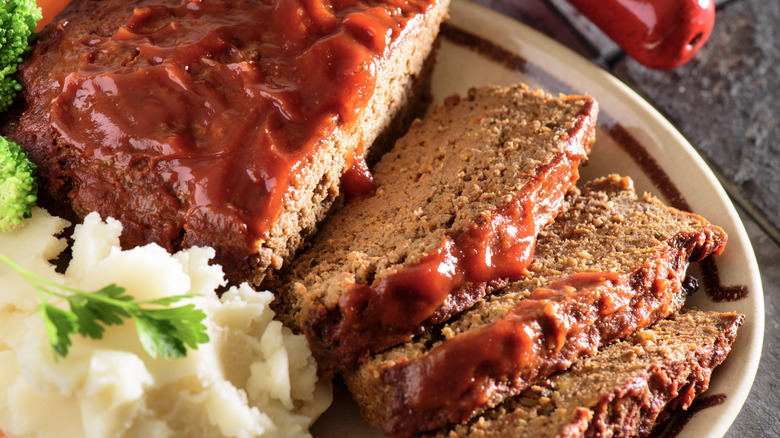
Meatloaf as a concept dates back to ancient times, but the dish has enjoyed many moments of popularity throughout history. More often than not, this has been due to necessity. First reaching boomers' parents' generation, meatloaf was a go-to meal during the Depression, as a hearty way to stretch limited access to animal protein and make the most of limited household budgets. Typically made from ground, seasoned meat and chopped onions, meatloaf was often further seasoned with Worcester sauce and topped with a layer of ketchup. But the dish's secret is the addition of a grain or starch for filler. Oats or breadcrumbs are some of the most common choices, which provide the loaf's quintessential light texture, but there's infinite room to play around with ingredients for satisfying results.
Whether enjoyed fresh from the oven or sliced up the next day to put in sandwiches, meatloaf remained a mainstay in the decades following the Depression, seeing families through the limited meat available during WWII rationing. After being exposed to meatloaf recipes on all manner of packaging during the war years, households kept up the habit and continued to prepare meatloaf in the 1950s. Boomers thus grew up with this hearty staple, which continued to be an easy way to feed families efficiently. In many households, meatloaf was such a prevalent part of boomers' childhoods that they lamented having to eat it so often. Nevertheless, they've been known to whip up a fair few meatloaves themselves.
7. Chicken pot pie
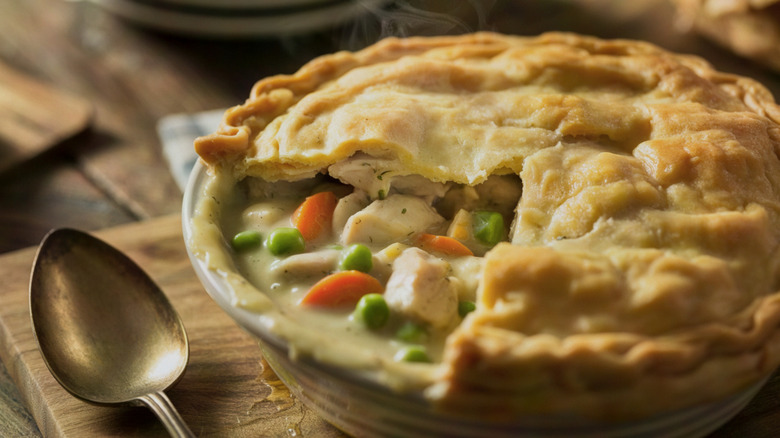
Baking meat in a pastry shell is an ancient practice, and a long-standing way of preparing leftovers by reimagining how to serve meat and vegetables. Chicken pot pie was another economical way of stretching meals further, and is yet another highly adaptable recipe. Typically consisting of chopped chicken and vegetables in a milk-based broth, this pie could be as easy or fancy as a home cook desired. Whipping up the filling with canned or frozen vegetables and a pre-prepared crust sped up the process with an outcome that was no less delicious.
What really popularized these hearty, savory pies, however, was another modern convenience in the 1950s, thanks to the rise of refrigeration technology and frozen foods. In 1951, the company Swanson started producing frozen, heat-and-serve chicken pot pies, which became widely available in most grocery stores across the U.S.
Innovative for their time, these frozen pies were as convenient as they were cutting-edge. Providing all the comforts of a savory crowd-pleaser without the time required to prepare them from scratch, frozen chicken pot pies became household staples, further emphasizing this dish as a regular meal in boomer households. Later, in the 1990s, Julia Child helped keep this savory pie popular with a recipe that emphasized a return to the homemade variety, publishing her version of a chicken tarragon pie in a cookbook collaboration with renowned French chef Jacques Pépin.
8. Grilled cheese and tomato soup
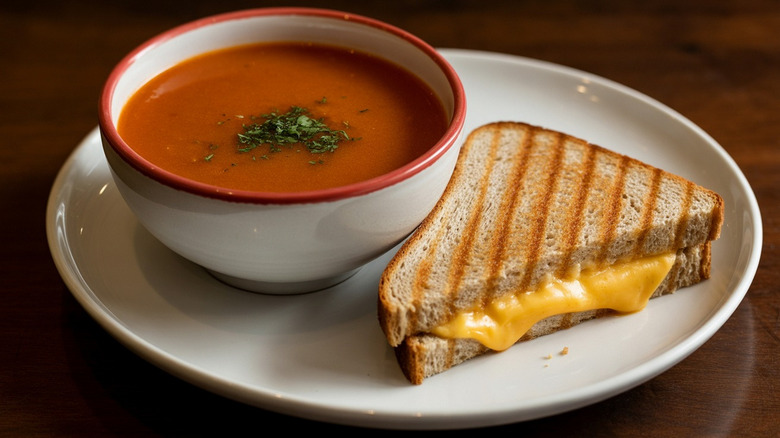
Though tomato soup's origins go back further, combining it with bread and cheese was first popularized in the 1930s as a hard times meal that still checked off necessary nutrition boxes. Since then, the combination of grilled cheese sandwiches served with tomato soup has become inseparable — those who've grown up enjoying them can hardly imagine eating one without the other. Not only is there a satisfying contrast between the cheese's fattiness and the tomato's acidity, but combining the two also makes for a balanced meal complete with protein and a healthy dose of vitamin C.
Boomers grew up enjoying this combination, something their parents might have grown up with too, as the grilled cheese and tomato soup combo continued to be a mainstay during WWII's rationing. This meal could (and still can) be prepared in a few minutes with three or four ingredients: a can of Campbell's tomato soup, slices of cheese, and ideally buttered slices of bread that get grilled to a crisp. Even when hard times weren't the daily reality, this easy comfort meal has remained a go-to amongst boomer classics. Regarded with nostalgia by many today as a childhood favorite, there's no reason it can't still be a regular fixture in the meal rotation. Though the fundamental "recipe" is as simple as it gets, it's easy to dress up this combo by simply adding spices or experimenting with different kinds of cheese.
9. Sloppy Joes
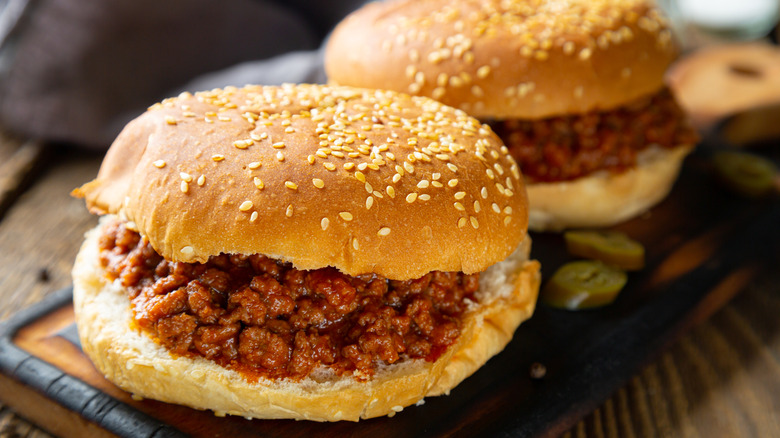
Another staple that saw households through the Depression and World War II, the Sloppy Joe is a sandwich that boomers grew up with, which was as tasty as it was convenient. Though the sloppy Joe has hazy origins, it has enjoyed a timeless appeal since the hard times that first saw its rise in popularity. Mixing ground meat with onions, tomato sauce, and spices and slapping it on a hamburger bun was an easy way to stretch a meal and keep a family fed with no complaints.
This became an even easier meal to whip up by the time boomers had to feed families of their own. Sloppy Joes enjoyed renewed popularity thanks to the invention of the Manwich, a new pantry staple. Manwich sauce, first sold by Hunt's Food Company as early as 1969, was a ready-made canned sauce advertised as the shortcut to preparing Sloppy Joes.
Manwich sauce took any added time out of preparing these sandwiches, as it contained all necessary seasonings and ensured all cooking could be done in one pan. Mixing it with ground meat created a meal in minutes, a lifesaver for busy families in an era when women were joining the workforce, leaving much less time to prepare meals at home. A Manwich is simply a sloppy Joe made with Manwich sauce, but the name might have helped solidify the notion that this simple meal need not be limited to a childhood favorite.
10. Chicken à la king
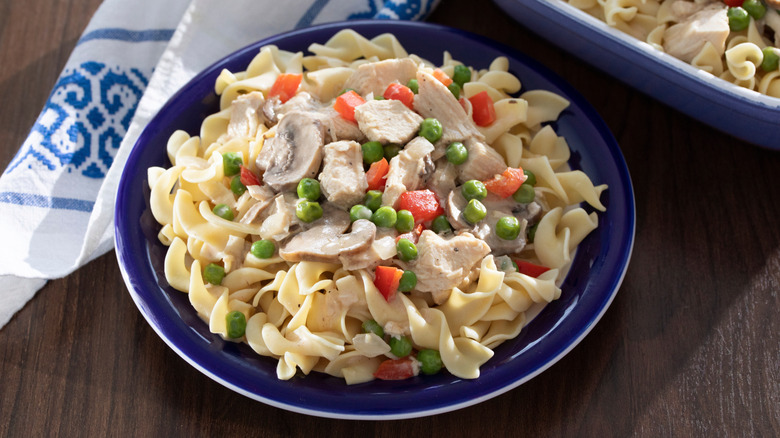
Dating back to the 19th century, chicken à la king was once considered the height of luxury dining. Featured on menus in upscale hotel restaurants across the U.S. by the early 1900s, these early recipes typically featured chicken, mushrooms, and cream sauce with a touch of Madeira. These ingredients trickled down into a simplified version, which was popularized in the following decades thanks to a proliferation of recipes in reference cookbooks, such as Irma Rombauer's "Joy of Cooking," which home cooks across the country relied on.
Part of this dish's midcentury popularity was likely due to the convenience of pantry staples that could mimic the original recipe. In the 1950s and 60s, variations of chicken à la king could be easily whipped up with cream of mushroom or cream of chicken soup as a base for the sauce. Add in some canned or frozen peas and carrots, and the entire thing becomes a balanced meal.
Whether prepared from scratch or using canned goods as a shortcut, chicken à la king was something boomers couldn't escape. If it wasn't something prepared at home, it appeared regularly in diners and cafeterias well into the '60s and '70s. Depending on the consistency, it was a dish that could be loved or hated. Though it has lost its luxury status, this boomer classic is undeniably hearty and filling, easy to stretch further by serving over something starchy — typically rice or noodles — or even simply with toast on the side.
11. Salisbury steak
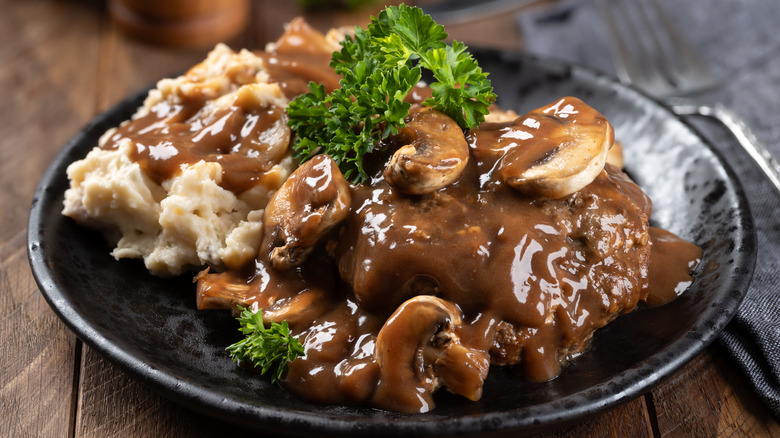
Though the name adds a degree of sophistication, the dish proliferated because of its simplicity. Salisbury steak as a concept likely existed before — it is, in essence, a seasoned hamburger without the bun. But the dish's namesake is Dr. Salisbury, who made the recipe mainstream in the U.S. in 1888, branding it as a health food. Though often referred to as "hamburger steak," the name evolved into Salisbury steak around WWI, a rebrand to limit German words from daily language while the country was at war with Germany. The fact that the dish was renamed at all speaks to its growing popularity at the turn of the century.
The Salisbury steak stuck around as another simple, wholesome, adaptable meat dish. Appearing in diners as a cheaper alternative to actual steak, it remained a fixture throughout the 20th century. But when prepared by home cooks, it was yet another victim of the convenience adaptations that were all the rage after WWII. If canned ingredients could go into a recipe, they did, and Salisbury steak variations were no stranger to added condensed milk or canned mushrooms. Even if they didn't prepare it themselves, boomers continued to witness the convenience aspect of this dish gradually supersede its original status as a health food. By the 1970s, Salisbury steak became synonymous with pre-prepared TV dinners and cafeteria meal trays. Today, however, it seems more like a nostalgic meal of the past.