

10 Ways Grocery Shopping In The '80s Was Different
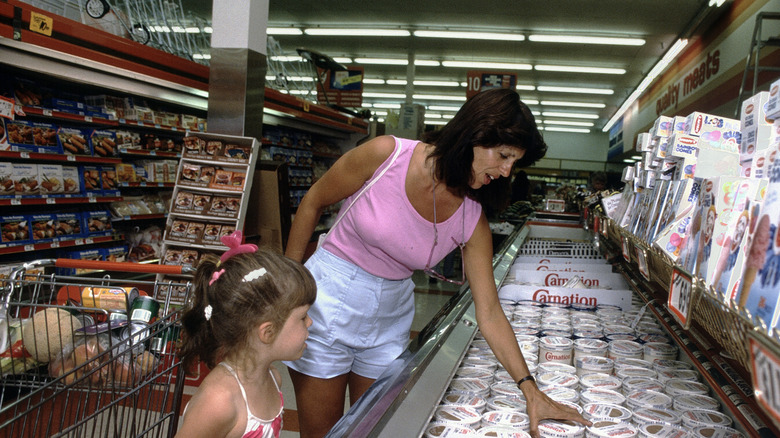
Many things from the 1980s evoke a sense of nostalgia, and in terms of grocery shopping, this decade was the last frontier for many analog processes that have since become obsolete. This was because the 1980s were on the cusp of technological advancements that have since redefined the modern shopping experience. As a result, grocery stores and supermarkets from this era pose an interesting case study into how society was evolving overall. Not only did the '80s oversee a shift from independent retailers to the proliferation of superstores, but it was also still a time when new developments, such as bar code scanners and electronic debit cards, were just starting to gain traction with stores and consumers.
Despite being revolutionary, these new technologies took a while to catch on and gain public trust, and the overall grocery experience during this decade was a lot more time-consuming than the fast checkout and quick scan methods we've become used to today. Furthermore, the price of groceries back then would shock today's shoppers, which is part of why inflation is causing retro grocery items to make a comeback. But many other aspects of 1980s grocery shopping are gone for good. Today's conveniences of credit cards, self-checkout, and home deliveries have affirmed much of what once defined shopping in the 80s as bygone and nostalgic. Nevertheless, this decade set the scene for how grocery shopping would evolve into the more streamlined experience we know today.
1. This decade saw the rise of the superstore
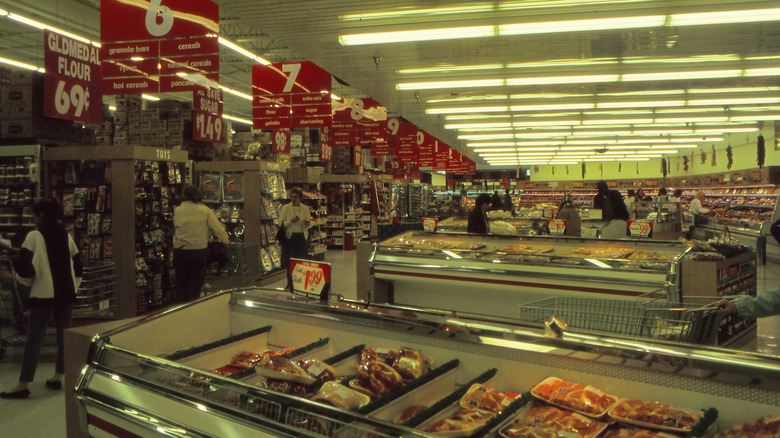
With the 1980s came the rise of the superstore, a new consumer tactic that changed the face of grocery shopping, and shopping in general. Though this kind of sprawling one-stop shop for all general needs had been introduced before the '80s, it gained popularity during this decade, especially as the rising number of superstores began to put smaller and independent shops out of business. Not only were these stores convenient for shoppers, but they also became a tempting model for grocery retailers to increase sales figures by proffering more to their customers. Retro kitchen appliances from the 1980s and home goods for more than just the kitchen soon became a common sight in supermarket aisles.
These supercenters also revolutionized the interior architecture of grocery stores, with a new, ultramodern style. Store layouts changed to accommodate the addition of in-house bakeries and deli counters, while neon lighting added a modern flair. By the time the first Walmart Superstore arrived in 1988, the process of running errands had evolved irreversibly, and the legacy of these one-stop shops remains the norm today.
2. Shoppers and workers were a lot less casual
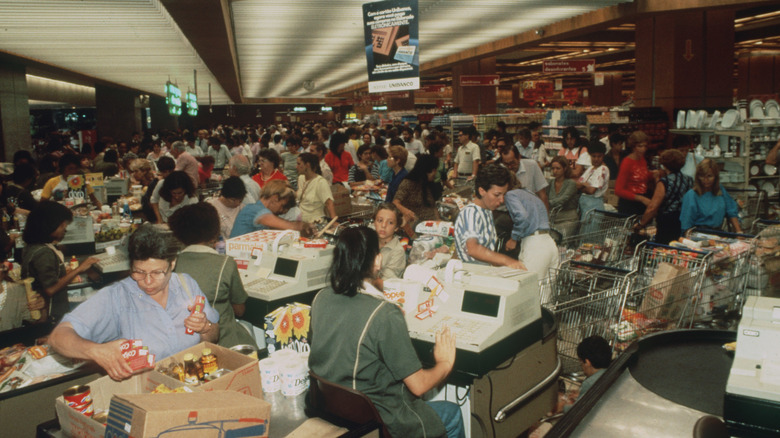
Since shopping in the 1980s could be a drawn-out affair, getting groceries to make those classic '80s foods was practically a day out. Though this might not have been the social highlight of the week, a trip to the grocery store in this decade still demanded a certain standard of dress. Fashion was evolving into the iconic 80s looks, such as Lycra, power suits, and the return of shoulder pads, but this did not change the fact that there was still a stringent social dress code, giving a base standard for how people would dress when leaving the house.
Quick grocery runs in pajamas were not a common practice, nor was there the convenience we know today of ordering groceries online for curbside pick-up or delivery. Among the aisles of any supermarket of the 1980s, it would have been more common to see people in button-downs, suits, and dresses. This social dress code prevalent in the 1980s was also reflected in the way store employees dressed. Not only were they more likely to wear uniforms, but they typically sported more than a vest thrown over street clothes.
3. There was no such thing as fast check-out
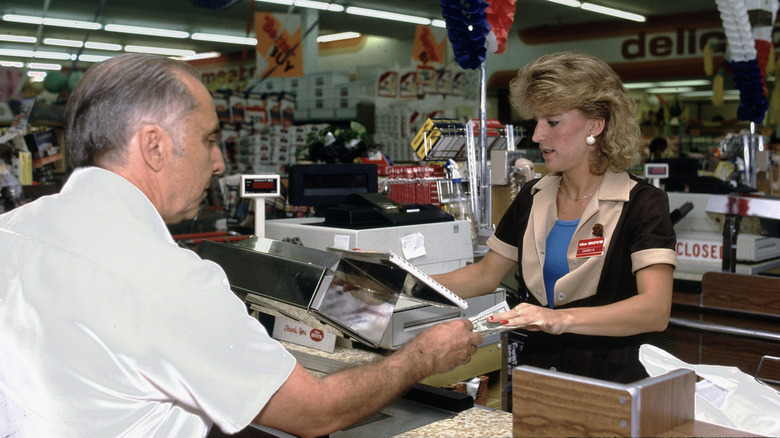
While credit card scanners and self-checkout may be things we take for granted today, this sort of autonomous shopping experience was far from the reality of a grocery run in the 1980s. Most aspects of the checkout experience were manual, from payment methods to the register itself. Though stores had started using bar codes during this decade, they weren't ubiquitous, and many stores still relied on a manually input system of codes. Debit cards had also just hit the scene, having first been released in the previous decade, but by the 80s these were still not a widely implemented payment method. The majority of shoppers back then still paid with cash or check, both processes that took significantly more time to check out than the mere swipe of a card.
Food stamps were also a hassle to keep track of. Though the first Electronic Benefit Transfer (EBT) debit cards were released in 1984, these were not widely circulated right away, and food stamps throughout the 1980s were still most often physical paper coupons. These had to be meticulously organized and hand-stamped to prevent customers from using them more than once. Despite the extra time this took, there was, however, one aspect of checking out that did make up for these manual processes. Back in the 80s, it was still common for a clerk to bag groceries while customers settled up, which accommodated rolling lineups at checkout.
4. Reusable bags weren't an option
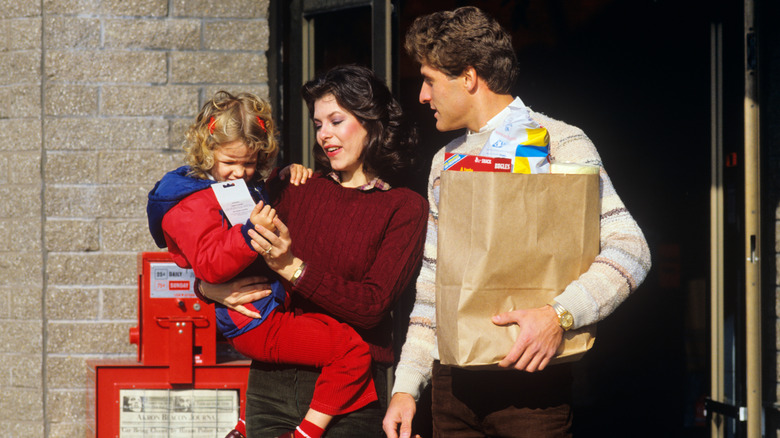
Reusable grocery bags are something we don't think twice about anymore, but they took years to become a regular habit to replace plastic bags, which had been the norm since the 1980s. This decade saw the introduction of plastic bags as an alternative to paper bags, which had previously been the most common way to carry groceries home. In fact, in the 80s, customers were so accustomed to the ubiquitous paper bags that they were initially skeptical of accepting the plastic alternative. Though plastic was introduced and adopted by a variety of mainstream grocery stores because it was more cost efficient, one big reason customers were reluctant to accept this material as the new norm was a matter of structure — plastic bags might be more durable, but they couldn't be propped up during the journey home, and grocery stores themselves were worried that formless plastic would slow down the bagging process at checkout.
It would require a considerable push from ad campaigns and grocery advertising to convert consumers, which some stores attempted to do by highlighting all the ways plastic bags could be used and reused for things other than carrying home groceries. The transition, nevertheless, remained gradual, and spanned the entire decade before plastic had largely replaced paper. The question "paper or plastic?" from an inquiring clerk was a common one at the grocery checkout in the latter half of the 1980s.
5. No-name products offered competitive prices

While making smart choices price-wise might be on everyone's mind when compiling their grocery list, this was something especially on families' agendas in the 1980s. Two economic recessions hit at the beginning of the decade, between 1980 and 1982, creating a time when unemployment and inflation were at an unusual high. To top it all off, food prices themselves began to rise too, making many grocery budgets tighter than usual. This meant creating new staple meals out of necessity, like the hard-times meal Poor Man's Pizza, made with toast and whatever cheese was available.
To catch up with economic uncertainty and keep customers coming back, supermarkets promoted a scheme to sell staples at lower prices than usual: The no-name brand. Also called "generics" or "no frills", these foods were first introduced in the mid-1970s as cheaper alternatives, but found more of a willing market during the 80s' recession years. Recognizable for their distinct white or yellow packaging with black lettering and no advertising, these staples came at a much lower price than the same products from known brands. No-name foods started losing popularity by the end of the 1980s, however, as the recession leveled out. Part of this was a concern about quality, as foods in no-name cans could sometimes be subpar. Nevertheless, the legacy of these foods still exists today in the form of store-brand products sold at lower prices.
6. Coupons were common
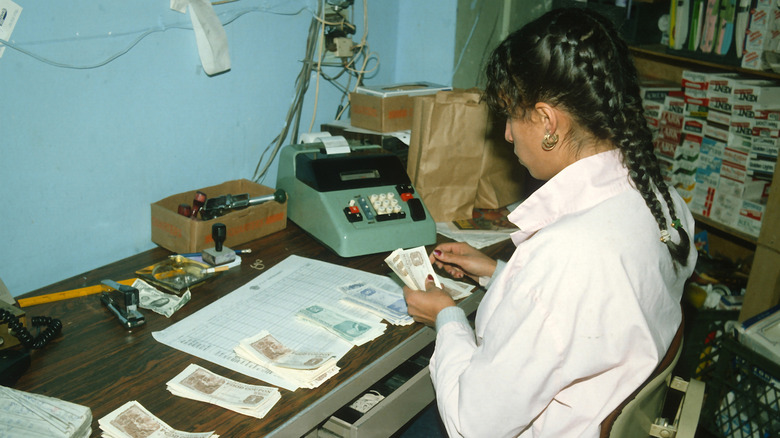
The recession of the 1980s surely spurred some of the coupon culture that defined grocery shopping in this decade, but the widespread coupon phenomenon was also an advertising tactic of the time. Grocery stores offered, accepted, and advertised all manner of coupons as a form of competitive advertising. It was not uncommon for consumers to be able to use double and sometimes even triple coupons on select products, which convinced them they were getting the most for their money. For the stores themselves, these coupon policies were often very expensive for supermarkets to run, and fraud was not an impossibility. Even so, despite whatever financial setback coupons might have posed for the retailers themselves, food prices would have suffered without them. This system became a necessary facet of the grocery economy in the 1980s, and did at least keep customers coming back.
Though many consumers didn't hesitate to use coupons as often as possible, these also contributed to the time-consuming nature of the entire grocery checkout process during this decade. Cut out from journals, magazines, and offers advertised on food packaging, these coupons could take a while to calculate. Later, stores had to sort and send them off to coupon redemption companies, which would partially reimburse the stores for the losses they'd accrued in awarding these discounts.
7. There was less produce than we've become used to
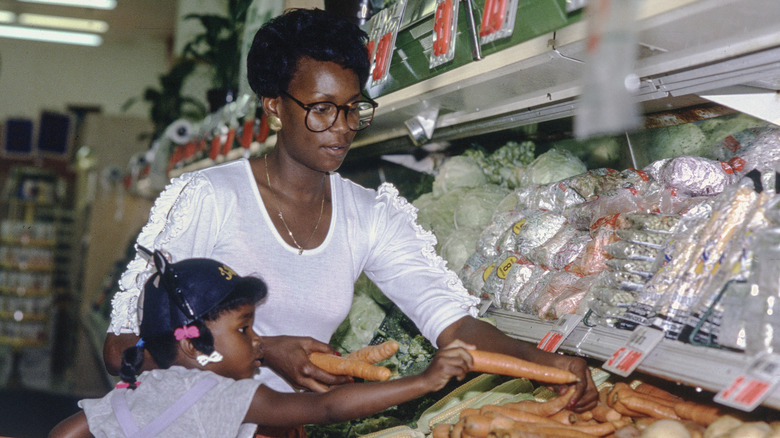
In the 1980s, the variety of fresh produce available in supermarkets was drastically different from what we know today. This was the decade when grocery stores began introducing internationally imported fruits and vegetables, but even so, the selection was more limited than today's options. According to The Packer, a publication covering trade news in the produce industry, stores in the year 1980 typically offered an average of 100 varieties of produce. With the growing practice of international produce imports, this number had doubled midway through the decade, marking the transition towards the greater variety available in grocery stores today. And yet, despite rising international imports, the '80s remained a time that was still largely reliant on seasonal produce.
Consumers still had the reflex to shop seasonally, and to rely on canned or frozen fruits and vegetables in the winter when fewer fresh varieties might be available. Casseroles were still a big part of home cooking in the '80s, and canned vegetables defined many of these classic, nostalgic one-dish dinners. Since then, with more fresh produce available year-round, we've adjusted to a new standard, albeit one that comes with its own complications — for one thing, internationally imported foods do hike up consumers' carbon footprint. For those interested in how to have climate-conscious eating habits, the shopping styles of the 1980s could be a decent place to start.
8. The final bill was a lot cheaper
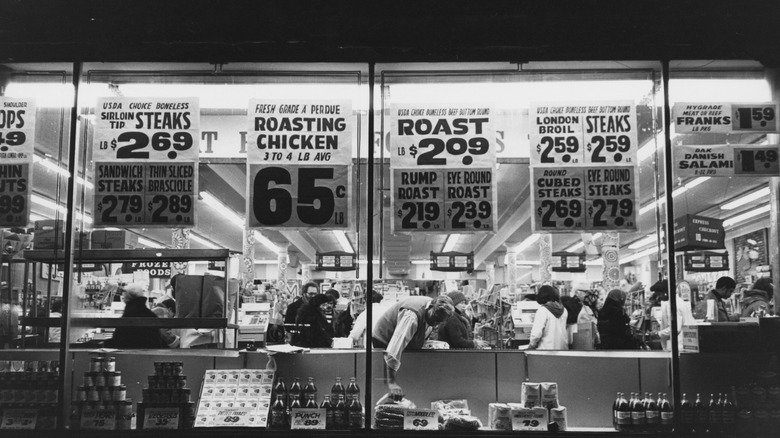
Despite inflation being one of numerous economic concerns that wracked the 1980s, prices in general were still substantially lower than what has become normalized today after a more prolonged exposure to gradual inflation. According to the Bureau of Labor Statistics, the average weekly cost of groceries in 1980 for a middle-class family was around $35, with eggs, meat, and dairy products adding up to an average of $17 for a week's provisions, with fresh produce only making up about $5 out of this total.
Though grocery bills during this decade were generally much lower than the average cost of provisions today, the '80s were also an era in which economic competition helped keep household grocery bills at a minimum. This was largely thanks to the forced competition of superstores driving down prices. Knowing that a slightly longer commute could help them save a substantial amount of money, shoppers often favored superstores, which forced independent retailers to lower prices or go out of business altogether.
9. Smoking was allowed

Today, it's rare to find people smoking indoors, but in the 1980s, it was still fairly common. In the U.S., anti-smoking organizations had started making strides in the 1970s, aided by newly publicized information about the harmful effects of second-hand smoke putting anyone exposed at risk. But with differing rules from state to state, it would take years for these organizations to succeed in redefining social smoking culture.
Strides to limit smoking began with dedicated areas on commercial airplanes and spread to elevators and hospitals. Bars and shops selling tobacco remained exceptions to these regulations, but new rules were gradually implemented in most public or work places. Throughout the 1980s, thanks to further efforts from anti-smoking organizations, some of these limitations became official bans, but the decade was still widely defined by mere restrictions. This meant that smoking indoors and in some public places was still an everyday reality. Though a ban on smoking in supermarkets was passed in 1974, it was still a common sight to see customers or employees smoking in grocery stores. Despite being enacted in the name of public health, bans were difficult to enforce, and it would take a while to officially transition away from the previous widespread habit of smoking in public places.
10. Diversions were available in-store and at checkout

Throughout the 1980s, two forms of diversion and entertainment became increasingly popular. The first was comic books. Proof of their rising popularity was reflected in the fact that these became available in supermarkets, as part of the cultural evolution towards superstore shopping, which offered most things that would interest consumers. Separate from food aisles, these stores had dedicated sections for comics.
As a more high-tech diversion, video games were a newer phenomenon in the 1980s. What started as pseudo-social activities in arcades during the previous decade became a pastime further enjoyed at home with the development of personal gaming consoles. Partially due to a widespread fear that players would become easily addicted, the home video game industry crashed in the early 1980s, shortly after taking off, but arcade games withstood this hesitancy. After becoming a success in dedicated arcades, they proliferated to other public places, and it was common to find them at grocery store checkouts.
Though game-inclined adults certainly enjoyed them too, arcade classics like Pac-Man and Donkey Kong were installed in supermarkets with children in mind. It was something to keep them occupied while their parents went through the often time-consuming process of settling up groceries.