

9 Best Butter Brands Made With The Highest-Quality Ingredients
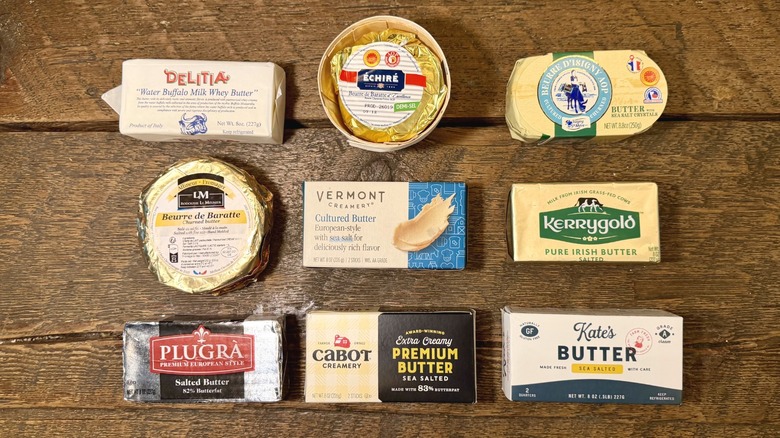
In Western culinary culture, butter tends to be one of the first things we fall in love with without even realizing it. But as we get older and begin to expand our palates, it sometimes becomes clear that those pats used to make those bowls of buttered noodles were just the gateway into a much larger, exciting world. Picking the right brand is what can help elevate your best baked goods and stovetop dishes, but it can also help turn something as simple as biting into a slice of buttered bread into a truly transcendent dining experience. It turns out it all just comes down to where you look and what you use.
As a bar and restaurant owner in New York City (one of which also happens to have a high-end cheese and dairy retail section), I've been fortunate to learn the ins and outs of truly great butters. And while I've always appreciated punching up a meal with whatever I have on hand, it was illuminating to discover that this churned dairy product can offer so much more than just fat and salt on the palate. From cultured (as in microbes, not fanciness) imports to decadent domestic offerings, putting in a little extra effort to find a great product can go a long way — including a few you can probably find in your local grocery store. Here are some of the best butter brands I've found that are made with the highest-quality ingredients.
Kate's Butter
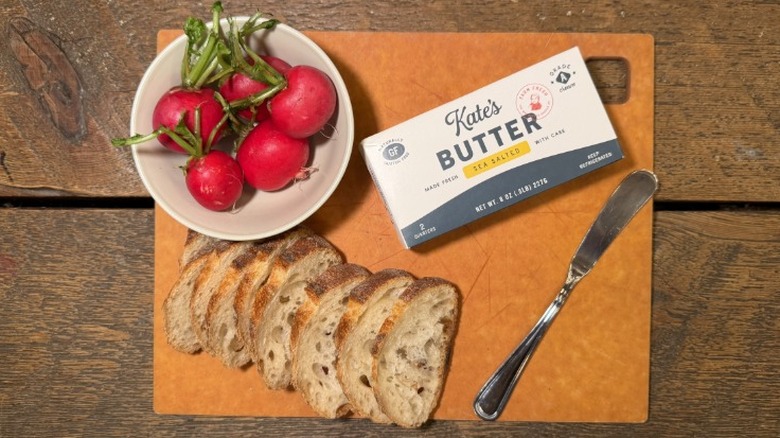
This Maine-produced butter has become a mainstay in my refrigerator in recent years after I came across it almost by accident (they were previously just my go-to when making recipes that call for buttermilk). True to its word, the family-owned dairy farm that has been handed down for four generations uses nothing more than Grade A cream from its own hormone-free cows, sea salt, and spring-fed water, never using freezing or additives in the process. Back home, it's not uncommon to see it served melted and clarified alongside boiled lobsters and clams, which is a clearly fitting pairing considering its home state.
Perhaps this is my native New Englander bias showing, but it was also the first time ever tasting an American butter that carried some terroir within its flavor profile — and that came through again when I retasted it on a piece of baguette. Compared to the rest of the lineup, this one had a unique brightness to it that almost made me think it had come straight from the farm that morning. A gorgeously soft texture makes each bite taste like a treat, all before a soft saltiness kicks in and balances things out on the palate. I will admit that while I loved this on bread, it was far and away my favorite on buttered noodles, elevating the simple two-ingredient dish to something even more comforting than what I've been enjoying for the past four decades.
Vermont Creamery Cultured Butter
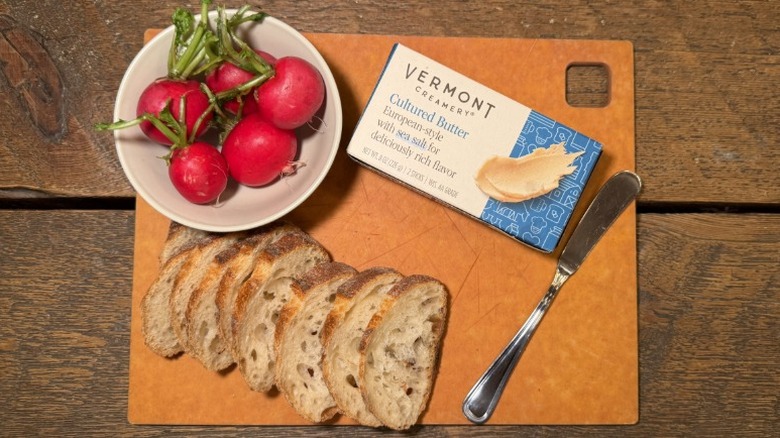
There's so much to love about this dairy company, from its crème fraîche and its fresh goat cheeses. But its simple cultured butter is a true standout among a seriously impressive lineup, which uses cream from the St. Albans Coop in Vermont and live bacterial cultures to develop an unmistakably tangy, nutty flavor that ends up with an 86% butterfat content. And while you really can't go wrong, I'm a particularly big fan of the Lightly Salted Chef's Roll, where cutting those bigger pats is that much easier for using on a stack of waffles or for melting into a sauce.
It took me until I was cutting bread for this tasting that I had never actually sampled this butter simply spread onto a bite of baguette. As soon as I took a bite, I was instantly disappointed with myself for never having thought to do this. It features the perfect mix of subtly tangy lactic notes and a rich nuttiness that almost tastes as though it's been browned right out of the packaging. Its elevated butterfat content also helps it cling to the palate, enhancing the creaminess — especially when tossed with egg noodles. My co-taster and I agreed this would be a perfect pat atop a steak straight off the grill or for folding into a pot of mashed sweet potatoes, where the tang and richness could help create balance.
Kerrygold
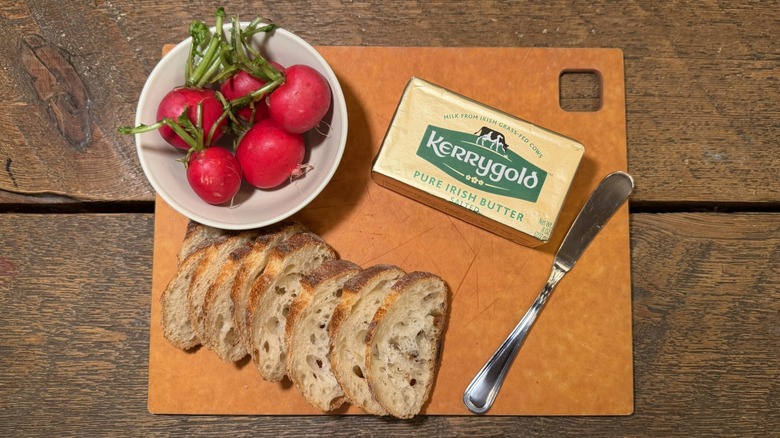
It's kind of hard to overstate just how much this Irish brand has skyrocketed in popularity among the home chef crowd, and I completely understand why. We buy more of this than any other butter (even picking it over Kirkland Signature Grass-Fed Butter on our Costco runs) in my household, and its rich flavor makes it an ideal everyday option. Made from nothing but salt (in some cases) and pasteurized cream from happy Irish cows, the quality speaks for itself — even at its relatively low price point and ubiquitous availability at grocery stores.
Even though the idea of tasting this as part of the lineup felt unnecessary, I was still surprised by its deeply comforting, rich flavor when spread on a baguette. Perhaps it's because I use it the most, but it is such a familiar profile that it screams versatility: I'm just as happy tossing this into scrambled eggs in the morning as I am a loaf of soda bread or homemade chocolate chip cookies. My co-taster agreed, becoming befuddled and deciding the best tasting note she could come up with was that, "It just tastes like butter!" (not at all inaccurate) after two bites.
But it wasn't until I took my first bite of it on noodles that I realized the winning factor here might be its balance: It's not overly creamy or decadent, far from too salty, and just complex enough that it feels like it's amplifying flavors around it. In the context of everything, it will likely remain my go-to for day-to-day use.
Isigny Ste Mère
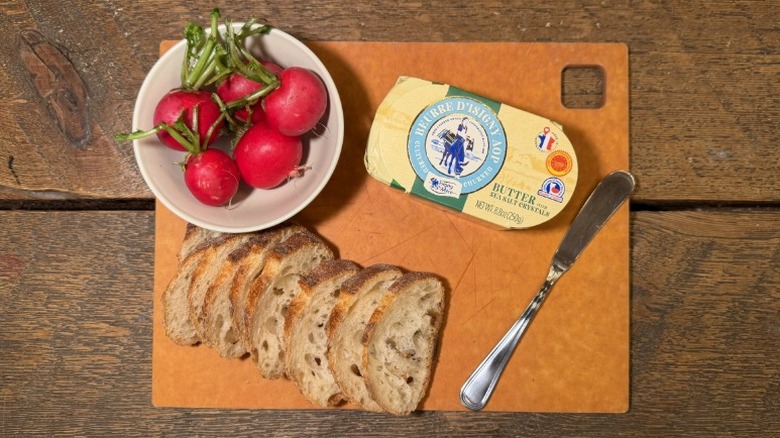
If you know anything at all about cuisine, it shouldn't come as a surprise that the French take their butter very seriously. After a decades-long battle, this iconic French brand achieved AOC status, which sets strict standards for production and protects against others using the name to cash in on its prestige. My first time tasting it years ago revealed that this terroir-driven butter was worth fighting for, which relies on churned cream from cows that feed on "opulent pastures" in the unique Isigny microclimate near Normandy in northwestern France.
What I've always liked about this butter is its softer, creamier texture (even right out of the fridge), punctuated with flecks of sea salt. It immediately starts to coat the tongue when biting into even just a small smear on a baguette. Overall, this makes it taste even more buttery in the moment before the saltiness kicks in at the very end alongside a subtle sweetness.
I was most pleasantly surprised by how it performed on the noodles, however, where the larger salt crystals shine through over this sublimely silky texture. My co-taster mentioned that the saltiness became so diffuse that it was almost more like a fatty brine than a butter, and I couldn't help but agree. I'm planning on melting this down for my next beurre blanc sauce and using it when roasting or grilling fish this summer.
Plugra
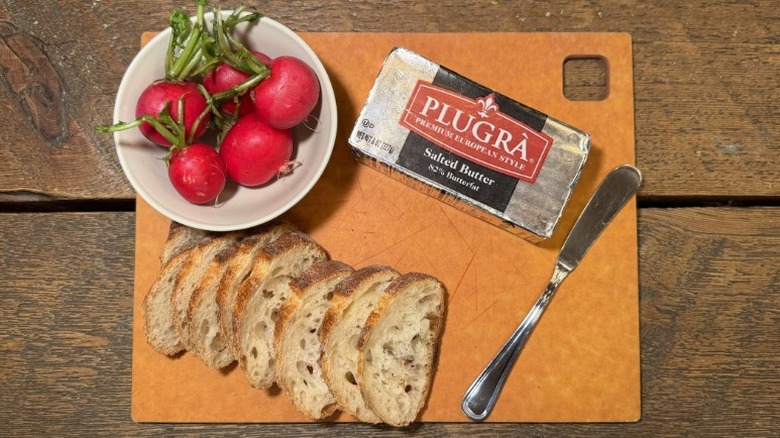
The first time a pastry chef friend of mine had me try this brand, they told me it was the one readily available option that works as a real crowdpleaser. Made in America with European methods, this culinary-driven brand uses high-quality cream, salt (when necessary), and nothing else in a process that leaves it with 82% butterfat — which chefs swear is the ideal level for cooking. Bakers also love how the company removes slightly more moisture from its finished product, helping it to blend more easily and keeping it more stable.
Having come to know this brand through my colleagues in the culinary and baking worlds, I wasn't at all surprised that this hit the palate beautifully on the baguette. That slight increase in butterfat is certainly noticeable but absolutely not overwhelming, showing a beautiful balance that likely explains why so many chefs enjoy using it. The creaminess held to the palate so well that saltiness doesn't even poke through until the very end.
This same evenness came through on buttered noodles, where it brought a silky texture, a hint of salt, and richness that helped amplify the best flavors of the noodles themselves. Everything considered, I fully understand why this is a go-to for professionals, and I'll be testing my next few recipes out with this to see how it changes the process and results.
Delitia Buffalo Milk Butter
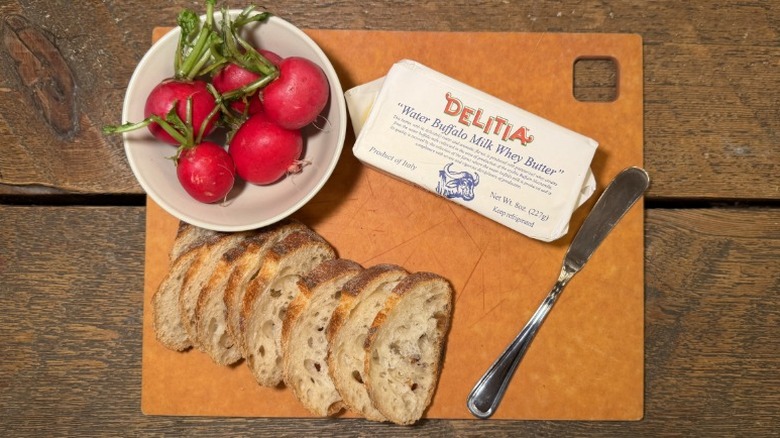
You think you know butter until you've tried Delitia. This brand is made in Parma, Italy, from the milk of water buffaloes (the same key ingredient in authentic mozzarella and burrata) and cultures, which gives it a uniquely tangy and umami-rich base. As someone who is obsessed with finding the best ways to elevate pasta dishes, this butter is easily one of them, but it's also just as incredible on a prosciutto sandwich or simply slathered on a piece of bread.
I have to admit that only one bite of this on a piece of bread instantly reminded me of why I seek this product out so often. It's immediately earthy on the palate with much less salt than its French counterparts, almost taking on more qualities of a fresh cheese than a butter. Of course, it's immediately easy to tie it back to a fresh piece of mozzarella, but I can swear it also brings to mind other soft cheeses like taleggio as well. I also realized that while I might not make this the first choice for a bowl of noodles for a picky child eater, it unquestionably makes a deliciously simple snack. The egg noodles almost took on a main course level of complexity once dressed in it, which all but furthers my point that it can truly elevate unexpected dishes like sandwiches or pastries.
Échiré Butter
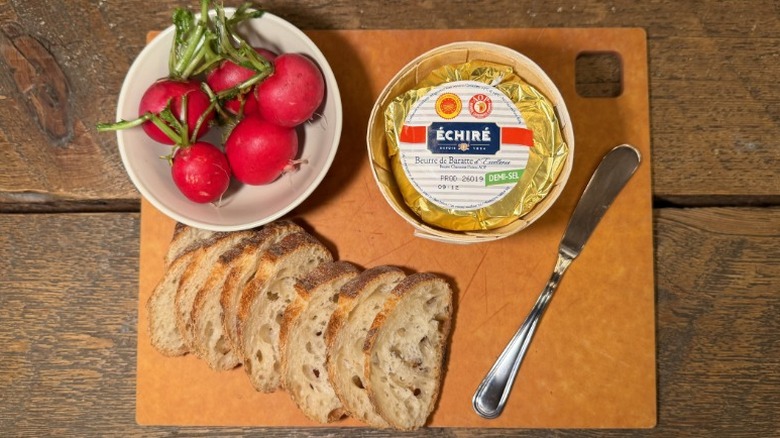
Often sold in its trademark tiny woven basket, this is another import from Southwestern France that's worth seeking out. Using only milk sourced from cows within 50 kilometers of the dairy, salt, and cultures, this producer uses traditional methods, including a wooden churn system and an 18-hour cream maturation process, which undeniably adds a layer of complexity to the finished product. While it's great in baked goods and cooked dishes, it's the perfect picnic pack-along, especially if you swipe it on a radish.
After unwrapping the foil-packed lump in the basket and getting it on bread, the positively velvety texture hit my palate. It almost brings in vegetal notes that ride behind its more subtle lactic flavors when swiped on a piece of baguette, finishing with subtle saltiness that helps prolong the flavors. It's markedly unique from even the other cultured French imports, bringing something a little different out with each bite. On butter noodles, its saltiness almost drops off entirely, adding a silky texture and subtle boost of nutty complexity to each bite instead.
While this isn't a ranking, my co-taster solidly declared this the best of the entire bunch when tasting, especially if you're looking for something that can stand on its own. I'd go so far as to say that this occasionally difficult-to-find product is worth the splurge for pretty much any use you can think of.
Rodolphe Le Meunier
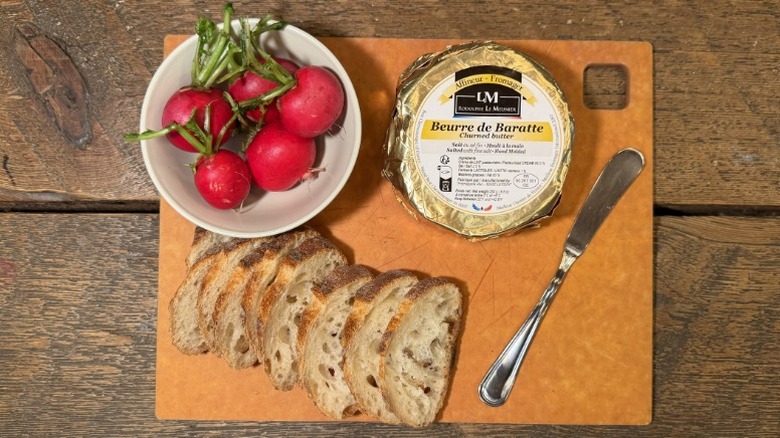
As a dairy powerhouse region, it's no surprise that this Normandy export has become a favorite among cheese and culinary professionals stateside. Made in a wooden churn using only cream from local cows, lactic cultures, and salt, this Beurre de Baratte (which translates directly as "churned butter") has a silky texture and rich flavor that's a match made in heaven for a fresh baguette. Its denser, velvety texture has made it a popular pick among culinary circles and specialty store aficionados.
It shouldn't come as a surprise that this French import is more or less perfect when simply swiped on a slice of baguette. It's much more salt-forward at first, but it's nowhere near the point of being overwhelming on the palate. If anything, it bolsters the pleasing milky, lactic flavors and helps pull even more complexity out of it.
The saltiness really shines through when added to egg noodles, creating a pleasant base with a soft nuttiness (and almost a meatiness) that comes through at the end of each bite. One chef friend swears he will never serve a steak without a healthy pat of this on top, and he'll often finish his rice at home dinners by mixing in a half-spoonful for a little extra heft and flavor.
Cabot Extra Creamy Premium Butter
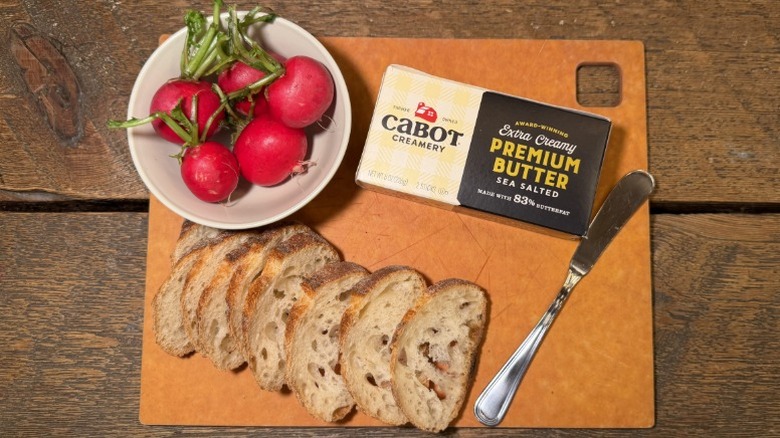
I may be a fan of practically everything Cabot makes (especially their creamy cheeses), but I'm clearly not alone. This product won both best in the world at the 2024 World Championship Cheese Contest and took home first place at the American Cheese Society Competition. In this case, the co-op dairy company uses nothing but cream from its New England cows and sea salt, resulting in a decadently rich butter. Thanks to its slightly elevated yet still restrained butterfat content of 83%, it's earned the adoration of culinary-minded fans who love it for baking and cooking.
Even though I had tried this product a few times before, it wasn't until this latest tasting that I realized it tastes like American-style butter taken to the next level. With all of the richness that hits the palate at the beginning, a subtle saltiness soon emerges alongside a nuttiness that almost belies its origins. Up until the very end, you might confuse this for Kerrygold.
Texturally, it's an absolute dream on the buttered noodles, waking up the palate with creaminess and increased complexity that comes with the warmth. I'm planning on backing a batch of chocolate chip cookies with this soon to test its abilities in the recipe, and slathering on the next bran muffin I find.
Methodology
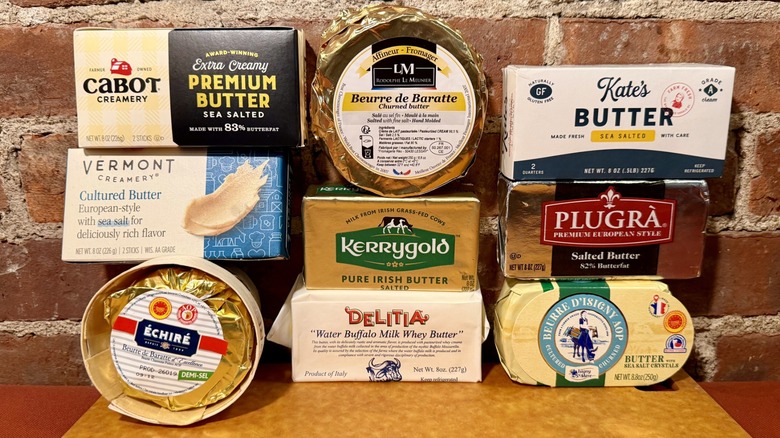
For this list, I tried to include a variety of butters ranging from common supermarket finds to more niche specialty imports. The only dealbreaker here came down to knowing what goes into each brand, which means avoiding anything that contains "flavor enhancers" like diacetyl, vegetable oils, or coloring agents.
While I've tried them all before, I decided to revisit each product anew. I tested each on a piece of sliced baguette and melted in a bowl of egg noodles to pick up on different flavors based on use context and temperature changes, as well as its texture after melting. While all of the selected brands produce unsalted versions (except for the Delitia), I also opted to buy salted or lightly salted versions when the option was available.
Thankfully, this isn't a ranking: All of the butters here are included because they pass a quality test that puts them in a special tier of dairy products made with top-tier ingredients. In some cases, this includes geographically limited sourced cream from a legally defined region. I tried to use this tasting opportunity to explain where each butter might be best used. Of course, when in doubt, just grab a radish and dig in.