

9 Seafood Buffet Red Flags You Should Never Ignore
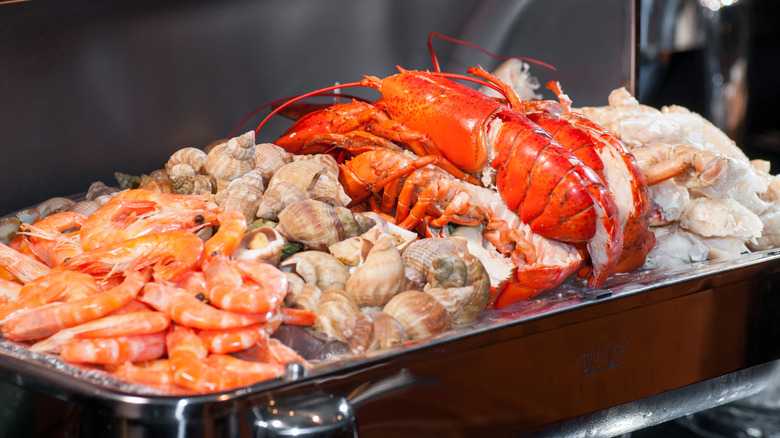
For a lot of people, seafood buffets are pure heaven. An opportunity to try all the fish and shellfish that you want, with more luxurious options like crab legs and lobster (which you'd never buy to eat at home) on tap? It all sounds wonderful, but that's really only the case if the seafood buffet you're eating in is up to scratch. Unfortunately, that's not always the case. With this type of buffet — which trades on a type of protein that very quickly becomes unappetizing when it's not fresh or presented well — knowing that you're eating in a place that cares deeply about customer experience, and preventing foodborne illnesses specific to seafood, is key.
How do you figure that out, though? By assessing for any key red flags. Warning signs at seafood buffets can be specific, and show up both in and around the food itself, and in how it's presented. From unpleasant smells and concerning food appearances to poor chilling techniques and strangely low prices, these red flags will reveal when a seafood buffet is to be avoided (and, conversely, when it's getting everything right). With a subject like this, we knew we had to get some expert input, so we asked Jimmy Ulcickas, co-founder and co-owner of Bluewater Grill Seafood Restaurants, to help us figure out exactly what to look out for at a seafood buffet. Turns out, there's quite a bit.
1. Visible signs of food spoilage
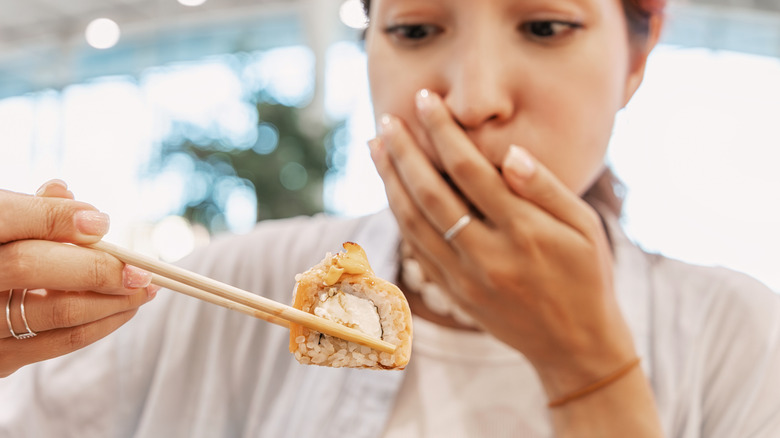
Spoiled seafood isn't just unpleasant; it's also unsafe. The longer that spoiled fish sits or comes into contact with other types of food, the more likely it is to cross-contaminate and spread potential bacteria, parasites, or viruses to humans. Sadly, at a seafood buffet, where food is allowed to sit out for hours on end, cross-contamination is way more likely, and any clear signs of seafood spoilage could indicate that the restaurant you're in doesn't care about the quality of its food or the safety of its customers.
The most important thing to do is use your eyes. "For any fish, you can start with the color," states Ulcickas. "If there are any off colors like browns or blacks, the fish probably wasn't prepared fresh." Ulcickas also told us that if fish looks old, which can be observed through a dryness or grayness, or a generally listless quality, then you should steer clear.
Instead, you want to be greeted with an indication that the fish and seafood you're eating have just been prepared. "Cooked fish should be moist looking without overt signs of dryness around the edges," Ulcickas says. If you have any uncertainty around whether what you're about to put on your plate is fresh, then your instinct is probably correct.
2. Improperly displayed chilled seafood
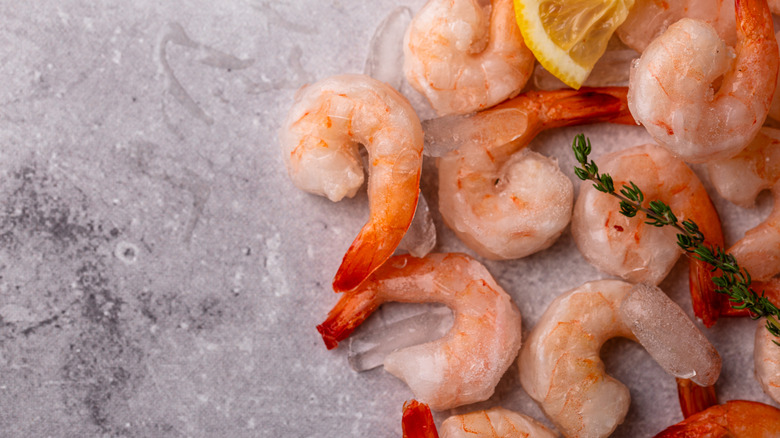
Chilled protein can be a risky proposition at a buffet, and seafood is perhaps the riskiest of them all: It's not cured or preserved, meaning that it's highly prone to bacterial contamination if displayed improperly. Throw in a high degree of perishability, and it's a recipe for disaster if your buffet isn't doing it right. According to Ulcickas, though, the proper method of displaying cold seafood varies from item to item. "Chilled seafood like shrimp or oysters on the half shell should be stored in direct contact with ice but never in ice water," he said. "Shellfish that are still in the shell can be covered with ice, but should never be sitting in melted ice water."
If the seafood is surrounded by moisture, though, you should run. Ulcickas advises that when chilled seafood sits in cold water, not only can the water leech out flavor, but it can also contribute to the spreading of bacteria. It may also be a sign that the buffet isn't fully on top of keeping its buffet super cold, and that the ice is melting.
Furthermore, keep an eye on what the ice looks like. If it looks dirty or contaminated, it could be a sign that the buffet is slacking on hygiene. If it also consists of large, clumsily-shaved blocks of ice, instead of crushed or flaked ice, then it might not be chilling the food properly.
3. Strange smells
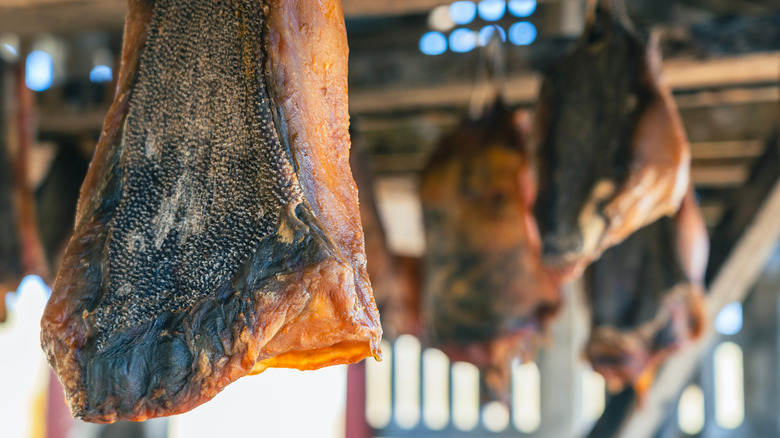
When you're eating at a seafood buffet, your nose will be your best friend. It'll likely be the most reliable thing, apart from your eyes, that you have to determine whether the fish in front of you has begun to go bad or not, and any off smells around your food should cause you to run. "When seafood starts to spoil, it gives off an ammonia scent," says Ulcickas. It can also have a notably fishy smell or a sourness that's a dead giveaway that it's past its prime and potentially hazardous to consume.
Instead, Ulcickas says that when fish and seafood are fresh, they should smell like the ocean — and this applies to hot and cold dishes, too. "Cold fresh seafood should smell like a fresh summer breeze at the beach — slightly briny, clean and fresh," he tells us. "Cooked seafood should have a pleasant aroma and not be overpowered by excessive seasoning." This last point is especially important, as buffets that use lower-quality fish may try to mask it by throwing on every ingredient under the sun, which can then mask any potential off smells. Plus, an over-the-top amount of seasoning on your fish can just get in the way of the light, bright taste that you want from the seafood in the first place.
4. Scrambled oysters
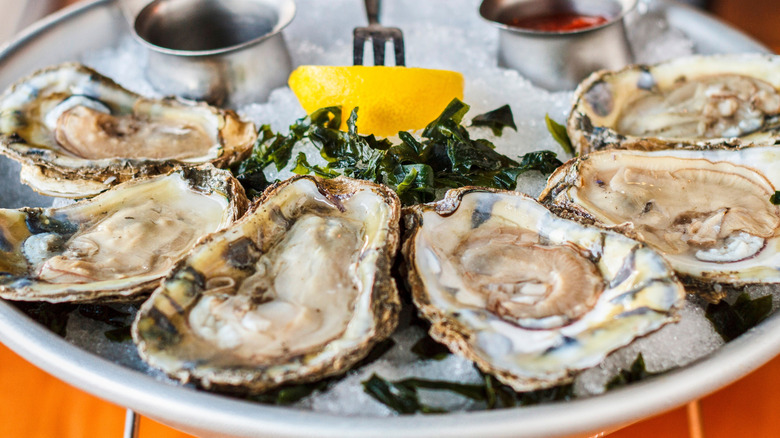
Oysters, which weren't always fancy, are a particularly tricky food to get right at any restaurant, but especially at a buffet. This is a food that needs to be as fresh as possible and stored very carefully, or else it can quickly turn into something that's not just unpleasant, but actively hazardous to eat. Eating contaminated oysters, or those that have been stored poorly or are old, can present you with a higher risk of various foodborne illnesses. They're really not to be messed around with.
That's why Ulcickas advises us that oysters should always be freshly shucked and not have a questionable appearance. "You want to see the 'oyster liquor' left in the shell, and the appearance should be unbroken and not scrambled," he says. If the flesh has a scrambled appearance, it could have been shucked incorrectly or handled after the process, which increases the risk of illness. Luckily, Ulcickas also shared the green flags to look for with these shellfish. "Freshly shucked oysters should smell like fresh salt water, briny and pleasant with no hint of 'fishiness.'" Having said all this, though, it's always safer to eat cooked oysters than raw ones to minimize any risk of food poisoning.
5. Excessively hot (or cold) temperature displays
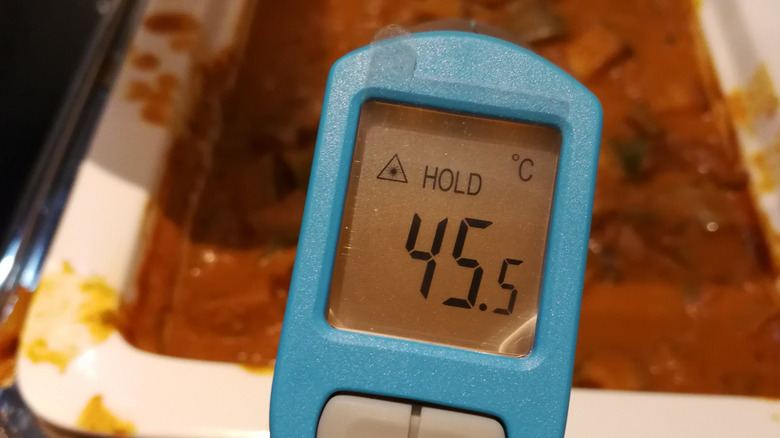
At seafood buffets, temperature is everything — and sadly, a lot of them get it very wrong. "The most common mistake is inadequate temps at both extremes," says Ulcickas. The food that's meant to be cold isn't cold enough, and the food that's meant to be hot doesn't quite reach the temperature it's meant to. In both of these cases, this is a big issue, as the longer food sits between the two, the more time it spends in the so-called "Danger Zone" where bacteria can thrive.
Ulcickas says that chilled fish and seafood should always be displayed at below 40 degrees Fahrenheit. Hot seafood, meanwhile, should be kept at 140 degrees Fahrenheit, or a touch higher. It's important that fish isn't kept too hot for too long, though: Ulcickas warns that "if it sits at high temperature for too long, it will dry out and overcook." No one wants that.
As for how to tell whether food is at the right temperature, many modern buffets will have gauges or screens that display their heat settings. If they don't, you can always ask a member of staff or the manager. If, however, the person you ask won't tell you what temperatures they use, this could be another red flag.
6. Unsanitary service stations
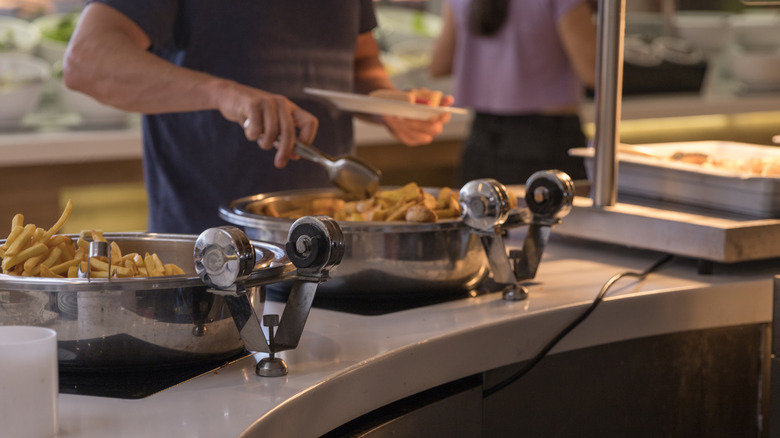
Cleanliness is absolutely everything at any buffet, but at seafood buffets, it's of paramount importance. Cross-contamination is a particular problem when it comes to seafood, which is especially prone to dangerous food safety mistakes. This contamination may not just come from other food, but from the people who are eating at or working at the buffet. The dirtier the service stations are — and the longer it's been since someone's cleaned them — the more likely cross-contamination is to occur. It also speaks to a general lack of care around the buffet, which doesn't exactly make you excited to eat there.
So, make sure that you're keeping one eye on the cleanliness of the buffet at all times. Each dish and its utensils should be clean, and the general area around the trays should be well-maintained. Sauce and condiment stations, which are another area where people can break buffet hygiene rules, should also be tidy and free of any food splatters. This is also an area that can often get neglected, so it can be a good indicator of how well the buffet is keeping on top of its hygiene standards.
7. Suspiciously low prices
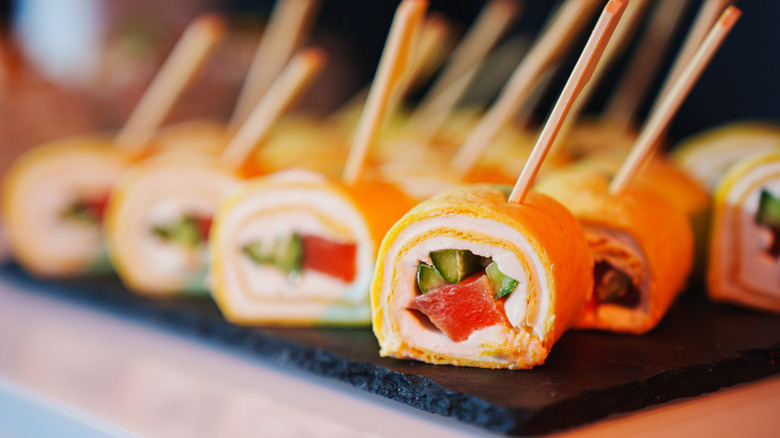
Never trust a super-cheap seafood buffet, guys. Why? Because if the buffet you're about to eat in feels like a steal, it's probably compromising on something. "Buffets are expensive to set up and operate, so a cheap price could be a red flag for poor quality," Ulcickas told us. Good-quality seafood is hardly inexpensive, and as buffet profit margins are generally low, you kind of want them to charge a little more so that you have a sense that they're actually paying a good price for their food and re-investing in the business's operations. Otherwise, they may well be cutting corners on their seafood, or elsewhere in a way that could negatively impact your experience.
That's why Ulcickas says, "It is best to pay a healthy price and expect the finest quality." Having said this, that doesn't mean that you have to put down a wild amount of money to have a good meal. Some of the best all-you-can-eat seafood buffets in the country get their balance of quality to price just right, and you can still get a great meal for under $30 in some places. Be wary of bargains that feel too good to be true, though.
8. An empty dining hall
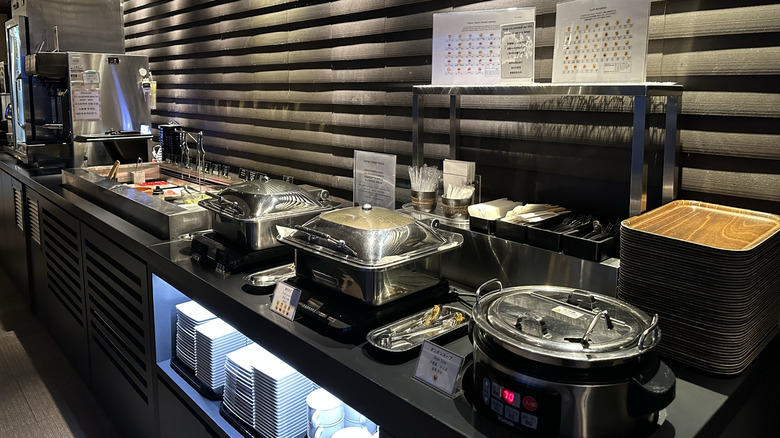
Although it might sound counterintuitive, you kind of want a seafood buffet to be busy. Yes, that can make the experience a little chaotic, but it also makes it safer — and generally means that the food is better, too. "Places like private clubs, casinos, and cruise ships typically have a lot of volume so [they] can do a seafood buffet safely as a loss leader to attract diners," says Ulcickas. Not only that, but these kinds of venues also have a quick, high turnover of food and dishes being rotated regularly, which is exactly what you want for fresh, safe, tasty dishes. By contrast, if a buffet's totally abandoned, that food might be put out at the start of dinner service, and not be changed at all — or worse, reused the next day.
This leads to you, the customer, getting lower-quality, potentially unsafe food, especially if it hasn't been kept at the right temperature. So, don't be afraid of the busy, obvious spots, like the ones Ulcickas points out (though even cruise ship buffets can have red flags). There's a reason why busy seafood buffets are generally decent, and you're more likely to get a good vibe out of them than a quiet restaurant where you're the only customer.
9. Poorly labeled dishes
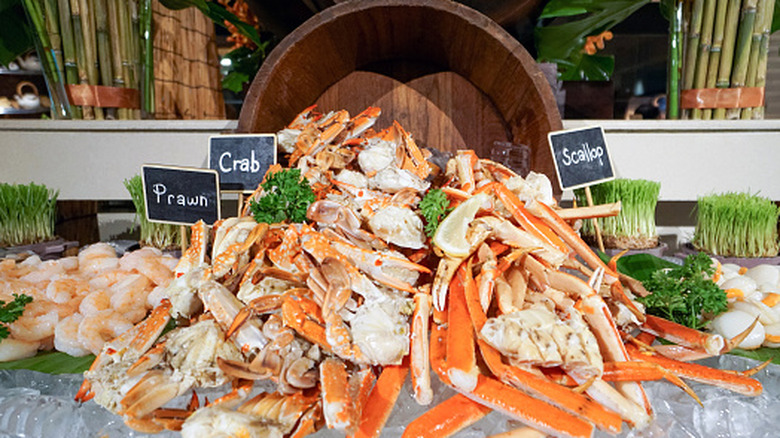
Labeling is more important than you think at a seafood buffet, and it goes beyond just knowing the type of dish you're eating. Seafood buffets can present multiple different allergen risks, with fish and shellfish being the most notable, but with other potentially allergenic ingredients also being present. Furthermore, some items at a seafood buffet may be particularly risky for certain groups to eat, due to their mercury levels. "High mercury-fish like tuna and swordfish should be eaten less frequently, and it is best for pregnant women and young children to avoid," says Ulcickas.
The thing is, though, that you can't assume that everyone knows what they're eating at a seafood buffet instinctively — and they also need to know if a certain item has ingredients that could potentially be harmful. So, check the labeling system at the buffet you're in very carefully. Look for allergen symbols and nutritional information for each dish, or physical menus or cards that will tell you what's in each thing. After all, if the place you're eating can't provide basic info like that, what else aren't they getting right?
This all goes hand-in-hand with cleanliness and organization, too. If a buffet isn't maintaining hygiene standards around potentially allergenic dishes that could cross-contaminate other ones — or if everything's kept too close together — you should run a mile.