

6 Types Of Takeout Containers You Should Never Recycle

We all know that we should be recycling. It's 2026, after all — the days of getting away with not being aware of its importance are long gone. However, some of us might be recycling a little bit too much. There's a fine balance between recycling the right items in the right manner and contaminating your recycling haul with items that may not have been prepared or cleaned properly, or that aren't eligible for repurposing despite seeming so. This can lead to your entire load of recycling not being processed properly, which then ends up in a landfill. See the problem?
Plus, one of the biggest culprits for causing recycling contamination? Takeout containers. These containers can vary considerably from restaurant to restaurant, and while plastic takeout vessels are perfectly fine to recycle (when clean, of course), others may disrupt the flow and poison the whole batch. Other containers, meanwhile, may be able to be processed or repurposed in other ways, but recycling them can cause more harm than good. Here are a couple of takeout containers that you should properly avoid putting in your curbside recycling, no matter how much you think they should go in there.
Polystyrene (Styrofoam)
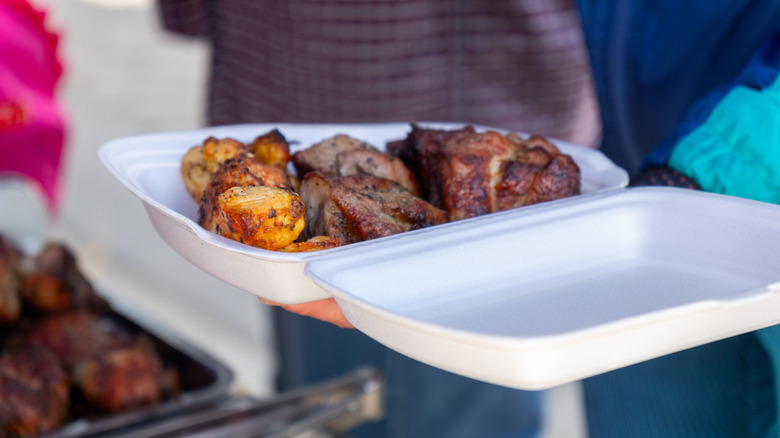
Do you wanna know the most frustrating thing about polystyrene? You actually can recycle it — you just probably shouldn't. Polystyrene, or Styrofoam, is technically recyclable, but many curbside recycling services won't accept or process it. The reason they can't is the same reason that the material is so valued by takeout places. Because polystyrene is so lightweight, it can be tricky to break down like other plastics and materials. This means that the cost of making sure that it's recycled properly is pretty high, making it an unappealing prospect for a lot of recycling services to process, even when the containers are clean.
As a result, many waste and recycling services recommend throwing your polystyrene containers straight into the trash to avoid contaminating the recycling stream. We can understand why this doesn't sound like an appealing prospect, because it'll just end up in a landfill — and in fact, some places have banned food establishments from using Styrofoam containers entirely, as it can harm wildlife when it's broken down and distributed into the environment. With all that said, though, some larger-scale recycling facilities can process polystyrene, but you'll likely have to drive your containers there yourself. Oh, and in case there was any doubt: You shouldn't microwave Styrofoam, either.
Plastic-lined cardboard or paper containers
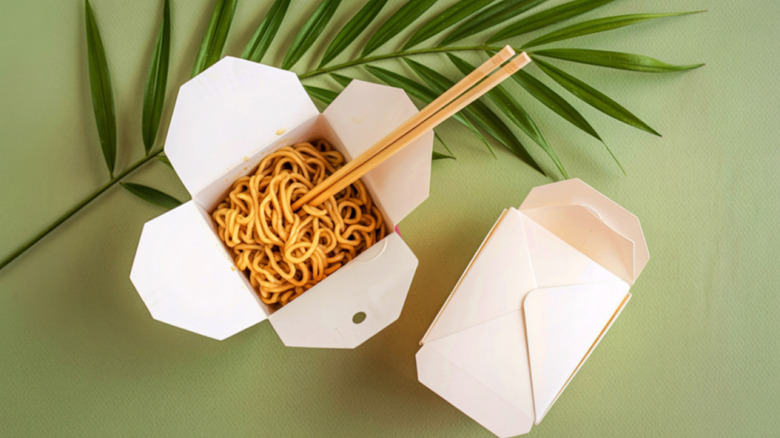
Look, we love a Chinese takeout box as much as the next person. What can we say? They're iconic. However, what we don't love is how they're pretty much impossible to recycle. The reason that most curbside recycling services hate these containers is because of the plastic lining inside them, which causes major issues. "Paper takeout containers (think Chinese food) are coated with a special material to 'waterproof' them, which makes the container unrecyclable," Republic Services' sustainability ambassador Jeremy Walters told HuffPost. "Add in food residue, and you run the risk of ruining perfectly good recyclable materials if you toss these containers in your recycling."
This plastic liner is also the reason that you can't compost these containers, as attempting to do so can cause further contamination (and they also won't break down properly). If you've received food in cardboard or paper containers that don't have plastic lining in them, though, then you may well be able to recycle them — but it depends on how much food residue there is. If your container is absolutely soaked with grease and covered in sauce, you probably can't recycle it. If, however, you can wipe it pretty much clean and food residue is minimal, it may well be good to go.
Black plastic containers
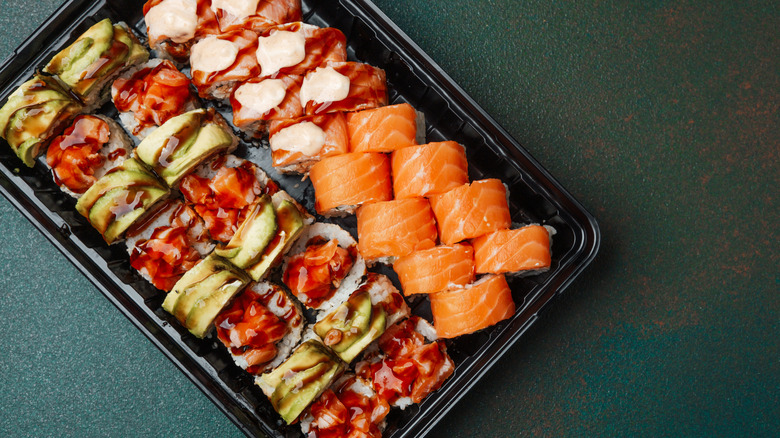
Black plastic containers — the kind that might house a serving of sushi and sashimi — might seem pretty recyclable. They're sturdy and easy to wipe clean, so they're practically begging to be thrown in with the rest of your plastic, right? Unfortunately, recycling them may create problems you might not have foreseen. This is all because of the materials that go into these black plastic containers, and the compounds in them that could be toxic to human health.
A study published in Chemosphere examined the concentrations of these compounds (which act as flame retardants) in household items, including black plastic containers. Essentially, if you recycle these black plastic items, you contribute to the redistribution of these compounds and may potentially increase exposure for other people further down the line.
We're pretty sure that no one wants that. Although this is a single study and its conclusions are at present a hypothesis, it may well be best to avoid recycling these containers and to throw them out, however counterintuitive that might seem. You may also want to avoid eating from black plastic containers in the first place, too, and opt for takeout establishments that use clear plastic.
Sauce, syrup, and condiment containers
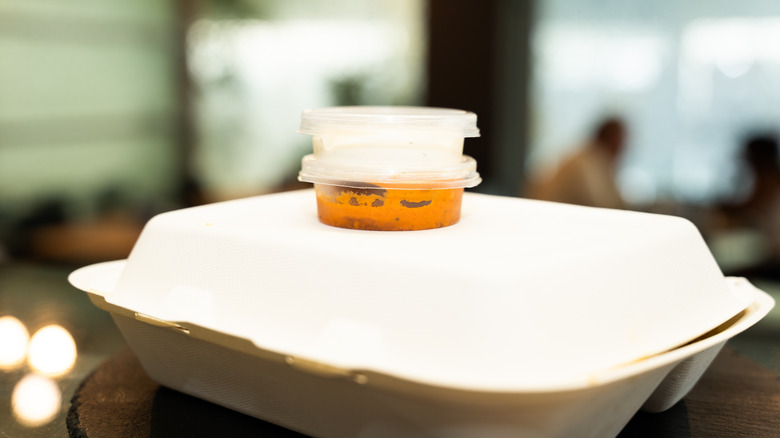
If you're anything like us, you've previously thought that recycling sauce, syrup, and condiment containers is a bit of an easy win. Clean these little pots out, throw them in your recycling, and feel the rosy glow of having conscientiously disposed of a small, irritating plastic item. However, that small nature is exactly why you should avoid recycling them in the first place. Those small pots are simply too teeny to be processed properly by recycling facilities, and they just cause problems further down the line. As a result, you should keep them out of your recycling bin.
The same thing goes for condiment packets or sachets. These little pouches aren't big enough to be broken down adequately and fall through the gaps in recycling machinery. Unfortunately, though, all of these items pose different problems if you throw them out, as they just end up in landfills. So, what do you do? An easy solution is to just not order them at all, or to ask the restaurant delivering your food not to include them in your order. Buy good-quality soy sauce, condiments, and syrups that come in larger bottles (which can be recycled), and add them at home. It's better for everyone, including your taste buds.
Compostable plastic containers
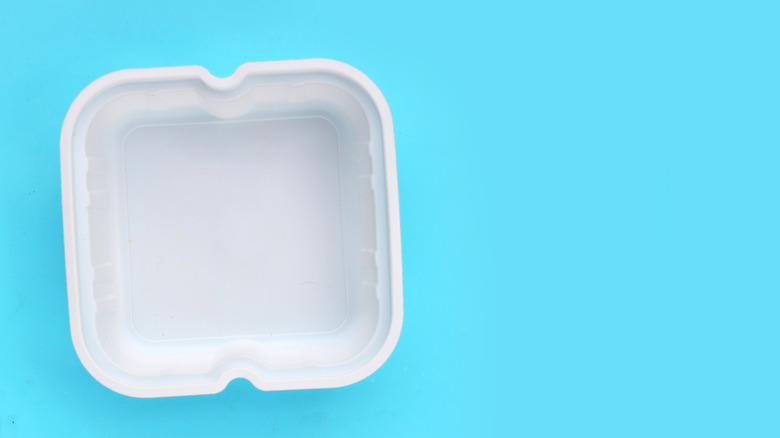
With compostable plastic containers, the clue's in the name. The beauty of compostable (or biodegradable) plastics is that they're designed to break down slowly with minimal harm to the environment. As a result, they should end up in your compost heap, or at a specialized composting facility — but they shouldn't be put in your recycling. When they are, they mix with the other, fossil fuel-based plastics that are being repurposed, and everything gets contaminated. The compostable containers can't be broken down, and the other plastic containers also become ineligible for proper recycling. It causes way more harm than good, despite your best intentions.
So, do what the label advises you to: Compost them! Make yourself a compost heap in your garden, and throw these containers in, ensuring that any pets don't have easy access to it. You'll be surprised at how much use you'll get out of it, and anything from vegetables to fruits to plain pasta can be composted. Trust us: Your plants will thank you for it.
Lightweight clamshell salad containers
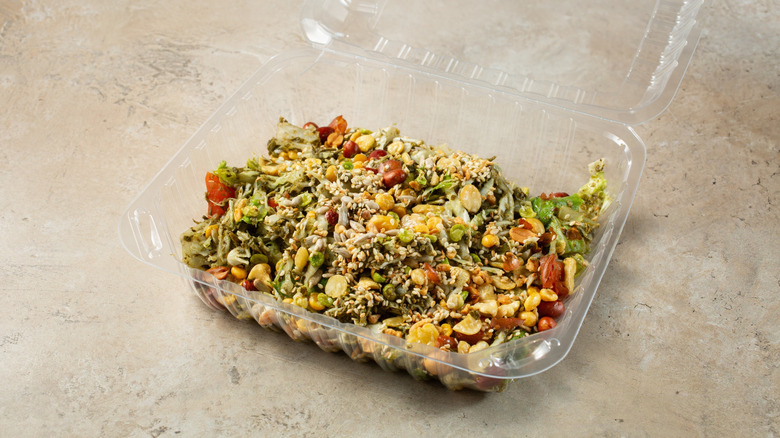
Clamshell plastic containers — you know, the type that contain those restaurant salads we love — are trickier to get rid of than you might think. This is largely because of their weight. Like polystyrene, some clamshell plastic containers may be made from recyclable materials, but their lightweight nature makes it difficult for machines to process them properly. They become too flat, and then they become difficult to separate from objects like paper, which leads to contamination.
These lightweight containers can also be made from a specific type of polyethylene terephthalate (PET) that has a different density from other PETs and can break down in unpredictable, undesirable ways. Add in any labels that might be attached to the plastic, which create further challenges for recycling, and you've got yourself a recipe for disaster. As a result of all this, many recycling services advise against putting them in your mixed curbside recycling, although some facilities may have the capacity to process them properly. It's best to check with your local service to see whether it's better to take clamshell containers to a more specialized facility.