

10 Retro Appliances That Time Forgot
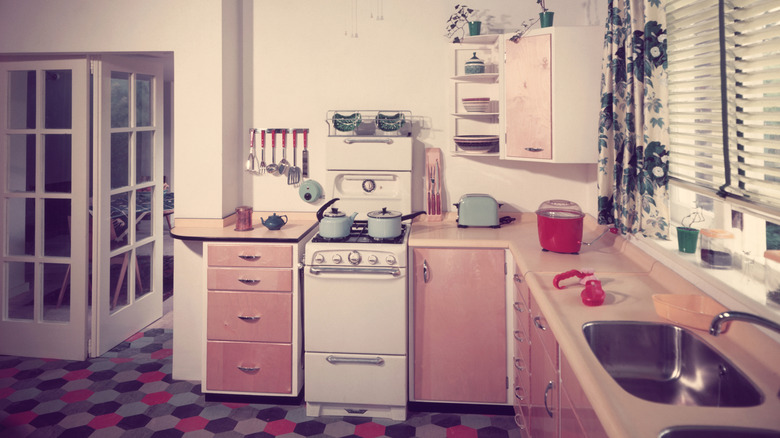
Kitchen tools get used every day. As a result, kitchen appliances have been an important frontier for technological innovation. We've loved staples such as coffee or butter for centuries, but the means of producing and preparing these things has evolved considerably over the years. Churns and hand-powered grinders were once embraced by home cooks as state of the art technology, but these tools required a great deal of physical effort and sometimes many hours to achieve the desired result. It was industrialization in the 19th century which changed kitchen operations considerably, with a slew of inventions to speed up daily kitchen tasks. Soon afterward, electricity paved the way for making many kitchen appliances automated and even more efficient.
Today, preparing coffee, tea, or toast simply requires the push of a button, and the arsenal of electric appliances available has eliminated the need for specialized whisks or spatulas which used to see daily use. Cranking, plunging, or stirring is no longer the norm, and labor intensive hand-operated appliances, which were once essential to a pre-industrial world, have become largely obsolete in a modern kitchen. We've gathered a list of retro and antique appliances that have fallen out of popular use, some of which were merely trends and others which are simply no longer manufactured, making them coveted collectors' items. Here are ten retro appliances, both hand-powered and electric, which once had an important place in the kitchen, but which time has since forgotten.
1. Nut grinders
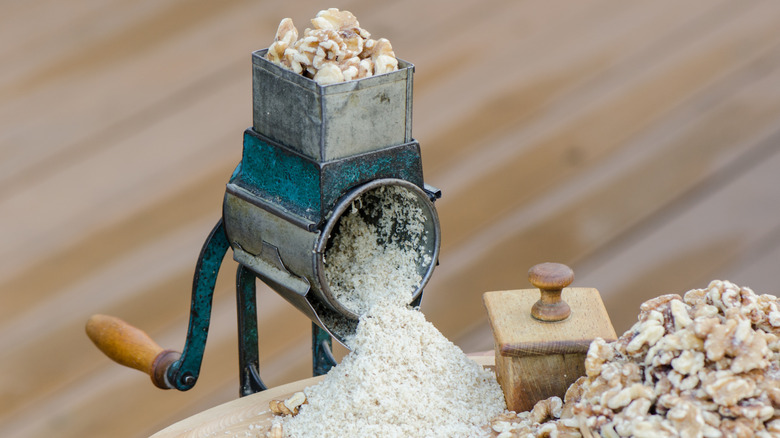
A manual precursor to the food processor, the nut grinder was an indispensable tool for home cooks. Invented in 1935, this simple but ingenious grinder had a set of teeth on the inside that spun when someone cranked the exterior handle. The nut grinder was created as a means of speeding up food preparation, eliminating the time-consuming process of chopping up nuts or dried fruits by hand, both of which featured prominently in many popular dishes of the time. Fitting on top of a glass container or outfitted with a clamp to secure it to a kitchen counter, this grinder was easy to operate. Simply tossing in a handful of nuts, fruit, or even bits of bread, then cranking the handle, churned out uniform small pieces or crumbs, which could then easily be added to any recipe.
Nut grinders may seem a bit old-fashioned now, as pre-chopped and ground nuts are regularly available in grocery stores, and food processors have also become an even faster means of achieving the same goal. But the nut grinder is a low maintenance, hand-powered tool, less complicated than its electric equivalents — it doesn't require disassembly for washing, and it's easy to gauge the exact quantity that you've ground. It might seem niche and quaint to today's modern cooks, accustomed to high tech gadgets which churn at the press of a button, but the nut grinder still crushes nuts perfectly, and just as effectively as something faster and stronger.
2. Wall-mounted can openers
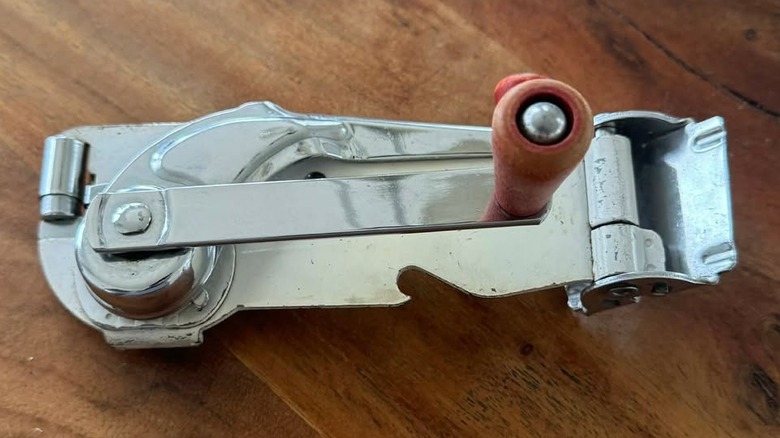
The invention of canned food is linked to Napoleon's military campaigns, and was a revelation for its time. These cans become a widespread means of food preservation in the 19th century, but were inconveniently only openable through the act of hammering into one of the ends to be able to pry it open. The can opener was invented in 1858, half a century after the first canned food and a miraculous convenience for its time. Once this tool became popular, cans became even more convenient and posed less risk of injury, which only further cemented canned food as a household staple. Different variations of this contraption soon came to be, some hand-held, others which clamped onto countertops. But one particularly convenient iteration was the wall-mounted can opener.
A midcentury invention popular in the 1950s, this fixture was practical for home cooks, as its position on the wall provided extra leverage for especially large or tough cans. This tool could be flipped away from the wall for easy access, and then pressed back into place so that it didn't stick out or take up too much space. Some can still be found in vintage homes, and their users swear by them. Nevertheless, though once widely popular in kitchens across the continent, the wall-mounted can opener has given over to the handheld versions taking up space in kitchen drawers, which remain the most popular version of this tool today.
3. Cookie press
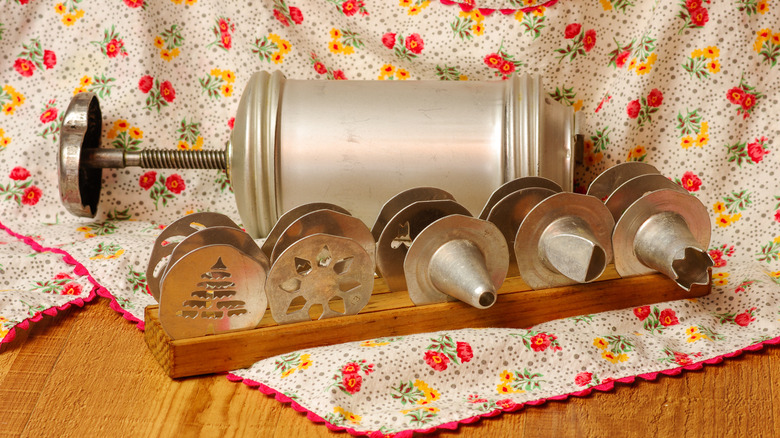
For those who prefer handmade Christmas cookies, the cookie press (sometimes called a cookie gun) is a kitchen tool that typically only comes out of the drawer around the holiday season. Designed to make spritz cookies, those golden, buttery confections that come in all manner of festive designs, this tool simply uses pressure to push dough through metal discs, to form different shapes. Spritz cookies get their name from spritzen, which means "squirt" in German — an apt descriptor for the process of squeezing cookie dough through a special tube. The treats and their requisite cookie press date back at least as far as the 16th century, and have been popular in both Germany and Scandinavia ever since.
Spritz cookies might have gained greater popularity in the United States during the mid-20th century, when the Minneapolis-based company Nordic Ware released its Cookie King in the 1960s. This was a modern take on the cookie press, which appealed to the heritage of the region's Scandinavian immigrants. Nowadays, with spritz cookies available in grocery stores around the holidays, the cookie press isn't a tool that quite as many households rely on during the holiday season. While not extinct, this tool does elicit an inherent sense of nostalgia. New, more efficient versions of this press also exist, making the process more streamlined. Perhaps homemade Christmas spritz cookies are asking for a comeback.
4. The Teasmade
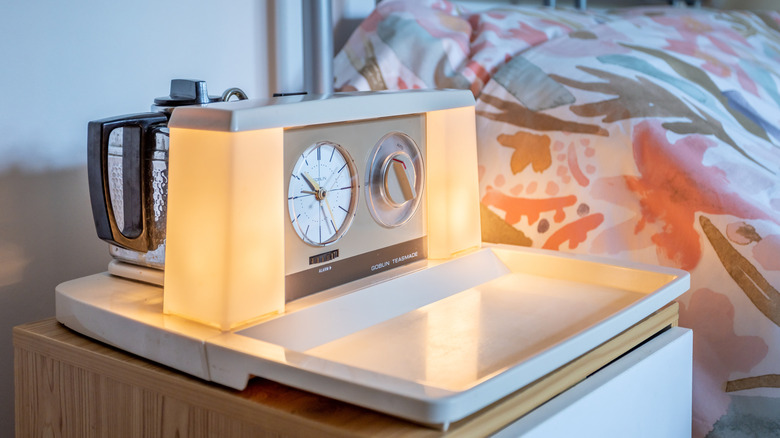
Popularized in the U.K., the Teasmade is an invention meant to be placed on bedside tables rather than kitchen counters, as it combines kettle and alarm clock in one. Rather than traipsing directly off to the kitchen in a haze, anyone with a Teasmade machine could awake at a preset time with a fresh pot of tea waiting for them. Though it's a brand name, the word "Teasmade" has come to refer to all versions of machines with both a clock and a burner attached to the same base. This concept of an automatic tea machine dates back to the end of the 19th century, when numerous inventors and their contraptions were all vying for the same convenient concept. These early prototypes, however, were somewhat hazardous and not commercially successful.
It wasn't until the 1930s, after electric appliances had become commonplace, that Teasmades started appearing in households across the UK. They remained a popular bedside fixture into the 1960s, by which time they were no longer novelties. By the 1980s, though, the Teasmade was considered a waning démodé gadget. These machines are still in production, but they're much less common today. The fact remains that the Teasmade doesn't especially speed up any tea-making process — all the preparation of filling the kettle simply happens before bed. The notion of having something hot and ready to sip as soon as you wake up, however, does have a sort of timeless appeal.
5. Foley forks
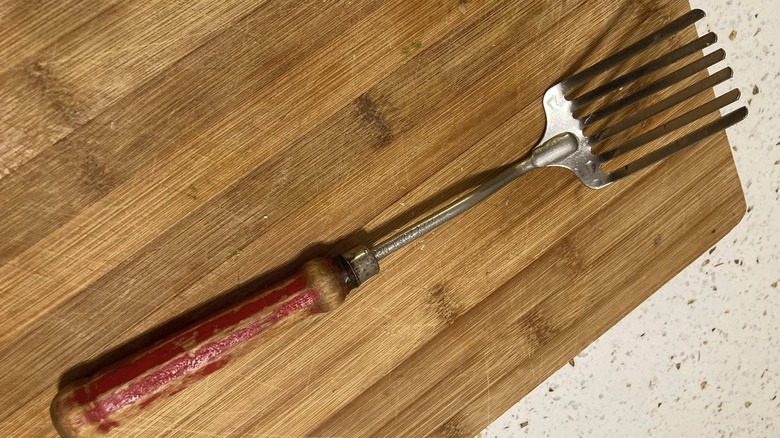
A product of Foley Manufacturing Co., the Foley fork was an unexpected success for a company that got its start in making metal sawing products. Seeing opportunity to expand business away from the industrial sphere and into the domestic, Foley pivoted in the 1930s. This was when the company branched into metal-based kitchen products, such as cookie cutters and baking pans. It was the invention of new tools, however, which would make Foley a household name. The brand's small flour sifter, which only required one hand to operate, was a favorite, as well as a large, six-tine metal fork that functioned as a useful, multi-purpose tool.
This Foley fork became a household staple, useful for many daily tasks. It was as effective at mashing potatoes as it was at whisking eggs, making it something that was reached for time and again. It was one of the kitchen tools our grandparents' swore by, and held a place among Julia Child's prized possessions in the kitchen, which she used while preparing dishes on her cooking show, "The French Chef." Whether or not Child's fondness for this versatile kitchen gadget boosted its popularity for a time, the Foley fork was on the decline after its midcentury heyday. In 1982, after a change in ownership, Foley Manufacturing stopped producing kitchen utensils, leaving Foley forks to become another nostalgic retro novelty. Today, home cooks are just as likely to reach for a simple fork in the cutlery drawer, but avid collectors are still on the Foley hunt.
6. Butter churns
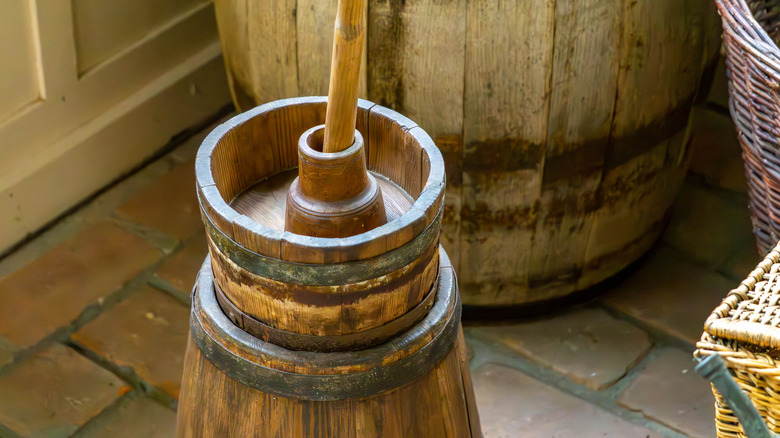
A device dating back to Ancient times, the butter churn was once an essential kitchen tool whose use has truly gone obsolete. Before industrialization and grocery stores, butter had to be prepared at home, by hand. After milking the cows, families would set the milk in shallow dishes to sit for a few hours, until the cream separated from the milk. Then the cream, which would rise to the top, could get skimmed off of the liquid beneath it and placed in a wooden container with a paddle or handle sticking out. This was used to turn or plunge the contents within, to remove all remaining liquid and moisture from the cream. Churning long enough resulted in the fat congealing onto the paddle into globs of butter. Any liquid leftover also produced a useful byproduct — buttermilk is different to cream, and would be drained from the barrel to be used for cooking.
Churning butter took hours, and households repeated the process regularly. Farms sold butter to their neighbors, and once families began migrating towards cities, the milkman from the local dairy farm would deliver butter with the milk order. But home butter churning remained a common method well into the 19th century, and some households still used variations of a churn into the 1940s. Today, the commercialization of the dairy industry has created far quicker ways to make butter, and the convenience of stocking up at the store means the churn is no longer a kitchen necessity.
7. Percolators
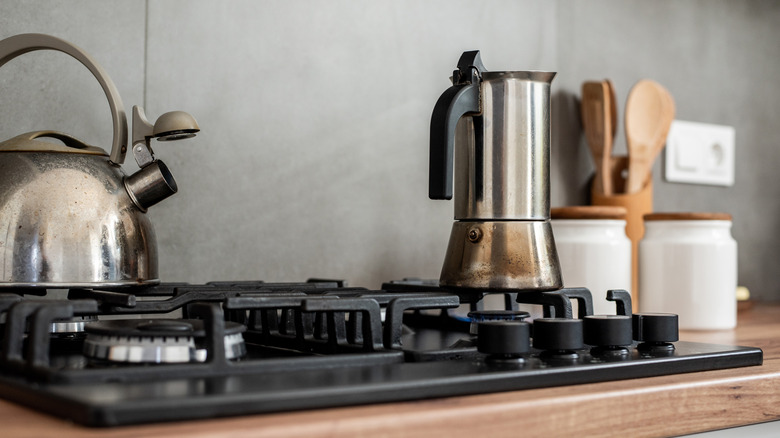
For its time, the percolator was a modern alternative to the tea kettle. Early prototypes date back to the beginning of the 19th century, though the first patented model came out in the 1860s. Despite the technology having existed for a long time, the percolator didn't become a mainstream household item until the mid-20th century. What made this appliance unique was the the way it heated water cyclically. Water was pushed up through coffee grounds and back down again, in a process that repeated until the heat source was removed. Convenient and efficient, the percolator meant that coffee could be more easily prepared to the tastes of whoever was making it. Leaving the machine to percolate for a longer period made for stronger coffee.
Percolators remained a popular home appliance for preparing morning brews from the early 1900s into the 1950s, only starting to fall out of favor in the 1970s, when alternative coffee preparation methods became available. Though drip coffee machines are more common in home kitchens and diners today, many electric coffee maker designs follow the percolator's example. These appliances are still around, but have become distinctly retro. Among today's coffee aficionados and busy home cooks, it's the espresso machines, French presses, moka pots, and coffee pods that have become the preferred means of daily coffee preparation.
8. The Toast-O-Lator
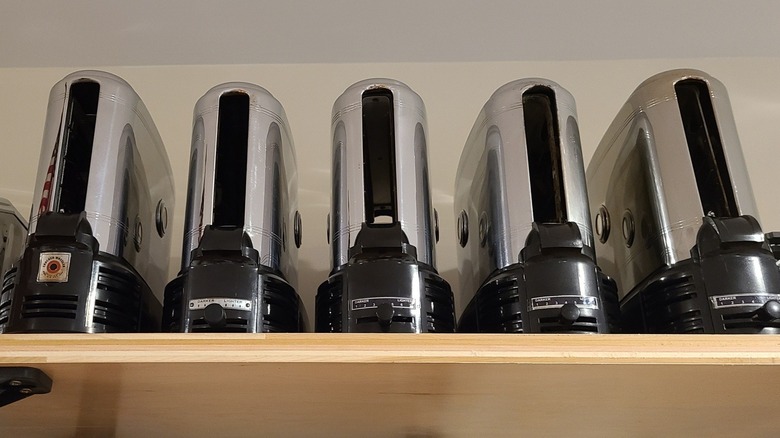
Toasted bread was invented centuries before the toaster, but it was never a convenient thing to prepare. Whether held over an open flame or heated in a pan, the early versions of toast needed to be watched carefully, to prevent the bread from burning. Automating this process was on many inventors' minds by the time electricity was entering households in the early 20th century. Early toasters functioned quite differently to today's machines, with the first electric toaster to reach consumers appearing in 1909. But, as was the problem with all analog methods before this invention, the first toasters only toasted one side at a time. Pop-up toasters, which heated both sides of a slice of bread at once, first became household conveniences in the late 1920s.
Though the pop-up variety was, and still is, the most popular kind of toaster, a more whimsical model was also common in the 1930s. Known as the Toast-O-Lator, this contraption functioned as a conveyor belt. Pieces of bread would glide slowly along, heating up in the process, to come out from the other side fully toasted. The Toast-O-Lator's additional novelty feature was its transparent window on the side, making it possible to watch the process of bread slices transforming into toast. While innovative, the Toast-O-Lator soon became a less-efficient novelty compared to the simpler pop-up toasters which appeared on the market in the 1940s. Today, it's mostly collectors who hunt for these vintage relics.
9. Coffee mills
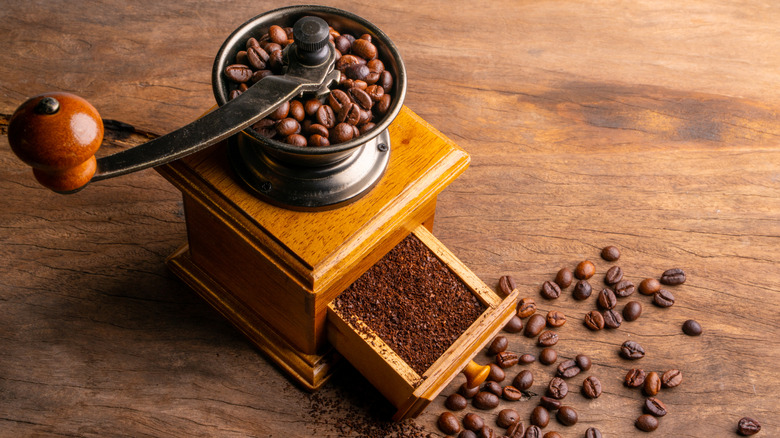
Also known as coffee grinders, coffee mills became indispensible to morning meal preparation after they were invented in the late 18th century. The first coffee mill patented in the U.S. was the innovation of one Thomas Bruff, a dentist who had Thomas Jefferson among his clients. Bruff's wall-mounted coffee mill was a revelation for grinding coffee beans. Prior to this tool, most households painstakingly pulverized beans with a mortar and pestle. Building off Bruff's hand-powered concept, different versions of coffee grinders would become household appliances throughout the 19th century, the most prevalent being box-shaped with a metal crank. Coffee beans went into the bowl at the top of the box and the crank would grind them into a powder that would fall into an awaiting drawer below. These grinders offered more convenience, and were also able to more finely grind beans, ultimately resulting in smoother coffee.
Hand-cranked coffee mills remained the dominant way to grind coffee beans until 1938, when the first electric version reached the market. Electric coffee grinders have become the preferred means of preparing fresh ground coffee since then, though even these are not always household staples. Today, with pre-ground coffee readily available in any grocery store, grinders in any form are less common than they once were. Antique coffee mills have become more collectors' items than anything else, though collectors will assert that their hardy, hand-powered technology still works like a charm.
10. Cast iron meat grinders
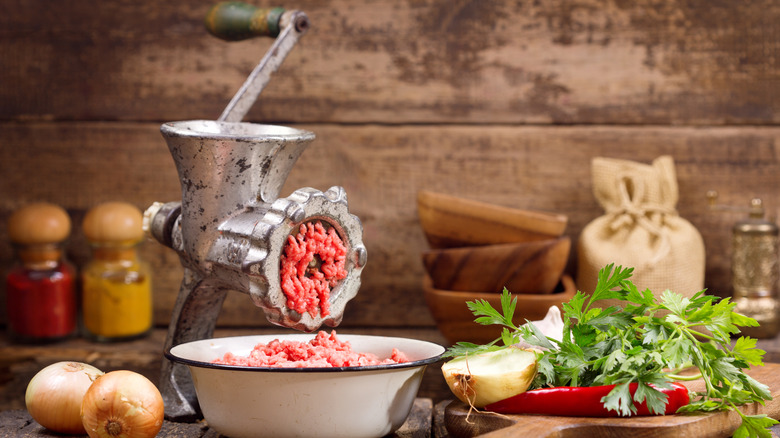
First invented in the mid-19th century, the meat grinder was a cast-iron solution to the laborious task of chopping and preparing minced meat by hand. The meat grinder drastically sped up this preparatory chopping through the use of a hand-powered crank that pushed meat through a metal plate dotted with small holes. The result was a uniform texture and neat, ground strands produced in one swift motion. Grinders also made meat more accessible to more people, as they provided butchers with a tool that could mix together less expensive cuts to offer more affordable options to the masses. The meat grinder's prevalence, and the abundance of ground meat that came with it, also led to the inevitable proliferation of the hamburger. While numerous people claim to have invented the hamburger, it's known to have appeared as a street food in the late 1800s. The convenience of this cooked, ground meat patty was the humble beginning for the worldwide phenomenon of fast food.
Today, grinding meat at home is a rare thing, as pre-ground meat is readily available in grocery stores. The same essential technology behind the hand-powered meat grinder is still used today, just on an industrial scale, with electrically-powered versions. This has relegated the meat grinder to a place among that set of vintage appliances that were game changers for their time but have, in turn, become obsolete due to the ever-flowing current of technological innovation.