

10 Groceries You May Struggle To Find In 2026
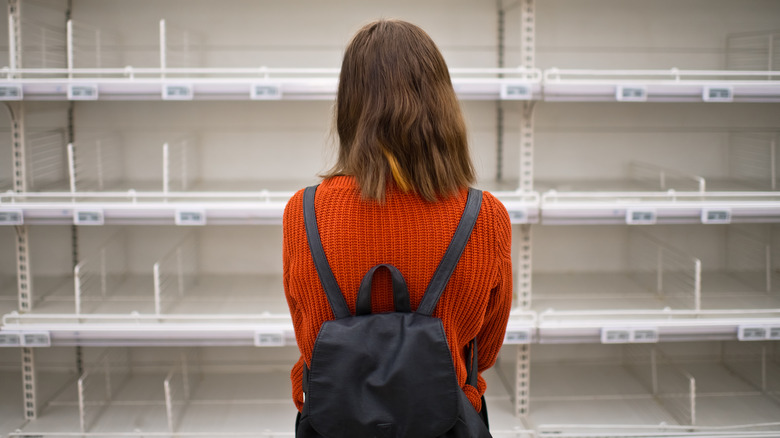
To shop for groceries in the United States is to expect lots of products on the shelves. We don't just want chips, we want the option to buy multiple different flavors of chips. When something is unexpectedly unavailable, it's unsettling. Unfortunately for our collective anxiety, food production is a variable thing. Now, this article isn't going to be all dire warnings and stock-up advice. There are no indications that 2026 will result in one of the worst food shortages in history. This piece is meant to be more of a combination of things to be aware of and potential upcoming trends.
Trends come and go. The times, as the prophet said, they are a-changing. The apocalypse is not coming just because you can't find pre-made ambrosia salad at the cold food bar or any other foods that used to be much more popular. Still, store inventory changes can be symptoms of things to worry about. For example, climate change and tariffs enacted by President Donald Trump will also be the cause of some struggles this year. Whatever the reason is, you may need to figure out some alternatives to these items in 2026.
1. Orange juice concentrate
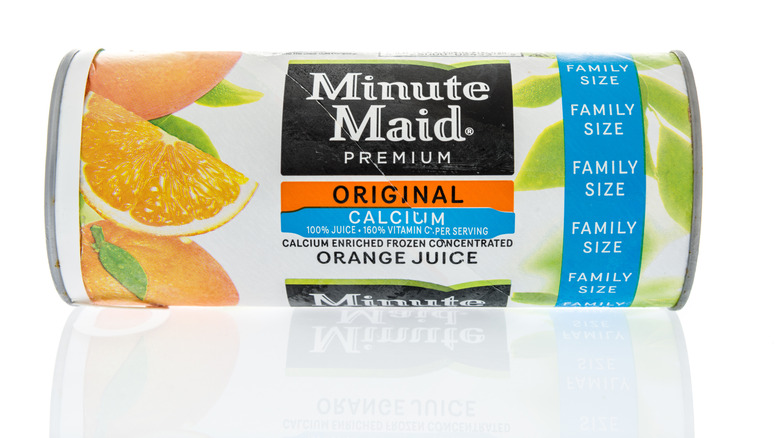
After 80 years on grocery shelves, Minute Maid orange juice concentrate is being discontinued. It wasn't just one bad weather year in Brazil and Florida affecting the price of oranges that killed the product, either. To be clear, OJ concentrate, as a product, is not going away entirely, but Minute Maid bowing out of the game does indicate certain things about consumer trends, as Coca-Cola announced that the decision was partially informed by shifting demand. People simply aren't drinking as much juice as they used to.
Juice concentrate does raise some red flags in the health-conscious mind. The stuff is made by extracting water from juice, and while there are a few different processes to do this, all result in some nutrient loss and a thick, syrup-like liquid. Fruit juice already has naturally occurring sugar, but any juice concentrate that isn't 100% fruit concentrate will also contain added sugars.
People got nostalgic at the news of Minute Maid orange juice concentrate being discontinued, but one Reddit commenter seemed to inadvertently sum things up by saying, "to be fair, I can't remember the last time I bought one." Hey, if you really want some OJ concentrate, there's always Tropicana.
2. Some General Mills cereals
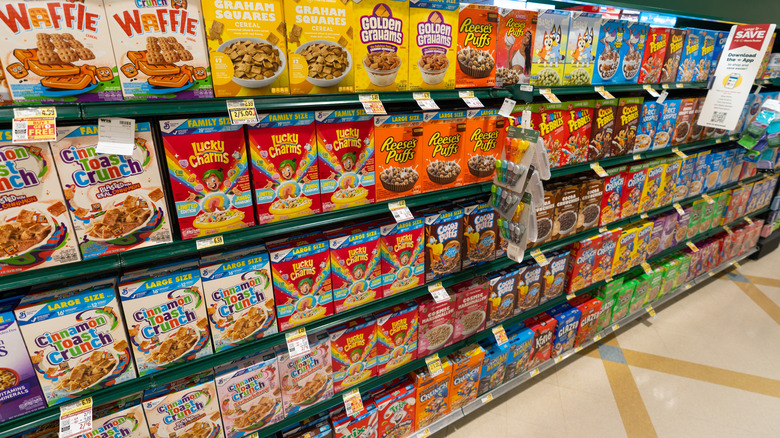
It seems that we're a long way from the heyday of sugary breakfast cereal. Maybe everybody's working for the weekend, but they're not necessarily working for the chance to get their "Calvin and Hobbes" on and eat Chocolate Frosted Sugar Bombs in front of Saturday morning cartoons. At the end of 2025, net sales at General Mills were down 7%, whereas operating profit was down 32%. During that same year, the company discontinued Honey Nut Cheerios Medley Crunch, Chocolate Peanut Butter Cheerios, and Honey Nut Cheerios Minis. Don't expect cereal variety to increase this year, is what we're suggesting.
A few factors could be at play here. Ongoing climate unpredictability puts corn and grain harvests in frequent flux, for one. Mostly, though, it's the fact that breakfast cereal sales have been declining for decades at this point. People are eating less cereal, especially sugar-loaded cereal. The reason why some cereals are no longer considered healthy has to do primarily with people's evolving opinions on what's healthy and what's not. Maybe the commercials used to tell us that sugary cereal in a bowl of dairy milk was part of a balanced breakfast, but now people are thinking more critically about what a balanced breakfast is. For their part, General Mills' new products for 2026 will include health-conscious items like protein cereal and granola.
3. Baby formula
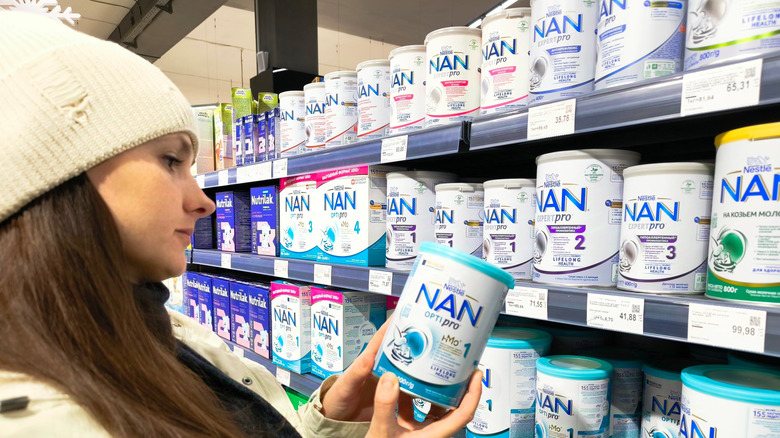
The 2020s have not been a good decade for baby formula. There was a shortage in 2021-2022 thanks to COVID-19, and the end of 2025 saw an outbreak of infant botulism cases caused by formula. Nestlé had to shut down production to get cereulide, a toxin that can cause nausea and vomiting, out of its formula. The cereulide issue seems to have been caused by an ingredient used in a range of products. The industry is working on addressing the problem, but there's already been a global recall on many different brands of baby formula. As of this writing, in 2026, there is a bill being discussed in Congress to prevent shortages and increase FDA oversight of production.
In the short-term, though, it could be difficult to find formula on grocery shelves. Being a new parent is stressful, so it's important to remember that one recall does not mean baby formula is gone forever. If the brand of formula you use is recalled, you can usually exchange it for a similar brand, and if you're getting assistance through WIC, your local WIC office may be able to help you find formula.
4. Certain spices
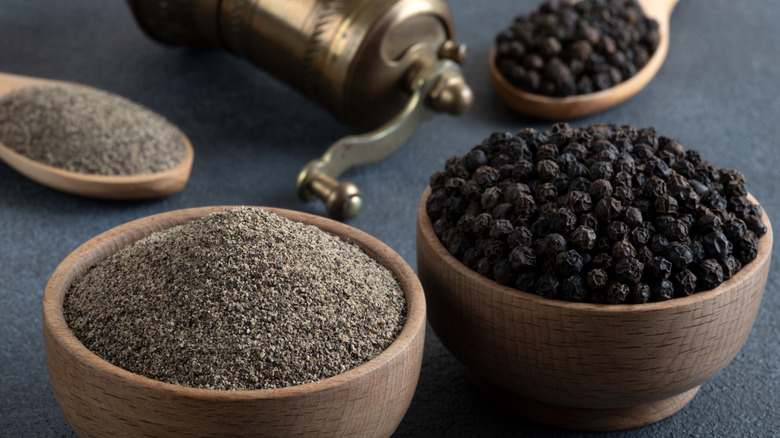
Bummer news for those of us who enjoy well-seasoned food. Thanks to a nearly 14% reduction in farm acreage, the spring 2026 cumin harvest in India is expected to be smaller than in recent years. Garlic could be in short supply, too, thanks to a difficult growing season in China and southern Europe. Garlic grown in California has suffered a "perfect storm" of bad conditions since 2023, and a return to normal is not expected until September 2026. Production of black pepper slowed significantly in 2025, with output down by as much as 20%, thanks to weather events in India, Vietnam, and Indonesia.
Tariffs could also affect black pepper prices and availability in 2026. Grocery shoppers in the United States are probably used to hearing dire warnings about tariffs since President Trump began enacting them in 2025. The haphazard ways those tariffs have been implemented have caused market uncertainty. Unpredictability isn't going away in 2026, and neither is the likelihood that those costs are passed on to consumers. It affects things that many of us take for granted, like black pepper.
That all said, there is some hope for your spice rack. Projections about the 2026 crop of black pepper are positive, and a good harvest is something to celebrate. There might be some pains before we see the results of that harvest, though.
5. Olive oil
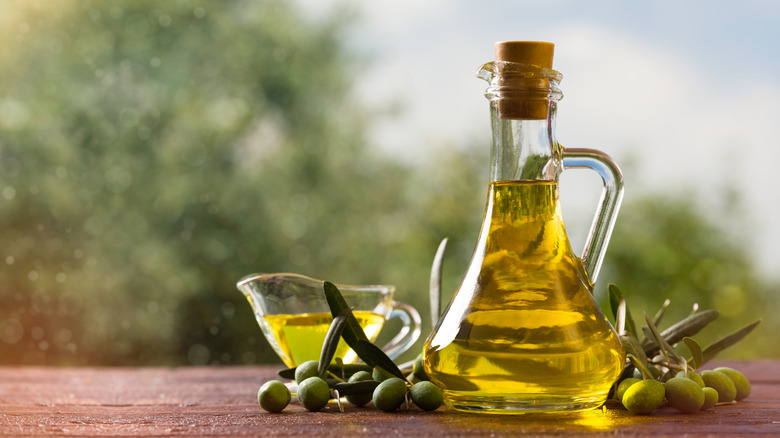
In 2025, the USDA predicted a 10% global olive oil decline for the 2025-26 crop year. Harvests in Greece have fallen because of climate-related production issues, while some producers in Jordan are worried that their olive trees might not survive recent record-breaking heat. Elsewhere, heavy January 2026 rainfalls in Spain disrupted harvests, resulting in fewer olives collected than in previous years. Considering the ancient origins of olive oil, there's a particularly grim element to this news — it's a shame that humanity has let climate change get bad enough to affect one of our greatest early culinary innovations.
One practical solution olive oil exporters are embracing is blending oils. Some producers are blending Greek olive oil and Spanish olive oil to keep prices competitive. If you start seeing olive oil prices shoot up, seeing fewer bottles on shelves, or even notice the stuff tasting slightly different to what you remember? Thank record high temperatures and excess rain, and hope that producers are hard at work with creative solutions.
6. Frozen cauliflower
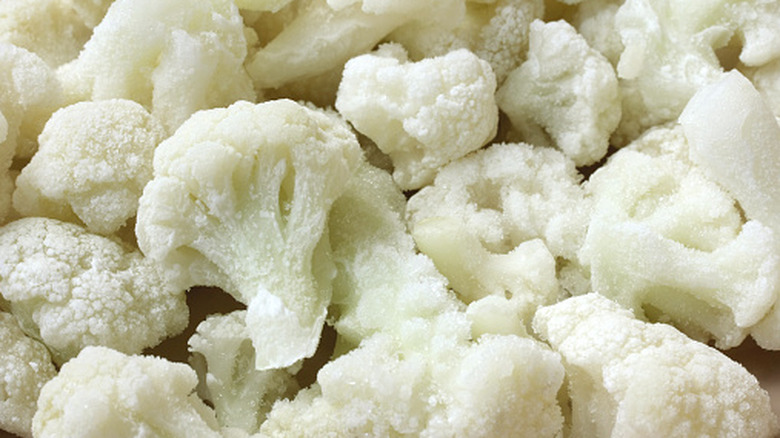
Cauliflower prices fluctuated by 230% in 2025. This volatility was fueled primarily by extreme weather in California, which grows 90% of the nation's cauliflower. Turns out, the cruciferous vegetable is not a fan of temperature changes, and things like unexpected frost or heavy rainfall can make growing difficult. A bad weather year, coupled with increasing demand for cauliflower, is an equation that results in potentially less cauliflower on grocery shelves in 2026.
Farmers are working on revised planting schedules and testing out stronger varieties of the plant, but those are future solutions. In the present of 2026, we have a shortage. The demand for cauliflower has grown in the 2020s, when frozen riced cauliflower has become a popular low-carb and gluten-free rice substitute. Cauliflower can also be turned into a pizza crust, another innovation that benefits our gluten-sensitive friends. An advantage that grains have over cauliflower, though, is the ability to be stored for longer periods of time. The higher demand caused by cauliflower's emergence as a grain substitute, coupled with low supply, adds up to rising prices. If you're reaching into the freezer for that bag of frozen florets, brace yourself for sticker shock.
7. Maple syrup
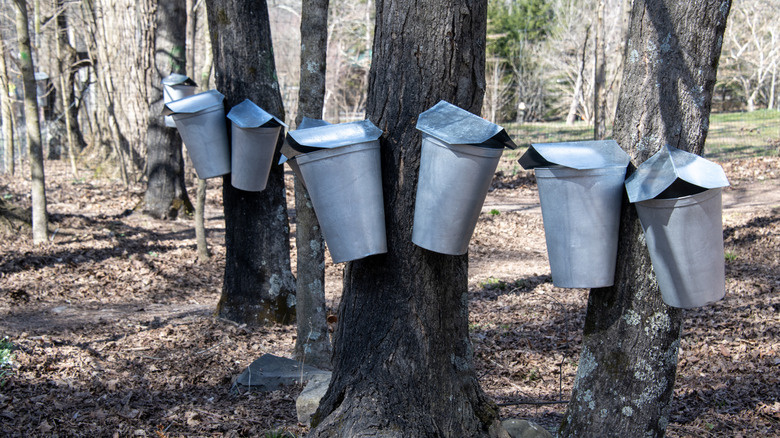
2025 was a difficult year for maple syrup production, with both U.S. tariffs and a shorter growing season negatively impacting production. The development of maple syrup depends on what's called a freeze-thaw cycle, which is when night temperatures dip below freezing but daytime temperatures rise above it. That fluctuation pushes sap up through the trees and out of taps. If the freeze-thaw cycle is not happening as much as growers plan, it's bad news. There are fewer and more variable tapping days, which means uncertain yields. Couple that with an unpredictable international market, and it's looking like a rough year for both Canadian producers and U.S. shoppers.
While some maple syrup is produced in the northern United States, 75% of the world's production comes from Quebec. Canada keeps a strategic reserve of maple syrup, but consecutive years of warm winters have nearly depleted those reserves. Some have even worried that hotter overall temperatures will lead to root damage and stunt tree growth, putting the future of maple syrup as we know it in jeopardy. Here's hoping the best and brightest minds are hard at work on that crisis. Sure, non-maple pancake syrup will do in a pinch, but there's no substitute for the good stuff.
8. Canned tuna
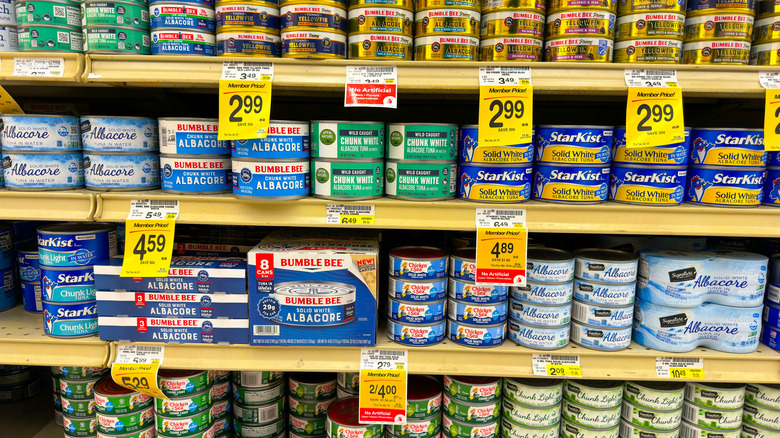
Tuna prices are weak globally, and sales towards the end of 2025 were low. Yellowfin tuna prices have been low, causing revenue loss for producers, and in 2026, skipjack tuna price volatility will also be a factor. These things feed into each other. Whatever is going on with skipjack tuna partially decides canned tuna pricing, and if that's fluctuating, then yellowfin prices have to remain low. All of this means tighter margins for producers, and likely higher costs for consumers. So even if you know what to look for when buying canned tuna, you might find yourself looking for any canned tuna at all in 2026.
When you think of a person squirreling away food in preparation for some future catastrophe, a pantry (or bunker) full of canned foods is one of the first images that comes to mind. If you're stocking up on canned foods in 2026, you might also run into some issues related to the cans themselves. Aluminum prices are up, and tariffs on imported tins are not going to help American grocery shoppers. Low-income shoppers who rely more heavily on canned goods are especially at risk.
9. Certain Frito-lay brands
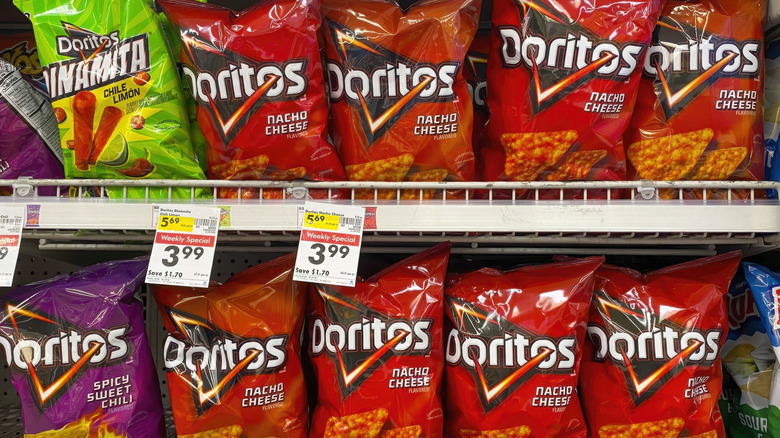
Changes are coming to our collective snacking habits. PepsiCo, which owns Frito-Lay, ended 2025 by announcing that it would reduce 20% of its production in 2026, closing three manufacturing plants. PepsiCo did not announce which products would be getting the ax, but Frito-Lay brands will be affected. Popular items like Doritos Dinamita and Hot Cheetos popcorn have already disappeared from store shelves in 2025. Soon, more chips will join the ranks of discontinued Lay's chips we want brought back.
Does this indicate that the market has hit a critical mass of chip varieties? Were there simply too many different types of chips available, and PepsiCo's production couldn't keep up with demand? Probably not. The American appetite for novelty snacks is boundless, and Frito-Lay is still putting out new products. Like General Mills, though, there seems to be something of a health-conscious shift. At the very least, Frito-Lay is getting in on the protein trend. PepsiCo's announcement indicated that new items like Doritos Protein and Simply NKD Doritos would be replacing some discontinued items.
10. Hemp milk, hemp flour, and other hemp products
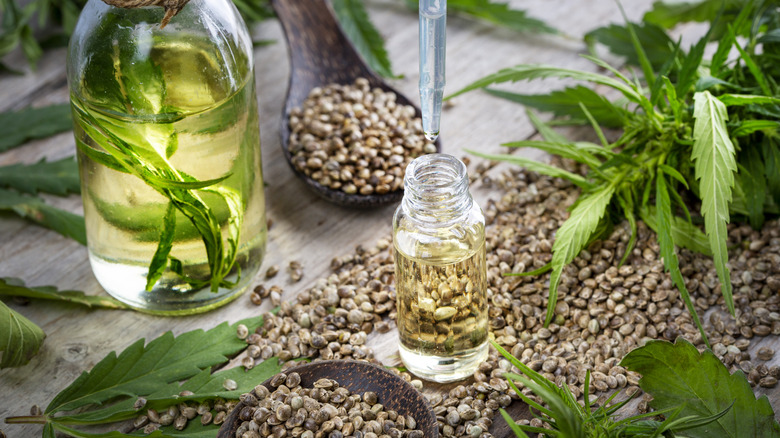
Regardless of your stance on legal marijuana or THC- and CBD-infused products, there are plenty of uses for hemp beyond getting high. Hemp milk is rich in vitamins and omega-3 fatty acids, while being low in fat. The market demand for hemp milk has grown a lot in recent years, as customers have become more interested in plant-based alternatives to dairy. If you're a baker, hemp flour is naturally gluten-free and rich in fiber. Hemp seeds are high in protein and fiber, and also an excellent source of dietary zinc. Unfortunately, the entire hemp industry is under threat.
At the end of 2026, a law that closes a loophole in the 2018 Farm Bill will go into effect. The loophole allowed products with intoxicating effects to be sold as "hemp," which is a legal product. Cannabis is still federally illegal, but expanded legality at the state level has increased production of hemp. This 2026 law is ostensibly aimed at hemp-derived products like THC-infused seltzers and gummies, but is likely to have consequences for the entire hemp industry. Even if you don't get high, but simply enjoy the flavor and health benefits of hemp milk, hemp seeds, or hemp flour, those products might not be as abundant as they were during the first half of the 2020s.