

10 Retro Kitchen Trends That Younger Generations Don't Understand

The way we cook, store, and consume food has evolved greatly over the years, and nowhere is this more apparent than in the spaces where we prepare food. From daily deliveries from the milkman to regular Tupperware parties, decorative fads to technological advancements, daily life surrounding meal prep in the kitchen once looked very different, as did the kitchens themselves.
Much has changed since the days when domestic servants kept large households running, just as electricity and refrigeration have redefined food preservation in homes of all sizes. In the same way that we've stopped using certain retro cooking hacks, there are many elements once deemed essential to vintage kitchens that might not make sense to today's home cooks. As technology has advanced and more resistant materials have been invented, kitchens have continually evolved to become more efficient hubs of household activity.
Throughout this continuous cycle, though, many things once relied upon daily in any well-equipped kitchen have since gone obsolete. Some aspects of once-popular kitchen layouts can still be found in houses that haven't been remodeled to fit contemporary design trends, while others remain covered up or even lost to history. Whether it's to do with floor plans, construction materials, or different cooking devices, here is a list of 10 retro kitchen trends that younger generations might not understand at first sight.
1. Linoleum flooring

A name with instant vintage associations, linoleum was formerly a ubiquitous material in household kitchens. Though it has long since fallen out of favor, it was once prized for its durability. Introduced to the public in the 1860s, linoleum was the response to the demand for kitchen improvements, as there was nothing comparable which preceded it that could be easily cleaned or remain undamaged by spills. Created by inventor Frederick Watson, the product is the Latin name for linseed oil, one of its primary ingredients. A combination of linseed oil and pine resin, thickened with cork dust and wood flour, results in a completely natural substance with antibacterial properties, making it a surface both resistant and hygienic, and therefore ideal for kitchen floors.
With nothing else comparable at the time, linoleum was embraced in kitchens far and wide, eventually becoming something as decorative as it was functional. Manufactured in colors and patterns both elaborate and subdued, the flooring suited a variety of decorative tastes and was easy to maintain. The only fault in this flooring was that its natural materials were technically flammable, and societal insistence on innovation would inevitably cause linoleum's decline in popularity. In the mid-20th century, it would be largely replaced in homes by synthetic flooring alternatives such as vinyl — made from plastic-based materials, this is often what people incorrectly refer to as "linoleum" in retro homes. Today, vinyl is still common as a kitchen flooring material, as are tile and hardwood.
2. Formica and tile countertops
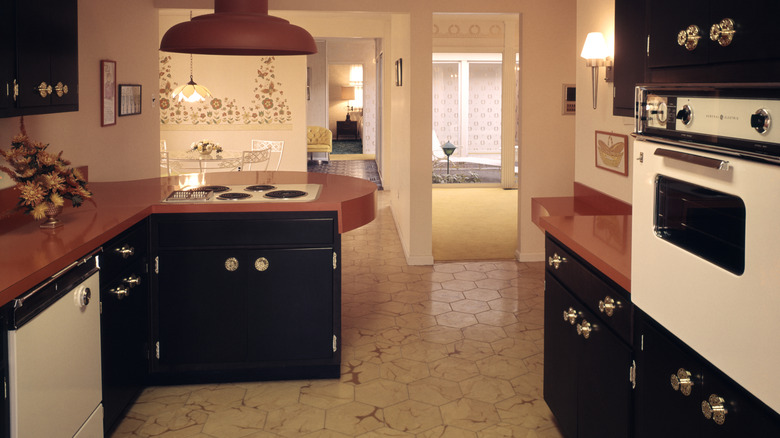
Another revolutionary product, unparalleled in its durability for the time, Formica has indelible retro associations and dates back to 1913. Originally designed as an electrical insulator and initially used in the manufacture of car engine parts, Formica didn't become a household kitchen material until the postwar boom of the 1940s and '50s. As an alternative to the laminate countertops popularized after WWII, Formica was heat-resistant and hardy. Made from melamine-laminated layers of paper, it could also easily be made decorative. Thus began a trend of colorful patterned designs that defined many a midcentury kitchen countertop. Though less common in renovated homes, this is still a material associated with the '50s diner counter aesthetic, and is still fairly common in some of these restaurants today.
Pre and post-Formica, tile countertops were another feature in vintage homes, popular in the 1920s and '30s before melamine swooped in, and later repopularized from the '70s to the '90s. With the potential to be colorful and customizable, tile counters were also fairly resistant, but not without their inconveniences. Setting heavy pans down too hard could cause cracks, and grout could be nearly impossible to keep clean. While tile is not unknown for kitchen counters today, it's since been replaced by more resilient natural surfaces, like quartz, granite, or marble. Though some colors suit vintage kitchens better than others, the move away from bright tile and Formica follows a contemporary kitchen trend towards more natural color schemes.
3. Breakfast nooks
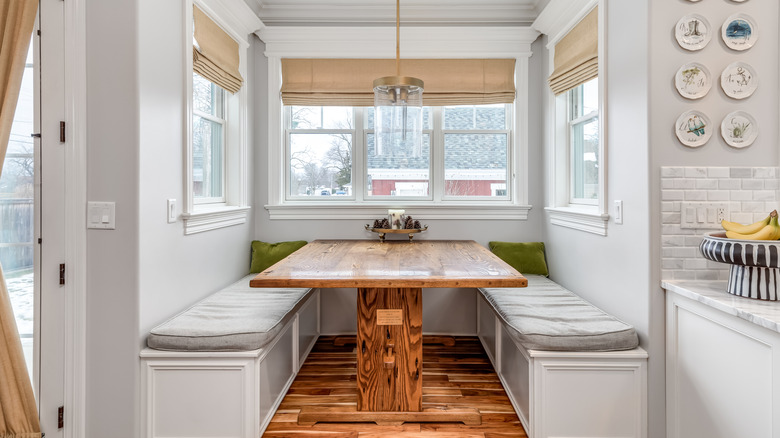
Also called breakfast alcoves, these designated dining spaces attached to the kitchen were especially popular in the 1920s. Part of an overall cultural shift away from strict Victorian social standards and domestic etiquette, the breakfast nook replaced the breakfast room of the previous era, providing merely a dining alcove attached to the kitchen rather than requiring an entirely separate room for morning meals. Intended to be a less formal space than the dining room, the breakfast nook was a central hub and a place where meals could be served and cleared away efficiently.
The breakfast nook became a regular feature in smaller homes, especially the bungalow-style houses which popped up as designated middle-class dwellings, filling the gap between city apartments and sprawling estates. Many such morning dining areas had a restaurant-like booth configuration with a built-in table and benches, making for a convivial extension to the kitchen that still kept dining and eating spaces relatively separate. This was the way most domestic households organized themselves around meals before open floorplan homes became a popular interior design trend. Open and unseparated communal space in homes arrived in tandem with the cultural embrace of modernity in the 1950s, redesigning home living to have dining, cooking, and social areas on the ground floor, all within one large, undivided space. Though uncommon now, separate breakfast nooks still remain a cozy feature in some vintage homes from the early 20th century.
4. Built-in appliances
While there are plenty of appliances that might add a vintage touch to your kitchen, there are also a handful of retro appliances that aren't really needed anymore. One such tool is the wall-mounted can opener, an innovation that arose in the 1930s. This was a decade after the convenient, hand-held rotary can-opener became available to the masses, both devices an improvement on the original method of using a hammer and chisel. A feature in many a retro kitchen, the company Swing-A-Way's wall-mounted can opener added extra leverage and could be flipped back against the wall when not in use, though it became less popular when more efficient handheld models arose after WWII. Today's rise of pull tab cans has rendered even hand-held can openers less handy than they once were.
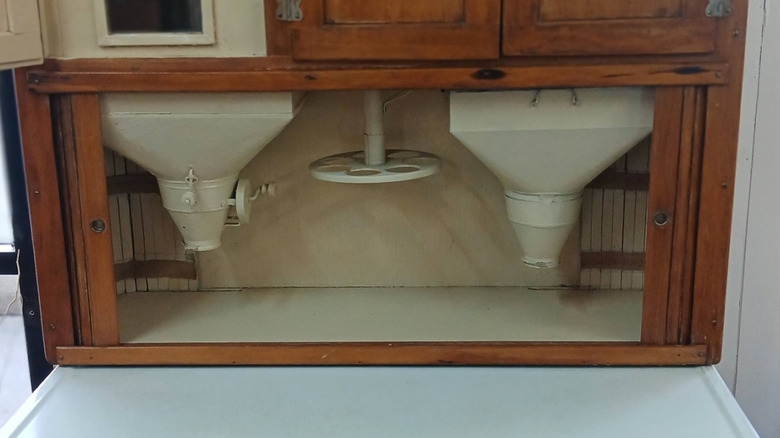
Another older home kitchen tool that's since lost its use is a built-in flour sifter. High tech in the day before pre-sifted flour became readily available in grocery stores, these sifters were typically included in freestanding organizational units, which predated the midcentury innovation of built-in cupboards. Known as Hoosier cabinets, these all-purpose kitchen storage spaces were popular at the beginning of the 20th century for their organizational capacity, which simplified food preparation. Some houses dating back to this era of Hoosier cabinets and home-baked bread might also have been equipped with a small, perfectly round drawer below the counter, which was used for convenient rolling pin storage.
5. Pull-down ironing boards
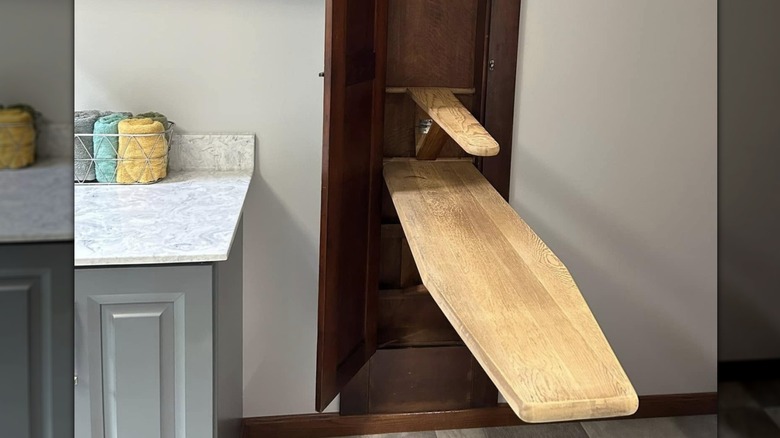
Some vintage homes may still have an unusual shallow cupboard in the kitchen, which might seem entirely out of place. Behind these mysterious cupboard doors are pull-down ironing boards. Extremely efficient for their time, these were meant to be space-saving conveniences that could easily be folded up and away when not in use. Adapting the design made by Sarah Boone, a black female dressmaker who patented the first collapsible ironing board in 1892, these ironing boards featured in home kitchens until the 1920s, for one very practical reason. Back then, irons were made of cast iron and heated directly on the stovetop, so having an ironing board within reach meant that clothes could be pressed while the iron was hot. Ironing also needed to be generally accessible, because it was a more routine task back in the day, and as hygienic as it was aesthetic — heating clothes killed off bacteria in addition to smoothing out wrinkles.
Today's tech-savvy laundry machines and wrinkle-free fabrics demand a lot less ironing to become fully clean or presentable. Ironing boards may seem generally old-fashioned as a result. Those built into vintage kitchens might seem even more so now that modern home floor plans have evolved to include entirely separate laundry rooms where all clothing maintenance typically takes place. The built-in, pull-down ironing boards that still remain in some retro homes speak to a time when the kitchen was a centralized hub for all manner of domestic tasks.
6. Meat and pie safes
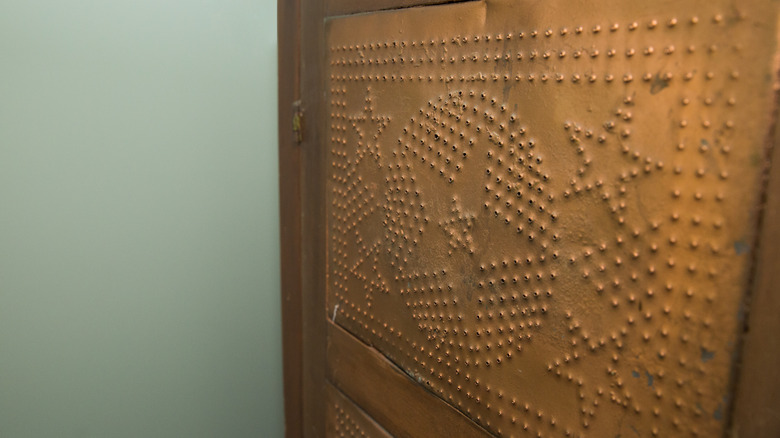
Before the refrigerator, there was the icebox, and before the icebox, there was the pie safe. This is an item with no practical use in contemporary kitchens, but was once an essential means of food preservation in a time before electricity or refrigeration. Popularized in the United States in the 1700s, these free-standing wooden cabinets were used to store freshly baked pies and baked goods so that they could cool without attracting insects or rodents. Made from wood, they were outfitted with screen doors and siding, or even sheet metal perforated with holes, in a design as decorative as it was functional. The holes or mesh would allow air flow to circulate, while keeping any invasive critters out.
Another related but slightly more recent food preservation cabinet was known as the meat safe. Functioning similarly to the pie safe by relying on ventilation, these cabinets resemble wooden hutches with mesh screen doors and siding. Typically placed in shady corners of kitchens or on back porches, meat safes kept insects out and allowed air to circulate so that moisture wouldn't build up and contaminate meat that wasn't being immediately prepared for consumption. Contemporary to the ice box, these kitchen safes were an effective way to store perishable foods before electric refrigeration, and were used for butter, eggs, and raw meat, with the latter typically kept on lower shelves so that any unforeseen drippings wouldn't contaminate the rest.
7. Milk doors
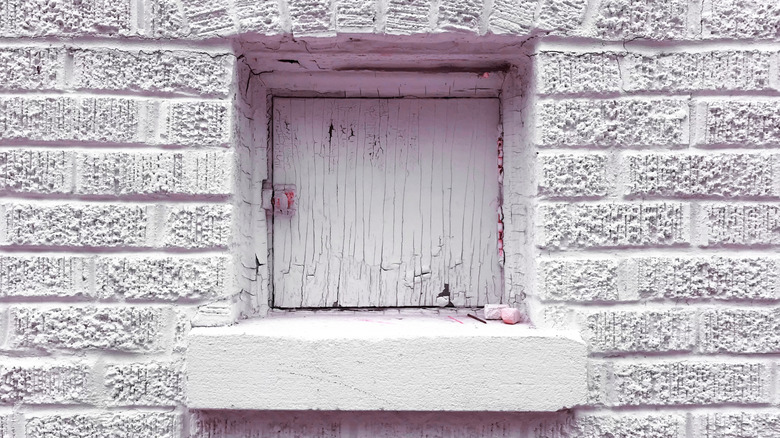
Some turn-of-the-century homes still have an unusual cubby in the wall with a small door on both sides, one giving access to the outside of the house. This is the milk door, once used daily as part of a now obsolete way to buy dairy products. Milkmen brought milk to households every morning, first by horse and cart and later by milk truck, allowing households to enjoy fresh dairy without it spoiling. These milk deliveries became the go-to way for families who'd moved into the city to have access to milk and butter. They were a part of daily life in the United States from the mid-1800s until the post-WWII economic boom, when the milkman's role was replaced by home refrigeration, which turned grocery milk into a cheaper alternative.
Before the milk door, the milkman would simply leave glass bottles of milk and fresh butter on porches, but the invention of a designated cubby streamlined the process. Sometimes these were even insulated spaces that kept milk cool until someone could bring it inside. The milk door was also a means of communication, where families could leave notes or payment for their order in this cubby, as well as empty bottles for the milkman to collect. While this service is no longer a part of daily life, many remaining milk doors in old houses have found a new purpose today as a convenient place for packages to be delivered.
8. Butler's pantries and dumbwaiters
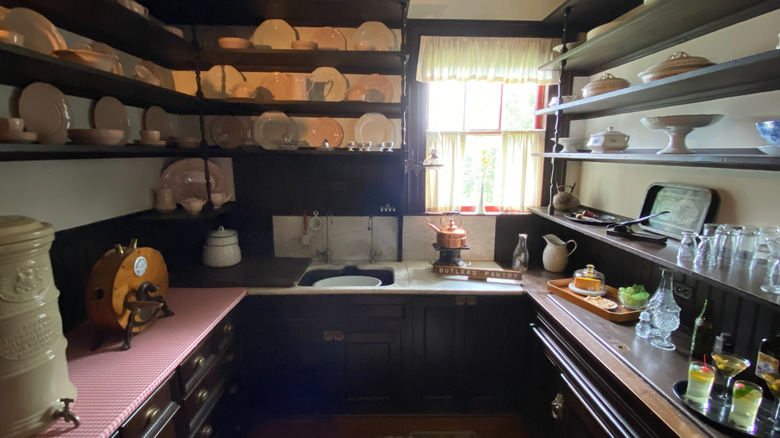
Larger old homes have plenty of strange corridors and cubbies connected to the kitchen, which speak to the way households were run differently within families that could afford to employ domestic help for housework. A common feature in wealthy families' homes throughout the 19th century, the butler's pantry was a transitional space closed off from the dining area and typically separate from the kitchen. This was an all-purpose space for final preparations where dishes for every course of the meal might be arranged or plated before being served. Often outfitted with ample counter and cupboard space, the butler's pantry was also where family crystal, silver, china, or linens might be stored, a convenient and useful organizational strategy due to the room's proximity to the dining area.
Another unusual feature in some kitchens from this era was the dumbwaiter, a small elevator designed for transporting food between the kitchen and dining room. Especially useful for kitchens which might have been on a lower level than the dining area, dumbwaiters became popularized towards the end of the 19th century, though the concept dates back much further. Originally consisting of a hand-operated pulley system, these could easily transport platters of food between floors to avoid them having to be carried up or down flights of stairs. Dumbwaiters eventually became mechanized and were adopted as a popular feature in hotel and restaurant kitchens as an efficient means of transporting prepared dishes.
9. Matching Tupperware sets
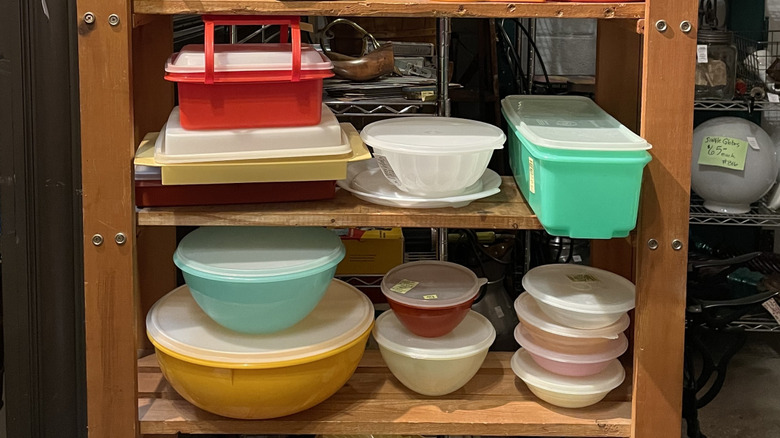
One common sight in retro kitchen cupboards was the ubiquitous matching Tupperware set, pervading households with widespread popularity in the 1950s and 1960s. Invented during WWII by Earl S. Tupper, these durable, indestructible, air-tight food storage containers revolutionized food preservation at the time. Made popular by the popular Tupperware parties hosted in people's own homes, an innovation by saleswoman Bonnie Wise, these plastic storage containers were a trendy addition to the arsenal of kitchen tools, and Tupperware products soon featured more than merely lidded containers.
The history of Tupperware's rise and fall comes with the introduction of more than just food storage possibilities. The well-equipped midcentury home cook might have Tupperware pitchers, salad bowls, Jello molds, drinking tumblers, lunch box dividers, and larger containers intended for transporting cakes or main courses to parties, potlucks, or picnics. An organized (or perhaps eclectic) collection of Tupperware products in a designated kitchen cupboard was the hallmark of any midcentury kitchen. Though these vintage storage containers are still around, they've fallen out of favor since the brand's patent expired, leaving copycats to manufacture cheaper, imitation products that serve the same base function. With newer awareness and research into the effects of plastic on human health and the environment, these containers have also been on the decline as many households have begun to prefer glass, metal, or even bamboo containers as a healthier and more ecologically friendly alternative.
10. Kitchen phones
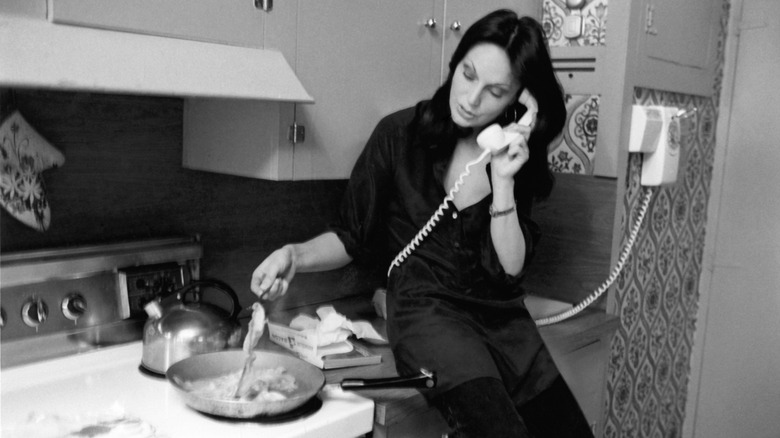
The wall-mounted landline was another retro kitchen item that further contributed to making this part of the house the central hub of activity. A nostalgic feature of the days before cellular phones and mobile devices, the kitchen phone was a staple in many homes, especially in the 1970s. Typically mounted on the wall and equipped with a long cord, these phones often came in bright colors. Though conveniently located in a place where they could be easily accessed when someone rang, they also didn't offer much privacy to members of the family hoping to talk without eavesdropping or interruption.
Omnipresent in homes and apartments, the wall-mounted kitchen phone was an everyday device that persisted into the 1980s. These phones have gradually been replaced by ever-evolving phone technology, from the cordless but chargeable landlines that could be placed throughout the house to today's omnipresent smartphones. Even though cords or batteries may no longer keep cell phones tethered to the kitchen, the abundance of holders and charging stations available today regularly coax portable phones back into this space. No longer used exclusively for making calls, plenty of home chefs enjoy playing music or podcasts while they cook, or use them to easily consult online recipes. While this speaks to our use of phones evolving significantly over the past 50 years, it also shows that the kitchen remains a central place for household activity, no matter the tools at hand.