

The Worst Vodka Brands To Buy, According To Bartenders
Despite its lofty perch as one of the top-selling spirits categories in the world, vodka gets kicked around a lot. When the craft cocktail renaissance of recent decades brought a lot of unique and interesting spirits and liqueurs to the forefront, vodka became an easy target for newly energized mixologists to scoff at. Its neutral profile and reputation for being an amateur drinker's spirit of choice meant that cocktail pros and enthusiasts with so-called serious taste shunned the centuries-old beverage. Typically with these kinds of trends in the bar world, it's only a matter of time until there's a backlash to the backlash, and these days vodka isn't the industry punching bag it used to be.
This re-embracing of vodka by cocktail pros and aficionados is in part due to the rise of quality artisanal vodkas that offer character that the spirit often lacks, and a new appreciation for vodka's versatility in mixology. There are tons of fantastic vodkas on the market now which are tasty enough to win over all but the biggest haters. Unfortunately there's also a deluge of mediocre, overpriced, and over-marketed brands, as well as some pretty terrible bottom-shelf swill. As a bar manager and spirits buyer, I've tasted countless vodkas over the years. In my humble professional opinion, along with those of my fellow bartenders, these are the top eight brands you should avoid.
UV
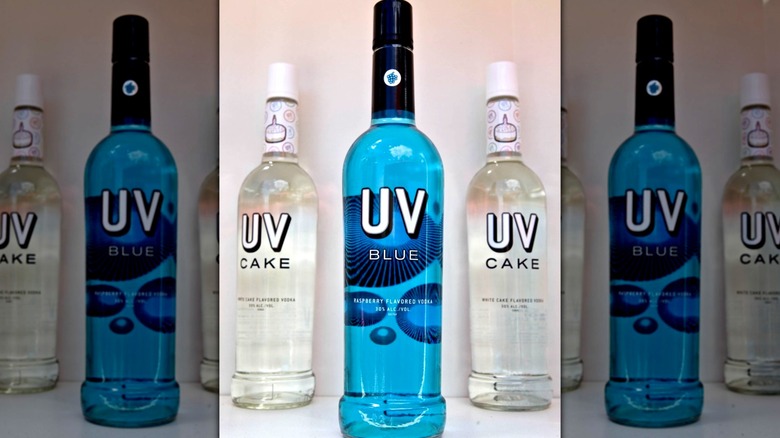
One of the unspoken beliefs held by many bar professionals is that any vodka brand that focuses on flavors is likely to be low quality. If that flavor-driven brand is also extremely cheap, that assumption becomes closer to a fact. UV vodka ticks both of those boxes. While they produce unflavored vodka, the main thrust of the brand is its bright fruity flavors like grape and mango. They've even produced a vodka flavored with sriracha. The brand claims that its flavors are all-natural, and while that's certainly possible with fruit, it's a mystery how one naturally infuses vodka with cake.
These flavored vodkas are sweetened with sugar, giving them a candied quality. Any bartender will tell you that if a liqueur or spirit is full of sugar, its versatility in cocktails is limited, since you don't have as much control over the sweetness level of your drinks. That makes UV's flavors really unsuited to mixology. The brand's unflavored vodka is fairly inoffensive, though it does have a bitter note on the palate that keeps it from being smooth. Because of its sweetness and low price, UV is vodka brand for young, inexperienced drinkers, not so much for bartenders.
Ciroc
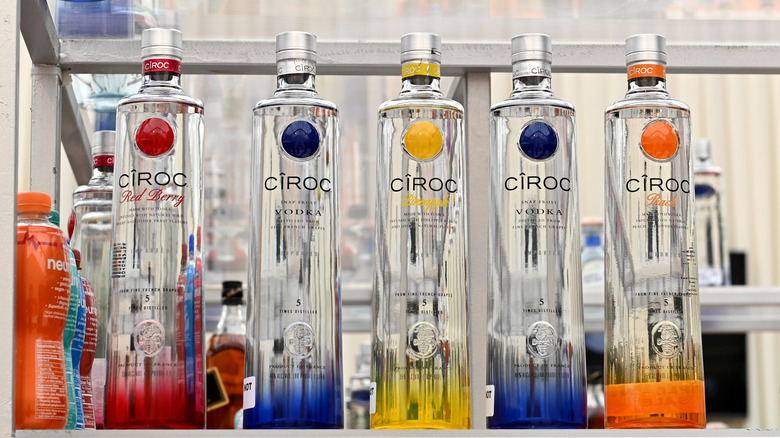
Ciroc vodka exploded on the scene in 2003 mainly due to its celebrity-centric marketing, its fancy bottles, and its identity as an "ultra-premium" spirit. While its unique makeup helps it stand out in a crowd — it's distilled from French grapes, rather than the typical grain — the hefty price tag doesn't match up with the product inside. The spirit's fruit base means that even the unflavored version of Ciroc is sweet, making it tough to mix with.
Like many other brands on this list, Ciroc is heavily focused on its flavored vodkas. Some are more successful than others, but many of them have an artificial, even medicinal taste reminiscent of cough syrup or cold medicine. Putting fruit flavors on top of a base vodka that's already fruity causes some unpleasant clashes, and there's a lack of consistency with the different varieties. Some flavors pack a major punch, often too aggressive, while others are more subtle and hard to pinpoint. At Ciroc's price point, there's a lot to be desired — you're paying a premium for the marketing, not just for the product.
Grey Goose
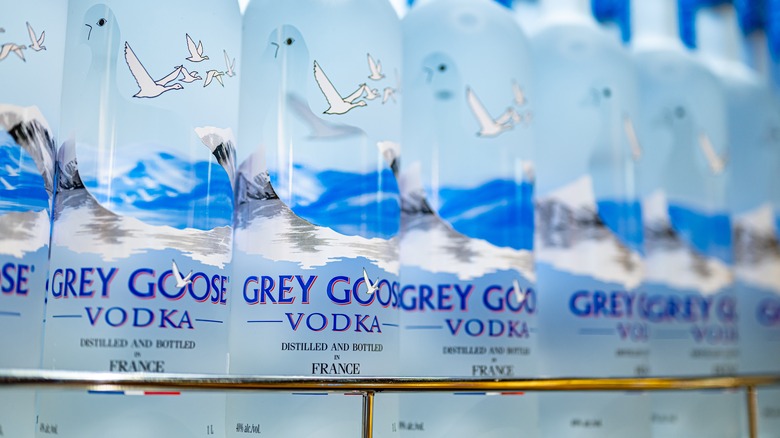
Grey Goose is perhaps the most famous example of marketing taking a product into the stratosphere, regardless of what's in the bottle. While it is produced in France, which is a massive part of its premium identity, it was actually created by an American who came up with the name and the brand, but hadn't distilled a single drop. There's no arguing his wild success, as he made Grey Goose into a global phenomenon that's among the most popular vodka brands in the world. There's also no arguing that Grey Goose is wildly overhyped, and is more about image than strictly quality.
Unlike many vodkas, Grey Goose is only distilled once, ostensibly to retain more flavor from its base grain, which is French winter wheat. It does have a unique character and a noticeable grainy warmth, but you can also pick up some unpleasant notes of ethanol and a bit of a rustic quality that seems incongruous with its price tag. I've done several vodka tastings with various brands, and when Grey Goose is tried blind, it's very rarely anyone's favorite. If it were less expensive, it would be a better buy, but then it would lose its prestige. There are other vodkas you can find at this price that are more focused on quality.
Pinnacle
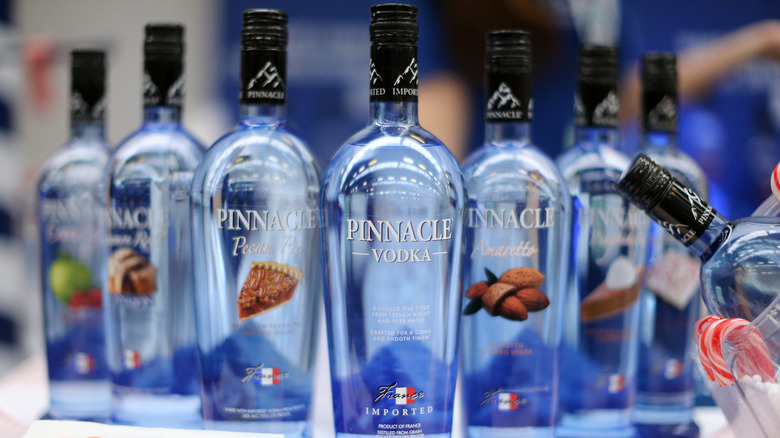
When it comes to wacky flavored vodkas, it's tough to find a wilder brand than Pinnacle. Like UV, Pinnacle also makes a cake flavor, but they don't stop there. They have an entire range of "whipped" flavors, which attempt to capture the taste of sweet whipped cream. In addition to the usual line of fruit flavors, they've also branched into spicy takes like habanero and something called atomic hot, other dessert styles like salted caramel and cookie dough, and even a limited collaboration with Cinnabon.
Sure, these flavors are fun and kind of goofy, and the bottles are pretty cheap. Their utility, though, is extremely limited. Flavored Pinnacle shots and 21st birthdays seem like a logical pairing, and the spicy vodkas would be at home in a Bloody Mary. Other than that, the flavors are so aggressive, and so oddly artificial tasting, that it's hard to imagine a bartender reaching for Pinnacle. Only one bar I worked at in my career carried Pinnacle, and the only person who ever opened a bottle was our pastry chef who used the flavors in various dessert components. There's an unflavored Pinnacle as well, which is serviceable in a pinch, but it's not worth seeking out.
Absolut
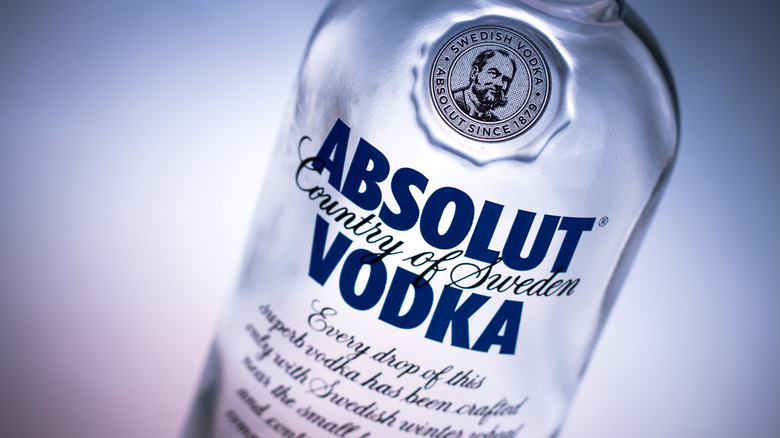
Along with Grey Goose, Absolut is one of the brands that jump-started the trend of flooding the liquor scene with aggressive marketing, making it a household name and an incredibly popular vodka around the world. Creative advertising campaigns involving famed artists like Andy Warhol and Keith Haring gave the brand a classy, cutting-edge vibe and pushed the Swedish product into bars and homes all over the world. The question is, are people buying Absolut for the vodka, or for the image surrounding its brand?
Absolut is certainly not the worst vodka on the market, and it's not prohibitively expensive. At its price level, though, there are other superior vodkas out there that don't focus more on crafting a high-quality product than crafting a brand identity.
Absolut has also gone hardcore into the world of flavors, limited edition bottles, and pop culture collaborations. While some of these products are pretty good — Absolut Peppar, for example, is fabulous in spicy and savory cocktails — it just hammers home the brand's focus on stunts and gimmicks. Case in point, the brand recently used AI to create cocktail recipes, a move that you might imagine would rub professional mixologists the wrong way.
Crystal Head
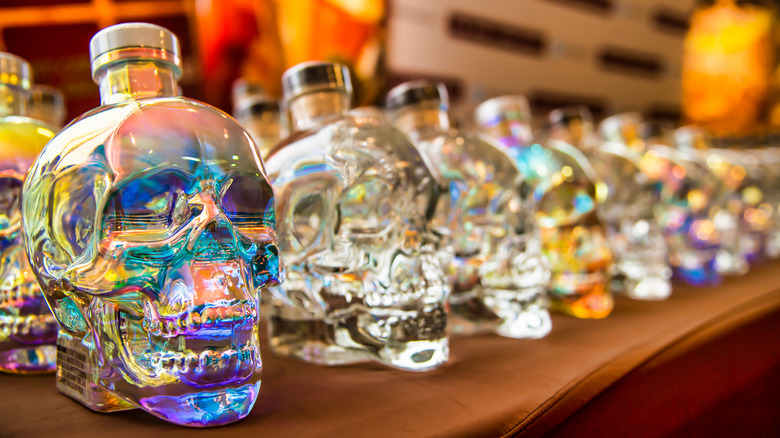
When it comes to vodka marketing gimmicks, one brand sits at the top of the list of offenders: Crystal Head. Famous for its elaborately crafted glass bottle in the shape of a skull, this brand is also celebrity-linked, with entertainer Dan Aykroyd at its forefront. Crystal Head produces three main varieties of vodka, each made with a different base: wheat, corn, and agave. They release a lot of limited editions, too, with different versions of the skull in various colors and styles. There's no doubt that these skull bottles are cool and create a unique brand identity. They are also arguably the main selling point.
The corn and wheat versions of Crystal Head, known as Original and Aurora, are actually quite good, very smooth and balanced. The Onyx, which is made from agave, is an odd duck, with plenty of tequila notes that make you wonder what category of spirit it really belongs to. As by far the priciest brand of vodka on this list, though, you have to admit that what you're paying for is the bottle.
In similarly gauche fashion, the brand also claims to filter its vodkas through layers of Herkimer diamonds. What that might accomplish is anyone's guess, and just adds another marketing gimmick layer onto things. As a Canadian product, this Crystal Head's sky-high price could get even more out of reach with escalating trade wars, making it even harder to justify the cost.
White Claw
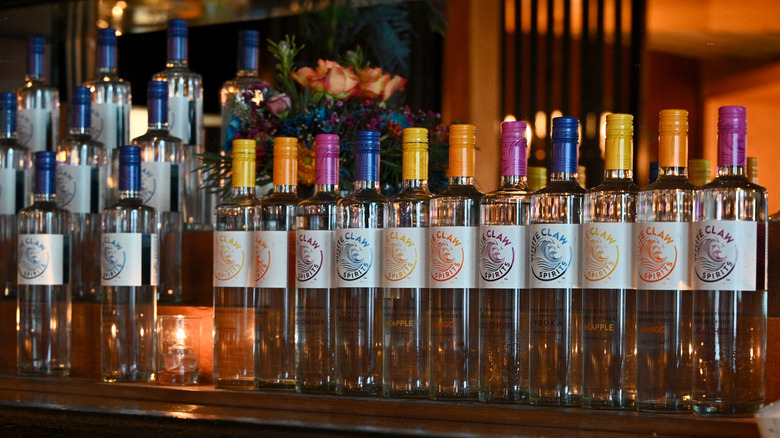
Yes, the same White Claw that started the hard seltzer trend now makes its own vodka. This relatively new addition to the already saturated vodka market is banking on its name recognition to compete with more established spirits brands. Similar to White Claw's canned beverages, the vodkas also come in a range of fruity flavors, along with an unflavored version. White Claw's vodkas aren't particularly cheap, lying at around the same level as Absolut and marketed as premium.
Yet another range of flavored vodkas seems unnecessary, and White Claw is attempting to capitalize not just on its name, but also on its distillation process, which the brand claims is completely unique. Trying to dig into exactly what that process is leads to a lot of dead ends. Called "triple wave-filtered," this method somehow includes coconut shells and the pressure of three ocean waves, but more specific details are hard to come by. If you love the White Claw brand, this could be worth the price, but it's not the smoothest or cleanest vodka at this price point.
Smirnoff
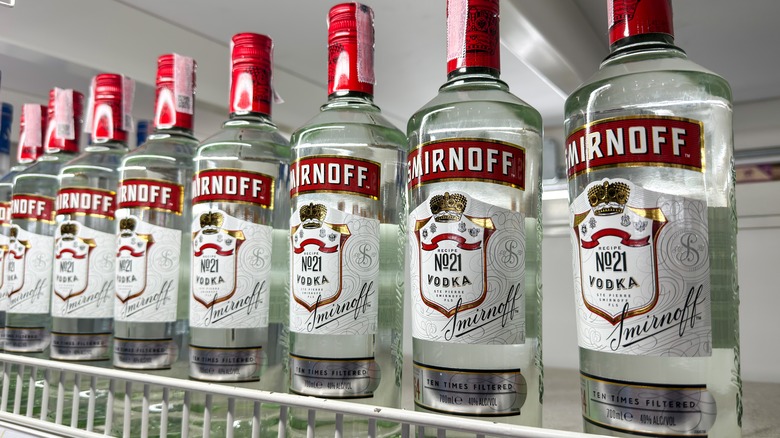
It's cheap, it's available everywhere, and those are the best things you can say about Smirnoff. This industrial workhorse of a vodka is the best-selling brand worldwide, largely due to name recognition and affordability. If you're graduating from the cheapest plastic jug, below the bottom of the shelf brands, it's a decent enough gateway vodka that lacks some of the overt offensive harshness of your Popovs or your Burnetts. Taken at face value, though, it doesn't have much else to offer in the way of taste or texture.
Smirnoff's multiple distillations and filtrations are meant to make it as neutral as possible, which is fine for a vodka, and what many people want from this spirit. However, you can't filter out everything, and a vodka mass produced at this price and scale is far from hand-crafted. If you mix and dilute Smirnoff aggressively, you can mask some of its unpleasant notes, but the burning finish tends to poke through regardless of what you do with it. Throw a few dollars more at your vodka, and you'll have a much better experience.
Methodology
During my early days of bartending, nothing hit the spot after a tough shift quite like an ice-cold shot of vodka. When the spirit was out of favor with most mixologists, and some cocktail bars even refused to stock any vodka at all, I remained a staunch defender of the stuff. Later on as a bar manager and spirits buyer, I was continually impressed by the unique and intriguing artisanal vodkas that I was introduced to, and remained a fan of the larger brands that I'd always considered high quality and good value.
For this list, I avoided lower-than-bottom shelf brands, which we all know we should avoid, and focused on vodkas you're likely to see in a bar. I consulted my years of spirits tasting notes and pulled out the least impressive vodkas that I've tried over my career. I revisited some that I had easy access to, in order to make sure my opinion remained the same. I also consulted some of my fellow bartenders and bar managers who are still active in the industry to get their opinions on the vodkas I chose, and browsed various spirits sites on the web to get a feel for how these brands are viewed out in the real world. In the end, though, this list is based largely on my personal views, a combination of vodkas that I find gimmicky, overpriced, or just plain bad — or in some cases, all three.