

1920s Food Products You Can Still Buy Today
It's no secret that food products come and go. Nowadays, it can feel as though every few months, your favorite new item is wrenched from shelves before you can stock up. This is the reality of the ultra-competitive food industry, in which new brands are constantly battling for your attention: It's estimated that about 15,000 new food products are introduced to the market each year, and 90% of all of those will fail. So it's pretty amazing when brands can last not just a decade or two, but a century. And what's even more amazing is that so many of the items we love today have managed to do so.
We're not quite sure what was in the water during the 1920s, but it was a particularly vibrant time for iconic food products. Items like Rice Krispies, Kool-Aid, and Twizzlers were all born during this decade, and they're now just as prominent as ever. Others, like Wheaties and Charleston Chews, have become legacy products that are still enjoyed by thousands of people every day. Let's take a deep dive into food history and see which products those clever folks were cranking out back in the '20s.
Rice Krispies
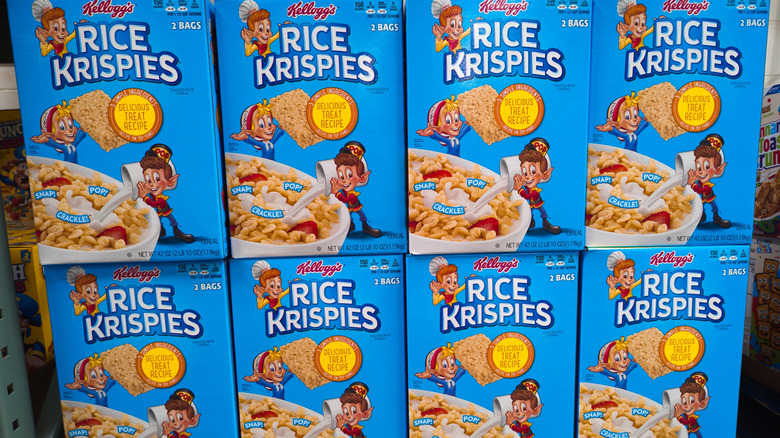
It's hard to believe that there was a time when the Snap, Crackle, and Pop of Rice Krispies didn't exist. That time was before the 1920s, the decade that Kellogg's unleashed this classic product on the world, changing the landscape of breakfast dishes for good. Rice Krispies were invented in 1927 by the development team at Kellogg's, and when the cereal was deemed a hit by W.K. Kellogg himself, it was presented to the world the following year. The words snap, crackle, and pop were first attached to the cereal in 1929 (later becoming one of the most famous slogans of all time), and its mascots began appearing several years later. It wasn't too long before Rice Krispies Treats were invented, either: Those were created by Iowan Mildred Day in 1939, before promptly taking over the world.
Throughout the years, Rice Krispies have been sold in various forms and flavors, with strawberry and chocolate versions also widespread. At its core, though, this product has barely changed in its near-100-year existence. Perhaps that's because of its simplicity: When the Kellogg's team stumbled upon this cereal, maybe they had an inkling that a humble kernel of popped rice would end up being timeless.
Cheez-Its
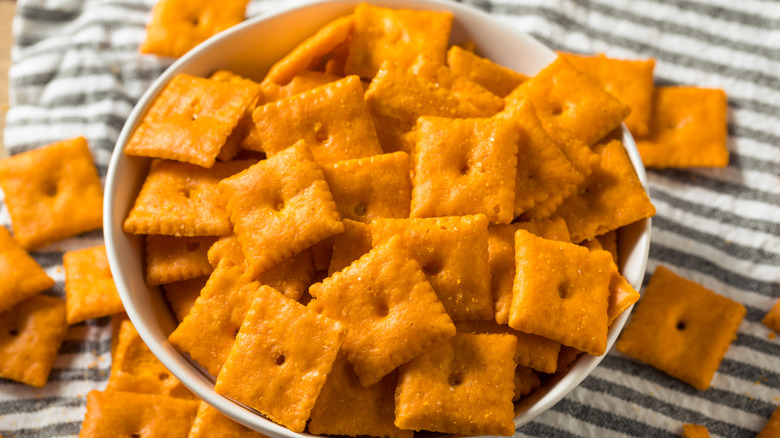
Cheez-Its have been around for a lot longer than you probably think. This snack still feels pretty modern today, thanks to its parent company, Kellanova, keeping its image and branding up-to-date and introducing a host of different Cheez-It flavors to the market. However, Cheez-It crackers actually started life way back in 1921. These little nibbles were born in Dayton, Ohio, and were invented by the Green & Green cracker company. Its name was trademarked, but the company had to get a little bit creative about how it would market the product, given that nobody had any concept of what a Cheez-It actually was. As a result, they dubbed the crackers a form of "baked rarebit," with Welsh rarebit presumably acting as inspiration.
It seems as though that marketing move worked to get Cheez-Its off the ground, and they were a hit. The snack saw a spike in popularity in 1929, when the Stock Market Crash led people to panic-buy the shelf-stable item. Over the years, the brand has changed hands several times, and while Green & Green is no more, its legacy remains strong in this cheesy little snack.
Reese's Peanut Butter Cups
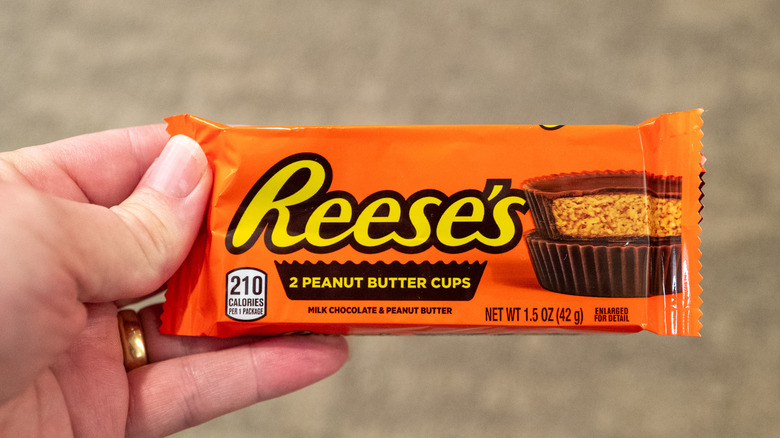
You don't get to be as iconic as Reese's Peanut Butter Cups are overnight, and the snack's been building its legacy for a long time. Almost 100 years, in fact. One of our favorite peanut butter cups, the snack was invented by H.B. Reese back in 1928, when he came up with the combination in the basement of his home. Reese had already created his own candy company by this point, but it was the creation of Peanut Butter Cups that sealed his fate and propelled him to enormous success. For all of you folks thinking about giving up on your dreams, take Reese's example as proof that sometimes it takes some time.
Reese was simultaneously working at The Hershey Company's factory, and when Peanut Butter Cups took off, he quit his job. He continued to collaborate with the company, though, which supplied chocolate for his cups. In 1963, six years after Reese's death, his company was sold to The Hershey Company, which has continued to manufacture Peanut Butter Cups to this day. It remains arguably its most iconic product, and one of the most recognizable candies in the country.
Kool-Aid
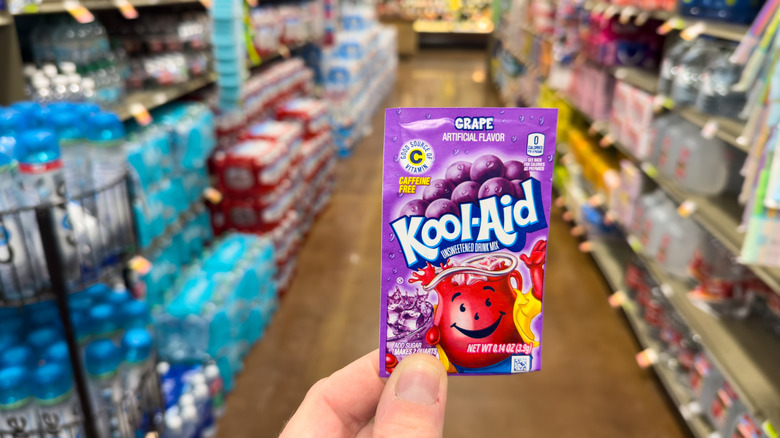
Kool-Aid feels like a pretty modern invention, right? The concept of taking a powdered packet and turning it into a punchy juice may not seem like something that somebody came up with in the 1920s, but that's exactly what happened. Kool-Aid was invented in Hastings, Nebraska, in 1927, by drinks company owner Edwin Perkins. His biggest-selling product, a fruit drink concentrate called Fruit Smack, was clunky and difficult to ship, and Perkins got to thinking about how he could streamline the whole process. Inspired by Jell-O, he developed a way to extract the flavor of Fruit Smack into a powder and called the finished product Kool-Ade. Its spelling was changed seven years later to the one we all know today.
Kool-Aid was sold to the General Foods Corporation in 1953, and it took another couple of decades before the Kool-Aid Man appeared on the scene. That mascot first emerged in 1975 and has stuck around to this day. It's not just a drink, either — you can use Kool-Aid in all sorts of recipes, like a no-bake cheesecake. If you're ever feeling enthused by the spirit of Kool-Aid, you can celebrate its creation with the rest of Hastings at its yearly "Kool-Aid Days" festival. There, you can try all sorts of different flavors, while honoring the invention of an iconic American product.
Welch's Grape Jelly
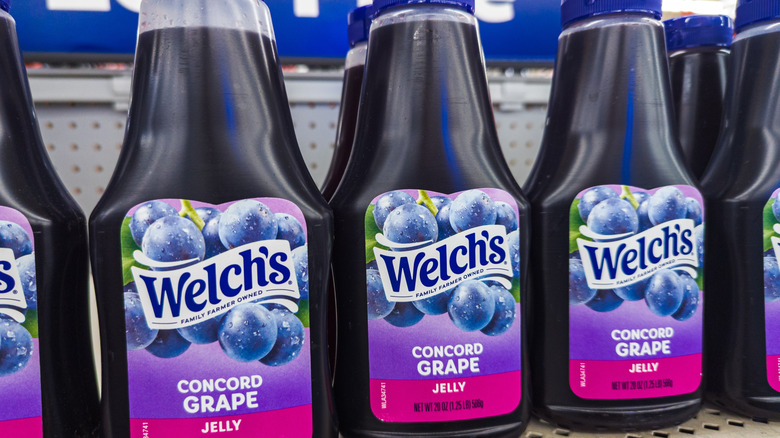
Arguably the best-known of all the grape jelly products out there (an essential ingredient for making grape jelly meatballs), Welch's Grape Jelly has a fascinating history. It was first released with its famous name in 1923, but a form of it was invented several years before that. Its predecessor, Grapelade, was created by Welch's in 1918, and it was originally sent out to U.S. Army soldiers fighting overseas in the First World War. The jelly was a big hit with the soldiers, and when the war ended, they were still craving its sweet taste. Five years later, Welch's delivered, and the whole country was able to try its product.
Welch's Grape Jelly is well-known for its ultra-smooth texture, which comes from being made with just fruit juice. This is also what distinguishes it as a jelly, and not a jam or preserve, with the latter two being made with solid fruit. Nowadays, you can grab versions of Welch's Grape Jelly in all sorts of forms, with reduced sugar versions and a natural product that skips any high fructose corn syrup or artificial flavors.
Twizzlers
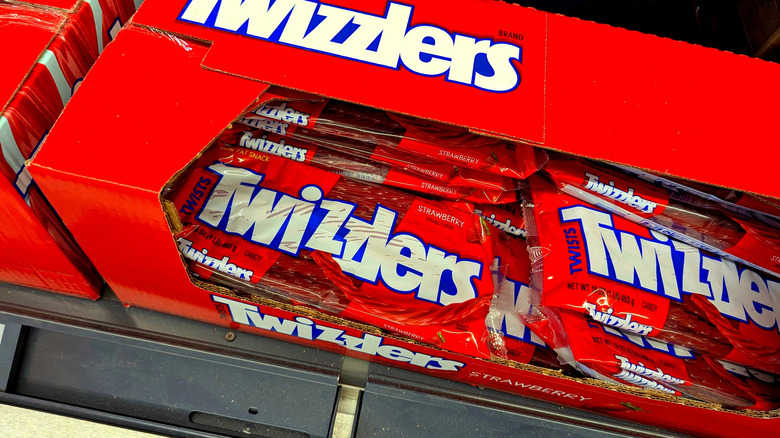
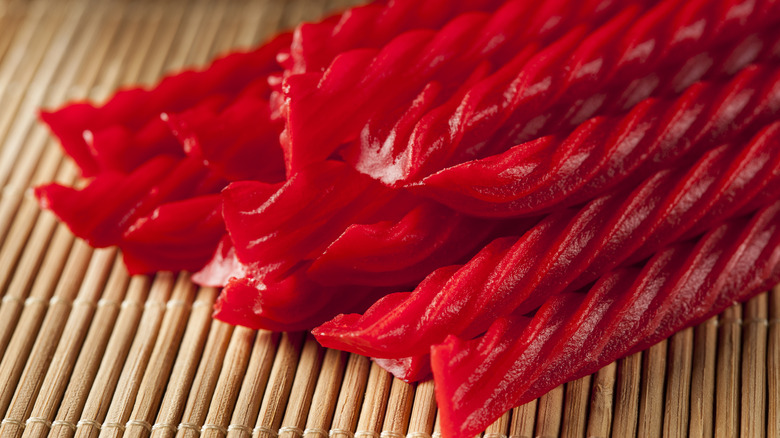
It's hard to believe that Twizzlers are as old as they are, but when you think about it, it kinda makes sense. This snack is undeniably retro, with its twizzled shape being the most remarkable thing about it, and its licorice texture not exactly having the fireworks that some modern candies do. Still, it's amazing how long it's lasted. Twizzlers first began being developed in 1927, and it took another few years for the snack to be released. In 1929, that moment happened, with the National Licorice Company debuting its twirly product and changing the face of American candy for good.
Throughout the decades, Twizzlers have gone through a host of changes. The majority of the candy's flavors now don't contain any licorice, and its removal changed the texture, making the resulting candies chewier. There have also been a host of endless offshoot products released, with some of them having none of the iconic twists that make Twizzlers so recognizable. Despite all this, though, Twizzlers remain both popular and prosperous: The Hershey Company makes almost 200 tons of Twizzlers Twists per day.
Wheaties
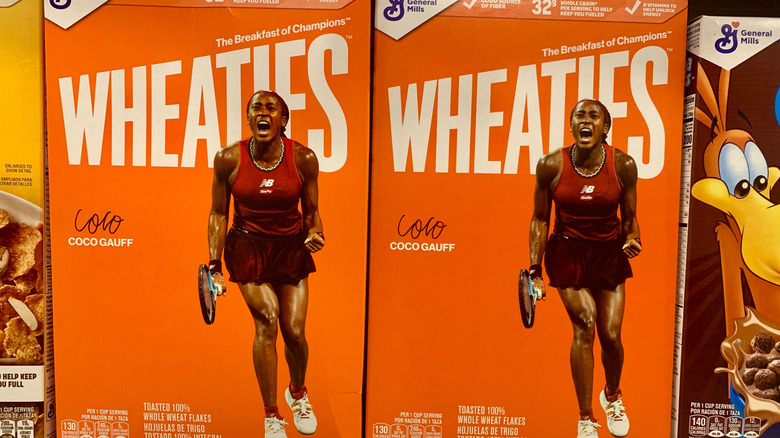
Of all the food products out there that come from the 1920s, it's fair to say that Wheaties is the one that's the most obviously old. Its branding still feels retro, with its box design and logo honoring its century-old status. Wheaties were invented in 1921, and back in the early '20s, the cereal was originally known by the decidedly less catchy name of Washburn's Whole Wheat Flakes. Its name was soon changed, though, and a timeless brand was born.
Interestingly, Wheaties were invented by accident. Back in 1921, the Washburn Crosby Company's facility was in full swing when a health clinician inadvertently dropped some wheat bran mixture onto a stove. The mixture crisped up into a firm, crunchy flake, and the cereal was born. It was subsequently marketed as a health food, and also one that would improve your sporting prowess, with athletes lining up to appear on its boxes. It's also notable for being the product that had the first ever jingle, with the original singing commercial for Wheaties appearing on radios on Christmas Eve in 1926. That's a pretty awesome legacy, huh?
Charleston Chew
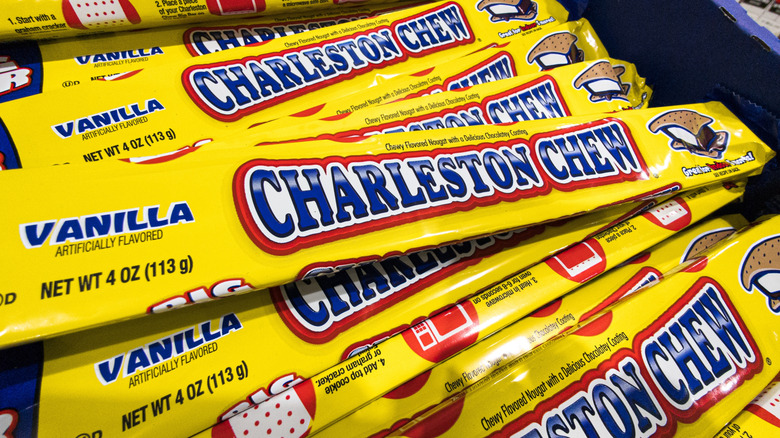
It's hardly a surprise that the Charleston Chew is a little bit older than other candies. After all, its name feels retro, and quite literally contains the name of a dance that was popular in the 1920s. However, if you need any further confirmation, we're here to stress that this isn't a throwback product. Charleston Chew was indeed born in the '20s, and specifically in 1922. The Fox Cross Company was the first manufacturer to produce the candy bar, after starting several years earlier with its Nu Chu bar. It was the Charleston Chew, however, that propelled it to national fame.
Charleston Chew's name made it immediately appealing to customers who were gripped with dance fever, but it didn't rest on its laurels. The old-school snack has managed to evolve subtly throughout the years, introducing new strawberry and chocolate flavors into the fold. The Fox Cross Company didn't quite have the same staying power, though. It changed hands time and time again, and the Charleston Chew flipped from owner to owner before eventually being purchased by Tootsie Roll Industries.
Wonder Bread
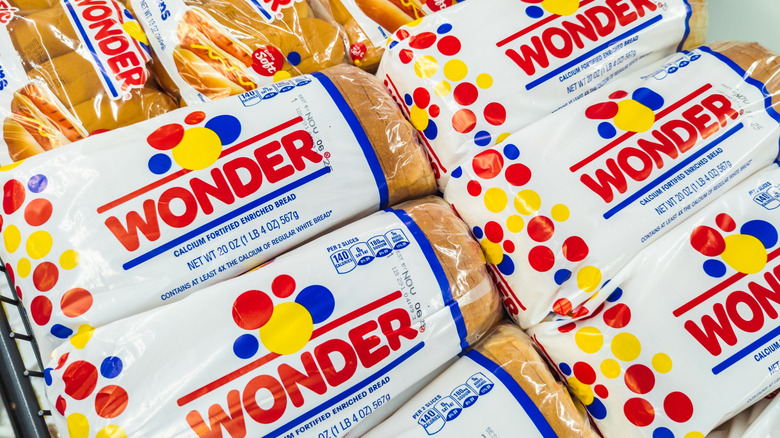
Prepackaged sliced bread is so embedded in the fabric of modern life that it can feel as though it's been around forever, but it's been sold on shelves for less than 100 years. The product that introduced it to customers, Wonder Bread, started selling packages of sliced bread in 1930, and the brand itself had existed for almost a decade before it made the move to slicing things up. Wonder Bread was created in 1921 by Elmer Cline, who was vice president of the Taggart Baking Company.
The story goes that Cline was attending the International Balloon Race at the Indianapolis Speedway, and felt overcome with wonder at seeing the sight of all the weightless hot air balloons in the sky. Like any good marketing professional, Cline turned this moment of inspiration into a product name. Wonder Bread was born, with Cline and the Taggart Baking Company employing balloons as a key part of its advertising strategy. Wonder Bread's famous color scheme, with red, blue, and yellow polka dots on each bag of bread, has also been a core component of its branding for decades. This is one wheat product that's certainly stood the test of time.
Peter Pan Peanut Butter
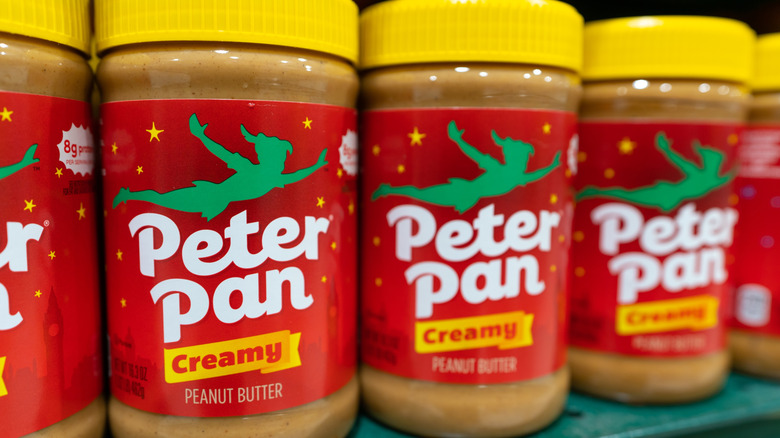
We take peanut butter for granted these days, right? Well, it wasn't always as easy to find or to make. The act of grinding peanuts into a paste was first performed by the Incan people in South America, but in the United States, modern peanut butter began its development in the late 19th century. Things changed when Californian Joseph Rosefield figured out and patented a process for partial hydrogenation, which would allow peanut butter to remain shelf-stable without separation. The first brand to successfully use this process in its product was Peter Pan, which was introduced to the world in 1928. The product was, of course, named after J.M. Barrie's famous character, and the act of doing so was a big hit with customers.
Rosefield, incidentally, ended up founding his own peanut butter brand, Skippy. He also debuted the practice of selling peanut butter in wider jars that you could easily spoon into, and of incorporating a little crunch. The two brands have battled it out ever since, but Peter Pan's kept the edge on consistent branding. The figure of the little ageless flying boy from Barrie's stories has remained on its jars to this day.