

Retro Thanksgiving Dishes You Rarely See On Tables Today
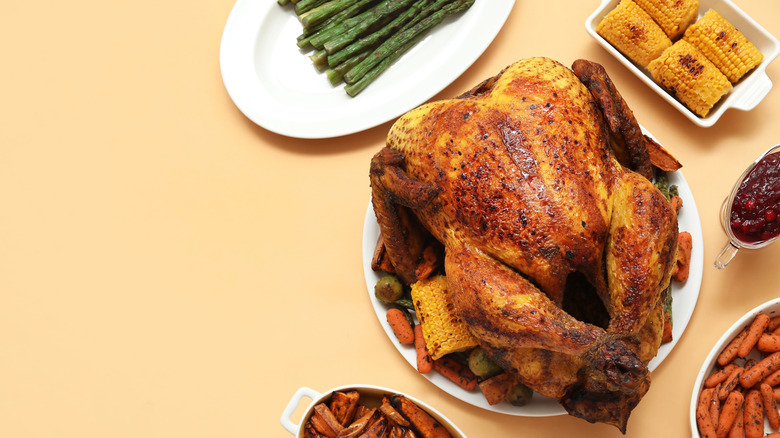
If you had to sum up Thanksgiving with a single feeling, we'd make a strong case for it being nostalgia. Sure, joy, peace, and thankfulness are all in high supply during this holiday (the last one's literally in its name, after all), but there's something about Thanksgiving that conjures a sense of the past, and of time-honored traditions being upheld. A lot of that, of course, comes through the food that's on the table, which feels static and unchanging as the years go by. What a lot of people don't consider, though, is that all of those delicious Thanksgiving sides you tuck into are far from being frozen in time. There are plenty of dishes that have been served around Thanksgiving tables throughout the years that are now pretty rare, and which could be at risk of disappearing.
Some of these dishes, like candied carrots and mock apple pie, feel like altered forms of the ones we enjoy today. Others are slightly more out there and are even more steeped in old customs. Dishes like succotash were present at some of the earliest forms of Thanksgiving, while options like creamed peas and giblet gravy are old-school favorites that used cooking methods that are less common now. This holiday season, let's check out some retro dishes that could give your feast an old-school twist.
Candied carrots
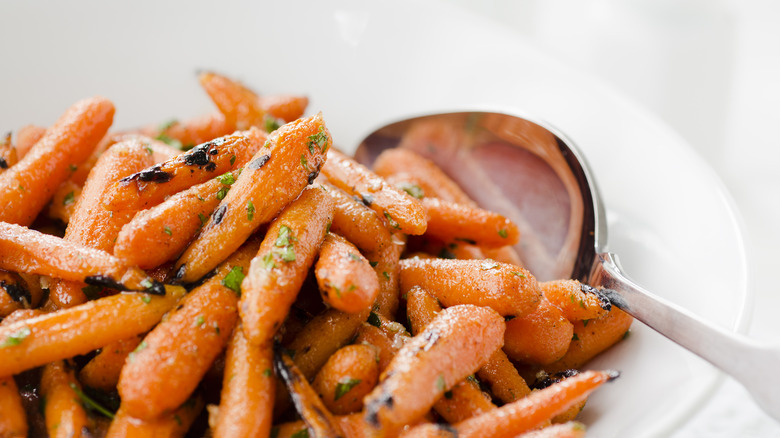
Carrots aren't exactly uncommon on Thanksgiving tables, but it's fair to say that they can often be overshadowed. In a world where green bean casserole, creamed corn, sweet potatoes, and roasted Brussels sprouts reign supreme, carrots can feel like an afterthought. It wasn't always this way, though. Once upon a time, candied carrots were the side to beat at Thanksgiving, and offered a sweet-savory accompaniment to the rich meats and heavy carbs on the table, that seriously freshened things up.
Candied carrots, or glazed carrots, feel very European, and they're a standard recipe to master in the curriculum at Parisian cooking schools. The dish consists of carrots that have been simmered in a sugary solution; they're sometimes glazed in orange juice to give them a lovely tartness. As the carrots release their starch, the liquid they're cooked in thickens up, and they develop a glossy shine.
Sadly, though, these days candied carrots feel like a relic of the mid-20th century. They're not gone, but there's something about the cooking method that feels old-fashioned, and the dish doesn't quite have the pop that other Thanksgiving sides do. They may not have totally disappeared, but they're hanging on for dear life.
Pecan tassies
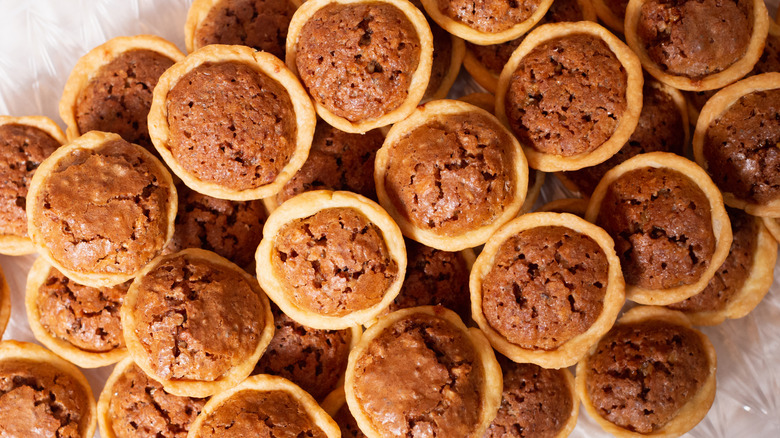
Spare a thought for pecan tassies at Thanksgiving, and you may well end up with a dessert you didn't know you needed. Deriving their name from the Scots word for "cup," pecan tassies are a mini dessert with a fun twist. The main difference between pecan tassies and pecan pie is in the crust: Pecan tassies lean into their Scottish vibe with a shortbread-inspired outer layer, which is sometimes flavored with cream cheese. This gives it a flaky, crumbly, and rich consistency that works against the pecan filling (which is flavored with maple syrup as opposed to the corn variety, giving it a more mellow flavor).
It's hard to pinpoint exactly where pecan tassies come from, or indeed when they first appeared. However, they appear to be a spin on pecan pies that emerged in the mid-1900s. They were especially common in the South, and remained so up until the late 20th century. Pecan tassies remain a staple in some households, but it's clear that their heyday has passed. Perhaps they just couldn't compete with the enormous popularity of pecan pie, which seems to be completely immovable from the Thanksgiving table. It is delicious, after all.
Mock apple pie
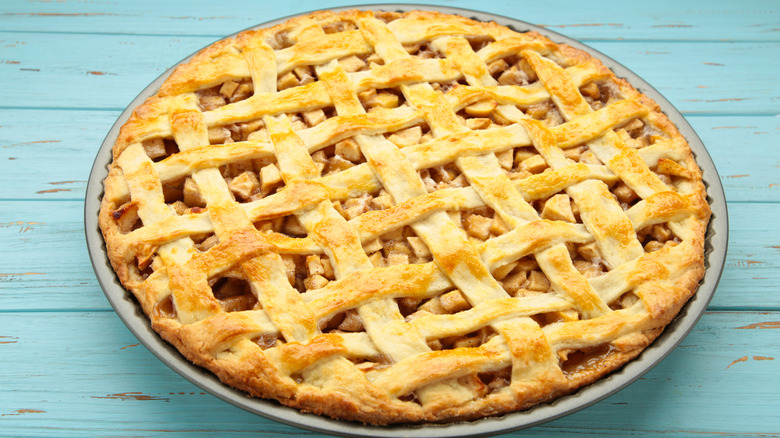
We absolutely love how food has changed throughout the years, especially when it's been in reaction to economic circumstances. When times are tough, people make do in extraordinary ways, and they don't let a little hardship get in the way of their Thanksgiving celebrations. Mock apple pie is the ultimate example of this happening. This dish's profile rose in the 1930s, during the Great Depression, although earlier forms have been around since the 1800s. It was made even more popular when its recipe started appearing on the back of Ritz cracker boxes and in recipe pamphlets distributed by Nabisco.
Why was that company getting involved? Because crackers are the key ingredient. Yep, that's right: Mock apple pie is made not with a filling of apples, but with crackers, water, sugar, lemon juice, and cinnamon. It sounds wild, but when they're all combined, the result resembles the flavor and texture of apple pie filling surprisingly well. This thrifty Thanksgiving option was a go-to both when folks couldn't afford regular apples and when they were out of season. Nowadays, though, most people can get hold of the real thing at a reasonable price, so this pie has faded into obscurity.
Giblet gravy
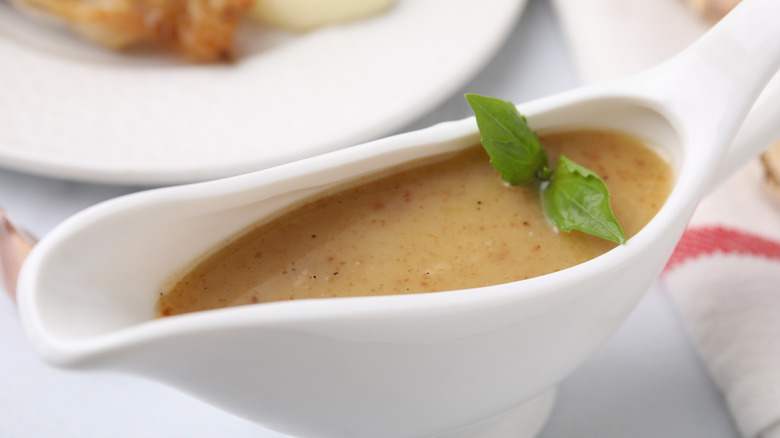
If you're the kind of person who gets their Thanksgiving turkey gravy from a packet, you're not alone: According to a survey from YouGov, 52% of people say they're likely to make their own gravy, leaving almost half reaching for a premade option. If you're in the latter group, you might not even be sure how gravy traditionally gets its deep, savory flavor. The secret ingredient is giblets (the liver, heart, gizzard, and neck of the turkey). Traditional giblet gravy was a common feature of Thanksgiving tables for generations, and while some people may still make it, there's now a certain squeamishness around the giblets themselves that stops people from doing so.
There's also the fact that a lot of turkeys are now sold without any giblets included. Back in the day, using offcuts like turkey neck in giblet gravy was a handy way to ensure that nothing was wasted, as well as to impart a rich flavor into the liquid. In modern times, though, turkeys are a lot more user-friendly, with most of them coming ready to cook without any preparation. This has meant that giblets have faded into the background, and when you combine that with the ubiquitous nature of sauce packets and gravy granules, it's no longer standard.
Oyster stuffing
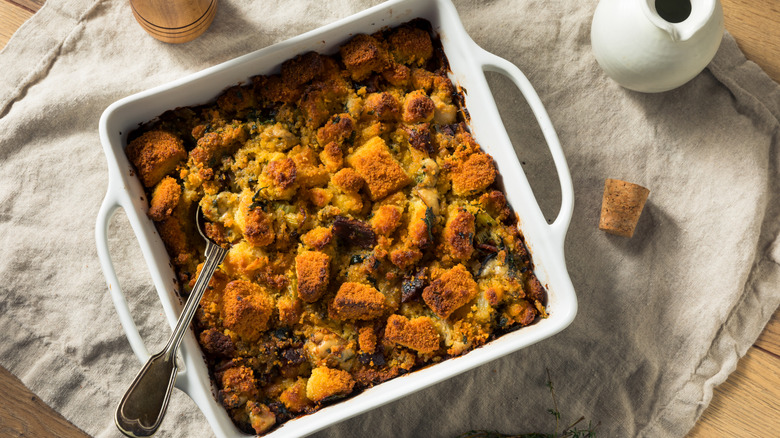
Thanksgiving can feel like a strange time for oysters to make an appearance. The meal is centered around land-based savory flavors, with turkey, sausage, bread, and root vegetables all looming large, meaning that the tastes of the sea feel a little out of place. Back in the day, though, oysters were commonplace in the form of oyster stuffing.
Oysters were one of the earliest Thanksgiving foods, and their use stemmed from British cooking traditions, with colonists bringing them over in the 17th century. The shellfish was commonly used as a stuffing for meat and poultry, and when people landed in the Northeast (where oysters were common), it was only natural to continue.
Oyster stuffing (or oyster dressing) continued to be eaten for centuries, with its spread across the country likely hastened by the growing rail network. However, as culinary tastes changed and the price of oysters started to get higher, this form of stuffing became way less common. These days, oyster stuffing feels incredibly retro, and dressing is more likely to contain sausage as its primary protein. If you want to see how your ancestors ate their Thanksgiving dinner, though, it's worth a spin.
Creamed peas
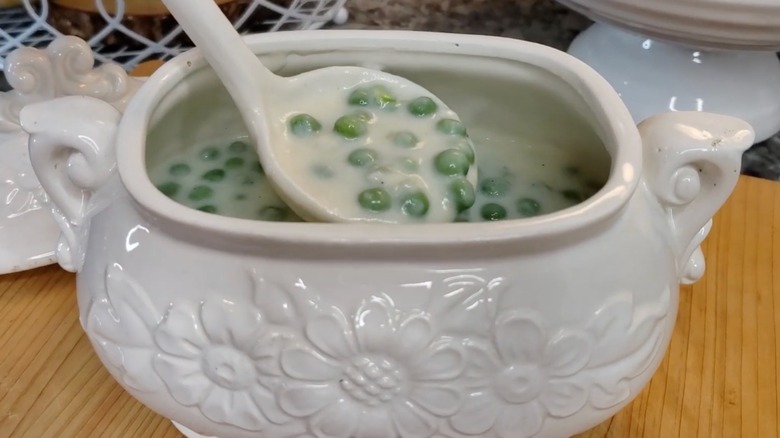
There was a time when people would cream absolutely any vegetable they could get their hands on — and while you might only be used to eating creamed corn and spinach at Thanksgiving now, creamed peas would often make an appearance in days gone by. Creaming peas was an old-school way of making them feel a little more fancy and luxurious. Like other types of creamed vegetables, the practice of doing so seems to have started in the late 19th century, when the rise of food preservation techniques like canning and freezing meant that peas were available year-round. They reached their peak in the mid-20th century, before they started to feel just a little bit too vintage.
It's kind of a shame, to be honest. Peas are one of the easiest vegetables to cream, and they offer a sweet, bright counterpoint to any Thanksgiving meal. They look great, they go well with savory flavors, and they're super affordable. In our opinion, it's time for creamed peas to make a comeback, so you can enjoy all of those old-school vibes.
Cranberry fluff
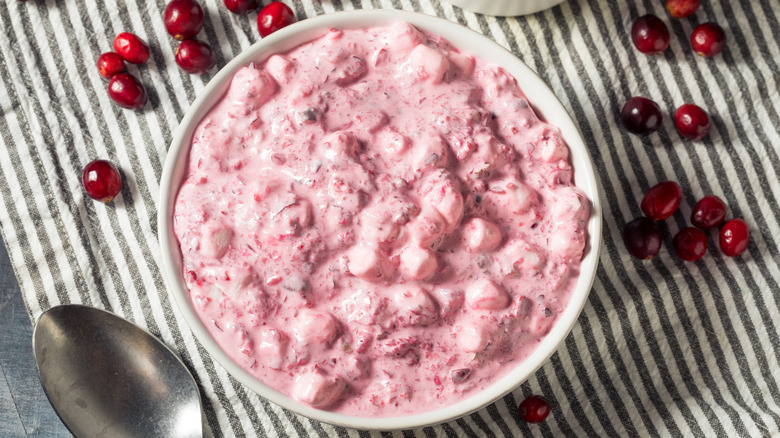
We're going to make a bold statement here, and say that Thanksgiving food used to be a lot more fun. Don't believe us? We present cranberry fluff for your consideration. This dish (which is a kind of fruit salad, but way cooler) is a relic of the 1960s and '70s, the decades when home cooks developed the habit of adding gelatin to anything and everything, before putting the mixture into a mold and leaving it to set. Cranberries didn't escape this fate and were combined with marshmallows, applesauce, vanilla, and whipping cream before being left to set. The resulting dish would be presented as a dessert, presumably with a lot of fanfare.
Cranberry fluff recipes didn't always contain gelatin, but the principle was the same: It was meant to be fairly solid and spoonable. We do have to admit that this was a pretty innovative way to serve cranberries, and way more fun and colorful than some other Thanksgiving desserts. However, in the 21st century, it's a dish that feels like it's from another era.
Succotash
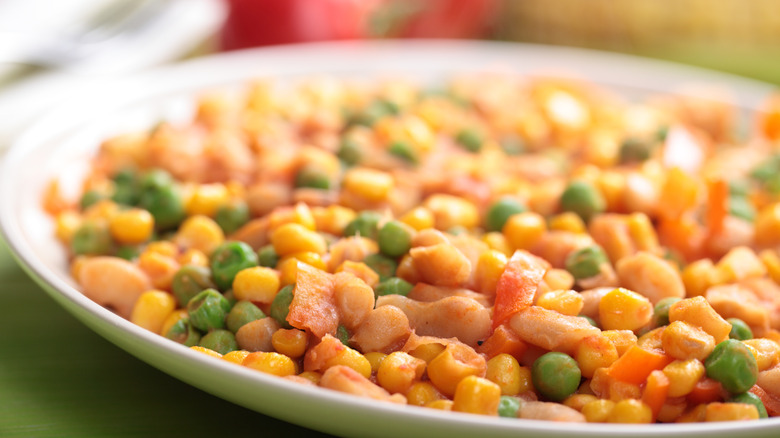
If you want to try an old-school Thanksgiving dish, make it one that was likely at the very first one in Plymouth, Massachusetts. Succotash, or some form of it, is often cited by historians as a food that was probably on the table in 1621, when the Pilgrims and Wampanoag sat down together to eat. Originally a Native American dish, the name comes from the Narragansett word "sohquttahhash," and is made from a combination of corn kernels and lima beans boiled into a stew, with additional vegetables mixed in to bulk it up and add flavor.
Succotash was common in 17th-century America, particularly in the Northeast, and it persisted for centuries. It saw another spike in popularity during the Great Depression, being hearty but also cheap and accessible, able to be made from common ingredients that could be grown locally. In some places and in certain homes, succotash is still a staple at Thanksgiving, but it's now appreciated more for its historical and cultural importance than its flavor. By modern standards, it feels slightly out of place at most tables, which are dominated by rich, sweet, savory, heavy dishes.
Celery Victor
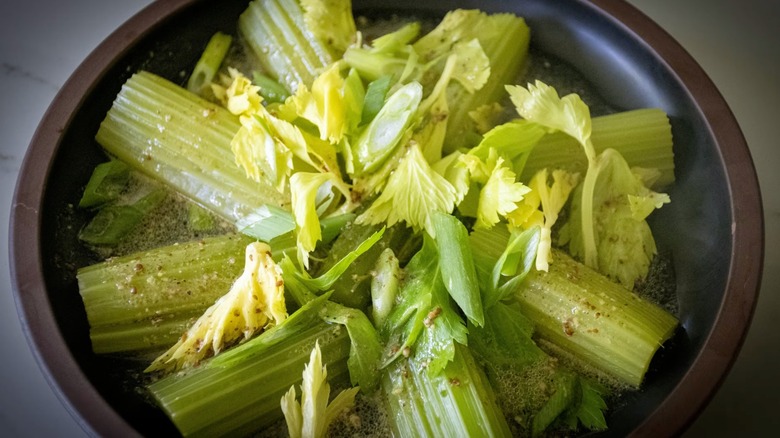
If you presented Celery Victor to your guests at Thanksgiving nowadays, you'd likely get a few confused frowns in response. Back in the 1920s, though, it was pretty common. Celery Victor was invented by Victor Hirtzler, a chef who worked for several royals before ending up at the St. Francis Hotel in San Francisco. It was here that he created his namesake dish, consisting of celery hearts poached in chicken broth and topped with French dressing.
It's not entirely clear how Celery Victor went from being a hotel dish to one that was enjoyed all over the United States at Thanksgiving, but it may be linked to the broader presence of celery during the holidays. Celery became a fashionable ingredient to serve at Thanksgiving in the late 19th century — so much so that it was considered essential, both as a palate cleanser between courses and incorporated into dishes. Turkey, meanwhile, was not held in such high esteem. Celery and Celery Victor remained common for much of the 20th century, before it suddenly dropped off the radar. Now, the idea of serving a celery dish like this during the holidays feels a bit strange.
Hasty pudding
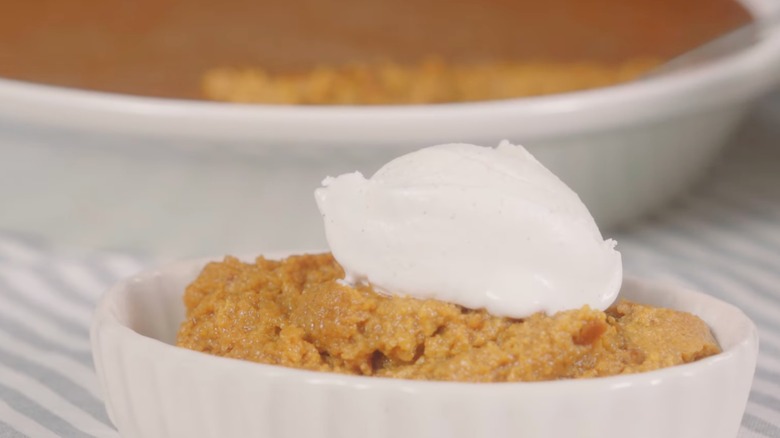
If you're from New England, you may well be familiar with hasty pudding. If you're not, though, you might have absolutely no idea what it is. This dish (which is also known as "Indian pudding") has been around since the 17th century and remains beloved in the Northeastern state, and used to be served as a full meal in itself. That's largely because of its hearty nature and its central ingredient: The pudding is made from cornmeal, which was as widespread back then as it is now. As time went on, recipes for hasty pudding evolved to include more flavorful ingredients, like molasses, eggs, sugar, and spices.
Hasty pudding became a traditional Thanksgiving dessert, and it was enjoyed in the highest offices of the land. Eleanor Roosevelt famously opted to serve the pudding during one Thanksgiving Dinner at the White House, with each bowl crowned with a scoop of vanilla ice cream. You'd think that getting a seal of approval from the First Lady would be enough to keep this pudding round, but that wasn't the case. Now, hasty pudding is much less common, and plenty of people have likely never even heard of it.