

The Beatles Used To Love These 10 Restaurants And Bars
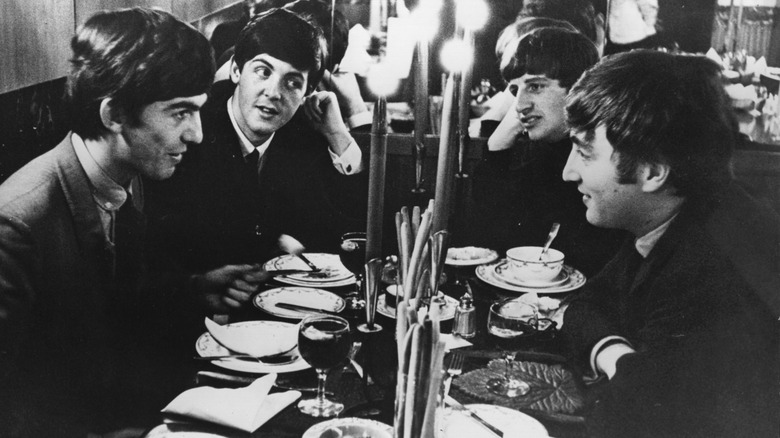
Before they skyrocketed to fame as one of the most iconic and universally recognized rock bands in the world, The Beatles were just a group of guys from Liverpool who liked to frequent local pubs when they weren't playing music together. In their early days, the group sometimes rehearsed in pubs' back rooms, in between more official gigs for the clientele. With this humble hometown start, The Beatles may never have imagined their launch to world fame would soon render certain old haunts off limits once they were required to sneak into bars and restaurants. The Fab Four performed together for less than a decade, but their music revolutionized popular culture, to such an extent that Beatlemania even inspired a Baskin Robbins ice cream flavor.
Even after The Beatles were too famous to remain regulars at British pubs, eating out or going for drinks was an inevitable reality of life on tour. The group made a few memorable visits to restaurants and bars around the world which remain ever-marked by the band's legacy. Some they frequented while touring, others were hangouts near home, and still more offered a discreet place to enjoy a meal or a few drinks without a barrage of fans or photographers. Whether it was before they were famous, after they became known, or once the band broke up, this list chronicles 10 bars and restaurants around the world that The Beatles used to love.
Ye Cracke
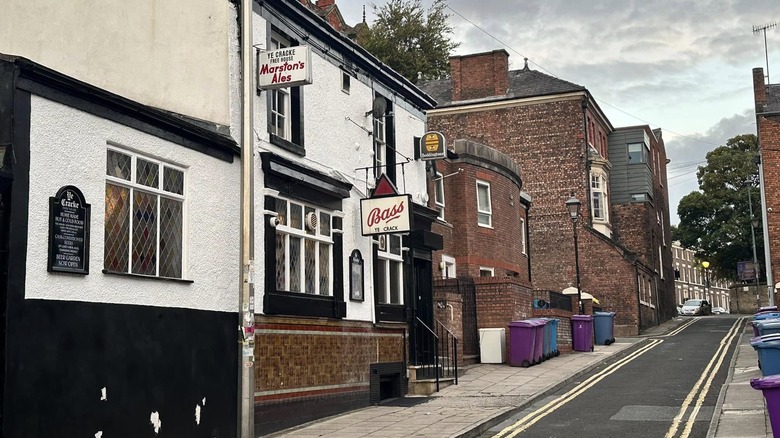
The distinction between a bar and a pub is subtle but significant, and Ye Cracke is one English pub whose history is closely aligned with Beatles lore. Located in their hometown of Liverpool, this humble drinking establishment is one of the oldest in town. It was previously noteworthy for its private War Room, a designated gathering place where veterans could share stories. But this unassuming joint got its immortal association with The Beatles for being the pub around the corner from the Liverpool College of Art, which John Lennon attended. Serving as a watering hole for students from the college, Ye Cracke saw many of Lennon's extroverted antics while he was a regular. It was also here that he had his first date with Cynthia Powell, another art student who would become his first wife.
Furthermore, Ye Cracke was where Lennon was introduced to Stuart Sutcliff, a fellow art student hailing from Edinburgh who had interests in both painting and music. Ye Cracke was where the two gradually formed a close friendship that would lead to their decision to collaborate. Sutcliff would become the group's original bass guitarist, back when the group went by the name "The Silver Beetles" and before the members consisted of the iconic Fab Four (John, Paul, George, and Ringo). But Sutcliff would part with the band shortly before they began to make a name for themselves, partially due to health concerns which lead to his tragically early death not long after.
The Jacaranda
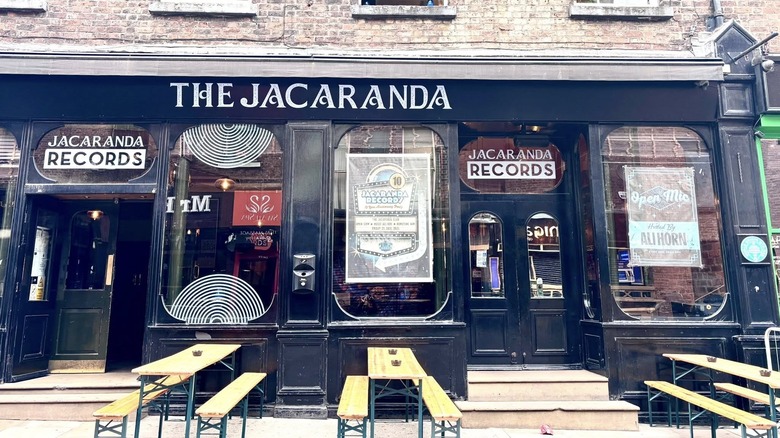
First opening its doors in 1957, The Jacaranda was an up and coming bar and music venue in Liverpool. It offered a space for rising musicians just when The Beatles were starting to perform together. Not only did the group play here on numerous occasions in their early days, but they held rehearsals on the premises as well. John Lennon and Stuart Sutcliffe, who had additional artistic skills to offer from their time at the local Liverpool College of Art, painted murals in the building as a form of payment for the right to use some of it for a rehearsal space.
In 1960, The Jacaranda was also where The Beatles, in their initial configuration as a five-piece band, had their first performance. This was when Pete Best, the original drummer, made up the 5th member of their ensemble, and before the band reached worldwide fame. After this, The Jacaranda continued to be a significant place for The Beatles' professional journey. Just a few days after the band's first performance on the premises, the club's manager at the time, Allan Williams, got The Beatles their first big break, arranging for their first tour in Germany. That tour was what would mark a significant turning point in The Beatles' rise to fame and widespread recognition. Today, functioning simultaneously as a record store, bar, and music venue, The Jacaranda still hosts live music in the basement every night and continues to introduce new talent to the music scene.
The Philharmonic Dining Rooms
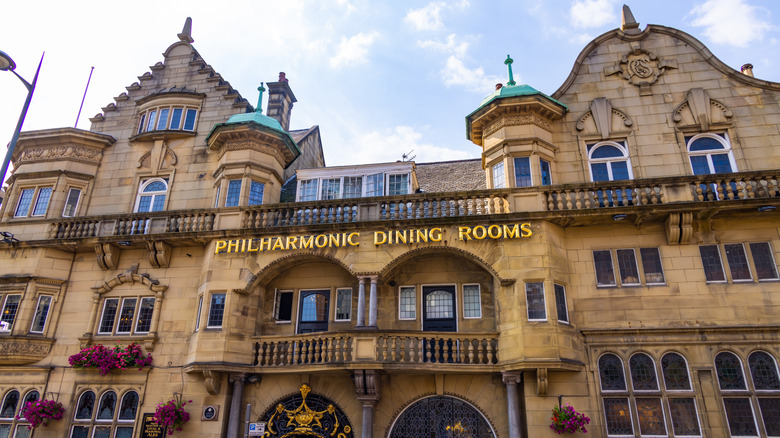
Named after the Philharmonic hall just across the street, the Philharmonic Dining Rooms are among the swankiest Liverpool haunts dating back to the turn of the century. With an elaborate Art Nouveau interior and bathrooms as aesthetic as the entry, "The Phil," as it's known to regulars, is a work of art to behold and an instant blast from the past. It's remarkably well-preserved turn of the century mahogany woodwork, stained glass windows, and elaborate tiling have, in recent years, granted the establishment a Grade I heritage status, putting it on par with Buckingham Palace among England's heritage buildings. But even though it has officially been deemed a place of historic importance, The Phil is, in the end, still a pub, albeit one whose halls many famous footprints have traipsed through. Among them, The Beatles.
Another of the Beatles' hometown stomping grounds, The Phil was where John Lennon and Paul McCartney spent a lot of time, particularly in a back room, which became a sort of unofficial workshop for writing songs. McCartney also admitted to frequently practicing with his guitar in the water closet, which, bedecked with marble and elaborate tiling, may have had the best acoustics in the building. Though the musicians stopped frequenting this venue once fame made public appearances tricky, The Beatles' association with The Phil lives on. McCartney even returned to this former watering hole in 2018 for a surprise impromptu concert on the premises.
The Cavern Club
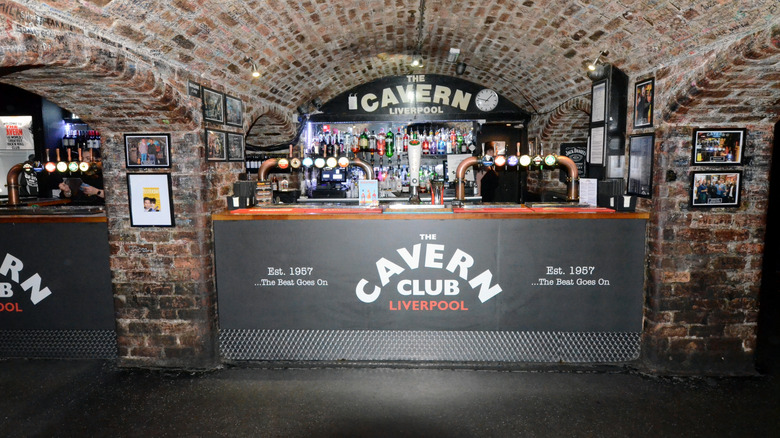
Regulars of many Liverpool pubs back in the early days, The Beatles also frequented the Cavern Club in the line-up of local venues where they got their start performing together. Opened in 1957 and originally a jazz only music venue, The Cavern was willing to make an exception for The Beatles in 1962. Another local cafe owner who had previously been hosting the group called up The Cavern because her limited facilities could no longer accommodate the band's growing popularity. Fans followed The Beatles to this new venue, and it quickly became synonymous with their rising local success.
Though an establishment with the same name claiming the same history is still standing today, it's not the original Cavern Club which still attracts rising talent in Liverpool. In the 1970s, the club was demolished as part of a plan to expand the city's underground metro, colloquially known as the Tube. But this project was never seen through. As a result, the Cavern Club got rebuilt in the 1980s, reconstructed and expanded largely from its original bricks, finding its new home just down the block from where it had once been.
The Scotch of Saint James
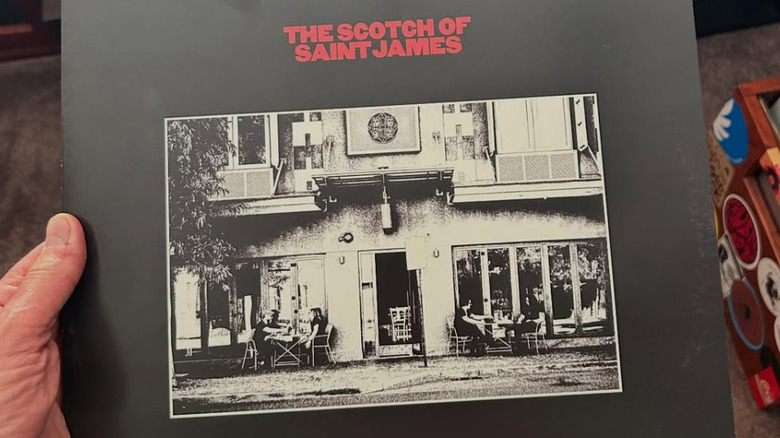
A nightclub which hosted all manner of up and coming names as they were on their rise to stardom, London's The Scotch of Saint James has hosted musicians the likes of Jimi Hendrix, Eric Clapton, and Elton John. The Beatles were also among the venue's big names in the 1960s. Here they rubbed shoulders with other world renowned musicians, and Paul McCartney met Stevie Wonder for the first time. "The Scotch," as it is colloquially known, also played a curious role in some of The Beatles' personal lives. In 1966, an evening which started at the nightclub led to the band later passing by the Indica Gallery, conveniently situated in the same neighborhood. They had heard about an avant-garde artist preparing for a new solo exhibit in London and were eager to discover her work. The artist in question was Yoko Ono, and this was where she and John Lennon first met.
A nightclub which has attracted celebrities since it first opened in 1965, The Scotch is still a venue which assembles world renowned musicians. It also hosts infamous private parties, which have attracted many more celebrities and even a Royal Family member or two.
Bob's Big Boy
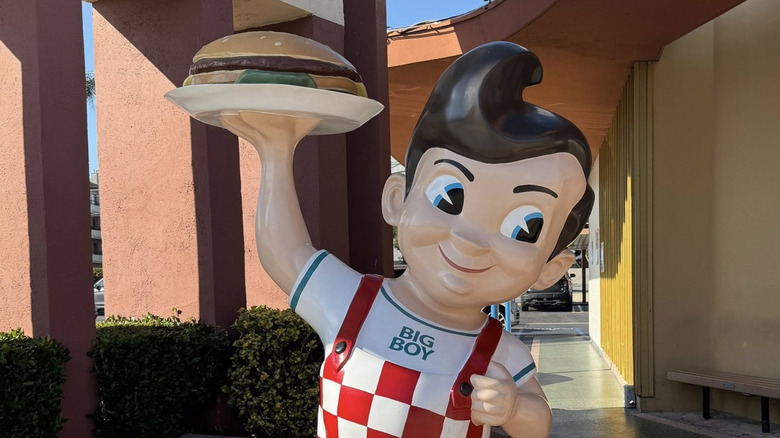
With its original location in Glendale, California, Bob's Big Boy started as a humble hamburger stand in 1936. The burger joint made a name for itself after its innovation of a burger bun sliced in three parts instead of two. This could subsequently accommodate two burger patties, a phenomenon which would become the eatery's widely renowned claim to fame as the "double deck hamburger." Due to its growing popularity, the restaurant expanded to numerous locations in the following decades. Bob's Big Boy diners and drive-thrus soon turned into iconic stops for locals and visitors, well-suited to the growing car culture in Los Angeles.
It is the Burbank location which hosted The Beatles in 1965, while they were on a summer tour in the United States. Intrigued by the origins of a proper American diner, The Beatles were recommended Bob's Big Boy when they said they wanted to stop at one such eatery. They only had time to visit Bob's between concerts and TV appearances while briefly in Los Angeles, so they weren't in town long enough to become regulars at the diner. But whether or not it made a lasting impression on their palettes, their visit to Bob's Big Boy created a lasting legacy. Today, visitors from around the world seek out this location and line up to sit in the "Beatles Booth" where the band once sat. The last booth on the right hand side, this spot is now designated by a plaque.
McSorley's Old Ale House
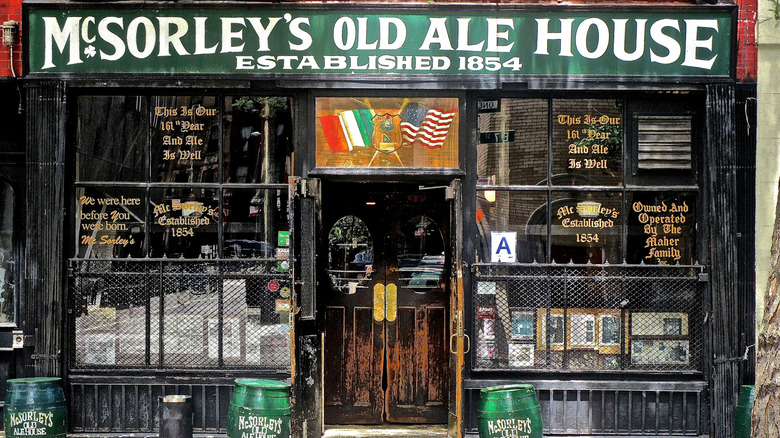
One of the oldest taverns in the United States still in operation, McSorley's Old Ale House in New York dates back to 1854, and the venue still oozes the ambiance of days gone by. It hasn't been redecorated since 1910, when its original founder, John McSorley, passed away, though it did maintain a brief identity as a speakeasy during the 1920s. The ale house has only ever served ale as its elixir of choice, but is no stranger to big names and historical figures, having once served President Abraham Lincoln. Later on, McSorley's occasionally welcomed 20th century musical legends, offering Elvis Presley too much to drink and serving Frank Sinatra as a semi-regular. Remaining a men's only establishment until 1970, the tavern had only just opened to a wider clientele by the time John Lennon started showing up fairly often, after moving to New York with Yoko Ono in 1971.
According to Mattie Maher, the ale house's owner at the time, he and Lennon realized after they got to talking that they had met more than once when they were kids, sharing Irish family ties to the town of Kilkenny. In addition to his small world connections with this Irish ale house, Lennon had a particular table to the left that he preferred. There, he would camp out in the afternoons and spend hours writing.
Gretel and Alfons
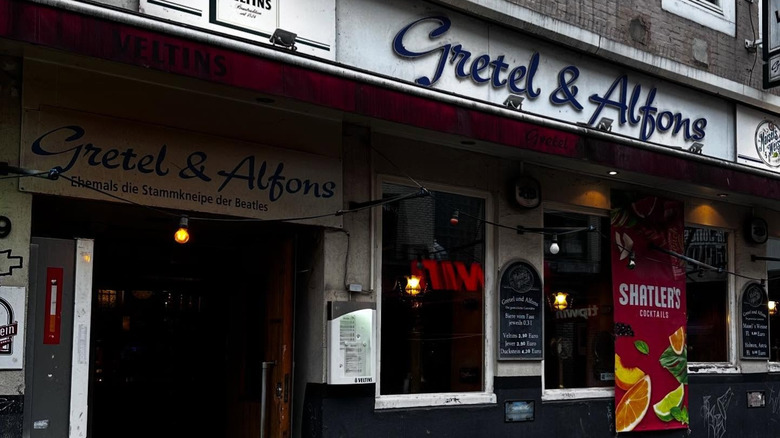
While Hamburg, Germany is separately renowned for its claims to the hamburger's origins, the city also played an important role in jumpstarting The Beatles' musical career. Arriving for their first tour in Hamburg in 1960, the band was still just starting out. Forced to be innovative in order to stand out among all the other up and coming musicians in this European mecca for live music, The Beatles began to develop their distinct and now iconic rock sound. The group was periodically invited back to Hamburg, eventually meriting an invitation to perform at the infamous Star Club. This was when their reputation began to skyrocket, and where they met Ringo Starr, who would soon replace their drummer Pete Best and solidify the Fab Four incarnation of The Beatles.
Just behind the Star Club was a drinking establishment known as Gretel and Alfons. Conveniently sharing a backyard with the concert venue, this became one of The Beatles' regular watering holes in Hamburg. On one infamous occasion, they collectively amassed a considerable tab which was more than they could or wanted to pay. Conveniently scheduled to leave Germany the next morning, they simply drank and dashed. But, decades later, in 1989, Paul McCartney returned to the humble drinking establishment to pay off The Beatles' standing debt at Gretel and Alfons, making sure to add interest. While this connection has made the bar a must-stop spot for Beatles fans, it remains a popular local hangout too.
Le Coupe-Chou
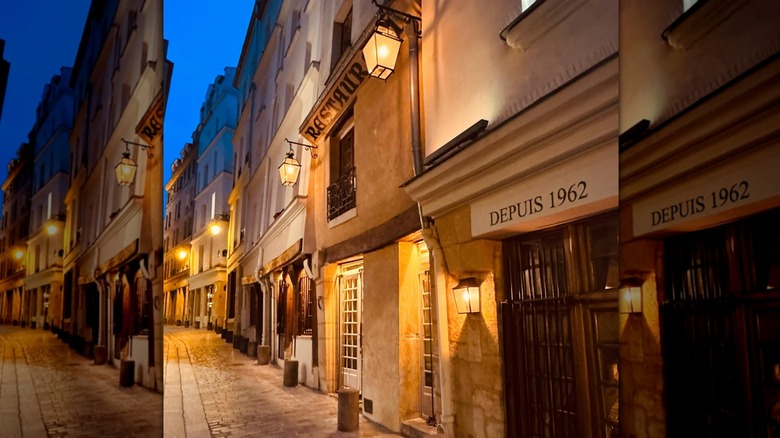
Opening its doors in 1962, Le Coupe-Chou is a cozy, upscale eatery in the heart of Paris's Latin Quarter. Operating out of historic buildings, some parts of the restaurant date back to the 14th century, suggesting the site has seen a great deal of history beyond its brushes with celebrity clientele. One of the restaurant's favorite anecdotes is its association with The Beatles, whose visit back in 1964 was impossible to forget.
This was at the height of Beatlemania, when the band was reaching new fame. The Beatles spent a successful few weeks in Paris, performing a total of 18 concerts before heading west to go on tour in America. Le Coupe-Chou became their post-concert haunt in the City of Light, where they hoped to escape Beatlemania crowds and enjoy a meal in peace. The Beatles had an unusual scheme to avoid fans and paparazzi, which had become the new norm with their rapid ascent to international fame. As the story goes, they were chauffeured from their concert venue, the Olympia Theatre, in a police van, which, with its unexpected arrival, alarmed Le Coupe-Chou workers at first. But then they watched, amazed, as the Fab Four casually climbed out of the back and strode up to the restaurant. While this might not have been the place to order Paul McCartney's favorite comfort dish, the evening at Le Coupe-Chou left a lasting impression. McCartney returned years later, requesting to be seated at the same table.
Rainbow Bar & Grill
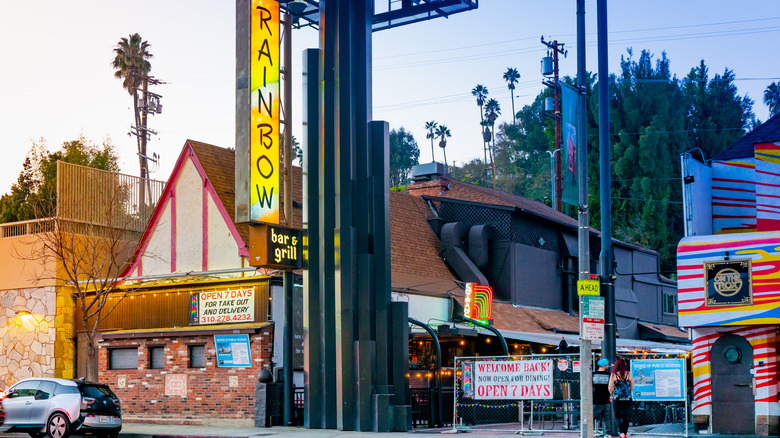
Starting out as the Mermaid Club in the 1930s, then transforming into Villa Nova, an Italian restaurant, in the 1940s, this venue on Hollywood's legendary Sunset Boulevard eventually changed again in the 1960s, becoming a bar where rock stars went to hear each other play. It transformed once more into the Rainbow Bar & Grill in 1972, and continued to be a place which regularly attracted the biggest names in rock and roll and heavy metal. The regular clientele included former Beatles members, two of whom found themselves sporadically in Los Angeles after the band suddenly broke up in 1970.
Beatles' drummer Ringo Starr was an infamous customer at the Rainbow Bar and Grill, frequenting the small second floor room dedicated to an elite drinking club which became known as the Hollywood Vampires. With their all-night benders at the Rainbow, the name referenced the fact that these musicians hardly saw the light of day. While Ringo belonged to this group as a semi-regular, John Lennon also joined the Vampires whenever he was in town. Rumor has it that, in order to be initiated into this drinking circle, he had to outdrink everyone else. Frequenting the Rainbow Bar & Grill led to Lennon wreaking havoc on the Sunset strip with other Hollywood Vampires, adding to the bar's infamous reputation. Bedecked in rock and roll memorabilia today, the bar is still renowned for its ambiance, its menu featuring Italian-American classics like spaghetti and meatballs, and its colorful history.