

Low-Quality 'Butter' Brands That Don't Belong In Your Cart

We may receive a commission on purchases made from links.
They say that butter is better, but we don't know whether that's necessarily true. While butter may be the perfect fat for countless occasions, it's arguably not the most convenient one to use. Plenty of us have been burned by a rock-hard, unspreadable block of butter just when we need it most. That's where butter alternatives come in. Butter-like spreads such as margarine have a lengthy history, and are more pliable than traditional butter. They can also boast a better nutritional profile, and provide less saturated fats per serving. However, butter alternatives have become more processed and filled with preservatives, additives, and emulsifiers; simultaneously losing the oil content that makes them so tasty in the first place.
While the word "margarine" is often used to describe any spreadable fat that looks like butter, most of the options available in supermarkets are simply known as spreads. True margarine needs to be 80% oil, while imitation butter spreads can have much less fat. This may sound like a good thing, but the bulk of these products can be made up of water, fillers, and artificial flavors. Although what makes something low-quality might be subjective — and some might consider a spread with less fat to be healthier — what follows are products seemingly made with the unnecessary ingredients and cheaper fats you'd want to leave on the shelf.
Blue Bonnet Vegetable Oil Spread
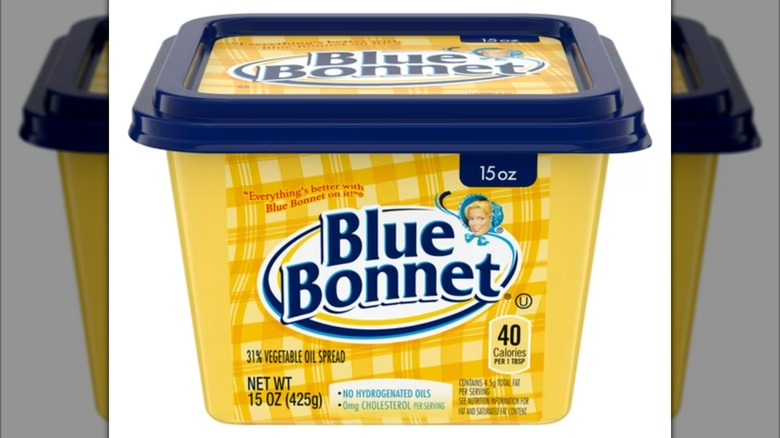
Blue Bonnet Vegetable Oil Spread is a product that won't break the bank, and that's a huge part of the appeal. For just a few bucks, you get a butter alternative with reliable flavor, easy spreadability, and the promise of no hydrogenated oil or cholesterol per serving (though some would argue that homemade butter substitutes are the best option). However, a closer look at the ingredients reveals how this choice justifies being so affordable. Blue Bonnet's product is only 31% oil, with the remaining 69% made up of water, maltodextrin, flavoring agents, and preservatives.
The oil is a blend of soybean, palm, and palm kernel oil. Food manufacturers favor these selections for their inexpensive nature, but such ingredients feature neutral flavors which come at the expense of real nuance. On one hand, soybean oil is good for deep frying, but it won't give this spread any character. The maltodextrin in this product is used to thicken the mix and help it seem generous; however this addition may have an impact on your gut health. Research published in Gut Microbes shows that maltodextrin could potentially reduce the amount of good bacteria in your gut, which might lead to a higher risk of inflammation over time.
I Can't Believe It's Not Butter
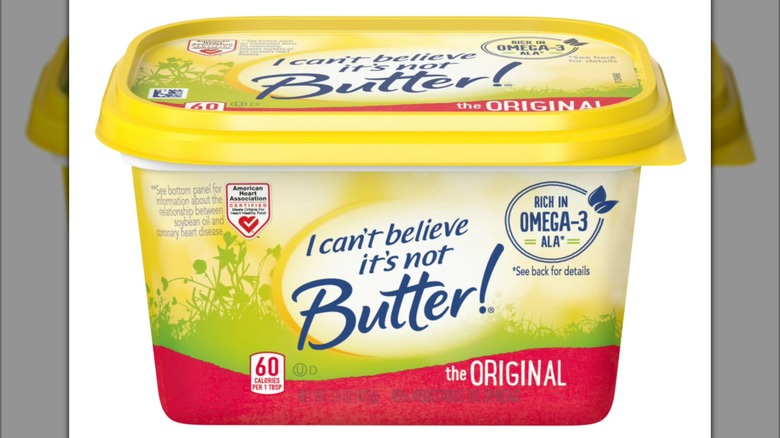
Arguably the most famous butter alternative out there, I Can't Believe It's Not Butter prides itself on being almost identical to the real thing. Well, no matter what the name suggests, we absolutely can believe that this product isn't butter — and all it takes is one glance at the ingredients list to prove it. I Can't Believe It's Not Butter has just 45% fat content, and this fat is made up of soybean, palm, and palm kernel oil. The rest consists of water, vinegar, flavorings, and additives. Butter, on the other hand, must have a minimum of 80% milkfat, which is what provides the iconic texture and flavor.
As "butter" products go, I Can't Believe It's Not Butter is relatively low on additional ingredients (although it still has more than we'd like). However, the use of palm and palm kernel oil is what really diminishes both quality and appeal. These oils are used because they're cheap, widely available, and versatile, but they also impact the environment. The palm oil industry is responsible for a huge amount of deforestation, which has destroyed the habitats of many endangered species of animals. It's also important to note that palm and palm kernel oil are both high in saturated fat, and I Can't Believe It's Not Butter features 2 grams per serving.
Parkay Squeeze Vegetable Oil Spread
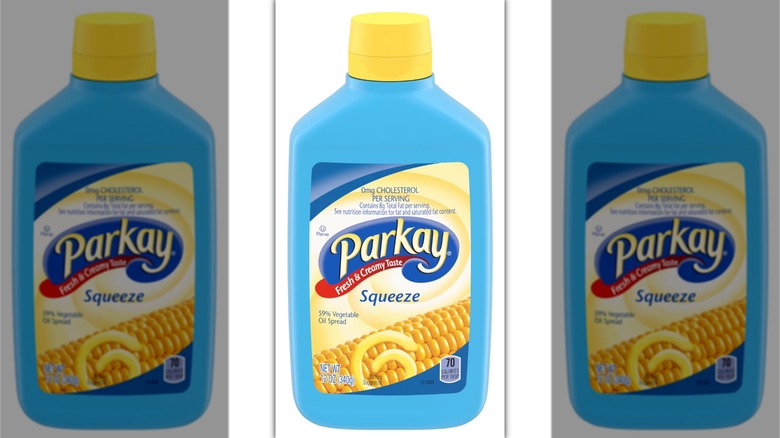
At first glance, Parkay Squeeze Vegetable Oil Spread doesn't exactly look like the highest quality product. As opposed to a tub, this spread comes in a bottle that seems like it should contain a cleaning product. It might be surprising, then, to hear that Parkay contains 59% vegetable oil — among the highest oil contents of any widely available butter-like spreads.
That's where the positives end, though. Like other butter alternatives, Parkay Squeeze Vegetable Oil Spread packs in an extensive amount of additional ingredients. This includes soy lecithin, which is likely included to protect flavor and texture. The product is also partially made with hydrogenated cottonseed oil, a highly processed oil product that may boost the spread's longevity,, but also increase the LDL cholesterol content. While the vegetable oil content might be higher than others, it's hard to escape the feeling that this is a product far from being natural and wholesome.
Smart Balance Original Buttery Spread
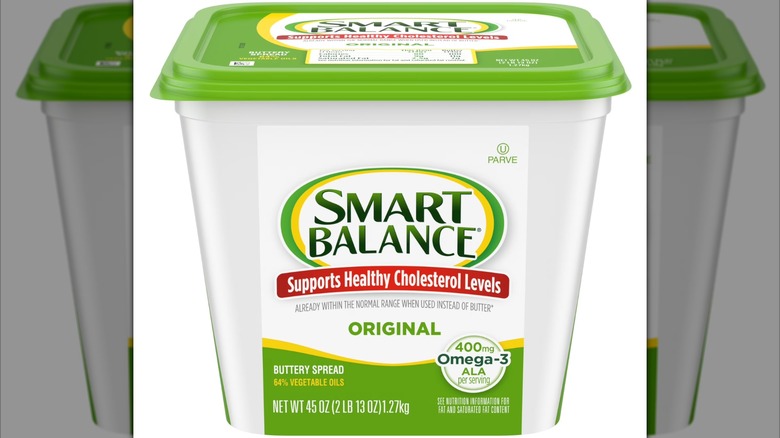
Smart Balance Original Butter Spread is, in a word, deceptive. This dairy-free butter product comes in a green and white tub with the phrase "supports healthy cholesterol levels," immediately conveying a sense of wholesomeness. While its 64% vegetable oil stops it from being considered a margarine, it does have a touch more than other spreads out there, which adds to the feeling of a higher-quality product.
However, one look at the ingredients list reveals this spread is a mass of fillers, preservatives, additives, flavorings, and bulking agents. Pea protein isolate is added to emulsify and improve the spread's texture, while potassium sorbate helps to extend shelf life. What's more, Smart Balance freely admits to using artificial flavors in its spread, which are typically chosen because they're cheaper than natural flavors (it should be noted that this product has natural flavor agents too). Additionally, while Smart Balance Original Buttery Spread advertises itself as a healthier choice, it has more saturated fat per serving than many other butter alternatives. Turns out it may not be so smart after all.
Country Crock Original Vegetable Oil Spread
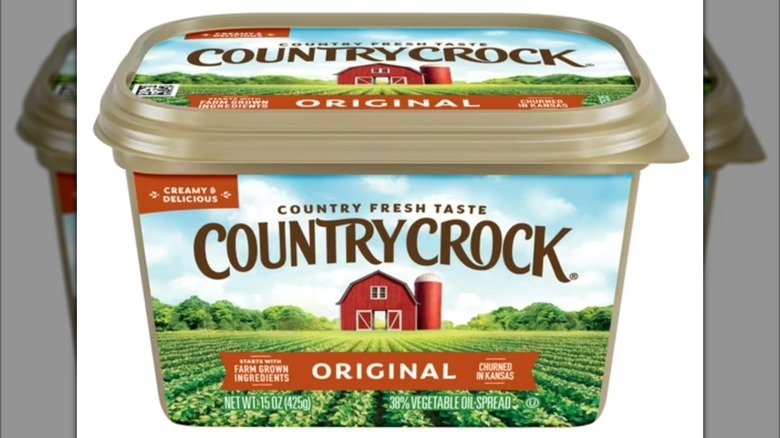
Everything about Country Crock Original Vegetable Oil Spread's branding implies a high-quality product. There's the brand name itself, which evokes images of rolling hills and wild pastures. This is reinforced by the art on the packaging, which depicts a countryside farm with a traditional red barn, perhaps housing cows that provide milk for this delectable product.
However, the truth is that this vegetable oil spread features very few wholesome ingredients whatsoever. The mix is just 38% vegetable oil, with the remaining 62% of ingredients being water, soy lecithin, salt, vinegar, natural flavors, colorings, and vitamin A palmitate. That vegetable oil is the classic trio of soybean, palm, and palm kernel, none of which are especially high-quality or nutritious. Although the term "natural flavors" might sound good, the truth is that these flavors can contain synthetic ingredients and are therefore likely not as natural as implied. Country Crock does win points for keeping its product free of any artificial preservatives, but there's little else that makes this spread stand out. If you're looking to substitute real butter for a dairy-free product, there are better options available.
Land O Lakes Margarine
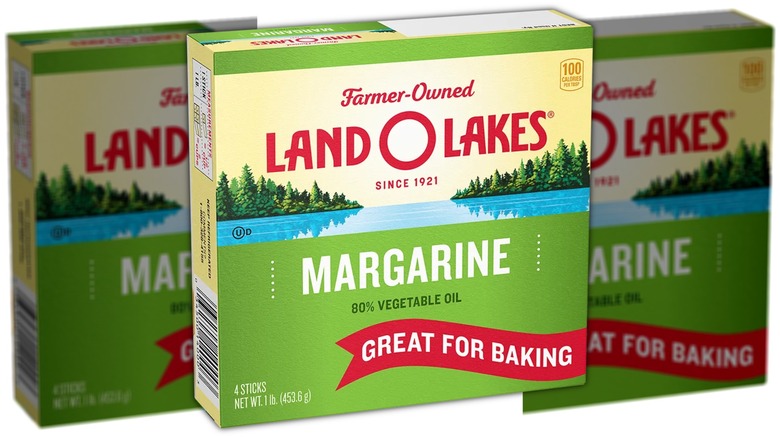
This one hurts. Land O Lakes Margarine stands separate from the pack when it comes to butter alternatives: Unlike most other options, this brand boasts a whopping 80% vegetable oil. This makes it a true margarine as opposed to a spread, and as such, could reasonably feature fewer ingredients. Right?
Wrong. Land O Lakes Margarine still has an ingredient list as long as your arm, and includes nearly all the same preservatives and additives as other spreads in major supermarkets. As well as containing potassium sorbate, soy lecithin, and lactic acid, Land O Lakes Margarine also incorporates mono and triglycerides. These ingredients act as emulsifiers to make the spread smoother, but may also impact our health in unexpected ways. Emulsifiers have faced increasing scrutiny for their impact on gut health, and it's thought there could be a link between their consumption and a decreased diversity of gut bacteria. If Land O Lakes left these emulsifiers (and the other ingredients) out, it would have been a winner. Well, if margarine was a fat worth baking with, that is.
Earth Balance Extra Virgin Olive Oil Buttery Spread
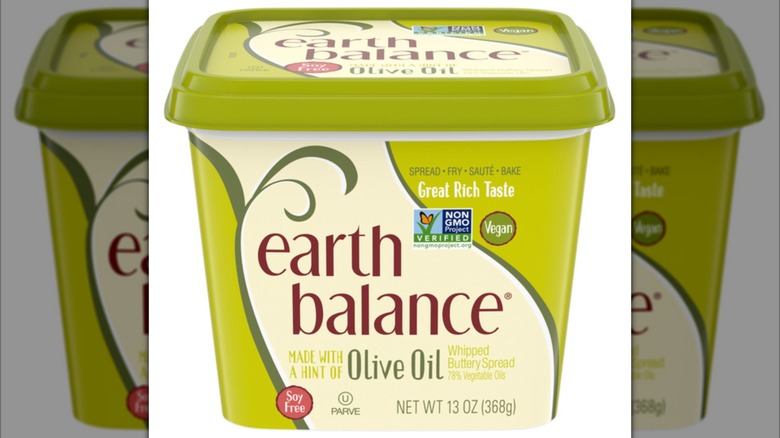
You'd be forgiven for thinking Earth Balance Extra Virgin Olive Oil Buttery Spread is one of the fancier butter alternatives available. The promise of extra-virgin olive oil in every bite seems high-quality, and the mature, two-tone green packaging also gives a little bit of — shall we say — presence. Sadly, this spread is less classy than it first appears. Look more closely at the label and you'll see there's only a "hint" of olive oil in this product, and it's not clear how much that means. In the ingredients however, olive oil places last; beaten out by the abundance of palm fruit, canola, safflower, and flax oils.
The inclusion of safflower oil is particularly unpleasant. Safflower oil can be high in omega-6 fatty acids, and consuming too much can cause an imbalance of omega-6 to omega-3s. Long-term imbalances of these acids have been associated with a range of metabolic diseases, such as coronary heart disease and type 2 diabetes. It should be noted that this spread also contains additives like pea protein, sunflower lecithin, lactic acid, and natural flavors, which take it into heavily-processed territory.
Imperial Vegetable Oil Spread
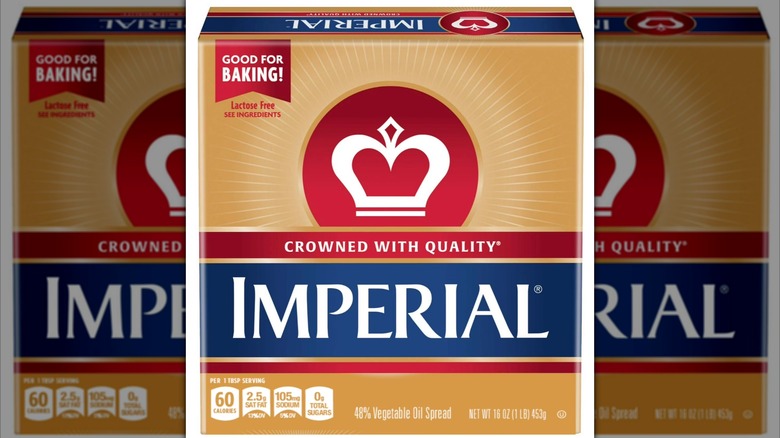
With a brand name like "Imperial," you might expect the best quality around, right? Sadly, that's not the case with Imperial Vegetable Oil Spread. Despite the slogan "crowned with quality" splashed over the package, this offering doesn't earn the regal title at all. Imperial's Vegetable Oil Spread has just 48% vegetable oil, and over half the product consists of preservatives and additives. Most, in fact, is water. No wonder this is one of the cheapest spreads out there: At Walmart, it costs just over $1.20 per pound.
Despite the 48% vegetable oil, Imperial Vegetable Oil Spread still manages to contain 2.5 grams of saturated fat per serving. Other, similar spreads have significantly less. We'd imagine that's because Imperial opts to use palm oil as the primary source of fat, while others go for soybean as their first choice. Plus, you'll the classic "artificial flavors" tucked away in the ingredients list, as well as monoglycerides, soy lecithin, potassium sorbate, and calcium disodium EDTA. This is a busy product, y'all.
Move Over Butter Table Spread
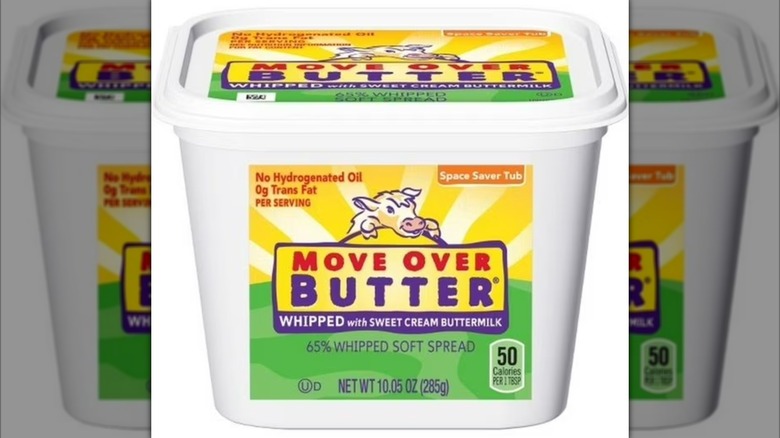
Move Over Butter? We'll stick with it, thanks — at least if this product is anything to go by. This butter alternative's composition is crowded to say the least: A mass of highly-processed ingredients compose one of the longest ingredient lists of any spread available. Although Move Over Butter Table Spread promises it's made with sweet cream buttermilk, that buttermilk is actually derived from a powder. Furthermore, soybean oil takes the cake as the primary ingredient in this spread.
Move Over Butter Table Spread also contains palm oil and palm kernel oil; plus a parade of emulsifiers, preservatives, and artificial and natural flavors. Perhaps most glaring, however, is the inclusion of fractionated palm oil. The use of fractionated oils stems from eliminating hydrogenated ones. While this might seem like a positive step, researchers have noted that studies of fractionated oils are in their infancy, and longer-term examinations of how fractionated palm oil might impact cardiovascular risk are needed.
Olivio Light Spread
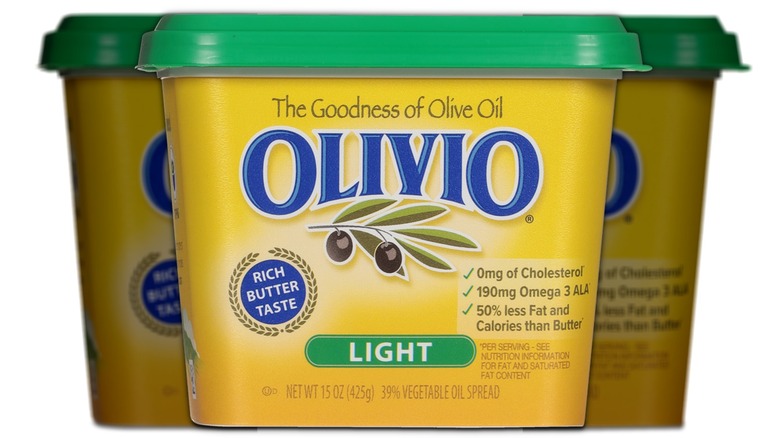
Since butter alternatives are usually as fatty as regular butter, opting for a light version seems like the smart choice. However, be aware that this might not result in the best quality. Proof can be found in Olivio Light Spread: This offering features less fat than the brand's Original Spread, but it's also filled with additional ingredients. To make this spread as creamy and tasty as possible while keeping fat and calorie content low, Olivio Premium Products adds emulsifiers, flavors, and preservatives.
Importantly, this light nature means the product's actual vegetable oil content is quite low at just 39% vegetable oil. This is to be expected with a lower-fat product, but it also means the mix is mainly composed of water. As such, the uses of Olivio Light are fairly limited. It'll be good for toast but totally useless for baking, as these spreads generally need to be at least 60% fat.