

Old-School British Dishes That Are Sadly Disappearing From Tables
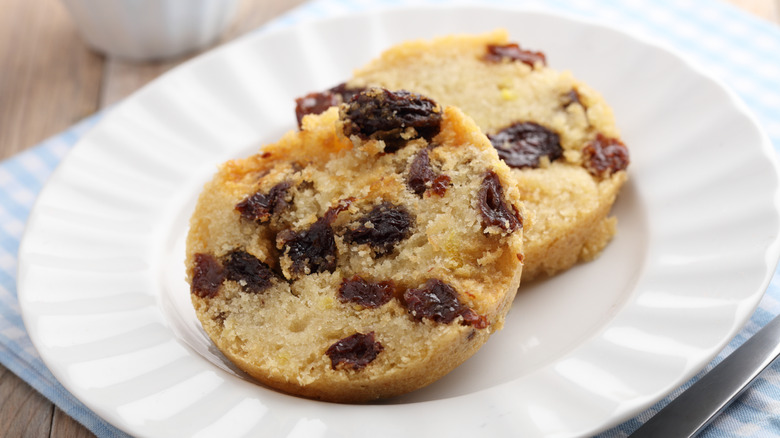
It's no secret that British food gets a pretty bad rep. The cuisine of that little island in the North Atlantic has long been derided for its apparent tastelessness and its emphasis on, shall we say, somewhat stodgy ingredients. This is a slightly misplaced reputation: The landscape of British cuisine throughout the years has been diverse and rich, with a range of influences from the various cultures that occupied the island throughout its history. However, there's also no denying that a lot of British food has evolved from what's naturally available on a cold, fairly small island, meaning that there's a lot of fish, beef, potatoes, and pastry in its culinary history.
In recent years, though, the food available in Britain has become as exciting and diverse as a lot of other places in the world. As a result, a lot of the classic dishes that people associate with the country are dying out. That means that meals that are culturally important but also slightly challenging flavor-wise, like eel pie, tripe and onions, and bread and dripping, are rarely seen anywhere these days. Its classic desserts, like spotted dick and jam roly-poly, are also beginning to fade into obscurity. Let's check out some of those old-school dishes that might be gone forever pretty soon.
Eel pie
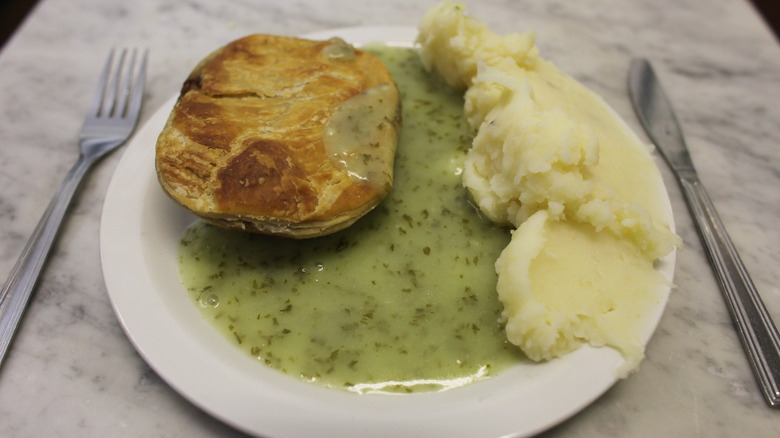
Foods don't get more British than eel pie. Long before London was full of pizzas, fried chicken, and doner kebabs, eel pie reigned supreme as the fast food that many British people would grab when in need of a quick bite. It first began gaining prominence in the 1700s, when the Eel Pie House on Twickenham Ait (a small island in the River Thames) would serve hungry customers who would boat down to specifically try its wares. That island became so associated with the dish that it was eventually renamed Eel Pie Island.
Eel pie continued to be a staple throughout the 1800s and much of the 1900s, with chains like M. Manze's serving it to working people throughout the city. It was cheap, readily available, filling, and the ingredients were right there for the taking: The eels could be caught directly from the river Thames itself. The pie would be served with a pile of mashed potatoes and a gravy, colloquially known as liquor. Over time, though, eel pies began to fall out of fashion (no doubt because people realized that there were meals that were, shall we say, slightly less challenging). M. Manze's still exists, but it has far fewer units than it once did, and eel pie is now seen as a cultural curiosity that's firmly a thing of the past.
Suet pudding
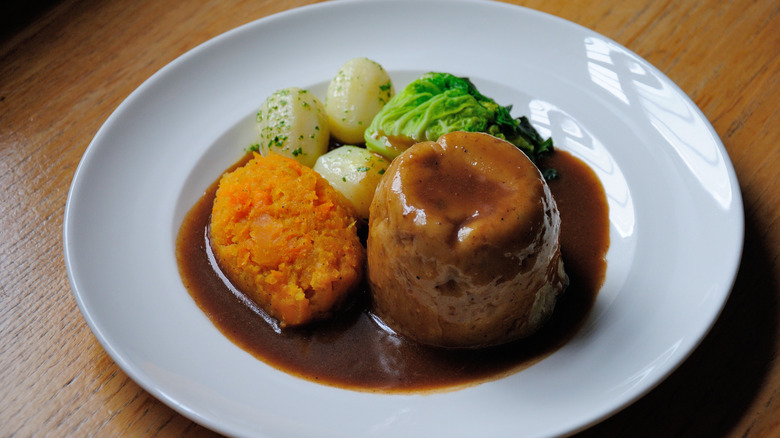
Suet puddings, both sweet and savory, have been around longer than entire countries have existed. These puddings were first made in the 14th century, and in their original form, they were fairly rudimentary constructions. Suet — a type of animal fat, typically beef — was combined with ingredients to preserve them. Workers would then eat these suet puddings through the long, harsh winters, when little else was growing.
Over time, suet puddings became much more sophisticated, and in the Victorian era, they began to be considered a delicacy. Chefs figured out how to work the suet with the pastry to create melt-in-the-mouth meals that had no discernible taste of animal fat whatsoever. However, as the years marched on, people began to use alternative fats, which didn't have the same associations that suet did (and which were more nutritionally balanced). Suet puddings became a thing of the past, and although they're still around, they're now rare. Suet is also a pretty unlikely ingredient to find in anything nowadays: Even traditional Christmas recipes that once used it now opt for different fats.
Lancashire hotpot
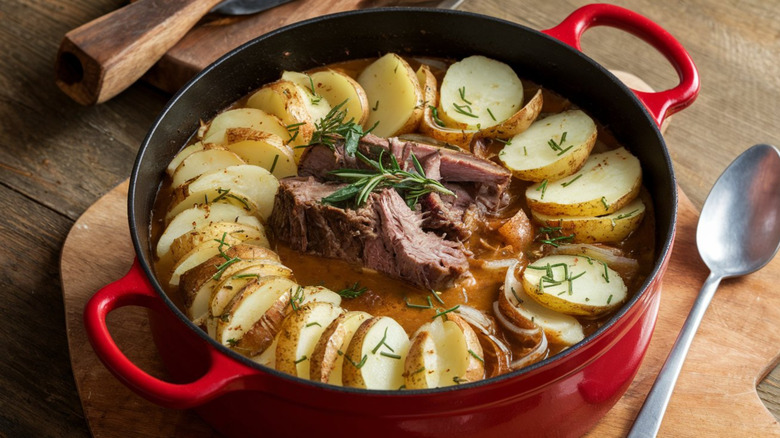
One of the saddest things about some old-school British dishes slowly disappearing is that when they do, we also lose the human stories that go with them. One example of this is seen through Lancashire hotpot. This is a dish with roots in North West England, which developed as a meal that could be cooked while people worked. In the early days, Lancashire hotpot would be left to slowly simmer above a fire while folks spun thread in their homes, contributing to the main industry in the area. As the Industrial Revolution took place and more people went out to work during the day, their hotpot would be left to cook on a low heat, ready for them when they arrived back home.
Lancashire hotpot is somewhere between a pie and a stew. It consists of layers of good-quality root vegetables and meat, which are all simmered together with a flour-thickened stock. The dish is crowned with sliced potatoes, which turn both soft and crispy as the hotpot cooks. Lancashire hotpot is now the kind of dish that gets passed down through generations, but it's definitely something that's made less often. In a few decades, it could be gone for good.
Stargazy pie
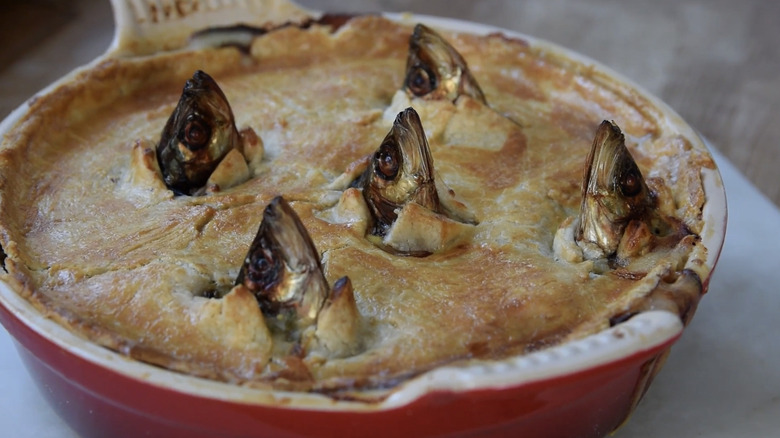
Ready for a dish that's unlike anything you've ever seen? We introduce you to stargazy pie. This dish might hold the title for the most bizarre British culinary creation there is, and you'll know it the moment you see it, namely due to the fish heads that are quite literally sticking out of the top of it. Stargazy pie's story starts in Cornwall, and more specifically, the small village of Mousehole, right at the bottom tip of the country. Legend has it that during one particularly harsh winter in the 16th century, local hero Tom Bawcock sailed out to sea and brought back a bumper haul of fish, helping to end the famine that Mousehole was experiencing. Bawcock is now remembered on Tom Bawcock's Eve, held on December 23 each year in the Cornish village. Oh, and you guessed it, every year, they eat stargazy pie.
Stargazy pie is an acquired taste, but that's mainly because of its appearance. Once you get past the fish heads poking out of the top, the pie is a pretty mild affair of potatoes, grated hard-boiled eggs, and a rich stock. It smells and tastes buttery, briny, and it's surprisingly moreish — but there's no doubt that its appearance is too much for people these days. Unsurprisingly, stargazy pie is now far from common.
Black bun
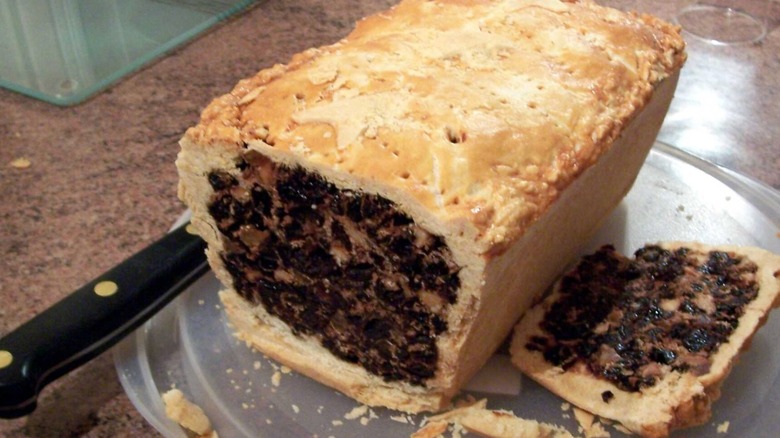
As a country that's plunged into cold and darkness for many months of the year, there are unsurprisingly a lot of preserved ingredients in traditional British food. One of the most common, particularly when it comes to desserts, is dried fruit, and it shows up in ample proportions in black bun. A Scottish dessert dish, black bun is a dense fruit cake, made by combining a yeasty, buttery dough with dried fruits (typically raisins and currants are used) and spices. Additional ingredients like slivered nuts and candied peel can be added for more texture and flavor. This dough is then piled into a dough casing, and the whole thing is baked, with the inside rich, moist, and luscious, and the outside crispy.
Black bun has been around for hundreds of years, and it has a key role in one of the most significant days in the Scottish calendar. It's typically served on Hogmanay, celebrated on December 31 each year, and more specifically as part of the first-footing ritual. As the first people who set foot over the threshold of your house after midnight come through the door, they're served black bun, generally with a glass of whiskey to welcome in the new year. Outside of this, though, black bun is disappearing. Even during Hogmanay, it's now slightly rarer.
Tripe and onions
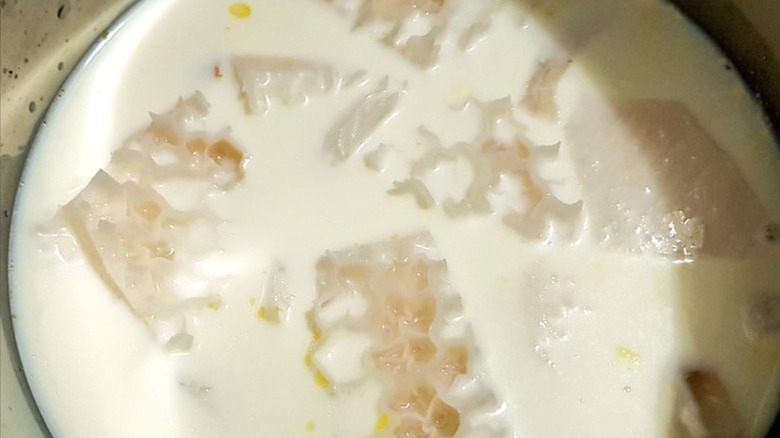
Okay, so we're sad to see some British dishes gradually disappearing — but when it comes to tripe and onions, we can't say we're that devastated. This meal is the definition of an acquired taste, and it's exactly what it sounds like. Pieces of tripe are sliced and then boiled with water, milk, and onions until the tripe softens, before the mixture is combined with butter and flour. The whole thing is then baked with cheese on top and then served. It doesn't sound too bad, right? Well, that's until you remember that tripe is animal stomach.
Tripe usually comes from cattle, but it can also come from lamb or pork. It's a cut with a long history in Britain, and it remained popular for the same reason so many others did: Because it was an affordable part of the animal that also helped people cut down on food waste. Nowadays, however, British cuisine has moved way beyond tripe. It's unlikely you'll find it anywhere on a menu, and you generally have to go to a specialist butcher to find it.
Bread and dripping
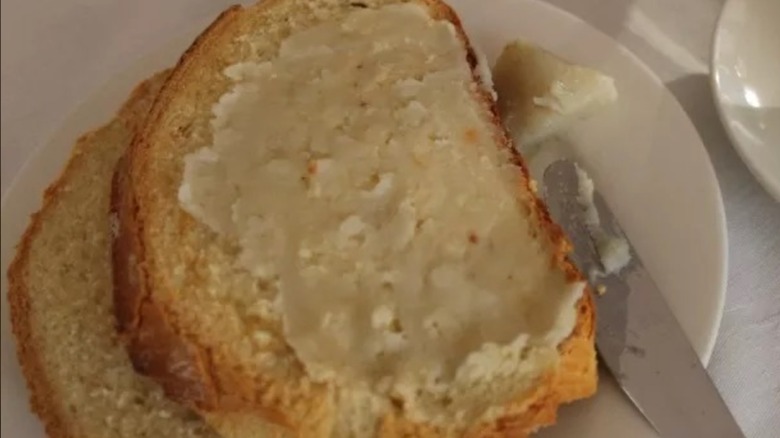
So many classic British meals are simple, rustic, and require little more than a few ingredients, and that's never been truer than when it comes to bread and dripping. This dish is a fairly basic combination of beef fat and slices of bread, with the fat coming from the oil that renders and drips off roast beef as it cooks. The fat is savory, rich, and filling, and while it may not be the most nutritious dish in the world, it has a certain satisfying quality that's hard to place. If you wanted to bulk it out, you could even combine it with beef mince — but the charm of it is in its simplicity, folks.
This dish was an unlikely go-to of some key figures in British history during tough times, "1984" author George Orwell being one of them. As you might expect, though, it's a meal that was typically eaten when people couldn't afford much else, or for sentimental reasons. Food has moved on a lot in the last few decades, and bread and dripping has been left in the past.
Spotted dick
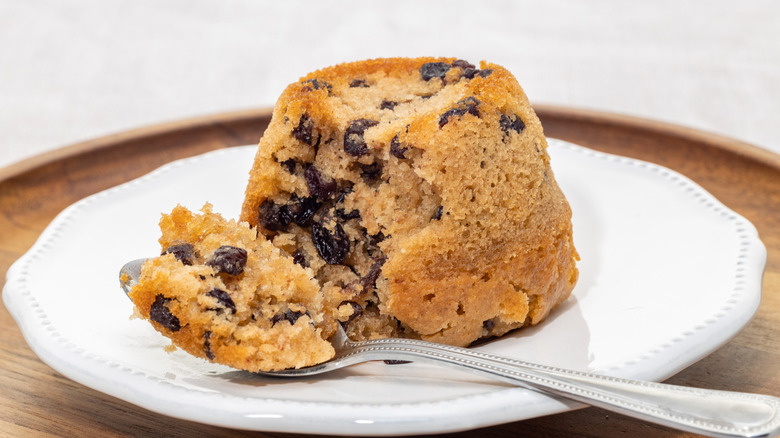
Let's all be adults about this one, folks. This British dish is famed for having an eyebrow-raising name, and that's arguably one of the reasons why it's started to fade in popularity — which is a shame, as not only is it not as naughty as it sounds, but it's also way more tasty than you probably think. Spotted dick is a classic British dessert, and is arguably the most famous of all of the suet puddings out there. Dense, sweet, and ever so slightly spicy, it's made by mixing a suet dough with a generous sprinkling of booze-soaked raisins, sugar, and a little cinnamon, and then being steamed until it's tender.
Spotted dick's name has been the subject of a lot of debate, and while it's got some dubious connotations, the logic behind it is likely way simpler. The word "dick" here probably either developed from an archaic pronunciation of the word "dough," or else from the word "dog." While spotted dough and spotted dog may be slightly more innocent terms for this dish, we think we can all agree that they don't have the same punch. Sadly, neither does spotted dick's flavor in a modern landscape. This chewy, thick dessert is now seen as totally traditional, and as the development of sweet treats has gone on and people have leaned towards different tastes, it's fallen by the wayside.
Bubble and squeak
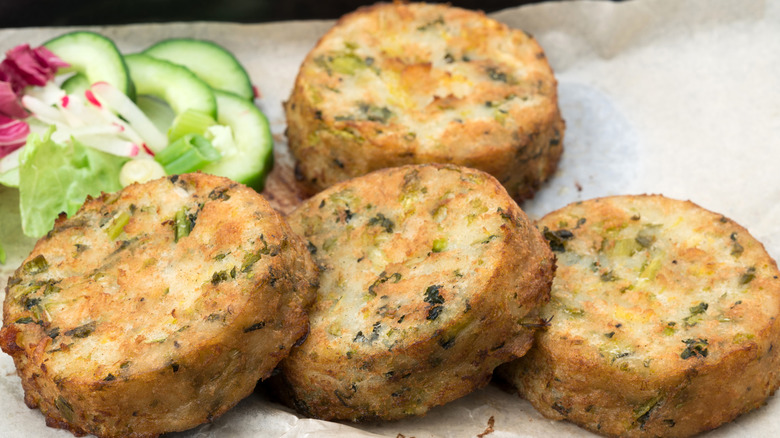
Let it never be said that British people don't know how to use their leftovers. Plenty of the country's dishes have emerged from the need to repurpose last night's meal or the scraps left in the larder, and bubble and squeak is perhaps the epitome of this kind of thing. This dish (which has such a fun name, right?) is typically made from the remains of a Sunday roast and the potatoes, cabbage, and other veggies that you don't know what to do with. Cooks mash the vegetables and the potatoes to make patties or one big pancake, and then the whole thing is pan-fried until the outside is crispy and the inside warmed through. You can also make a classic bubble and squeak much better with just one ingredient: A perfectly fried egg.
Bubble and squeak has been around for hundreds of years, and early forms of it contained meat, namely the beef that was the protein of choice for many people on Sundays. As time went on, the dish became more potato-based, and a marked shift could be seen towards this around the Second World War, when meat was in short supply. Its lovely name comes from the sound of the vegetables as they cook in the pan. Sadly, though, bubble and squeak is way less common than it used to be, both due to people being more careful about their leftovers and because it's undeniably pretty heavy for a Monday meal.
Jam roly-poly
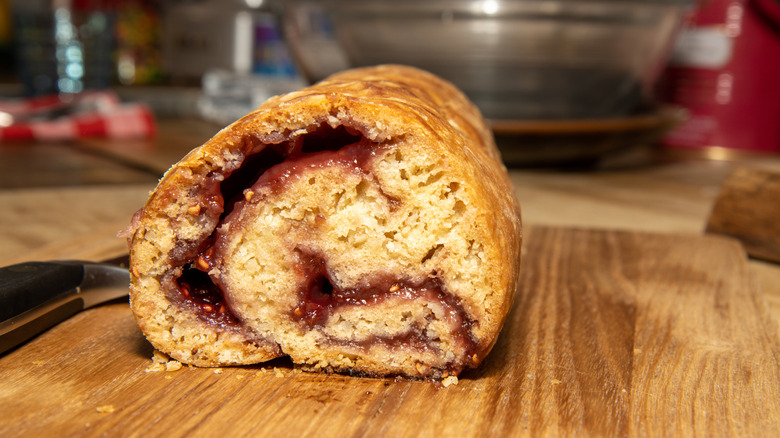
It's hard to deny that the British know how to give their food catchy names. Jam roly-poly is perhaps the cutest of all of these, and what's especially charming about it is that it's pretty much exactly what it sounds like. It's made by spreading jam onto a flat piece of suet dough, before rolling the whole thing up into a log and steaming it. For something so simple, it's very effective, and the balance of the tender pudding and the sharp jam is pretty knock-out.
Jam roly-poly has been a staple in British households since the 19th century, and it's also the kind of thing that a generation of adults can remember eating at school. It's also been known by a much less charming name: Jam roly-poly has also been called "dead man's leg," perhaps because it combines heaviness and a red interior. Although jam roly-poly has been modernized throughout the years, with many chefs now opting for vegetable suet, it hasn't been enough to keep it around. This longtime favorite is now slowly fading into obscurity.