

Old-School Salad Dressings Hardly Anyone Remembers Anymore

It's easy to think of salads as pretty unchanging. After all, how susceptible can a bowl of greens be to evolving trends and taste? As it turns out, quite a lot. Like any other food, salads have changed significantly over the years, with both the ingredients and the dressings that accompany them shifting over time. Back in the day, vintage salads and their dressings would incorporate the flavors of the day, and often these weren't what you expected. They would also use ingredients you might not typically associate with "healthy" dishes — with dressings made with everything from canned tomato soup to limeade.
It's therefore no wonder that a lot of salad dressings have come and gone, and that dressings nowadays tend to stick to classic, tried-and-tested flavors. However, we do think that the salad dressing landscape has gotten a little boring. That's why we decided to bring some of our favorite old-school salad dressings back to life for one more spin, so you can take a look at the wild and wacky ways people were throwing theirs together in previous decades and centuries.
Southern Pacific dressing
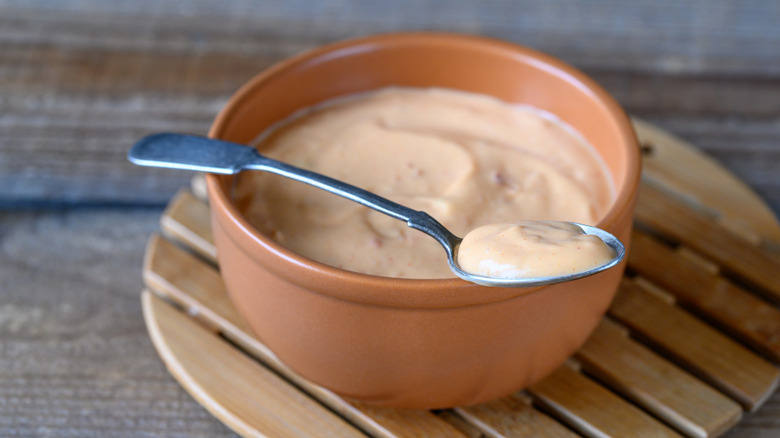
The glory days of rail travel are long behind us. We think that's a crying shame, not just because travelling by train is a far more sustainable way to move between locations, but because there was a certain glamor to it all, with companies like Southern Pacific investing heavily in customer experience. This extended all the way to its salads, which it would serve in the dining car on its four main routes. Southern Pacific's salads and its distinctive dressing were heavily promoted as a key food offering during its operations in the early 20th century, perhaps because innovations in refrigeration technology would allow trains to transport fresh foods like vegetables for longer periods. Its Southern Pacific dressing was also promoted in recipe booklets that the company distributed, which contained dishes it served en route.
Southern Pacific dressing was notable for its use of red currant jelly, which was combined with English mustard, mayonnaise, catsup (an iteration of ketchup), and vinegar. Salt was also added, although we'd guess that it was plenty salty already from the other ingredients. This creamy salad had a sweet-savory flavor profile, and its intensity meant that it paired well with lighter vegetables: Southern Pacific recommended pairing it with lettuce. As Southern Pacific gradually wound down operations as the 20th century rolled on, this salad dressing also started to lose steam — and eventually, it became a lost curiosity.
Strawberry sour cream dressing
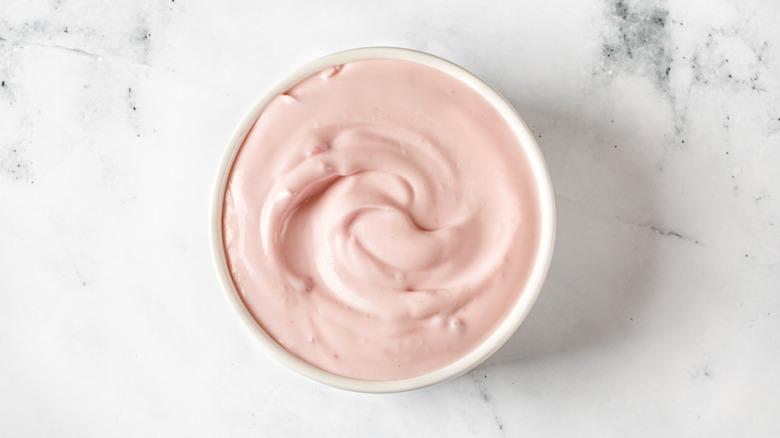
One of the biggest culinary quirks of 20th-century cooking was the tendency to dress fruit salads in bulky, thick sauces. Somewhere along the line, we managed to stop doing this for the most part, and nowadays, people understand that heavy dressings mask the freshness of the fruit that you're trying to champion. Back in 1957, though, this wasn't the case: Chefs and cookbook authors like Helen Corbitt were still making up creamy salad dressings to top their fruit with. In Corbitt's recipe book, aptly named "Helen Corbitt's Cookbook," she promoted a strawberry sour cream dressing, which was simple to put together and had a lot of flavor.
This dressing consisted of just three ingredients: frozen strawberries, sour cream, and salt. The amount of salt was pretty surprising, with a full teaspoon specified for two cups of sour cream. We'd imagine this made it a pretty briny affair, but it also would have had a nice sweet-sour flavor profile and a lot of richness. Corbitt recommended using it to top canned pears, but also stated that it could go on pretty much anything.
Boiled dressing
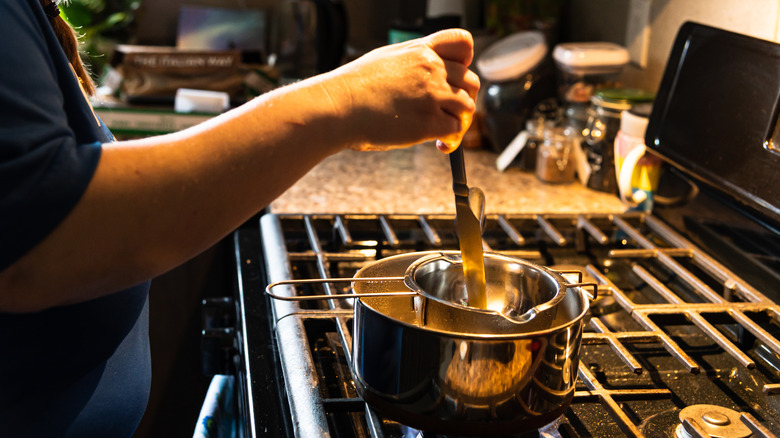
We love a dish with a misleading name, y'all. This dressing, despite what it leads you to believe, wasn't boiled at all. Instead, boiled dressing (which was almost a spin on hollandaise sauce) was prepared in a double boiler, although it could also be cooked in a pot, as long as it wasn't allowed to actually boil (a gentle simmer was ideal). Boiled dressing was a rich affair, with eggs and cream coming together and heating to create a thick, luscious sauce, which was given additional layers of flavor with mustard, sugar, and vinegar. Some recipes would also contain butter and flour, giving this dressing even more body, and it could also be spiced up with the addition of paprika or Cajun seasoning.
Boiled dressing's heyday was back in the early 20th century, when it was circulated in cooking pamphlets that were commonly distributed by churches and women's groups in the South. It could be used as a dressing for a standard salad, but it was also common to combine it with chicken salad or to make pimento cheese filling, and it could be the dressing for slaw, too. As time went on and cooking salad dressings went out of fashion, boiled dressing somewhat disappeared. It's now rare to find anyone making it in a casual setting.
Tomato soup dressing
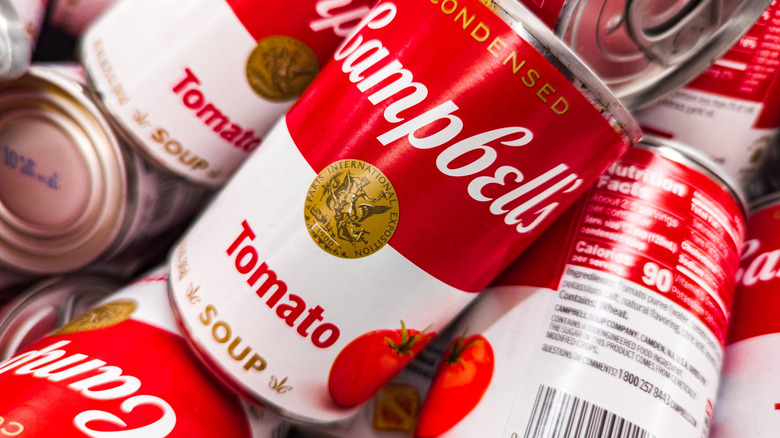
Look, we don't wanna be rude, but we're really glad that we weren't making food back in the middle of the 20th century. If we were, we might end up having to whip up tomato soup dressing and pretend that we enjoyed the trendiest salad sauce of the moment. This brainchild of mid-century cooking started showing up in cookbooks in the 1940s, and it was also promoted by soup companies like Campbell's as a canny way to use their product. As you might expect, it all began with a can of tomato soup, into which various ingredients like vinegar, oil, mustard, minced onion, paprika, and Worcestershire sauce were added. There was no cooking involved: You just mixed everything up and then put it in the fridge until you were ready to use it.
We understand why this dressing might have appealed to home cooks looking for novel ways to use newfangled processed foods, but we just can't get past how intense it must have been. The combination of canned soup and Worcestershire would have been incredibly salty, and there's also a lot of acidity going on — which, when combined with the umami of the tomatoes, must have been a little overwhelming. It's no wonder that this recipe ended up being left in the past, to be honest.
Banana dressing
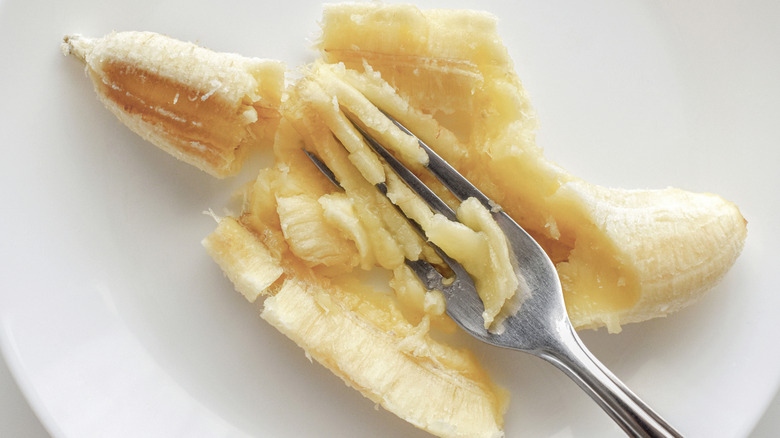
Generally speaking, salad dressings should be smooth, right? The last thing you really want is to end up with a big lump of something in your dressing, which gets in the way of everything else going on. If we had to guess, this is perhaps why banana dressing didn't stand the test of time — well, that and the fact that it sounded just a bit odd. Banana dressing was an early 20th-century sauce designed to be used in fruit salads, and would show up in recipe books like the very literally named "Two Hundred Recipes for Making Salads, with Thirty Recipes for Dressings and Sauces" by Olive Hulse. The recipe instructed cooks to mash up two bananas before combining them with lemon juice, sugar, and olive oil.
This last ingredient raises quite a few question marks about what this dressing would taste like. The olive oil may have given it smoothness, but its briny note would have clashed pretty heavily with the other sweet flavors and the fruitiness of the banana. To be fair, not every recipe had that last addition, but all of them contained mashed banana, which at the best of times has a lumpy, slightly curdled consistency that never really appeals. We're not surprised that this one didn't last long.
Celery seed dressing

There was a time when celery seed dressings were all the rage. Dressings containing this earthy, grassy ingredient would regularly appear in cookbooks and on tins of celery seed during the mid-20th century. Interestingly, despite its popularity as an ingredient, no one recipe for celery seed dressing ever became the go-to, and instead it would be combined with everything from tomato catsup to white onion to grapefruit juice. It was also used, somewhat strangely, in both savory and sweet salads, with one recipe recommending combining it with fruit. We're not so sure about that one.
It seems strange that celery seed dressings didn't remain popular as time went on. After all, celery seed's slightly anise bite gives dressings a lot of vibrancy and serves as a nice counterpoint to the acidic and mustardy notes that were also present in the sauce. However, it seems that at some point, America fell out of love with celery seed in its dressings, and it was pushed to the back of the spice cupboard. Nowadays, though, you can use celery seed in all kinds of things, and it's great for taking tuna salad up a notch.
Limeade dressing
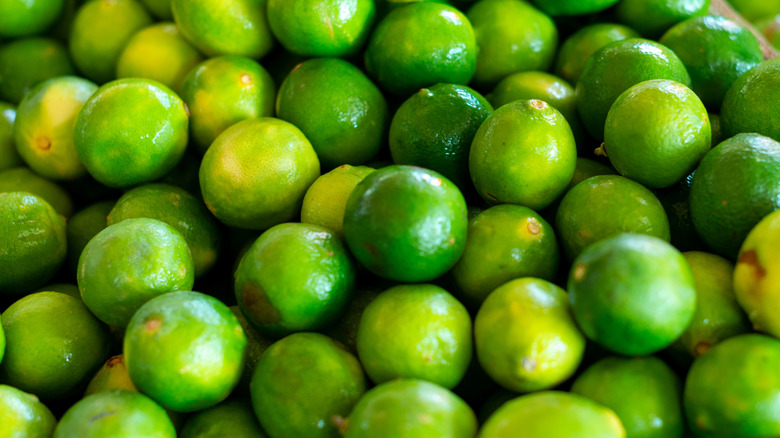
Sometimes we marvel at what people used to get away with in the kitchen. Wanna see what we mean? We present limeade dressing for your consideration. This dressing may sound like something that a bored college student came up with, but it was established enough to make its way into the famous "Betty Crocker's Cookbook," specifically its 1978 edition. In the book, cooks were instructed to combine thawed frozen limeade concentrate with honey, vegetable oil, and celery or poppy seed. They could also use frozen lemonade concentrate, if they wished.
Betty Crocker kept promoting this dressing for several years after this recipe was printed, pairing it with chopped salads consisting of grapes, nuts, cherries, and celery, and using it in jellied affairs. Eventually, though, limeade dressing receded into the background. We can see why, too. While in theory, its flavors provided the acidity and sweetness that salad dressings require, it's hard to get past the feeling that this dressing would have tasted bizarrely artificial. Personally, we'll just stick with fresh lime.
Mayfair dressing
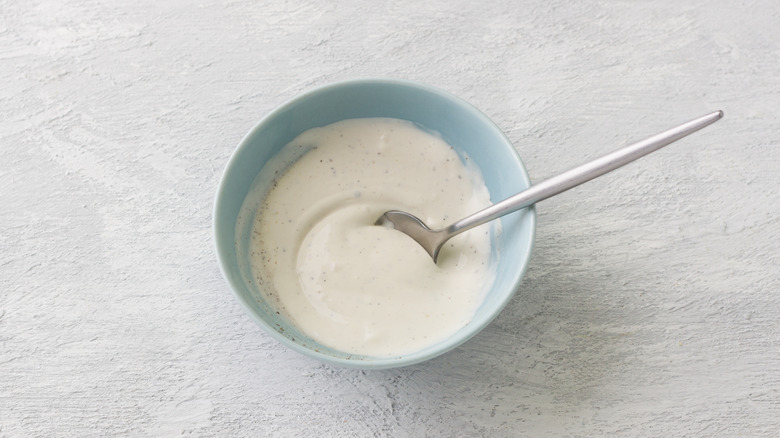
Mayfair dressing is a turn-of-the-century sauce with a striking similarity to a modern-day salad most of us eat pretty regularly. This dressing, which was designed to top a Mayfair salad, first came to wider public attention during the 1904 St. Louis World's Fair Exhibition, but was first created at the city's Mayfair Hotel. It subsequently became a signature dish for the hotel before it eventually faded into obscurity.
We can hazard a guess as to why. This dressing was made with mayonnaise, mustard, lemon juice, garlic, and anchovies. Sound familiar? If so, that's because these are all of the key ingredients of a Caesar dressing. Mayfair dressing, however, also had celery and onion, which were blended with the other ingredients. These last two additions gave the dressing a gloopy, slightly gelatinous texture, and an overcomplicated flavor — whereas Caesar dressing kept things a little simpler. There was only room for one in the culinary landscape, and Caesar dressing won out.
Bacon and tomato dressing
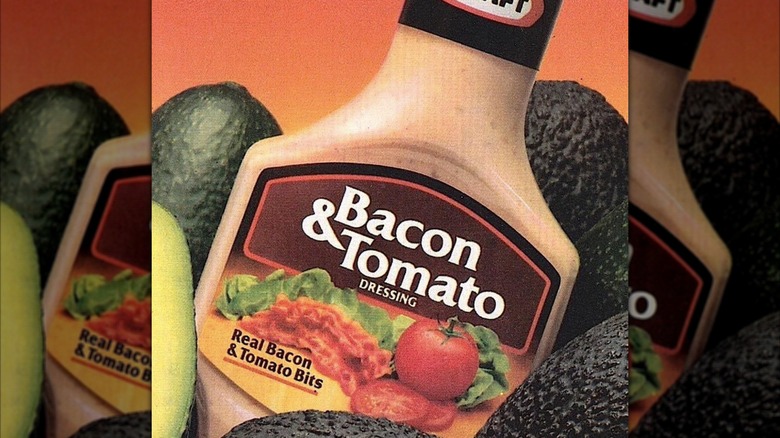
The '80s were a fairly odd time when it came to food: The extravagant, weird dishes of the '60s and '70s were starting to disappear, but there were still some strange choices being made. One of these was by Kraft, which decided to start selling and heavily promoting its Bacon & Tomato Dressing. This bottled dressing was a rich, savory experience, made from real bacon bits, tomato pieces, and sour cream. It was advertised alongside a creamy bacon dressing, which removed the tomatoes but kept the bacony goodness, and it also came in a reduced-calorie version.
Now, we really do get the logic of this one. After all, tomatoes and bacon are common ingredients in salad, and sour cream dressings are also very popular — so why not combine everything in one bottle? It certainly seemed to hit a spot with customers, some of whom remember it to this day. According to those fans, this old-school dressing deserves a comeback. Despite this, it seems as though Kraft knew that it didn't have the widespread appeal it would need to remain a regular fixture in its product line. It was eventually discontinued in the early '90s, with Kraft shifting focus to its Catalina dressing.
Buccaneer dressing
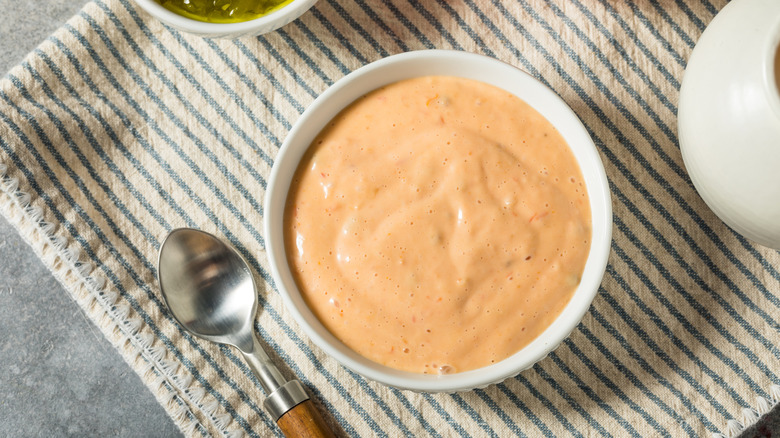
Here's a salad dressing so obscure that even the company that made it can't quite remember it. Buccaneer dressing was a little-known product made by Louis Milani Foods, a manufacturing business that specialized in making condiments, salad oils, and dressings. Buccaneer dressing was just one of its products, and by all accounts, it was a Thousand Island-style affair, with a mayonnaise base and a piquant flavor profile. Louis Milani Foods produced this dressing throughout the '70s and '80s, and when the company was bought out by Kent Precision Foods, it took the recipe with it.
However, as time went on, Buccaneer dressing began to feel more and more obscure. Eventually, Kent Precision Foods decided it was time to discontinue it, and the once-popular dressing simply vanished. Somewhat incredibly, at some point, it seems to have gotten lost in Kent Precision Foods' vaults. When a researcher who remembered the dressing emailed the company asking what happened to it, they received a response stating that no one who worked there had the recipe anymore. As such, all that remains of this dressing is a mere memory.