
Once-Popular '70s Fast Food Chains That Have Faded Away
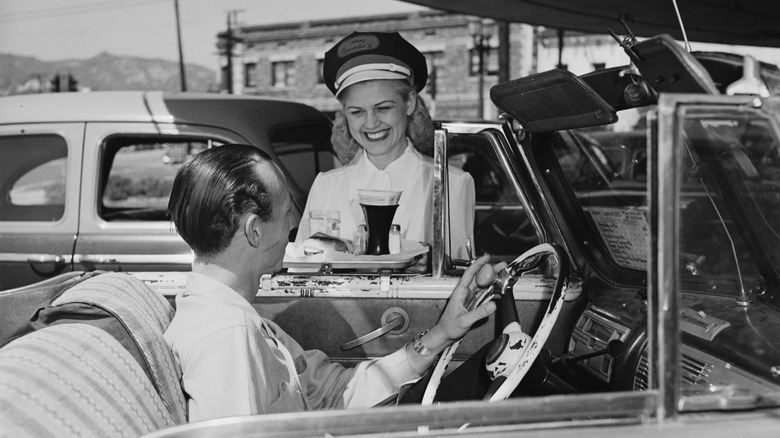
The culture in America shifted in the 1950s from eating at home to a fast food revolution. Parents enjoyed the concept of these newfangled restaurants, where they could feed the whole family a hearty, yet convenient meal to-go. By the 1970s, small-timers and franchisees capitalized on society's increasingly hectic lifestyle, while offering a consistently reliable menu filled with beef, chicken, and seafood. Yes, meat was back on the menu after decades of post-war rationing, and grabbing a pre-cooked burger from the guy behind the counter was a special affair.
With the cost of food skyrocketing, affordable fast food was a welcome option and fast food chains began to soar. Homemakers were probably the first to rejoice, as handing over 15 cents for dinner was certainly easier than preparing a scratch meal at home, especially as many moms had entered the workforce in the 1970s. Drive-thrus, low prices, and speedy service met their demands and it was a hard business model to discredit. If you grew up in the 1970s — though these restaurants had their beginnings before that decade — some of these once popular fast food chains are going to sound familiar and may even induce a bit of longing for a tasty combo meal that has faded away.
Arthur Treacher's Fish & Chips
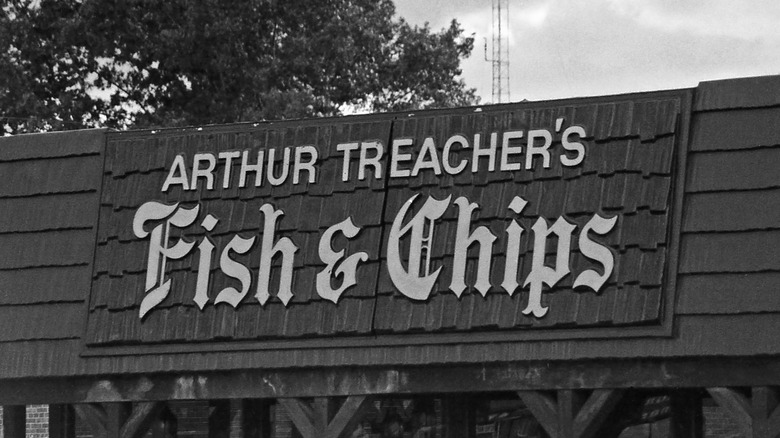
Around the same time Long John Silver's opened its doors in 1969, David Thomas (of later Wendy's fame) teamed up with S. Robert Davis and L.S. Hartzog with the same idea: Fast food seafood, and Arthur Treacher's Fish & Chips was launched. Treacher was an East Sussex-born actor who lent his name to the classically British "fish and chips" chain to boost authenticity — and it worked. What started out as a single restaurant in Ohio grew to a bustling chain with 826 locations in its heyday.
The menu consisted of fried fish featuring the famous Malins of Bow batter recipe with a side of crispy chips. Mrs. Paul's purchased the chain in 1979 and swapped out traditional cod for cheaper pollock, and quality plummeted, displeasing franchisees. Despite efforts by Nathan's Famous to revitalize the brand through its ghost kitchen delivery scheme in 2006, it was too late. The damage was done. After a slew of investors, roller coaster sales, and a bankruptcy in the 1980s, the fast food chain dwindled to 27 locations in 2010. Today, there are just three chains left where you can sample this British phenomenon and all of them are in the fish and chips fast food chain's home state of Ohio. If you're in the area, remember to stop by on June 30th to celebrate Arthur Treacher Day and honor the memory of this once popular restaurant.
Burger Chef
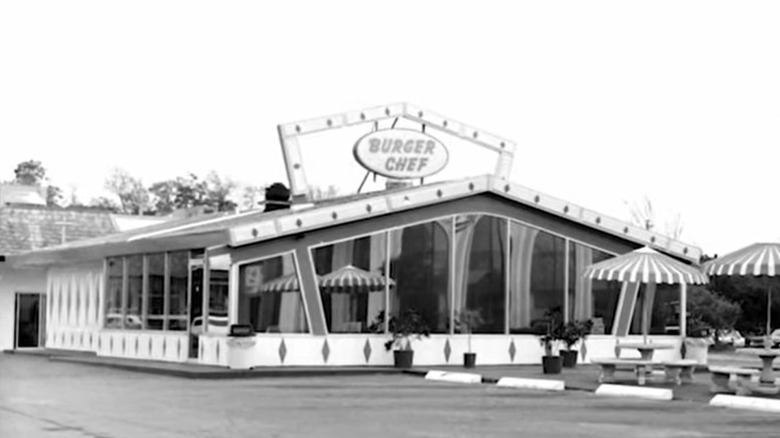
Robert Wildman and brothers Frank and Donald Thomas opened Burger Chef in Indiana more than 70 years ago with their new invention: The flame broiler conveyor belt system. The brothers' innovative gadget could dish out 2,000 burgers an hour, which meant you only had to wait 20 seconds from order to tray. Some fans said this newfangled cooking method put competitor's offerings to shame, and with its legendary condiment's bar, you could dress your 100 percent all beef patty anyway you like. The idea was a huge success and the 1950s chain took over the Midwest.
Within two years the trio had 40 locations under their belts where families could go and eat for just a nickel and a dime. By the 1960s it grew to become the second-largest burger chain in the United States. It stood at 500 locations when General Foods took the helm with lofty plans for new menu choices and plenty of modernization. There were 1,200 spots at its peak in 1972 and Burger Chef's kid's "Fun" meal transformed the chain again in 1973, years before McDonald's released the Happy Meal. Kids could get forgotten fast food we want back, like a Big Shef, fries, and a drink, plus a Star Wars' poster promotion. But that wasn't enough to keep the chain's bottom line from heading south. The food manufacturing corporation sold off the once popular Burger Chef to Hardee's in 1982 for $44 million.
Carrols Burgers
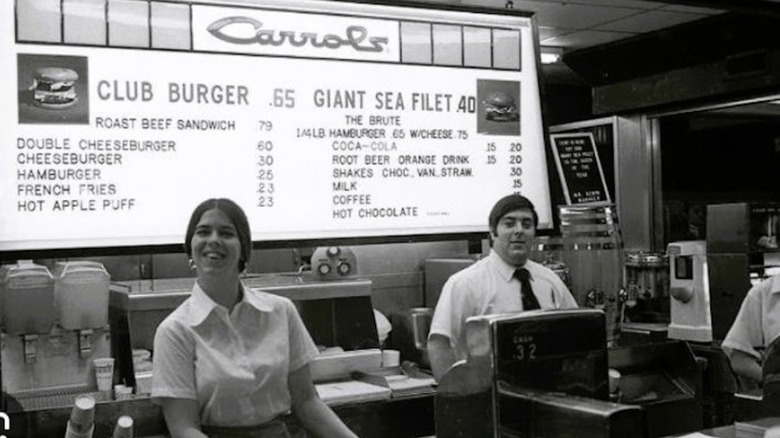
Herbert Slotnick dreamed up the Carrols Burgers drive-in 65 years ago in upstate New York and launched the restaurant under the Tastee-Freeze brand. The new fast food joint was named after co-owner Leo Marantz's daughter Carol, and it offered a decent menu that satisfied budget conscious diners. The brand hit the scene with a unique mascot: A yellow slug and that was enough for plenty of regional success.
While Carrols didn't really give national chains a run for their money, at its peak, the burger spot had roughly 150 locations, primarily in the northeast part of the country. It was here that you could pick up your very own Looney Tunes drink glass, but as the chain expanded, so did its biggest competitor, Burger King. Slotnick had an "if you can't beat them, join them" philosophy and decided to partner with the flame broiled success. He converted hundreds of his restaurants to Burger Kings and became the company's largest franchisee late in the decade.
But the beloved small-time burger and fries chain eventually collapsed under heavy competition from the Pillsbury-owned chain. It would go on to close the doors on its last surviving independent location in Batavia during the early 1980s. Restaurant Brands International eventually acquired all of Carrols Restaurant Group's shares in 2024 for $1 billion, and it's good night Carrols forever.
Chicken Delight
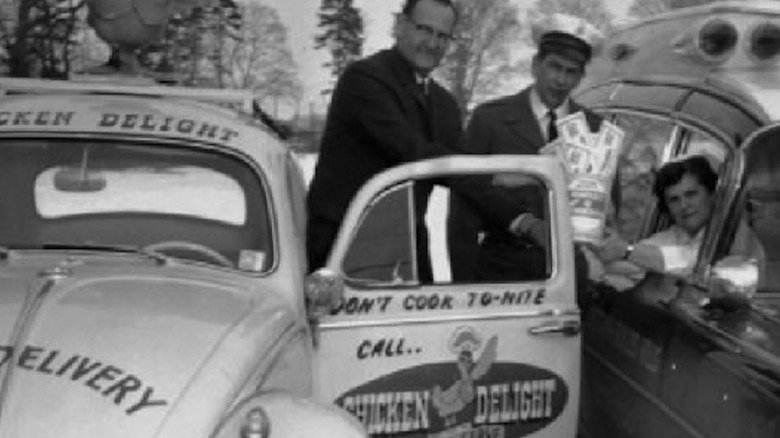
Chicken Delight had been filling up famished customers for nearly 20 years by the time the 1970s rolled around. Al Tunick founded the fast food joint in 1952 with a passion to do something a little different with his own quick service restaurant. So, with a couple used fryers and a catchy slogan, "Don't Cook Tonight, Call Chicken Delight," the poultry chain was born. While chicken was traditionally pan-fried or oven roasted during the fabulous '50s, those cooking methods didn't lend themselves to the fast food setting. But some spicy breading and a dunk in the deep fryer changed everything for Tunick. The results were hot, juicy, and delicious, and now customers could get a half a chicken meal with all the fixin's for just $1.39.
A series of small takeout and delivery locations launched the chain to success with more than 1,000 outlets in the United States during the 1960s. Legal trouble ensued as franchisees sued the company for its illegal tying agreements, forcing a reduction of locations. Franchise owner and Canadian businessman Otto Koch acquired the U.S. and Canadian operations in 1979, moved the fast food chain north of the border, and improved quality control measures. So, while Chicken Delight still exists in Winnipeg, it has long since faded away in the U.S.
Doggie Diner
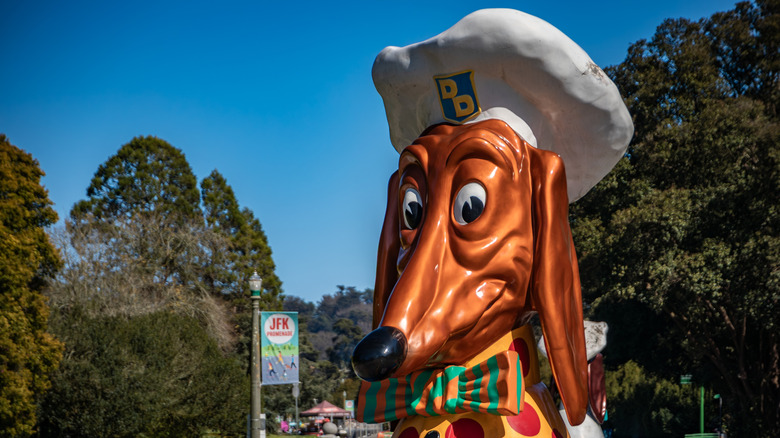
We just had to take your taste buds on a trip down memory lane with Doggie Diner. This California-based eatery with its charming rotating wiener dog head perched out front got its start in 1948. Al Ross had a dream to use only the finest quality ingredients at his hot dog stand. His tasty plan was a hit and it grew to 22 locations across the region. The chain was open 24 hours a day, seven days a week, so no matter when you had a Doggie Diner craving, you were in luck.
Artist Harold Bachman designed the chef-hat wearing doggie head in 1966 and the last one stood on the corner of 46th Avenue and Sloat Boulevard in San Francisco. The mascot was restored through a grassroots preservation effort and declared an official Historical Landmark in 2006. For nearly four decades Doggie Diner dished out chili cheese dogs, Western hamburgers, and hot pastrami sandwiches, but Ross sold the beloved chain in 1979. The fast food place with the iconic 10-foot tall dachshund mascot wrapped things up and closed in 1986. There are some rumors that it may be resurrected in the Bay Area soon. We sure hope so, because we think it'll rank right up there with the best of today's fast food hot dogs.
Gino's Hamburgers
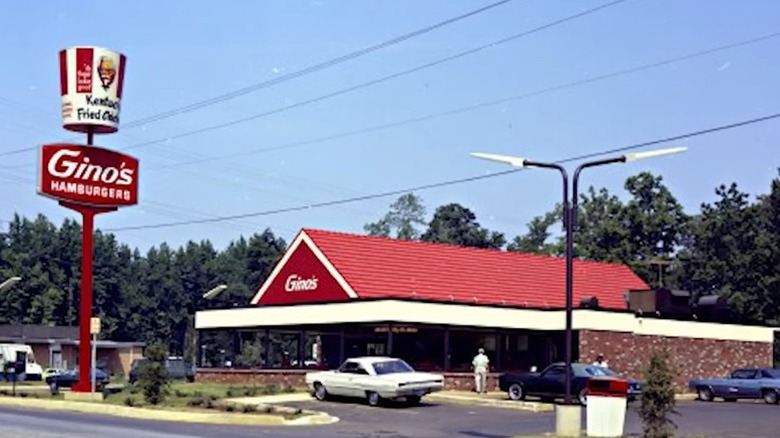
Gino's wasn't your ordinary fast food chain. It was the love child of NFL Hall of Famer Gino Marchetti and had a strong focus on philanthropy. The celebrated Baltimore Colts defensive end along with Alan Ameche, Joe Campanella, and pal Louis Fischer capitalized on their illustrious sport's careers and opened the Maryland-based burger joint in 1957. But what made Gino's extra special was the giant servings. The char-grilled burgers were bigger than competitors, and so were the fries, drinks, and shakes. Thanks to a deal with Colonel Sanders and Kentucky Fried Chicken, you could even order up both menu items all under the same roof.
Each Gino's location was company owned and operated, and it worked hard to expand to new territories in Michigan, Massachusetts, and Connecticut. Celebrity boxer Muhammad Ali starred in the fast food chain's 1976 commercial promoting Gino's "banquet on a bun," and by 1982 it had amassed 359 restaurants. But success was short-lived and the football stars sold out completely. Marriott ended up buying out the company in 1982 for $48.6 million, dumped the Gino's name, and rebranded the chain as Roy Rogers. One Gino's Hamburgers held on until 1986 in Maryland. But sadly it's gone the way of so many once popular and now forgotten fast food chains from this era.
Lum's
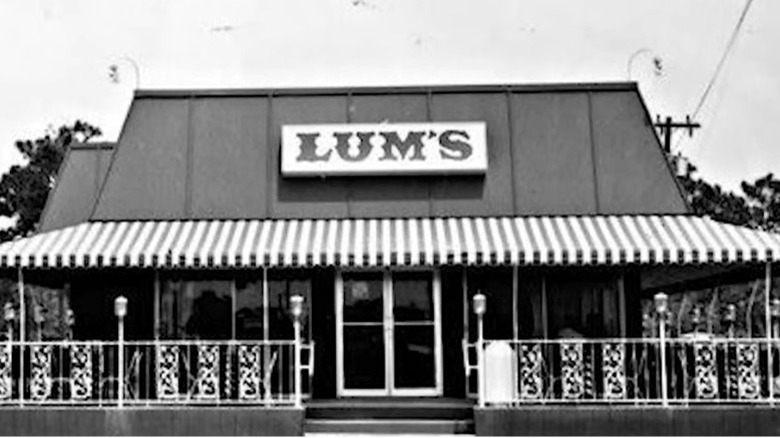
Back in 1956, Lum's in Florida did something unique: It steamed its hot dogs in beer. It was a flavor combination you couldn't get anywhere else, and its vast menu of bar-style foods and welcoming tavern vibe launched Lum's to fame. Pitchman Milton Berle even starred in a few commercials for the chain, and over the years, Clifford and Stuart Perlman's seven-stool hot dog stand grew to 400 locations across 29 states and Canada.
Once the brothers purchased Caesars Palace in 1969, it only took them two years to get out of the restaurant business, and they sold Lum's to Kentucky Fried Chicken's chairman, John Brown. Even though the new owner paid $1 million to add the secret 32-spice Ollieburger recipe to the menu, he couldn't fight the greasy spoon's inevitable downfall. Supply chain issues and a conflict of interest with Dave Thomas led Brown to sell the fast food chain to Wienerwald Holdings. By 1982 the Swiss company filed for bankruptcy and the final location in Nebraska has been a memory since 2017. There's nothing stopping you from recreating this flavorful hot door and beer recipe at home, though.
Pup 'N' Taco
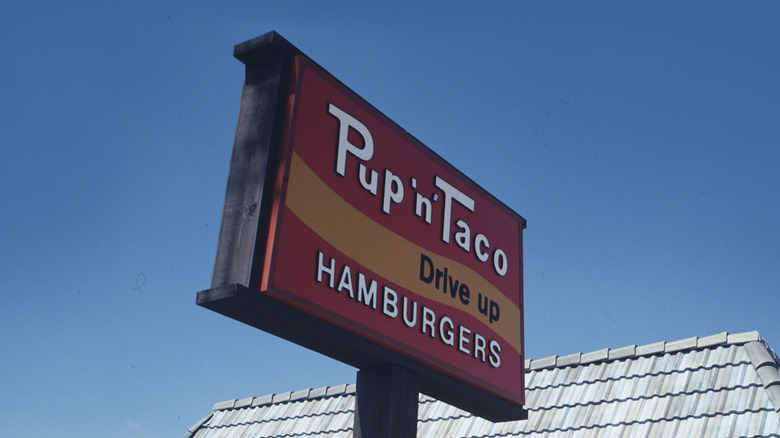
There wasn't a fast food chain quite like Pup 'N' Taco back in 1956. You could roll up to Russell Wendell's variety restaurant in California and order a burger, taco, chili dog, pastrami sandwich, and a straw clogging milkshake right off the same menu. This eclectic line up of scrumptious eats certainly did reflect its hometown's diverse culinary influences. With its chugging train commercial and animated spot with talking food, and a "Bite the one you love" bumper sticker, the fast food restaurant's advertising manager certainly made an effort, but its marketing campaigns must have fallen short.
So, what did happen to the home of the 84 cent meal deal? This jack-of-all-fast-foods was bought out by Taco Bell's parent company in 1984, when it stood at 99 locations between California and Colorado. While three spots remained in New Mexico after the sale, they tried to stay afloat by rebranding from "Pup" to "Pop." Sadly, even though the unique menu offerings were the same, survival wasn't in the cards for the chain. Ultimately, its nearly five decade run ended around 2014, when all the Pup 'N' Tacos turned off their kitchen lights forever.
Red Barn
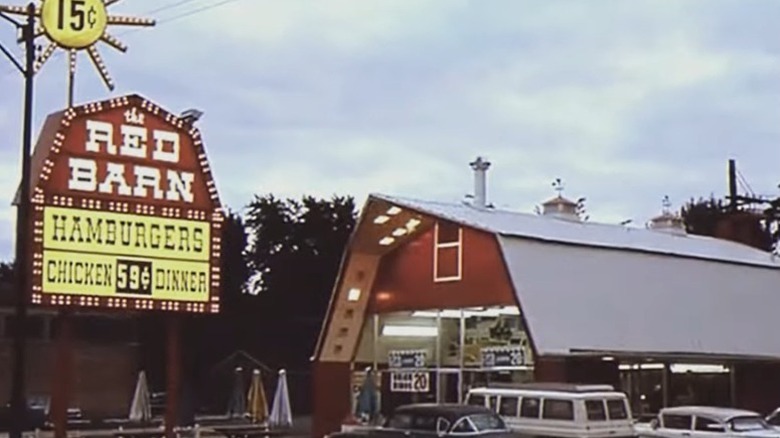
When the hungries hit, you hit the Red Barn. According to this 1970s fast food chain's slogan, that is. This new competitor to hit the quick serve scene was housed in, yes, you guessed it: A stately red barn. In 1961, partners Don Six, Martin Lavine, and Jim Kirst opened the first Red Barn with all its rural charm in Ohio. The shape of the building was a big deal, and designer Red Barn Systems held the patent in 1962 and granted franchisee licensing. But it wasn't just the architecture that drew in customers. Its lineup of massive burgers, scrumptious fried chicken, and authentic fish sandwiches made it a popular place for hungry patrons, growing to nearly 400 locations in 19 states.
Red Barn changed hands numerous times over the next 17 years. United Servomation bought the chain late in the decade and merged with City Investing Company in 1978. But no one could seem to make a go of the fast food venue. Its new owners were more interested in growing its real estate business, and Red Barn basically just faded away. The Motel 6 franchise just let the restaurants' leases run out and it was lights out in the barn by 1988.
Wetson's Hamburger Drive-In
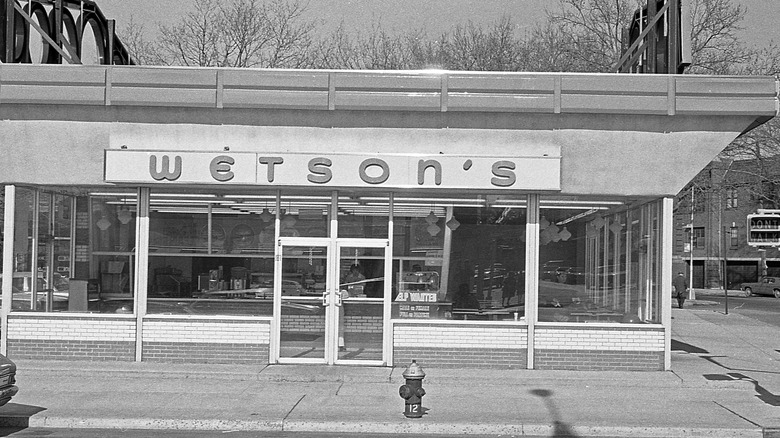
Brothers Herbert and Errol Wetanson had a plan that blossomed after a first-ever trip to a McDonalds in California. The experience inspired a radical idea, and with the post-war boom, the brothers were on to something big. After all, their father was a restaurateur, so they had some idea of what they were getting into. So, together they introduced the Long Island community to Wetson's drive-in. The family-owned and operated fast food joint started serving customers in 1959 with a few Golden Arches borrowed concepts. Why even their mascots, a pair of clowns named Wetty and Sonny, were modeled after the nationwide competitor's red-headed character.
But the Wetson chain did pretty good on its own. It's one of the best vintage burger chains that never made it nationwide. Its juicy patties topped the scales at up to 22 percent fat, which not only made them more delicious, it helped prevent shrinkage on the griddle. Weston's had a good run with 72 locations in New York, New Jersey, and Connecticut, but the now extinct burger joint would close up shop in 1975. It wasn't the menu that led to its collapse, though. Wetson's owners decided to merge with Nathan's Famous with a one to six share swap for stockholders and poof. It disappeared.