

The Story Behind Panera Bread's Fall
Once upon a time, Panera Bread was the place to be. The soup, sandwich, and salad spot first appeared in 1987, and by the end of the '90s, it was beginning to dominate the fast-casual lunch space. During the early 2000s, Panera became renowned for its freshly prepared food and attentiveness to nutrition, and it felt like a breath of fresh air when compared to other quick-service restaurants. Over the following years, it ballooned to a mammoth size, boasting well over 2,000 units across the country and remaining a heavy hitter in the food industry. It's also managed to make a mark in your local grocery store with its Panera Brand soups.
However, in the last few years, Panera has started to change. Customers have noticed that the brand doesn't feel like it once did, and that the quality of its food and its menu offerings has shifted, making it a shadow of what it once was. Many observers pin the moment everything changed on Panera's 2017 sale to JAB Holding, which appears to have ushered in a new era for the restaurant — and that era hasn't been great, folks. There's a little more to it than that, though; so how did this once-beloved eatery lose its shine? We've got the lowdown on how it all turned south.
Panera's downfall started when it was at its peak
Although most people agree that Panera's downfall has been most obvious in the last decade, the truth is that the cracks were starting to show way before that. The 2000s saw Panera grow to mammoth proportions, opening over 1,000 locations in just five years and seeing its revenue go through the roof. However, that expansion was also coupled with workers raising serious issues with the company, citing racial discrimination against them in its stores. Two separate lawsuits were filed against Panera within three months, with both workers stating that they had faced discrimination in the workplace during their several years of employment. One of the plaintiffs, Guy Vines, stated that he had repeatedly been made to work in the kitchen and claimed that Panera preferred Black employees not to work behind the cash register.
In response, Panera stated that it had zero tolerance for discrimination. It also said that the franchisee who ran the store Vines worked in claimed that his allegations were false. Despite this, it was pretty bad publicity for a company that had, up until that point, seemed like it was doing things right. It was the start of a very long, slow decline.
A high-profile peanut butter allergy case caused trouble for the chain
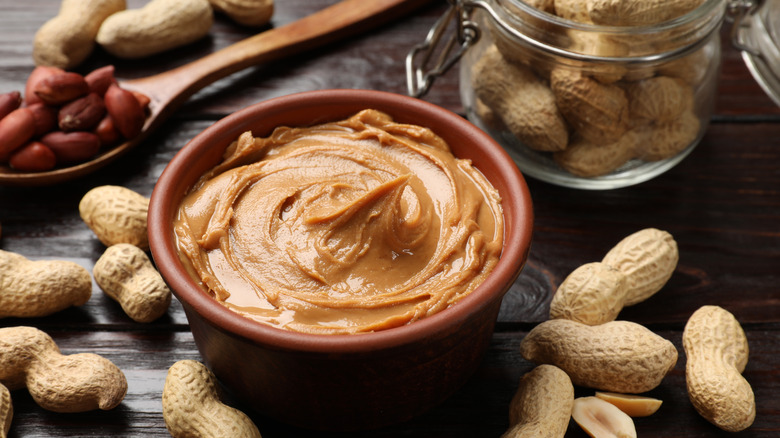
Huge chains like Panera pride themselves not only on the flavor of their food, but on the safety of it too. When the latter goes wrong, things can become incredibly complicated for those companies. Panera realized this in full back in 2016, when a highly publicized peanut allergy event caused the restaurant to appear less wholesome than it once did. When a pair of parents in New England ordered a grilled cheese from Panera for their five-year-old daughter, it arrived with a massive dollop of peanut butter in it, despite the parents flagging in the online ordering system that she had a peanut allergy. When she bit into the sandwich, she reacted and had to be hospitalized, before being discharged the next day.
The parents promptly sued Panera and a group of franchisees in the New England area for negligence. The case was serious enough that it eventually was instructed to go to trial, before Panera and the complainants eventually reconciled and resolved things in 2022. While it's a huge relief that there were no worse consequences for the young girl, the lawsuit was a massive problem for Panera, considering the seriousness of the event. And that's all without getting into the quality of its grilled cheese sandwich, which some say they wouldn't serve to their worst enemy.
Panera's sale to JAB Holding Company was a key step in its downfall
Long-time patrons and observers of Panera generally agree on one thing: There was the restaurant before it was bought by JAB Holding Company, and there was the restaurant afterward. This key purchase, which occurred in 2017, is generally regarded as the tipping point in the company's journey, and the beginning of the downfall that's plagued it in recent years. The massive umbrella company was already the owner of Krispy Kreme, Keurig Green Mountain, and Caribou Coffee before it made the bid for Panera. The price it was willing to pay was $7.5 billion, making the purchase the second-largest in restaurant history.
At the time of the sale, JAB Holding's CEO, Olivier Goudet, stated that the company would seek to support Panera's vision for its future. In truth, however, it's hard to escape the feeling that Panera's true identity was lost. Although Panera continued to be operated independently by its management team and CEO Ron Shaich, JAB Holding increasingly began to intervene in its business and incorporate other brands into the Panera stable. Ultimately, this may well have diluted what once was a strong brand, and customers have noticed that things haven't been the same since.
Shortly after it changed hands in 2017, Panera started to face turbulence

Panera's 2017 sale to JAB Holding was meant to strengthen the restaurant chain for the future, but it actually unleashed a fair bit of turbulence. Just six months after Panera was purchased by the umbrella company, its founder and CEO, Ron Shaich, announced that he was stepping down. Shaich had been with the company since its beginnings, and his leaving the company seemed to be at odds with what he indicated during the JAB Holding purchase, when he said that its move to a private company would allow him to do more. We're not sure what happened along the way, but clearly things didn't quite work out the way everyone might have intended.
Although the CEO position was handed over to longtime employee and president Blaine Hurst, the sudden change provoked suspicions that the company was in quite a precarious position. This was compounded by a major publicity crisis just months later, when it was learned that Panera had been inadvertently leaking customer data through its website. Reporter Brian Krebs learned that Panera's customer information had been freely available in its website code for eight months, and Panera's information security team hadn't adequately addressed the issue when first alerted to it. It was a moment that made Panera look like it just wasn't taking customer experience that seriously.
Under JAB Holding Company's ownership, Panera's customers started to notice its food getting worse
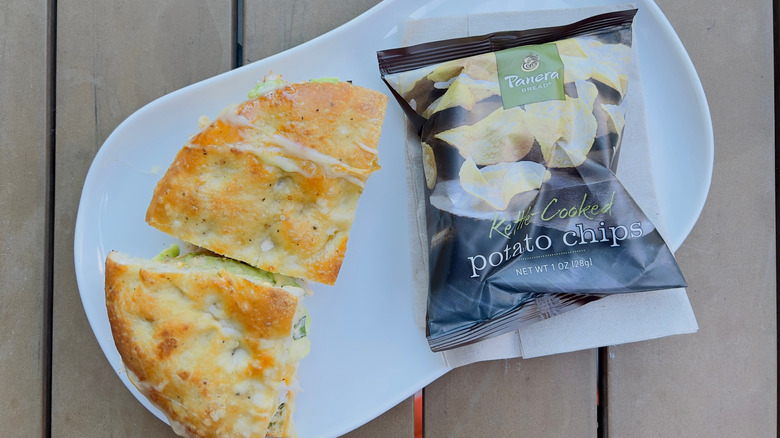
You know what people want when they pay for food? Taste and quality. Up until 2017, Panera was a reliable place to get both of those things: The chain was well-known for its nutritious options that managed to taste good, feel worth the price, and remain relatively healthy. Customers have pointed out that over the last few years, they've seen the food get worse while simultaneously being more expensive. "It's very sad. Thousands of people feel just like you do," said one person on Reddit, in response to a question about why Panera is declining so much. "Quality has gone down while prices skyrocketed. It's all about corporate greed."
One of the biggest places it's dropped the ball, according to its customers, is in its namesake: The bread. This became, unfortunately, yet another of Panera's items that are frozen, not fresh. "Panera has gotten far, far away from what it was," stated another frustrated customer on Reddit. "Eliminating bakers and making it just another job for a regular employee, going to pre-made frozen bread rather than shipping in the dough and have a trained baker turn it into a work of art, that is what Panera Bread used to be about." It doesn't seem like Panera's decision to get rid of its scratch-made bread is going to be reversed any time soon, either. In July 2025, it announced that it was closing its fresh dough facility in St. Louis, Missouri, resulting in the loss of 72 jobs.
Its decision to sell Charged Lemonade proved to be catastrophic
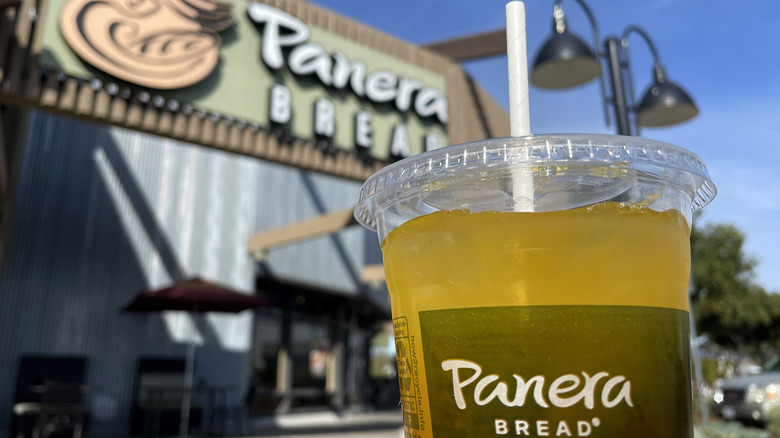
One of the biggest events in Panera's recent history, which has caused many customers to reassess whether they want to eat at the restaurant, is also the saddest. In 2022, Panera launched its Charged Lemonade, a range of soft drinks that had roughly the same amount of caffeine as coffee. The lemonades' caffeine content was advertised in stores, but was offered next to Panera's other soft drinks. In September 2022, college student Sarah Katz, who had a heart condition called long QT syndrome type 1, purchased one of the Charged Lemonade drinks. Katz later went into cardiac arrest and sadly died.
In 2023, a second death was linked to Charged Lemonade when a Florida man, Dennis Brown, experienced cardiac arrest after drinking three servings of the beverage. Both deaths resulted in lawsuits against Panera. Other lawsuits were brought against the restaurant by individuals who stated that they experienced cardiac issues after drinking Charged Lemonade. Panera had settled all of the lawsuits by July 2025, but it was an incredibly controversial time for the company, and its reputation was impacted enormously.
The restaurant's customer service has declined in recent years
It used to be that you could rely on a pretty good experience in Panera Bread, but those days are now long gone. In the last couple of years, customers have repeatedly noted how much its customer service has gone downhill. Folks have noted that staff don't seem to care about their experience anymore, and that hygiene standards have been slipping, with some employees being observed handling food directly after mopping the floor without washing their hands in between. Others have pointed out that Panera's now seem to be understaffed, and the decision to run its stores on a skeleton crew has led to a decline in customer enjoyment.
All of these frustrations are exacerbated by the fact that it's almost impossible to receive an answer to a query or complaint. "I have been trying to get one simple question answered for a month," said one annoyed customer on Reddit. "I have asked every employee I have seen, all the managers at 4 different locations, tried to ask on this sub, Panera's Facebook and Twitter accounts, called 2 times, sent 2 emails and I keep being told they will get back to me asap." With service like that, who can blame people for starting to eat elsewhere?
Panera's 2024 menu overhaul was sharply criticized
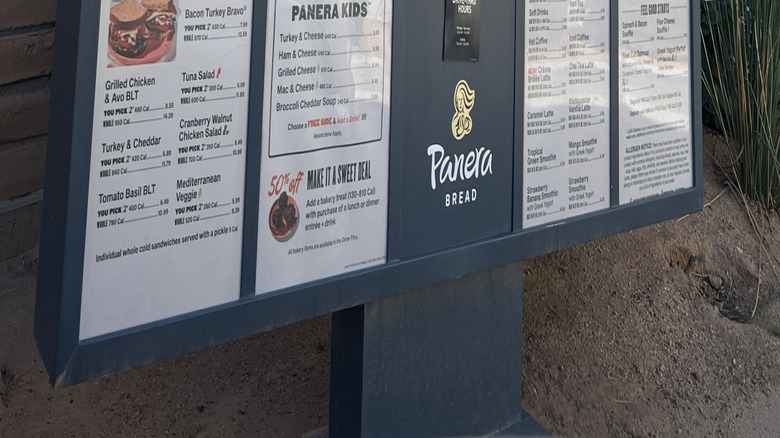
Panera's no stranger to changing up its menu, but what most people go back there for is the classics. As such, it's generally been pretty good about remembering what its customers actually want. In the last few years, though, it's made a few menu decisions that just haven't worked. Panera previously added pizza to its menu in a bid to target an evening crowd (and also created some unimpressive chicken sandwiches), but when this didn't pay off, it made a wide-scale revision in 2024. In doing so, it announced that it was simultaneously adding things to, and removing things from, its menu — and it was also changing up its bread in the process, while adding more meat and cheese items for customers.
None of these moves was received especially well. Its decision to add more non-plant-based options seemed to go against Panera's core vision, as well as its promise to serve more plant-based choices in the name of sustainability. Its bread changes, meanwhile, were a big mistake. "Imagine a BAKERY overlooking the fact that customers go there FOR THE BREAD," ranted one person on Reddit. Others lamented the fact that their favorite sandwiches, bagels, and drinks had been axed. Panera took a big risk, and it didn't pay off.
Other chains have been making life difficult for Panera
It's no secret that there are a lot of chains out there, and while Panera once looked unique in its offering, that's no longer the case. Over the last few years, it's been facing stiff competition from other growing brands like Sweetgreen, Cava, McAlister's Deli, and Chopt, all of which are seeking to challenge the legacy brand. Panera is now just one of many fast-casual concepts that put its focus on serving nutritious food, and with the steady growth that some of these brands (like Chopt) are experiencing, it may well find that it's in trouble soon.
Although Panera still has the edge in terms of its sheer number of stores, it may be struggling on the quality front. People are increasingly feeling that salad options from Chopt and Sweetgreen (which Martha Stewart is a fan of) feel fresher and more flavorful than those from Panera. Plus, on a nutritional level, they can also be way less salty and lower in sugar. The fact is, many former Panera customers have actively been looking for recommendations for alternatives to Panera, due to no longer feeling that it's a place they want to eat — and other chains are stepping up to fill the gap. The signs are all pointing to Panera's decline.
Panera's Sip Club has demonstrated that it's struggling to fulfill its promises
Plenty of restaurants these days have subscription schemes that are designed to keep customers coming through their doors — but these schemes only hit the spot if you can actually get what you pay for. Unfortunately, when it comes to Panera's Sip Club, that's not always been the case. Panera first launched a coffee subscription in 2020 and renamed it Sip Club in 2022, costing customers $10.99 a month before tax for as many drinks as they want. In 2025, it rejigged the scheme and for a limited time offered subscribers three months' free drinks.
Sounds great, right? Well, the problem was that these drinks were often just not available. People who visited their local Panera to obtain Sip Club drinks were greeted with signs stating that the restaurant's coffee machines were broken. "Happened to my store a couple times. Actual nightmare scenarios," lamented a customer on Reddit. What was even worse for the restaurant was that the Sip Club issue instigated a wider conversation about Panera's stock issues, as well as exposing the generally poor service that Panera offers at present.