

Old-School Chocolate Desserts That Should Be More Popular
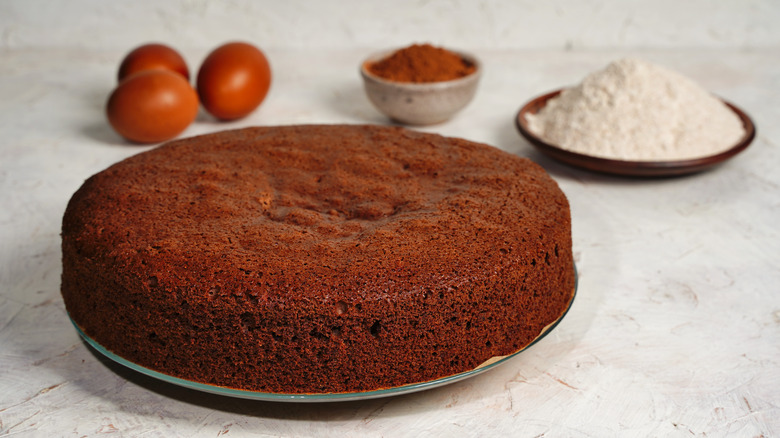
Do you love chocolate? Is the Pope Catholic? Does the moon come out at night? Okay, you get what we mean — we know that chocolate is one of the most beloved flavors out there, and as a result, it's no surprise that it still dominates desserts everywhere. Whether homemade or store-bought, chocolate is a central ingredient in many sweet treats, but not all chocolate desserts have stood the test of time. Throughout the years, there have been plenty that have flown under the radar, but these stand among the most iconic nostalgic desserts, and we think it's time for them to make a comeback.
A lot of the old-school chocolate desserts that have never quite taken off have been regional favorites. Dishes like buckeyes, Maine Needhams, and possum pie (don't worry, there's no actual possum in it) have never quite made it out of the states where they were invented, and deserve a bigger stage. Elsewhere, older desserts like bumpy cake, chocolate chiffon cake, and the tunnel of fudge have fallen off the radar in recent years, and while they may still be made by some people, we think that they should be way better-known than they are.
Bumpy cake
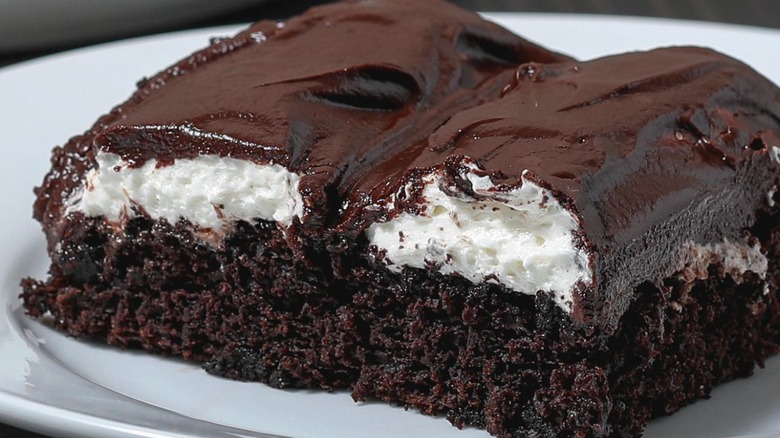
Take one look at a bumpy cake, and you'll know exactly why it's called what it is. This dessert was first invented in Michigan in the early 1900s by confectioner Fred Sanders, and it's immediately identifiable by its ridged top, which looks slightly like it's crowned by speed bumps or curved mountain ridges. The base of a bumpy cake is fairly standard devil's food cake, with thick tubes of buttercream piped across it. The buttercream and cake are then smothered in a fudge frosting, and everything's chilled until set.
What's especially delightful about this cake is its series of dualities. You get not just the soft, fluffy cake in each mouthful, but the rich, creamy buttercream frosting too — and the irregular texture makes eating it even more fun. We can see, however, how the bumpy cake started to lose its appeal to make. It is a bit tricky to put together for the amateur baker, particularly those who don't have piping bags. However, for chefs who want a challenge in the kitchen (and a delicious treat), we think it's definitely worth your time.
Chocolate mayonnaise cake
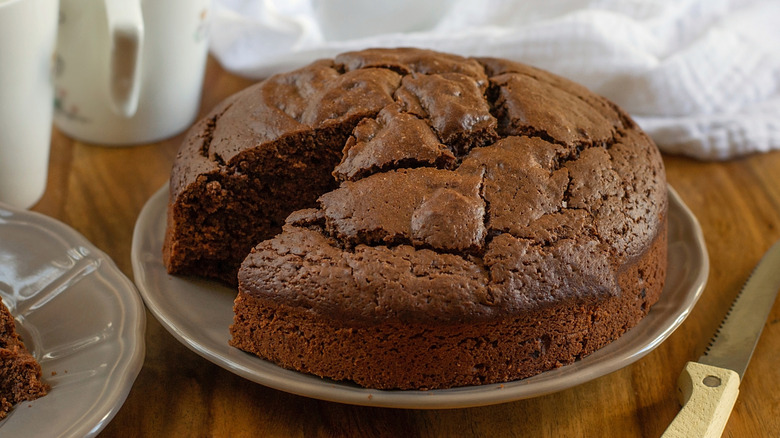
Okay, so before you close your laptop and walk away for good, hear us out. We know that the idea of putting mayonnaise in a chocolate cake sounds disgusting, but there's a reason why this dessert had a brief spell in the spotlight back in the 20th century. Chocolate mayonnaise cake recipes first started appearing in print in the late 1920s, with mayonnaise company Hellmann's allegedly developing a recipe that incorporated its product. It only really began gathering steam, however, in the 1940s, when food rationing forced home cooks to get a bit smarter about how they made their cakes.
After a while, though, even with variations on the chocolate mayonnaise cake appearing, it fell out of fashion, as chefs turned back to using eggs and milk instead of mayo. Well, we think it's still worth a try. Not only is using mayo in a chocolate cake very easy, but it's also an excellent choice when you don't have any fresh ingredients at home. Plus, it's worth bearing in mind that in its basic form, mayonnaise is just eggs, oil, and lemon juice or vinegar. All of these ingredients are perfectly at home in cakes and provide an excellent counterpoint to the sweeter additions. Give it a try — we don't think you'll regret it.
Maine Needhams
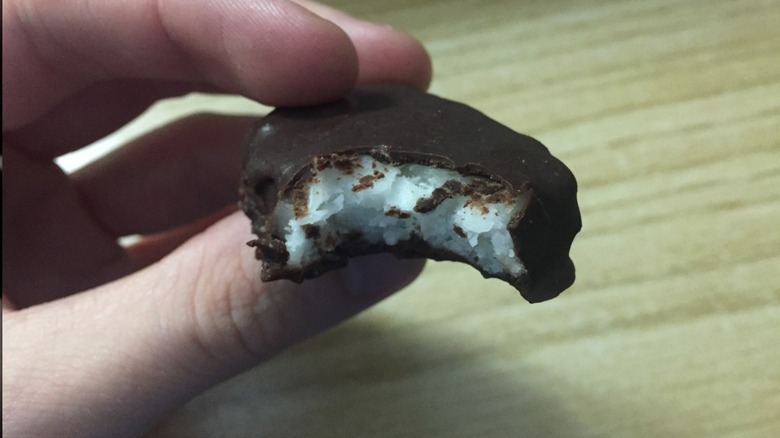
A dessert made of chocolate and potato? Now we've seen everything. That's right, folks, if you're ever in Maine, you can try such a delight, in the form of a candy known as the Needham. These were first invented in the late 19th century, by a cook for a Maine-based candymaker. The enterprising chef put together a combination of coconut and mashed potato and covered it in chocolate. The candymaker (known as John Seavey) loved it and suggested that they name it after a local evangelist, George C. Needham. A classic was born.
Although the idea of using potatoes in candy might seem strange, it actually serves a vital function. Coconut candies can often be way too gummy and sweet, and the potato helps to temper things and smooth out both the flavor and the texture. There's still a chewiness, but it's also nice and soft on the inside, and the chocolate on the exterior gives it a nice complexity. However, the use of potato is arguably why this dessert has never really taken off outside of Maine, and even within the state, it's slightly overshadowed by the iconic Whoopie Pie, another local delicacy that's arguably way more famous.
Buckeyes
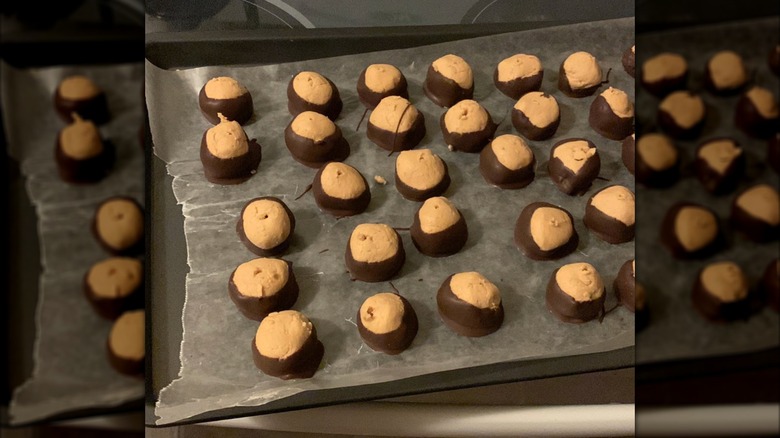
Few people do homemade peanut butter candy like Ohioans. One traditional sweet dish that's unique to the state and rarely found elsewhere is the buckeye, a mash-up of peanut butter, powdered sugar, butter, and chocolate, that makes the perfect light dessert. Buckeyes are named after Ohio's famous buckeye trees, and their appearance resembles the tree's nut. The first three ingredients are rolled into a ball, and then each ball is dipped in melted semi-sweet chocolate before being left to set. It gives the candy a two-tone appearance that's easy on the eye — the buckeye, if you will.
Buckeyes are, for all intents and purposes, round peanut butter cups (although they have a slightly smoother bite than the Reese's version), but that shouldn't take away from their appeal. They have a delightful balance of salty and sweet that's tempered by the butter, which gives the dessert added richness. Because of their idiosyncratic nature and relationship to Ohio, though, they've never really become popular elsewhere in the country. Luckily, if you do want to try them, they're super easy to make at home.
Chocolate cobbler
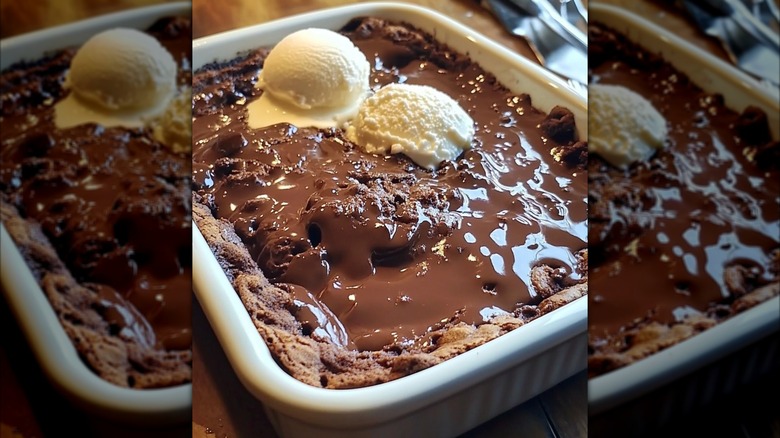
We've all tried cobbler before, but chocolate cobbler is in a league of its own. This retro dessert had a brief moment of popularity recently, but it never quite managed to dethrone the fruit-based version that's dominated since the late 19th century (even though that too is now also feeling pretty old-school). Instead of using a base of stewed fruit and covering it with a biscuit or crumble topping, chocolate cobbler starts with a batter base made from flour, sugar, chocolate, and/or cocoa powder, baking powder, and optional extras like espresso powder and vanilla extract. This thick batter is then topped with a mixture of chocolate, cocoa, and sugar, and then the whole dish is finished off with a generous splash of boiling water.
This last part might sound a little strange, but go with us here. As the cobbler cooks, the water will both keep the batter on the bottom moist and slightly evaporate. The combination of these two things occurring will allow the base to remain fudgy, while the top crisps up nicely. The final product is like a very fancy chocolate pudding, which is best served with a scoop of vanilla ice cream.
Possum pie

So, before we get into this one, let's clear one thing up straight away: No possums are harmed in the making of this pie. In fact, possums don't go anywhere near this Arkansas dessert, which appears to have first got its name in the 1980s. Possum pie is instead named as such because of how it's put together. On first glance, the pie looks pretty boring, with a thick layer of whipped cream covering the whole of the top. Under that whipped cream, though, are layers of chocolate custard, cream cheese, and vanilla pudding, which are "playing possum" and hiding their glory for the diner to find and enjoy. The crust is just as delicious, typically made with a combination of flour and ground pecans.
This pie is one of the tastiest desserts going, but it's fair to say that its name has probably held it back. People see the word possum in a sweet dish, and they kinda get the fear, right? Even folks in Arkansas have reported that it's difficult to find, and it's now a slightly more obscure dessert. However, we think it's definitely time for it to return to center stage.
Chocolate-banana Jell-O pie

There was a time when Jell-O was seemingly used in every dish out there. From salads to salmon mousse, enterprising chefs in mid-century America managed to find a way to get the packaged dessert into most things on the table, in a move that no doubt pleased the manufacturers of the product. Thankfully, it was also used in more appropriate ways, such as in the chocolate-banana Jell-O pie. This dessert was advertised by Jell-O in 1960 as a way to use its chocolate pudding flavor and consisted of a chocolate filling piled into a pie crust, on top of sliced bananas. The pie was then topped with whipped cream and garnished with more banana slices and maraschino cherries.
Alternatives to the Jell-O version of this pie could be made by whipping up a chocolate pudding from scratch, but there's no denying that the packaged pudding made things much easier. Over time, though, the combination of chocolate and banana started to lose its appeal. Chocolate desserts drifted towards more innovative flavors and combinations (and people stopped using Jell-O in everything), and this pie was left in the dust.
Chocolate chiffon cake

If you like your chocolate desserts with a touch of class, then you'll love the chocolate chiffon cake. This was an evolution of the classic chiffon cake, which was invented in the 1920s by Harry Baker, a salesman who figured out the recipe for a super-light sponge before subsequently selling it to General Mills. The company subsequently released the recipe in 1948, and chocolate chiffon, alongside regular chiffon cake, began to take off. This cake subsequently began to feel a little fussy and, dare we say, stale, but there was a brief resurgence in its popularity at the start of the 21st century.
Since then, though, it's slightly lost its way. Chiffon cake (as well as the similar angel food cake) has been replaced by denser crumbs that value moistness and richness over an airy consistency. We think that's a shame. Chocolate chiffon cake manages to perfectly balance the deep flavors of chocolate with the sweet lightness of the delicate crumb, and it's the perfect choice if you want a dessert that doesn't feel too heavy.
Coca-Cola cake

There was a time when Coca-Cola cake was all the rage, and that time was the '90s. It was actually around way before that: Coca-Cola cake recipes first started to show up in the 1950s, and the '60s saw its popularity begin to spread, primarily in the South. However, it wasn't until Cracker Barrel put the cake on its menu that it became a national preoccupation, and people far and wide rushed to try its super-sweet flavor.
That sweetness, unfortunately, seemed to be what stopped it from becoming an all-time great. The syrupy nature that the Coca-Cola brings to the cake is just a little too much for some, and perhaps the nutritional downsides don't quite gel with a culture increasingly focused on wholesome, healthy eating. The Coca-Cola cake is far from gone, and it's still one of Cracker Barrel's flagship dishes and should be one Cracker Barrel dish that's definitely worth ordering at least once — but honestly, we think it should also be a little more widespread than it is. The Coca-Cola gives the cake a surprising richness that you just don't get with other ingredients, and a caramelized note that stops it from being too chocolatey.
Tunnel of fudge

Ah, the tunnel of fudge. So impressive when it's done correctly, and so difficult to do right. This cake first began sweeping the nation in 1966, when it won second place in Pillsbury's Bake-Off Contest, a famous annual competition that saw amateur bakers coming to impress with their cakes and win a massive cash prize. It may not have won, but Ella Helfrich's invention was soon a sensation, and by the end of the '60s, it was absolutely everywhere.
Soon, though, it began to lose its appeal, and we can see why. The tunnel of fudge is incredibly difficult to get right: To make it, you have to be both incredibly precise and patient, with the cake requiring just the right amount of baking and cooling time for its center to be fudgy and decadent. Get one thing wrong, and it simply collapses on itself. This might be why it's not seen today as much as it once was, with people simply not having the time or inclination to make it, when there are plenty of easier cakes out there. That's pretty devastating, given this cake's inimitable combination of textures.