

7 Behind The Scenes Facts Of America's Test Kitchen

America's Test Kitchen and its other media brands — Cook's Illustrated magazine, the "America's Test Kitchen" and "Cook's Country" TV shows, along with their plentiful web content and cookbooks full of tested recipes – have become trusted, go-to sources for serious home cooks. Unlike many other cooking shows, which can be more about glitz and drama than actual cooking, ATK works hard to earn the trust of its audience. It's known for thorough testing of recipes, hyper-knowledgeable hosts, and impeccably high standards for the recipes and products it endorses.
This level of seriousness comes through on screen. The friendly, cheerful cooks work from a well-equipped, no-nonsense kitchen, and their lively onscreen banter focuses on the food in front of them, rather than on interpersonal intrigue. The whole vibe is wholesome and professional. Behind the scenes, however, things aren't always so tidy — and there's a lot more work involved than you might think. Here's the real story about what happens at ATK when the cameras are off.
Each recipe takes months to perfect

When you watch a cook on ATK or "Cook's Country" prepare a dish, you're watching the culmination of months of work. Each recipe undergoes dozens of rounds of testing, with some enduring more than 50 rounds to ensure every detail is right. And it's not random recipe tweaking, either. ATK's rigorous testing process resembles that of a formal scientific experiment.
Each recipe starts with extensive background research on the dish and how others have made it. "We have lots of recipe books here, so we will pull what we think demonstrates the spectrum of recipes that a home cook might find," Dan Souza, ATK's chief content officer, told Vox. The team then identifies around five promising recipes and tests them out. Using the findings of these initial tests, they then create a working recipe and start testing in earnest. Each subsequent test focuses on only one feature of the recipe — say, the formulation of brine for the ultimate roast chicken. The winning recipe from each round moves on for another round of testing. The result is a recipe with every detail road-tested and locked into place. But while many home cooks appreciate this level of precision, it's a turnoff for others, who find the ultra-detailed recipes more intimidating than helpful.
Volunteer home cooks play a big role in recipe development

Even after the ATK staff lands on a recipe it likes, its work still isn't over. The next step is to see how the recipe fares in the hands of non-professionals, and for this, ATK invites home cooks to volunteer as testers. Members of the volunteer tester team get recipes via email and have a couple of weeks to try any that interest them and report back with all the details: How easy it was to follow, how it turned out, and even how easy or hard it was to find the right ingredients.
You don't have to be a seasoned cook to serve as a tester. ATK strives to make its recipes workable for cooks of all skill levels, so welcomes any interested cooks to participate. Volunteer testers get about one recipe to test a month and can test as many or few as they like. After testing recipes, testers complete and submit a survey on recipe clarity, yields, time needed, and ingredient substitutions, along with their personal rating of the recipe. Only recipes that 80% or more of testers say they will make again are deemed worthy of publication. Others go back to the kitchen for more refinement.
ATK staff get to take home lots of leftovers
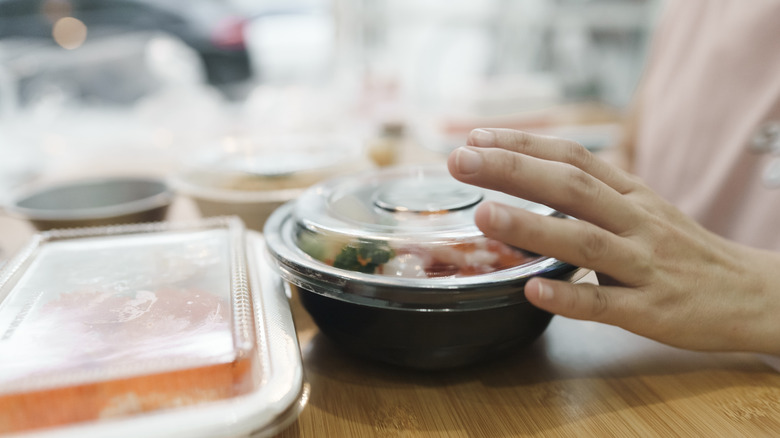
ATK tests multiple recipes at a time, with each recipe being made, tasted, tweaked, and remade close to 50 times over a period of several months. This means the kitchen goes through an enormous quantity of food (ATK spends about $11,000 on each recipe it develops, though it's unclear if this figure includes labor and overhead or just food.)
All this testing also generates a huge quantity of leftovers. Consistent with the frugal, New England ethos at ATK, these don't go to waste. Instead, all of these leftovers end up in a dedicated refrigerator in the test kitchen, and ATK employees are free to take them home. And since the kitchen has around a dozen recipes in testing at any given time, hungry staffers should have plenty to choose from. Even though most of the offerings will be from recipes in progress and thus not officially ready for prime time — given the skill of ATK's cooks — they will likely be better than what a lot of us eat at home. And even if you're among those turned off by leftovers, you can be confident the ATK team knows how to avoid the common mistakes that render leftovers unsafe or unappealing when reheated.
In the ATK test kitchen, trashing stuff is part of the job
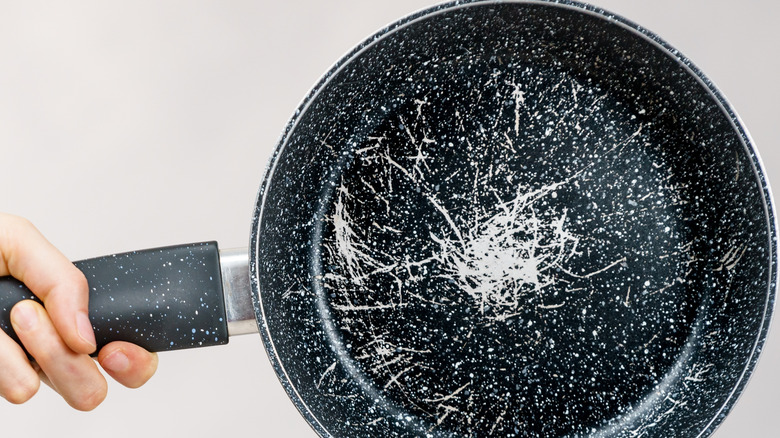
In cooking (and many other pursuits), a critical part of understanding what works well is understanding what doesn't work. For ATK, this means studying the ways a recipe could go wrong to render it foolproof, since the team knows few of its readers or viewers have the skills or experience of its in-house cooks.
To help home cooks avoid screw-ups and disappointment, ATK cooks engage in what they call abuse testing – deliberately incorporating common mistakes an amateur cook would be likely to make, such as using the wrong equipment or making ill-advised shortcuts or ingredient substitutions. This lets the ATK team know how well the recipe will hold up in typical home kitchens. Choosing and using the right equipment is also an important part of ATK's teaching, so its product testers put cooking equipment through multiple rounds of sometimes abusive use (which can include slamming skillets against hard surfaces) to determine which products are durable enough to deserve their endorsement. "We always try to find out why did the winners win and the losers lose," Lisa McManus, ATK's executive tasting and testing editor, told CBS. "We don't just say, 'Go take our word for it.' We want to prove why."
Here's why so much ATK content is paywalled

A pet peeve of many casual followers of ATK is pretty much all their print and online content is paywalled. You'll read a mouthwatering description of a cool recipe, only to find you'll need a subscription to get the recipe itself. This is because, unlike most other online food media, ATK does not take advertising for many of its services, and hasn't since its founding.
This was an intentional choice meant to ensure editorial independence — readers can depend on their reviews to be fully objective and not a form of advertising in disguise. Since product reviews, for everything from trendy kitchen appliances to canned supermarket staples, are a big part of what ATK does, it takes its credibility and the trust of its audience seriously. This business model, however, comes at a price for ATK's audience. The company depends on subscriptions for its income; hence, the ubiquitous paywalls. Still, ATK has engendered enough goodwill and earned enough fans to make this model work.
Low wages and poor working conditions drove ATK employees to unionize

On camera, the hosts of ATK seem endlessly cheery and relaxed, even while they execute technically difficult recipes. They make no secret about the amount of work that goes into creating each recipe, but they make the process sound like a fun and challenging journey of discovery, rather than a slog. And ATK promotes itself as a fun, collegial place for food lovers to build their careers, with a dog-friendly office and a speaker series featuring food-industry bigwigs.
Behind the scenes, however, employees found ATK a tough place to work, with poor pay and benefits, understaffing, and high turnover. Issues of particular concern were high healthcare and commuting costs, along with unpaid overtime and uncredited creative work. These conditions and others drove them to unionize, and in 2022, they voted to join the Communication Workers of America. The vote wasn't even close, with union supporters outnumbering opponents by a vote of 105 to 17. Besides better pay and benefits, the union immediately began to negotiate for clearer and more equitable processes for hiring, evaluation, promotion, and pay raises, along with continued options for remote work and processes for employee input on office policies.
The departure of ATK founder Christopher Kimball sparked a scandal

For longtime followers of ATK, company founder Christopher Kimball was the face of the brand. He was an unlikely food star. With his ubiquitous bow ties and round, wire-rimmed glasses, he looked and acted more like a professor than a chef: a bit dorky and patronizing, but he clearly knew his stuff. When he was suddenly booted from the company in 2015, it was a shock to both fans and to Kimball himself, who until a few months earlier had been the company's titular head.
Even more shocking was the very public and acrimonious legal battle that followed, with ATK's parent company, Boston Common Press, suing Kimball and three others for stealing intellectual property and poaching employees to start new food media company, Milk Street. The lawsuit alleged that Kimball and three associates began developing Milk Street while still employed by ATK, and not only copied ATK's business model, but stole its customer lists. Kimball asserted that since new management installed by Boston Common Press had taken over much of his responsibilities at ATK, he had the right to start a new venture using the business model that he developed in the first place. The lawsuit wasn't settled until 2019.