

Sardines Vs Tuna: What Are The Differences?
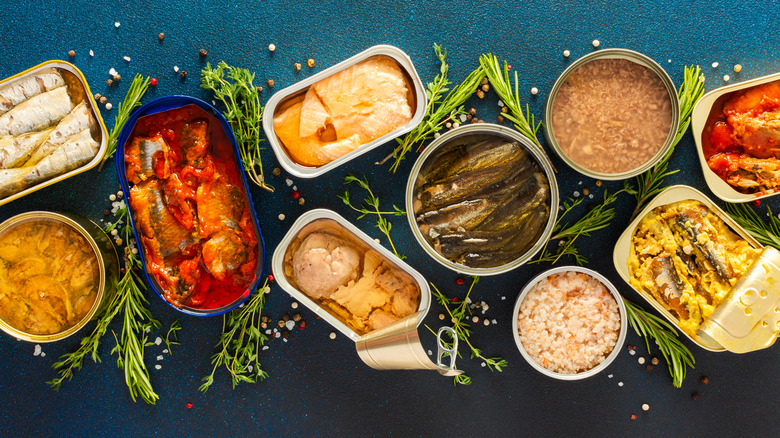
The National Fisheries Institute reports that canned tuna was the third most consumed type of seafood in the United States in 2022. While sardines weren't in the top 10, which is 79% of total seafood consumption, they're still a popular seafood option in grocery stores. Since both come in fresh and canned versions, how exactly are these two fish different?
Sardines and tuna may be considered fish cousins, but their diets and sizes can vary significantly depending on the specific species. As food, they're both dense with nutrients, albeit the specific contents vary between the two. When you're reaching for one as a snack or recipe ingredient, though, it's important to know the difference. How sardines are presented in cans — whole — is part of the reason more people tend to choose tuna over sardines. Let's take a better look at sardines and tuna individually to better understand what sets these fish apart.
Sardines
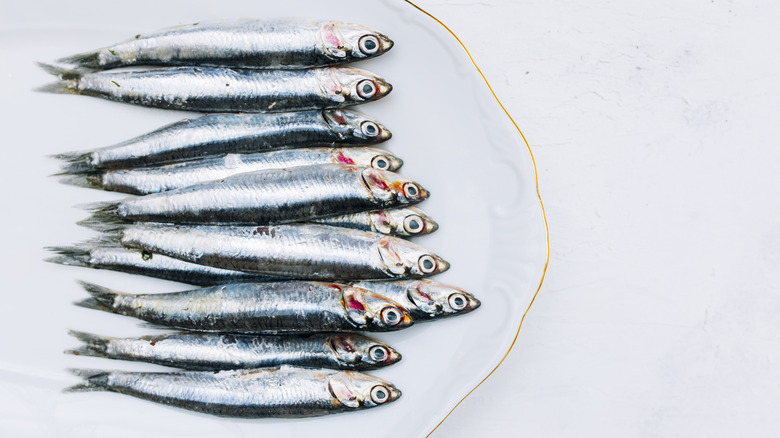
Technically, the term sardine doesn't refer to a species of fish. Rather, it refers to a number of species in the herring family (Clupeidae) that are canned. They're small, with elongated bodies that usually measure 6 to 12 inches, although some can get bigger, and they have a silvery color. They generally migrate coast to coast in dense schools, feeding on large quantities of smaller organisms, such as plankton and the eggs of other fish and crustaceans.
Even when sardines aren't canned in oil, they have an oily, rich flavor, a slightly soft texture, and a strong fishy smell that can be off-putting for some people. However, these fish are rich in nutrients, such as omega-3 fatty acids, vitamins B-12 and D, various essential minerals, and protein. Surprisingly, sardines are also a good source of calcium and actually one of the foods with more calcium than a glass of milk.
Believe it or not, you can choose fresh sardines for recipes. These small herring are also used in curries in India, and they're cooked in tomato sauce in the Philippines. On the other hand, there are plenty of ways to upgrade canned sardines – such as with the addition of lemon and herbs like dill. You can even turn them into a totally new dish, like a soup, a poke bowl, or cracker topping.
Tuna
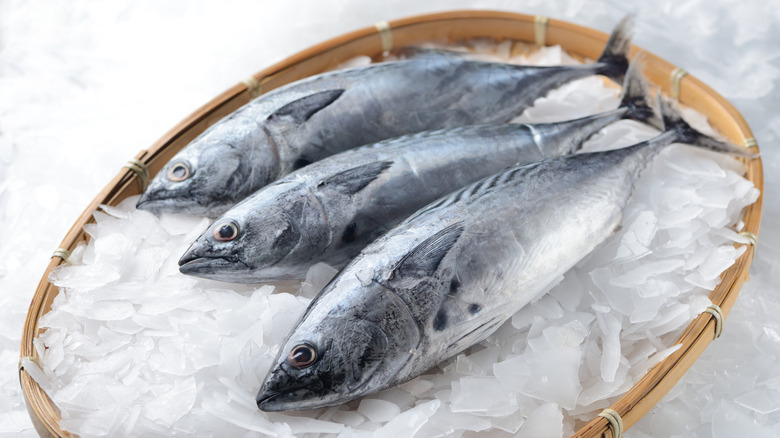
From a totally different family of fish (Scombridae) than sardines, tuna vary significantly between the 51 species, and even within the same species. The most common is the skipjack, which grows up to 3 feet long, making it one of the smallest. Meanwhile, the Western Atlantic bluefin is the largest, up to 14 feet and 1,800 pounds. Most species, though, migrate long distances while feeding on an astounding amount of phytoplankton, shellfish, squid, and other, smaller fish.
Compared to sardines, tuna is nowhere near as oily, and it has a milder flavor and smell. It also has a firmer texture, which is why so many people enjoy tuna steaks. Not to mention that it doesn't take long to perfectly sear a tuna steak, just two minutes max on each side. This fish is also full of essential nutrients, including omega-3 fatty acids, albeit not as much as sardines, vitamin D, selenium, and lean protein.
In addition to searing tuna, fresh fish fillets and steaks can be baked, grilled, oil-poached, or prepared confit or sous vide. There are also several canned tuna varieties – from albacore and bigeye to skipjack and yellowfin – that you can prepare in a multitude of ways. Eat it right out of the can, or mix it with other ingredients to create tuna salad for sandwiches or different casseroles to feed a family. Or, use it as a protein topping for your next salad.