

Pyrex Vs PYREX: The Major Differences, Explained
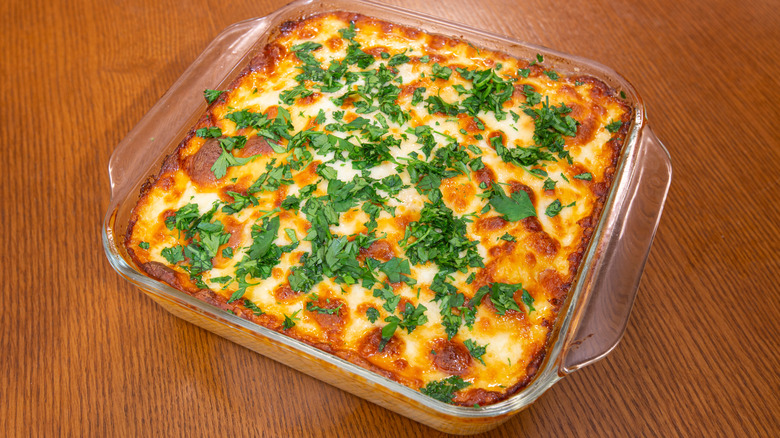
You may have grown up hearing about the legendary strength of PYREX cookware, which reportedly had enough thermal shock resistance to go straight from the freezer into a hot oven. But if you tried the freezer-to-oven pyrex trick yourself only for the glass to shatter, then you unfortunately discovered one of the main differences between PYREX and pyrex.
PYREX (stylized with uppercase letters) is the name brand for Corning's line of lab-made borosilicate glass, known for its excellent resistance to rapid temperature changes that occur frequently in lab work. It's also resistant to impacts and chemical reactions. On the other hand, pyrex (stylized with lowercase letters) is the name for the modern soda-lime glass cookware, which is more vulnerable to damage but is also less expensive.
The two diverged when Corning stopped producing its own cookware in 1998. The likely explanation is that the new manufacturers decided that the brand should be more affordable for consumers. The more cynical version is that the manufacturer cut costs in order to create a more replicable product. Whatever the case, soda-lime glass is plenty strong for most cooking applications — just not as strong as the more expensive borosilicate variety.
What happened to the original PYREX?
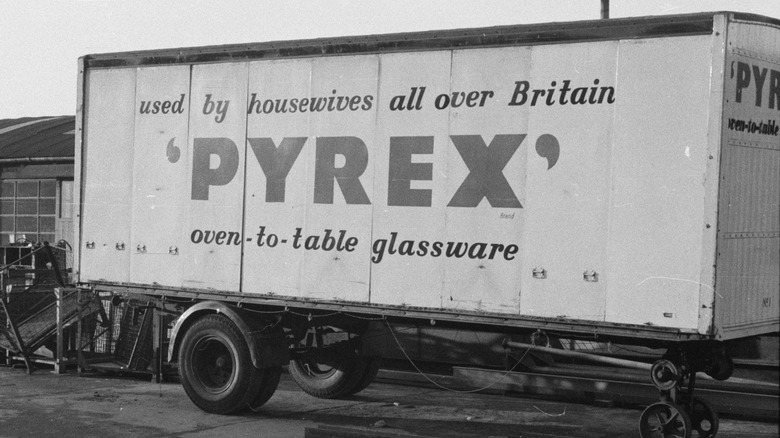
The PYREX story begins with Nonex, an earlier borosilicate formula that Corning Glass Works sold for assorted industrial uses. In 1913, a Corning employee brought home a Nonex battery jar that his wife requested so she could cut it down to use as a baking dish. She successfully made a sponge cake in the renovated jar, and it wasn't long before the company caught on.
By 1915, Corning removed the lead from Nonex and branded the new glass product PYREX, which some claim is a portmanteau of "pie" and "Nonex." PYREX was initially sold as home cookware, but the company soon realized its laboratory potential and began producing beakers and pipettes along with bowls and plates.
Today, Corning still produces laboratory glass with the original PYREX formula. However, the company divested itself from consumer products in 1998, ending the production of original PYREX cookware. Pieces from before that year are highly sought after by collectors and cooks alike. If you're one of these collectors, remember to authenticate vintage PYREX cookware by finding the backstamp, which should feature the word "PYREX" in uppercase lettering.
Is modern pyrex cookware any good?
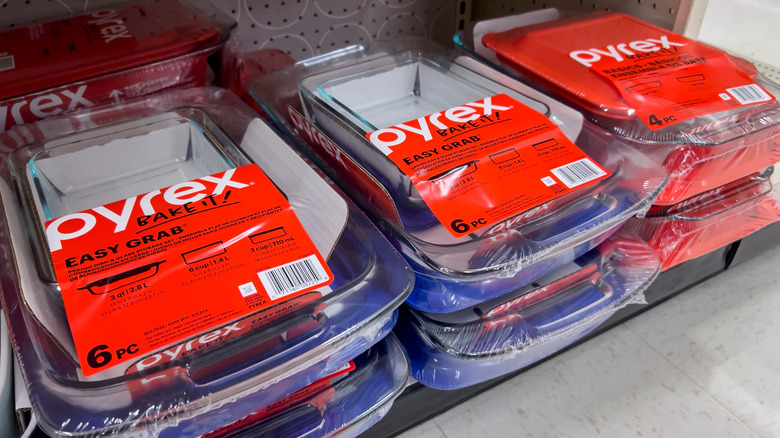
Since the late '90s, all pyrex cookware has been made of soda-lime glass and produced by various companies, including Corelle Brands in the U.S. Despite its reputation for being more prone to breakage than borosilicate glass, soda-lime glass is also quite strong (thanks in part to the tempering process) and can hold its own against culinary wear and tear.
Stylish kitchen owners can also appreciate that adding color to soda-lime glass is easier and more affordable than adding it to borosilicate. There are plenty of vintage PYREX items out there in various colors, but these are opaque coatings added to the outside. However, the modern Pyrex Colors line features transparent glass in various colors, a precision achievement that may be more challenging — and expensive — with borosilicate.
In the same way that you should think twice before using vintage Tupperware, as these items may contain unsafe chemicals, vintage PYREX colors likely get their hues from dangerous lead paint, which shouldn't be anywhere near food. In this case, newer is absolutely safer.