

Where To Find Replacement Parts For Your Keurig Coffee Maker
Keurig coffee machines are a common and convenient go-to for households over the world, but something that gets such frequent and repetitive use can be prone to breaking down. In a throw-away society, it's easy to simply get a new Keurig, but parts problems don't have to be the machine's end. Keurig sells a range of OEM (original equipment manufacturer) parts online, including water reservoirs, drip trays, and filter baskets.
However, there are limits to buying from Keurig, which is generally the most expensive option and may not have parts for older models. There are, however, a plethora of sellers on Amazon and eBay that offer a wide range of replacement parts, including OEM examples, internal components (which Keurig does not sell), and more options for older machines.
The third party route is not without its downsides, either. Non-OEM parts can vary widely in quality, so reading customer reviews is highly advised. Any parts may be in used condition, especially for discontinued models that haven't had new examples produced in years. It's also essential to have the correct item number for your machine before buying, to make sure the part will actually fit.
Which parts to buy where
Between Amazon, eBay, and Keurig, you can find almost any Keurig replacement part you need, but sometimes it's better to make one purchase instead of the other. For instance, if you're worried about the warranty, only use OEM parts, ideally purchased directly from Keurig. Anything else may void your coverage.
Items that need to be an exact fit are best bought as OEM parts, whether from Keurig or not. This is especially true of water reservoirs, where even the smallest inaccuracy in a third party's measurements could lead to leaks. If the part was made by Keurig, it's guaranteed to fit the machines it was designed for. If you do go third party, make sure there are satisfied customers first.
The pod holder assembly, including the needles that puncture a K-Cup, can be reliably bought from Keurig or third-party manufacturers. These components don't have to be as precise a fit as the reservoir, so any slightly inaccurate measurements are likely fine. As always, though, the most reliable option is the correct OEM part.
When a Keurig may not be worth repairing
The average lifespan of a Keurig machine is about three to five years, though a lot of that depends on how you treat the brewer and, potentially, the replacement parts. Good ones can extend the Keurig's lifespan, whereas faulty or poorly fitting ones can cause new problems. But, if it's an internal problem, you may want to start researching replacement machines, not parts.
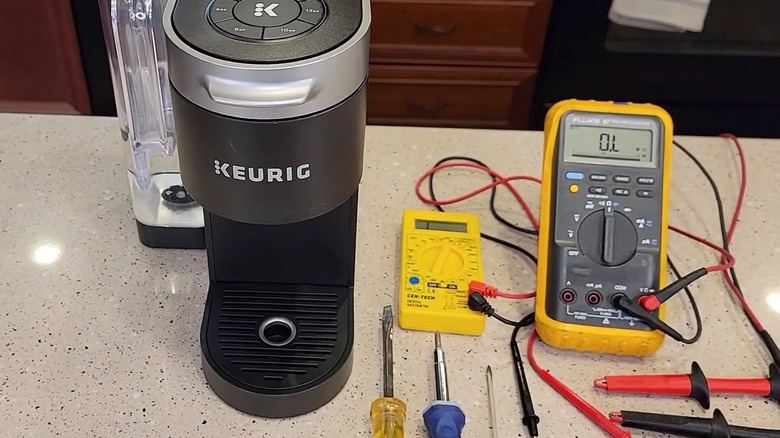
Some of the most common customer complaints about Keurig machines relate to broken internal components. Replacements for many can be found online, whether the issue is electrical or mechanical, but these problems are often tricky to troubleshoot and frustrating to fix. It may not be worth the annoyance of a DIY repair.
Therefore, it makes sense to try to keep internal components in as good of shape as possible. That means you should descale your Keurig regularly — every three to six months — though you may want to descale heavier-used machines more often. Descaling eliminates mineral buildup inside, a normal byproduct of coffee brewing that can put undue stress on components and cause malfunctions if not removed. Regular maintenance can keep your Keurig in top shape, inside and out, and descaling is one of the most important tasks.