

5 Vintage Dishware Brands That Might Contain Lead
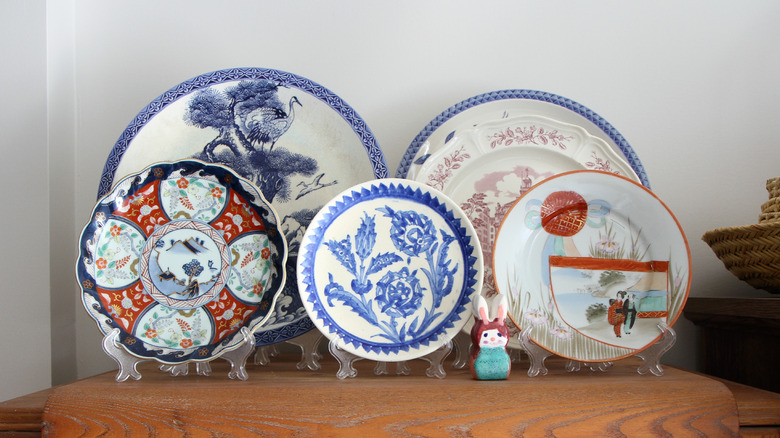
Finding a prized piece of vintage dishware is something homeware thrifters live for. However, one of the well-known downsides of vintage china is that it can contain lead. For centuries, lead was added to ceramic glazes to seal the pieces. Unfortunately, eating or drinking from dishware containing lead can result in high blood pressure and problems with reproductive organs, kidneys, and even the brain. Children exposed to lead may also develop learning or behavioral problems.
Luckily, in 1971, the FDA set limits on the amount of leachable lead allowed in ceramics, tightening these laws even more in the '90s. While there is no technically safe amount of lead in dishware used for eating or drinking, the FDA now sets limits for ceramic foodware of between 0.5 and 3.0 μg/mL (approximately 0.5 to 3 ppm (parts per million)). What this means for vintage shoppers is that dishware with a production date before 1971 is of major concern for lead, with pieces produced between 1971 and early 1990 possibly containing more than current regulatory limits.
It's also a good idea to pick up a lead testing kit. But note that these can return incorrect results. Vintage dishware that you confirm has lead, suspect has lead, or cannot verify should not be used for food or drink, but can usually be displayed in your home. On top of these tips for vintage dishware shopping, we've rounded up five popular brands that previously used lead in production and highlighted some specific pieces to be cautious with.
Lenox
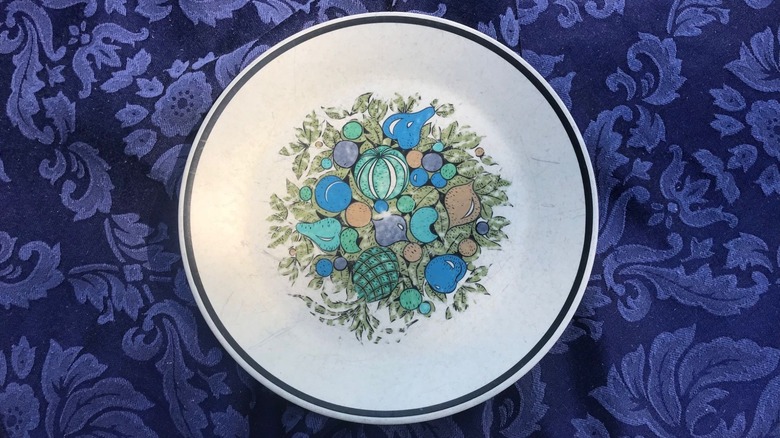
Beloved for generations, Lenox has recently gained an increase in popularity, notably for its adorable spice village. This uptick in acclaim has resulted in more thrifters hunting for Lenox items. But as this dishware brand has previously used lead during production, you'll need to shop with caution.
You should be most cautious with Lenox dishware produced prior to the introduction of safeguards in the 1970s; however, varying amounts of lead can still be present in pieces produced after that date. To determine the production date, check backstamps. You should see a unique design that you can look up to connect to a time period. For example, a singular green laurel wreath backstamp generally means the item was produced between 1906 and 1930.
Unfortunately, some of the most desirable and rare Lenox china patterns are likely to contain lead. These include dishes with the Brookdale and Fall Bounty designs. Some of the most sought-after vintage Lenox teacups, such as the Rutledge and Charleston teacups, have also been known to contain lead. For more recent production, Lenox states that all newly produced dishware meets the FDA's regulatory limits, but it's up to you whether you want to eat or drink from these items.
Spode
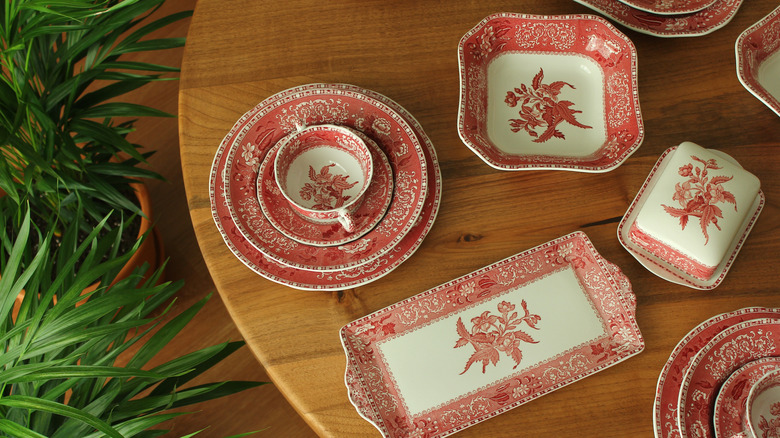
Known for its intricate patterned designs and much-loved Christmas collection, 250-year-old, English-based Spode is another top vintage dishware brand to thrift. Yet, like many older chinaware brands, you can expect to find pieces that contain lead. Items known to contain lead include many of the prized Blue Italian pieces, certain dishes with the iconic Christmas tree design, and some of the Fairy Dell, Gainsborough, and Yellow Albany patterned pieces.
Buying these patterns new (1991 to present) is of the lowest concern, as they align with FDA and California Proposition 65 guidelines. Spode also states that items produced between approximately 1976 and 1991 have maximum lead levels of 2 ppm. However, older versions (which are the most collectible) have a strong chance of containing amounts of lead that exceed current guidelines. Pieces dated before 1949 are of greatest concern, as the most harmful types of lead glazes were banned in the late 1940s in the U.K., where Spode pieces were produced.
Unfortunately, identifying a production date for Spode dishware can be a little tricky. Backstamps are the biggest clue, with certain stamps being linked to certain periods. Older pieces, like those from 1833 to 1847, may not even say Spode, instead sporting the Copeland name. As with other brands, you'll want to test all Spode dishware you discover with a lead testing kit, and consider not purchasing pieces you cannot confirm as being lead-safe.
Johnson Brothers
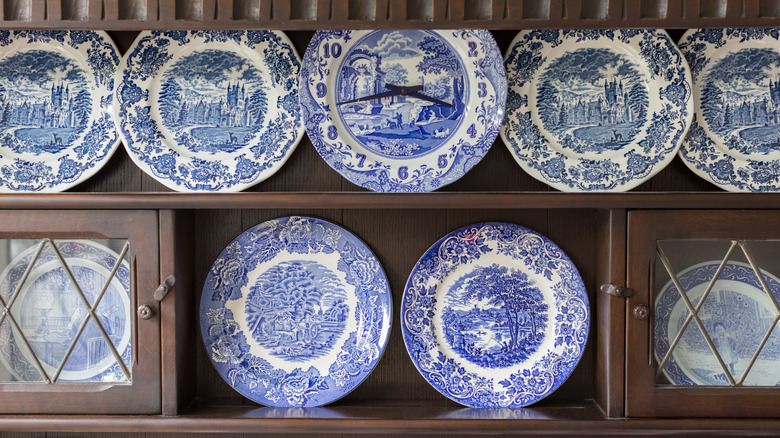
Founded in 1883, Johnson Brothers is another English china brand known for its elegant patterned dishware, including designs inspired by British castles and Devonshire cottages. Along with classic English designs, Johnson Brothers produced American designs like History of America and is frequently found in U.S. thrift stores. But if you come across a stunning item from Johnson Brothers, be aware that vintage pieces have a high chance of containing lead.
Designs confirmed to have quite high levels of lead include Mill Stream, Rose Chintz, and Franciscan Desert Rose. Unfortunately, even newer pieces, such as the Ships collection produced between 2005 and 2007, have been found to contain a decently high amount of lead.
This suggests that you should test every dishware item you thrift with a lead testing kit and consider keeping this dishware for display only. Due to the beautiful, intricately drawn designs found on these items, there's a good chance you'll want to use them as art for display anyway. If so, this removes concerns about eating from Johnson Brothers dishware with unknown or high levels of lead.
Corelle
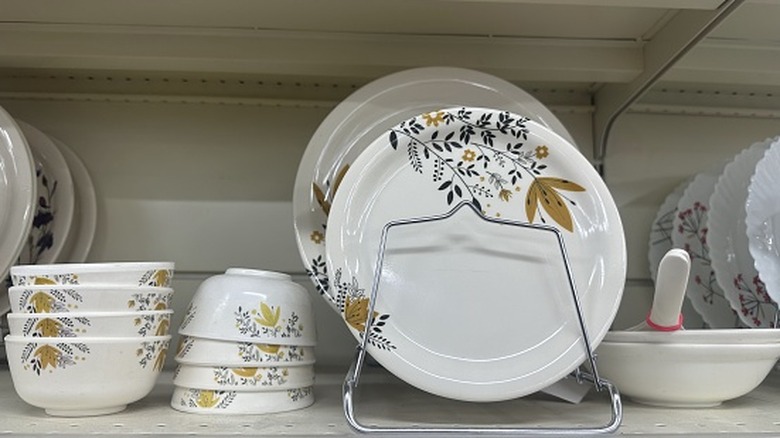
One of the more modern dishware brands on this list, Corelle was established in 1970 and is renowned for its functional dishware with somewhat contemporary designs and chip-resistant finishes. Yet, as you may have guessed, a danger of using vintage Corelle dishware is that lead could be present. Anything pre-2005, especially before 2000, could be of concern, and it is recommended to use these pieces for display only.
Popular Corelle patterns that used lead pre-2005 include Blue Snowflake, Butterfly Gold, and Spring Blossom Green (Crazy Daisy). To determine the production year of a Corelle piece, review the backstamps, as these changed over different periods. For example, the older pieces generally say CorningWare or a variation of Corelle by Corning, while the newest pieces say Corelle. A production year may also be stamped, but this is not guaranteed.
Checking the pattern can help date the item as well, because some designs were only produced for a limited time. Doing a final check with a lead testing kit is again recommended. These days, Corelle explains that new products comply with all lead-related regulations at the time of production.
Royal Albert
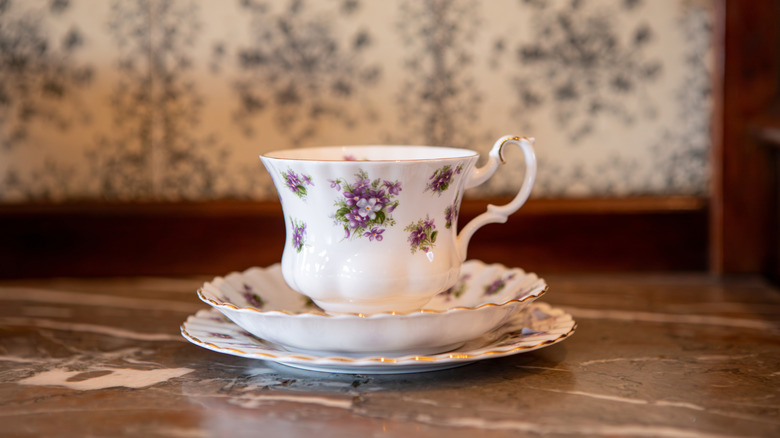
Produced by Wedgewood, Royal Albert dates to 1896 and is highly collectible. The English brand is known for its stunning patterns, which include recognizable floral designs, such as Old Country Roses. Due to the company's age, there are likely pieces sitting on thrift store shelves that were produced when there were no limits on the amount of lead allowed. While thrifted Royal Albert is the perfect addition to your afternoon tea chinaware collection, you need to confirm you can safely eat your scones and tea sandwiches off of these dishes before purchasing.
Patterns known to possibly contain lead include Sweet Violets, South Pacific Bone China, and the renowned Old Country Roses. Like all designs covered on this list, it's those made in the 20th century or earlier that likely feature very high levels of lead. While some patterns are still produced today (and should be safer for food and drink), certain designs, like South Pacific, were only produced before 1970. These older, limited-edition collections should be completely avoided or used for display only, while newer pieces should still be tested with a lead testing kit and used for display only if you have any concerns.