

Think Twice Before Using Vintage Corelle Dishware — It Could Make You Sick
Thrifting is a true investment of time and energy, but the rewards can be incredible. For instance, you can thrift cute retro pie dishes or source branded cookware in second-hand stores for a fraction of the original cost that are perfectly safe to use in the kitchen. However, if you've spotted some vintage Corelle dishware at a local flea market, think twice before using it — it could make you sick depending on when it was made.
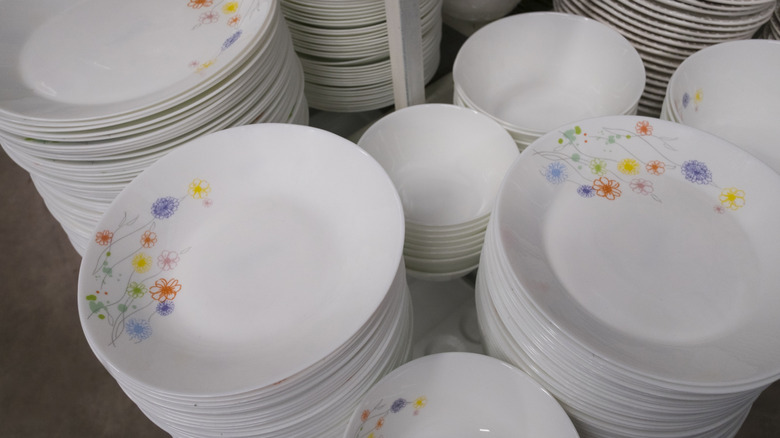
The popularity of Corelle dishware lies in its construction. Made of fired three-layer glass that's strong and unlikely to chip or crack, these timeless pieces are also lightweight and non-porous. Better yet, modern Corelle dishware carries several designs to suit the aesthetic of your tablescape. The problem is that the older patterns, such as the blue snowflake, butterfly gold, and crazy daisy, that were made before 1971, used paints that could have contained lead (the FDA regulation on lead leaching didn't come into effect until the 1970s).
If these pieces of crockery were to chip or flake off, the paint could leach out and end up in your food. Lead poisoning symptoms in adults include abdominal pain, headaches, and mood disorders, but it can be much worse for children, who could develop hearing loss, learning difficulties, and seizures. While lead poisoning usually happens over months or years, you should definitely avoid eating on any Corelle dishware items that could contain lead to play it safe.
Turn vintage Corelle into decorative pieces

The Corelle website states that "the small amount of lead used in decorations pre-2000 was encapsulated in glass before and after the decoration was applied to product and fired to above 750C. The Corelle manufacturing process has always encapsulated decoration in glass, using extremely high processing temperatures to ensure the glass decorations are sealed, which prevents food contact and intentionally decreases the extent of any lead migration to food." However, lead safety advocates, such as Tamara Rubin, the owner of the Lead Safe Mama website, who has carried out her own lab-testing on Corelle products, advises setting vintage pieces aside for safety's sake.
If you do have any vintage Corelle items, remove them from your kitchen cabinet and immediately stop using them for serving food. This is particularly important with pieces that are showing any signs of deterioration. However, you can turn them into decorative pieces to lend your kitchen some charm and character, so you don't lose out altogether. After all, some of these vintage Corelle sets, which include plates, teacups, and serving dishes, have pretty designs that are perfect for showcasing or repurposing into new items (FYI, old teacups make wonderful and whimsical herb planters). Meanwhile, Corelle dishware made after 2005 is safe to use as it complies with FDA regulations, so you don't need to worry about any modern purchases being potentially harmful.