

Forget Pyrex: The Nostalgic Kitchenware Brand To Look For At Thrift Stores
We may receive a commission on purchases made from links.
After years of common disuse, vintage china is becoming trendy again as stylish retro home decor. This means that the resale market for many patterns might get hotter, but for the most popular and longest-made brands, they mostly remain affordable because of the sheer number of pieces made. Such is the case with Royal Albert, an English china brand with over 100 years of history.
Its predecessor company, the Albert Works, made breakfast, dessert, and tea sets, until a boost in business after an 1897 mark of approval from Queen Victoria herself. In 1904, the Albert Works became Royal Albert. The expanded china catalog distinguished itself with colorful, elaborate florals and other designs evoking English gardens and luxury. It became enormously popular worldwide and is still in production — though it's no longer an independent company, or made in England.
Decades of Royal Albert's widespread popularity means that many pieces are relatively affordable. On sites like eBay, sets of Old Country Roses (1962-present), a signature pattern of red, pink, and yellow roses, can go for $50 to $100 depending on the piece. But large dining sets from earlier runs easily command over $400 and up. Vintage Lady Carlyle (1980-2022), with colorful rococo-style borders, typically sell for about $250 per full set. But how do they compare to other vintage china?
Royal Albert vs. its contemporary rivals
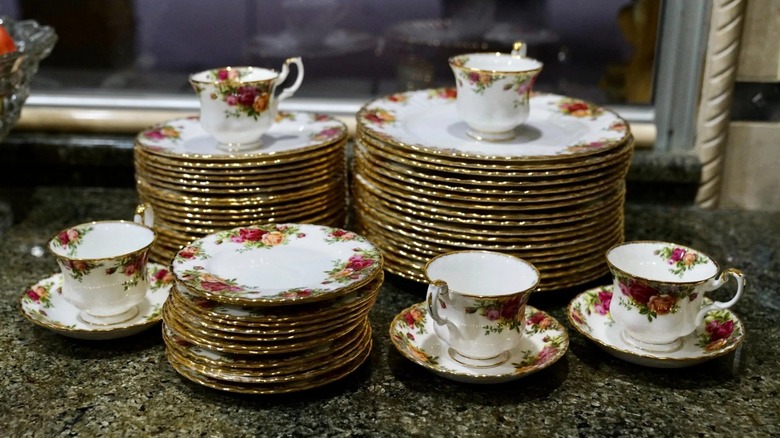
Royal Albert china can certainly be collectible, but it's not particularly high-end among the vintage china world. Compare this to a rare fine china brand worth hunting down, Royal Copenhagen. The 251 year old Danish company has made china for a range of price points, including one of the most expensive in the world: Flora Danica, a limited-run pattern originally intended as a gift to Empress Catherine II of Russia. Individual examples can be valued from $1,000 to $40,000 and up.
Another vintage dishware brand to look out for, Spode, has an almost equally long history, but arguably a bigger impact on the ceramics world. Founded in 1776 in the same town that would later birth Royal Albert, Spode revolutionized the industry by inventing feldspar porcelain and successfully commercializing bone china, which became a standard material. Depending on their rarity, size, or age, vintage Spode sets can easily sell for about $300-$500 today.
European china like these brands, and Royal Albert, tends to be more valuable than American china. This is part of why Fountain (1926-1948), a vintage Lenox china pattern worth seeking out, generally doesn't sell at as high of prices as Royal Albert's patterns. Even though it's rare enough that full table sets of Fountain are uncommon, individual pieces can still sell for as little as $4 and up to almost $300.