

Not Lenox: The Rare Fine China Brand Worth Hunting Down
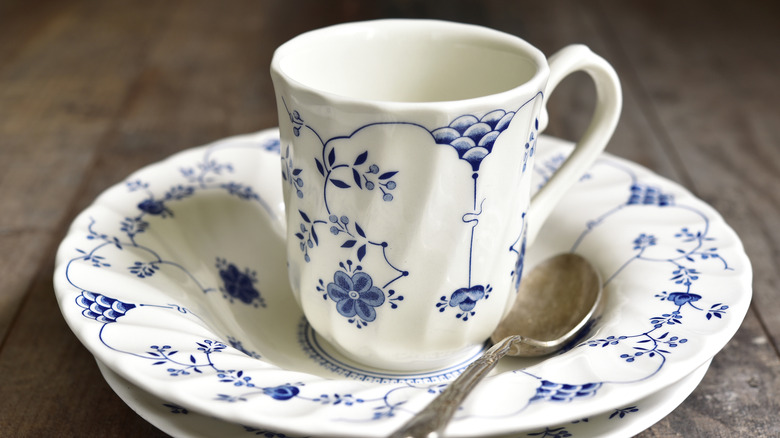
Getting your hands on a collectible piece of dishware is a major win for those who thrift housewares. And while many hunt for popular porcelain brands like Lenox, lovers of fine china won't want to miss out on looking for rare Royal Copenhagen pieces. This Danish porcelain manufacturer dates to 1775 and is still in operation today. While a range of patterns have been produced, the brand is most famous for its blue and white patterned chinaware, such as the Blue Fluted Plain pattern, which is one of the company's oldest designs.
Although you can purchase new pieces, thrifting Royal Copenhagen will appeal more to those who enjoy tracking down rare collectibles. If you believe you've come across a piece from this brand, you can confirm that by assessing markings. An authentic Royal Copenhagen item has a backstamp, usually on the underside of the product. How this looks will vary based on when it was produced.
Pieces produced between 1870 and 1923 will feature three blue wavy lines, a blue crown, or both. Most will also say "Denmark" or "Royal Copenhagen". Those made between 1923/1924 to present should all have a blue crown, with "Royal" above it and "Copenhagen" and "Denmark" below. You should also see a painter's signature. Dishware from 1775 to 1869 will generally have blue waves that are hand-painted, instead of being stamped like those from 1870 onwards. If you're unsure about a piece's authenticity or the production year, double-check using Royal Copenhagen's backstamp guide.
Popular Royal Copenhagen pieces to thrift
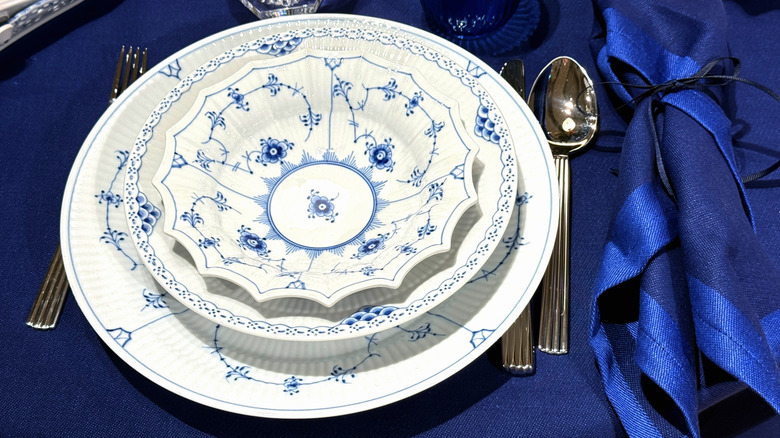
The best Royal Copenhagen kitchen items to thrift will ultimately depend on your taste. However, many search for pieces you can't find new anymore, as well as collectibles with iconic patterns. Items sporting Blue Fluted Lace are some of the most collectible. This pattern features a white china base with a delicate blue pattern and can be found on various types of dishware, from plates and bowls to teacups and saucers. Another highly collectible pattern is Flora Danica, a stunning botanical design that's over 235 years old and is seen on dishware and vases.
In terms of Royal Copenhagen patterns you can no longer purchase, chinaware with the Blue Flowers pattern, which was created in 1913 and discontinued in 2002, is a top thrift. The Blue Pheasant design, which was available from 1989 to 2000, is also a great find and plays into vintage kitchen design trends that are becoming popular again, such as vibrant patterns. Seasonal products, like annual Christmas plates, are highly collectible as well.
One downside of using vintage china is that it may contain lead, so make sure you check pieces with a lead testing kit before purchasing if you're going to eat or drink from them. Notably, china with the Flora Danica pattern was previously made with lead. While the brand confirmed that pieces with this design made from 2021 onward no longer contain lead, be cautious when thrifting older versions and opt to use them for display only.