

10 Rice Vinegar Alternatives (Or Substitutions) That Could Be In Your Kitchen
We may receive a commission on purchases made from links.
Rice vinegar has been a staple of Asian cuisine for centuries, dating back to at least the eighth century if not earlier. In fact, Mizkan, the world's largest vinegar company, started in 1804 as a rice vinegar producer. In the 21st century, rice vinegar has gone worldwide, with a global market projected to reach $1.8 billion by 2034. Also known as rice wine vinegar, it's a cooking product that has many possibilities for Asian cuisine and beyond. As with many other cooking ingredients, though, if you don't have a bottle of this vinegar on hand, there are a few things which can work instead, albeit with slightly different results.
Rice vinegar is perfect for adding sharpness without bitterness, making it a useful ingredient to keep on hand. Unlike some vinegars, this fermented rice wine byproduct has a mellower taste, a milder acidity with a pH of 3 to 3.5, and a sweetness that isn't overwhelming. This is what gives salads, pickles, marinades, fish, dipping sauces, and other dishes brighter flavor without the commonly associated harshness. Furthermore, it's a good source of antioxidants and has been shown to help control blood sugar and lower cholesterol. Finally, there are many varieties, including seasoned rice vinegar and black vinegar, to give your meal the right finish.
However, there may be times you need or want another type of vinegar. Perhaps you ran low and don't want to go to the store for one item. Maybe it's not available in your area, or you want a more affordable option than this relatively high-priced item. Or perhaps you're just in the mood for something different from what the recipe says. Whatever the reason, here are 10 rice vinegar alternatives and substitutes that you might already have on hand.
Apple cider vinegar
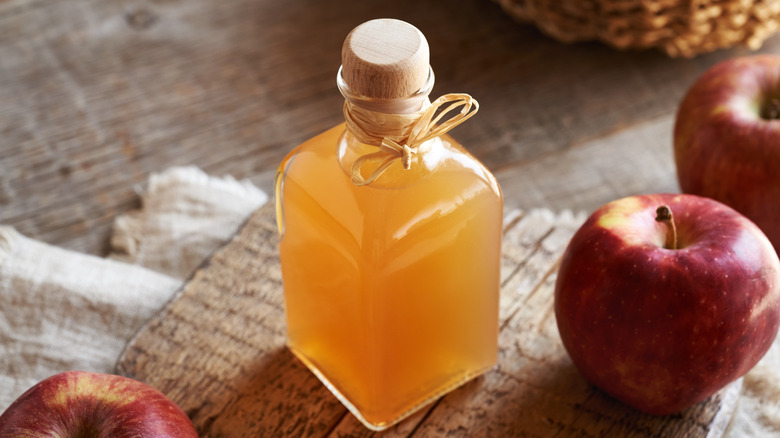
The many apple cider vinegars out there, made from fermented apple cider or juice, have gained a lot of steam in recent years. This vinegar is often used as a wellness product, with half of all Americans having used it for health reasons in 2022. But beyond wellness benefits like supporting weight loss and heart health, it has a strong place in the kitchen, which is why it's a viable substitute for rice vinegar.
Like rice vinegar, apple cider vinegar has a sweeter flavor, with a brightness that livens up dishes, although the cider version will be a bit tarter. The pH of each vinegar is also similar, so they can be used in marinades and dressings much the same way. If budget is a concern, apple cider vinegar is notably cheaper. A 32-fluid-ounce bottle of Great Value Apple Cider Vinegar can be found at Walmart for under $3, while some high-quality rice vinegars cost as much as $15 for a 12-ounce bottle.
The main differences are that apple cider vinegar will have fruitier notes and a different fragrance because of its origins. As a Reddit user noted, "it would impart a definite flavor that might be off for the rest of your dish." Nevertheless, that might be what some cooks are going for, which makes it worth a try. If you want the same sweetness as rice vinegar, we recommend substituting apple cider vinegar 1:1 and adding a pinch of sugar.
White wine vinegar
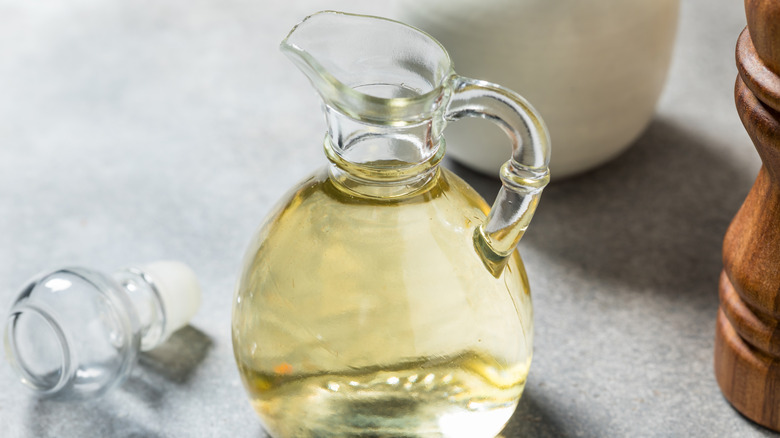
The name may be close to white vinegar (which we'll get to soon enough), but white wine vinegar is worlds apart. Like rice vinegar, its origins involve wine, with certain wines known as "wine stock" being used specifically for this purpose. In this case, white wine is further fermented until it oxidizes and becomes acidic. Red wine vinegar is made this same way, but the white wine version has a lighter flavor and is less harsh.
This is what makes it a fine alternative to rice vinegar. Its balanced, lightly fruity profile makes it a versatile choice for many of the same dishes. Professionals and casual chefs alike recommend white wine vinegar for everything from marinades and salads to various seafood and poultry dishes. You'll enjoy many of the same health benefits as other vinegars from this, too. You won't get the same sweetness as rice vinegar, but you can easily add a little sugar or syrup to achieve this. A quarter teaspoon of sugar per tablespoon of white wine vinegar should do the trick.
The one catch is to avoid white wine vinegar for delicate dishes like sushi rice. Its typical pH of 2.6 to 2.8 makes white wine vinegar notably harsher than rice vinegar, and this can overpower the rest of the ingredients and flavors unless you dilute it with a little water. Otherwise, though, white wine vinegar is a great go-to, especially at the price — a 16.9-ounce bottle of Bertolli White Wine Vinegar is under $4 at Walmart.
Lemon juice
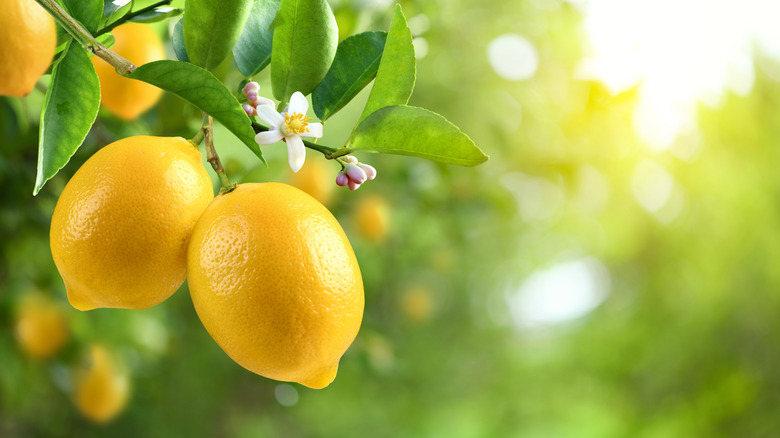
You don't necessarily need vinegar on hand to substitute for rice wine vinegar. A bottle of lemon juice or a fresh-squeezed lemon could do the trick. We're guessing most of your exposure to lemons comes from lemonade and soda, but lemons have been used in cooking since ancient times, finding their way into everything from fish marinades and pastries to liqueur. It's another way to brighten a dish that feels dull, and the citrus flavor is a fresh way to change things up.
The main difference is the type of acid. While vinegars, like rice vinegar, contain acetic acid from the fermentation process as the active component, lemons have citric acid. This offers a mild taste and refreshing notes that resemble rice vinegar in some ways. It also provides contrast to existing flavors with a healthy dose of antioxidants and vitamin C (itself another type of acid). That said, while rice vinegar is sweet, lemon juice is sour. It's also very acidic, with a pH as low as 2, and marinade enthusiasts have noted that lemon juice is easy to overdo. It's best to start with a few drops and go from there.
Like rice vinegar, there's a precedent for lemon juice in Asian dishes. Yuzu, a similar citrus fruit, has been widely used in Japan since the fourth century and China before that. It's used much like lemons in other cultures. As such, you can safely and cheaply add lemon juice in place of rice vinegar while remaining faithful to the menu's origins.
Lime juice
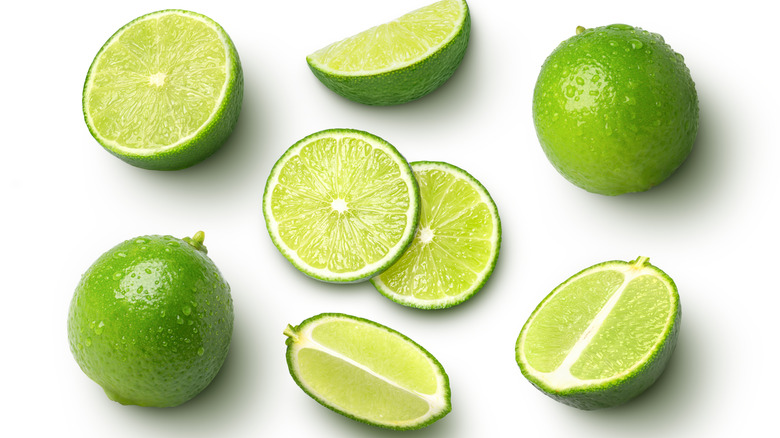
We're not done with citrus options, either. Limes may play an even bigger role in Asian cuisine than lemons — and may even rival rice vinegar, for that matter. While rice vinegar is more prevalent in East Asian countries like China and Japan, limes are in firm control of Southeast Asia, dominating in Thailand, Cambodia, and Indonesia. From the juice to the zest and leaves, the simple green lime has many uses, and it provides an unmistakable aroma.
Like lemons, though, you'll want to be intentional and moderate about using lime juice in place of rice vinegar. The level of citric acid in the two fruits is effectively identical, and if anything, the taste of lime is even stronger (and by extension more bitter). As such, the best time to swap rice vinegar for lime juice is if you're trying to balance heavy and spicy foods like chili, curry, or pad thai (stir-fried rice noodles).
Even so, if you're desperate for some freshness and don't have any rice vinegar, squeezing or spooning on a little lime juice will do the job. It's cheap — you can get a bottle of Great Value 100% Lime Juice at Walmart for just $1.42 — and has many of the same health benefits as lemon juice. You might even surprise yourself with the taste, and find yourself adding lime juice to your regular ingredients.
Champagne vinegar
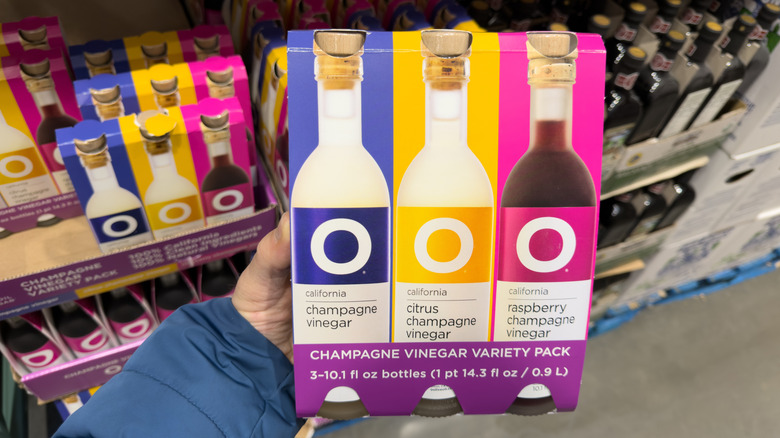
Sounds elegant, doesn't it? Champagne vinegar has been compared to rice vinegar before, because of their shared mild acidity and subtle taste. In the case of the former, it's made by fermenting sparkling wine, most often a mix of Pinot Noir and Chardonnay. The result is a vinegar that can be on the pricey side — even cheaper options like O California Champagne Wine Vinegar can cost over $8 for a small bottle — but has many culinary uses, including as a rice vinegar substitute.
Champagne vinegar is actually a lot like white wine vinegar in terms of taste, color, and smell. With a flavor that's perhaps even more mellow than rice vinegar, it can be used in much the same way. Add it to spring and summer salad dressings, delicate vegetables and greens, chicken and seafood marinades, and more. You'll need a little sugar to mimic rice vinegar's sweetness, as champagne vinegar is more tangy. Or you can go without the sugar if you prefer.
In terms of acidity, champagne vinegar is about halfway between white wine and rice vinegar, so you shouldn't notice much difference in the harshness, and the balance of your cuisine should be close enough that most people won't find much difference. Even high-end vinegar stores and organizations suggest champagne and rice vinegar as good alternatives to each other. As a bonus, you can even make more champagne vinegar at home from a leftover bottle of sparkling wine and a mother of vinegar, which unfiltered store-bought bottles may include (look for a little cloudiness and sediment in the bottle).
Mirin

We've mentioned that rice vinegar is made from rice wine. So, the logical follow-up question is, why can't you just use the wine itself as a substitute if you have some lying around? True rice wine, known as sake (although the Japanese name for it is nihonshu), has the inherent problem that it lacks vinegar's acidity, which dramatically changes the brightness and profile of a dish. In the case of mirin, though, there's more than enough upside to consider it in certain circumstances.
Mirin is a specific type of rice wine used for cooking and seasoning. There are multiple theories about its origin, with both China and Japan taking credit, but regardless of its history, mirin has been used for centuries — originally as a drink and now as a base ingredient for glazes, marinades, and sauces. Like rice vinegar, it has a sweet, mellow taste, coming in part from added salt and sugar. Like other types of rice wine, it's fermented with koji fungus, and it typically has an alcohol content of around 14 percent, in line with the typical 10-20 percent of sake brewed for drinking.
Essentially, mirin is stage-one rice vinegar without the second stage of fermentation. As such, you'll need to make some adjustments, such as adding a little white vinegar for acidity, or using a smaller amount to reduce the sweetness. If you prefer something less sweet, it can help to look for bottles labeled as "hon mirin," which doesn't contain any added sugar (though it's still naturally a little sweet). Mirin can also be on the pricey side, although a small bottle of Mizkan Mirin costs under $3.50 from Walmart. But if you already have some in the pantry, it's worth a second look.
Sherry vinegar

Although white rice vinegar is the most common, there are other types, with black rice vinegar being notable for its bolder acidity and malted, smoky, and/or woody flavor. It makes sense, then, that different rice vinegar varieties would have different alternatives. For our two cents, one of the best substitutes for black rice vinegar is sherry vinegar, which has a rich culinary history of its own.
This gourmet vinegar was discovered by mistake centuries ago while making Jerez sherry wines in the Andalusia region of Spain. Today, though, sherry vinegar is so revered that it's one of only five vinegars in the European Union with a Protected Designation of Origin controlling how it's made, which includes extended aging in wood barrels. Authentic sherry vinegar has a mild acidity and slight sweetness, like regular rice wine, but also a bolder, often nutty flavor. The richness and complexity of sherry vinegar add depth to almost any dish.
Depending on the base grapes, different sherry vinegars can have unique characteristics, giving you more substitution possibilities. For example, palomino sherry vinegar is the closest to black rice vinegar, with a balance that makes it versatile for meats and dressings. Moscatel sherry vinegar is more akin to white rice vinegar with a fruiter finish for delicate cuisine, while Pedro Ximénez vinegar is the sweetest. Many chefs already have sherry vinegar in the cupboard because it's so useful, with amateur cooks emphatically recommending it.
White balsamic vinegar
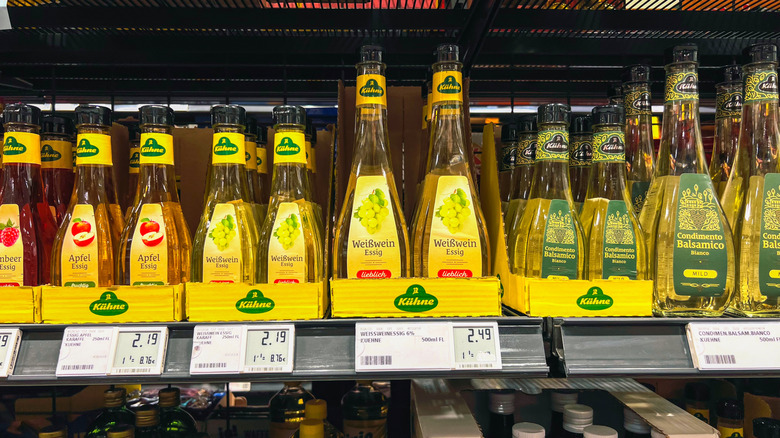
Many people are familiar with balsamic vinegar, a dark, sweet-and-sour Italian vinegar sometimes called "black gold." Although its paler-colored cousin is less widely known, those who prefer a lighter taste, brighter tone, lower acidity, and pourable consistency may already have white balsamic vinegar at home. It's made by combining roughly 70% crushed white grape must and 30% white wine vinegar. Unlike traditional balsamic vinegar, there is no Protected Designation of Origin or Protected Geographical Indication, which means it can be manufactured worldwide with more variations, many of which can be used for cooking.
The lightness of white balsamic vinegar is what makes it an option when you don't have rice vinegar. White balsamic is a little sweeter, but you can offset that by adding slightly less vinegar to the recipe, diluting it, or reducing sugar elsewhere. The added flavor notes, which can range from grapes to citrus, also give white balsamic a touch more presence, although it shouldn't overpower the other flavors. This could be exactly what you want or something to account for with other ingredients and seasonings.
White balsamic pairs well with many foods, from salads and rice to marinades and stir-fries. Notably, it's a great seafood vinegar for sushi and shrimp, working well in much traditional East Asian cuisine. If you're combining the vinegar with olive oil, a delicate oil mixed with white balsamic can give a result similar to rice vinegar and mild oil.
White distilled vinegar
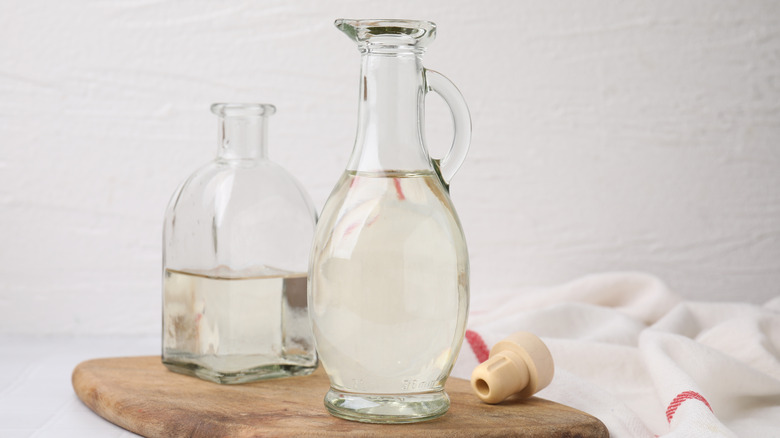
What's the first thing you think of when someone mentions vinegar? Chances are it's the cheap bottle of white distilled vinegar sitting in seemingly every pantry. It's the most basic of vinegars, made by fermenting grain alcohol (better known as ethanol, which is the same stuff mixed into gasoline) and then adding water until it reaches the desired acidity. Typical white vinegar for cooking is around 5% acetic acid, equating to a pH of 2.4 to 2.7, although you can buy it at higher concentrations for cleaning and other specialty uses.
We hope we haven't scared you off with those comparisons, because the basicness of white vinegar is what makes it a reasonable rice vinegar substitute. The added sharpness and tang are easy enough to tamp down by thinning the vinegar or simply using less. From there, add some sugar to get the sweetness level you want. Because white vinegar is neutral as vinegars go, you can think of it as a blank canvas for your cuisine.
Can you get it to perfectly match the subtlety of true rice vinegar? Maybe not, and it won't have anywhere near the same nutritional profile, either. But a creative kitchen maestro can turn distilled vinegar into a solid approximation. Maybe you'll also appreciate the nomenclature that a Reddit user pointed out, observing, "It's kind of funny because white wine vinegar and white vinegar are totally different, but rice vinegar and rice wine vinegar are the same thing!"
Malt vinegar
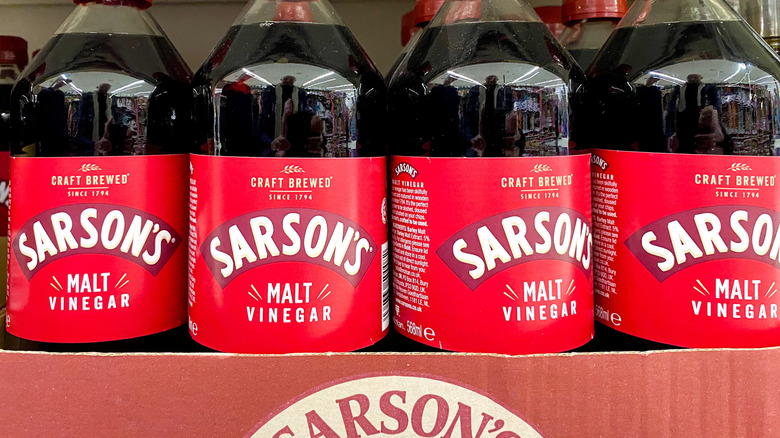
Our list of rice vinegar substitutes closes with another grain-based vinegar with a unique place at the table. If you live in England or Canada, or you cook cuisine from those countries often, we can pretty much guarantee you keep a bottle of malt vinegar handy. It follows a double fermentation process, like rice vinegar and other wine-based vinegars. In this case, though, malted barley grains are used to produce ale, which is then fermented into vinegar by breaking down the alcohol.
Malt vinegar has historically been used to give rich foods a lighter feel, which is why fish and chips with malt vinegar is such a classic combination, though it can also add depth to lighter fare. That's about as far as you can get from the cuisine rice vinegar is associated with, but there is a time when it's a solid substitute. If you want a more pronounced flavor, resembling black rice vinegar, consider a dash of malt vinegar instead. This variation is also known for a malty taste and earthy, nutty tones.
Just remember that because malt vinegar is tart and sharp in comparison, you should heed the words of one Reddit commenter, who noted that it "tends to need lots of sugar to counterbalance. Maple syrup works best." Also bear in mind that traces of grain remain in the vinegar, so it isn't gluten-free. All in all, it's fair to think of malt vinegar as a working-class alternative to black rice vinegar, though you can also buy gourmet malt vinegar to match your tastes.