

8 Store-Bought White Wine Vinegars, Ranked
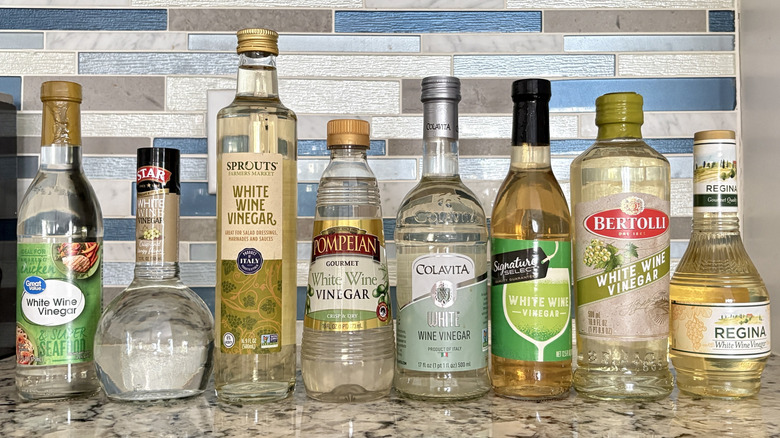
If you're not using white wine vinegar when cooking, you should definitely start. This ingredient can be a game-changer. It isn't as harsh as other types of vinegar, such as distilled white, so its delicate nature makes it a perfect candidate for various uses.
You can use this vinegar when making sauces or add a splash to a dish that tastes flat, and it's an easy way to give homemade salad dressing a boost. Need a quick, light-bodied marinade for your grilled lemon chicken? White wine vinegar can surely enhance it. However, there are several brands making this vinegar, and not all have the same quality — the taste and aroma can vary by manufacturer, and sometimes it can be watery or unpalatable.
Luckily, I've taste-tested multiple brands to give you the scoop on which ones are worth buying. This way, you can pick a vinegar that actually takes your recipes to the next level. As someone who's been in the culinary field for over 10 years, I've got plenty of experience with this ingredient and recognize the importance of choosing a product that has versatility and flavor. Aside from those two properties, I also relied on other reasoning when deciding which white wine vinegar is best. If you're curious, my methodology is at the end of the article.
8. Great Value White Wine Vinegar
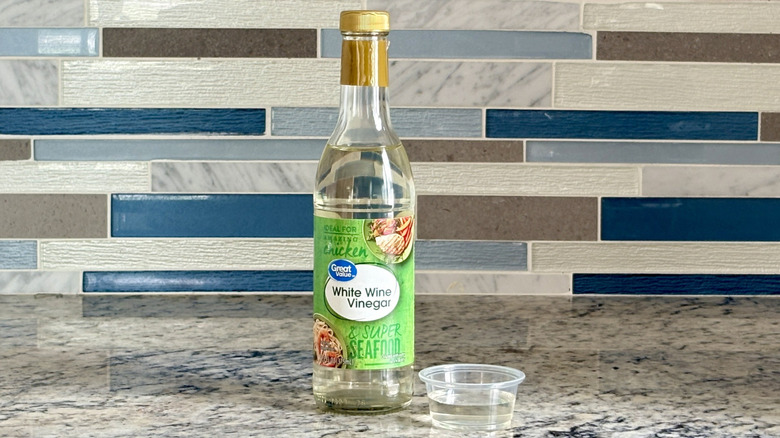
Coming in last place is Great Value White Wine Vinegar. This product finds itself here because of its overall quality. I bought it at Walmart for $2.32, making it the cheapest of the group. If you're unfamiliar, Great Value is Walmart's private label brand. To be frank, this vinegar tasted flat and watered down. It didn't provide any fruity or floral notes, which I could forgive if there was at least enough tanginess to it.
If this were the only option you had, I'm sure you could make it work in your recipes, but it absolutely won't enhance them in any way. Honestly, I'd probably only use this product for deglazing. It would lift the caramelized food bits from the pan but wouldn't necessarily contribute to the sauce's flavor. Since this was half the price of other vinegars on this list, I can't say I'm surprised that it didn't hold up.
7. Signature Select White Wine Vinegar
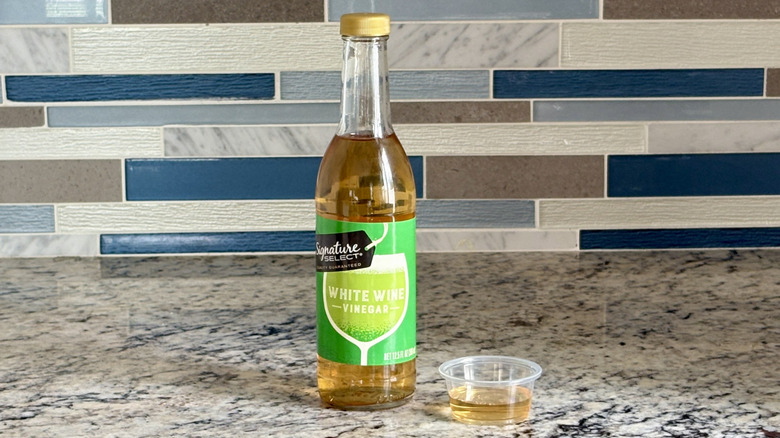
The Albertsons private label brand, Signature Select, was also a disappointment, but it had the opposite issue of the Walmart brand — it was much too overwhelming. It actually burned my throat because of how acidic it was. This vinegar was priced at $3.99, so it wasn't the cheapest or the most expensive either. I ranked this one in seventh place because, although it's strong, at least there's something to work with.
I think this could work in specific scenarios. For instance, you can reach for this ingredient when you need to counteract over-salted soup or cut its fattiness. But it's definitely not the best option for things like salad dressings, because it's hard to stomach; you'd need a heck of a lot of honey and other ingredients to make up for it. All in all, I don't recommend purchasing this vinegar if you want something that you can use in many ways — or something that has complexity. It sadly doesn't have those qualities.
6. Sprouts White Wine Vinegar
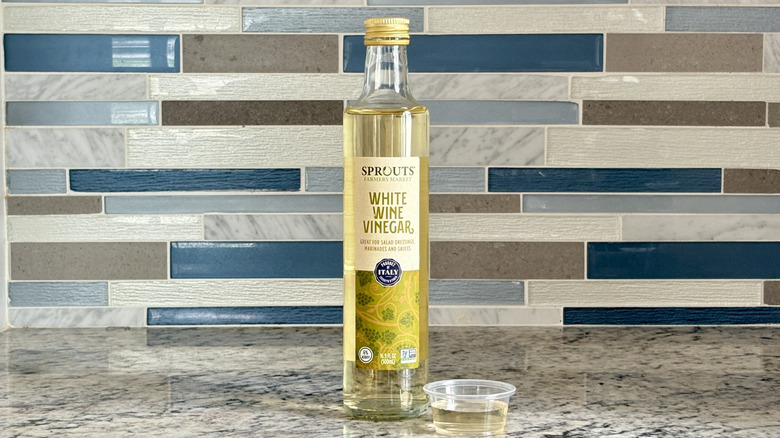
The bottle of Sprouts White Wine Vinegar (which I bought for $4.99) says that this vinegar is a product of Italy and that it's ideal for dressings and sauces. Since Sprouts advertises its supposed versatility, I expected it to offer more. However, similar to the Signature Select vinegar, this option was also much too aggressive for me to enjoy. The acidity dominated any light, fruity notes it might have, making it lack sophistication. There was also something incredibly off about its aftertaste that I couldn't pinpoint, and I didn't like how it lingered.
With its flavor, I certainly wouldn't make a vinaigrette with this vinegar. I still rank it higher than the last vinegar because, although it was undeniably sharp, it wasn't enough to make me instantly pucker and grab a glass of water. I just wouldn't use it for dishes where I want my white wine vinegar to take center stage and build flavor.
5. Regina White Wine Vinegar
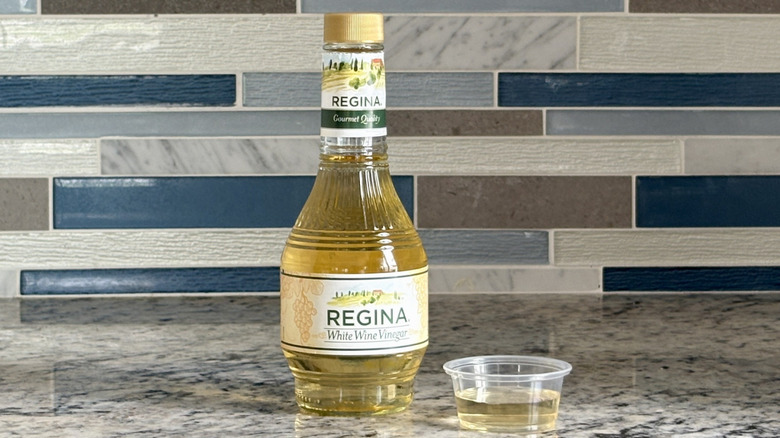
Regina White Wine Vinegar is a better option than the Sprouts product because its piquancy is much more manageable; it's actually mild in comparison. I'd also describe its flavor as simple since there weren't many layers to it. This vinegar has 5% acidity, and it's made with champagne stock and watered down. For those wondering, the wine's origin is California. If you're looking for a more neutral-tasting option, this could be a good choice. However, for that, you might as well just use distilled white vinegar instead if you already have it.
This vinegar won't ruin any of your recipes, but it also won't elevate them, which is why it's ranked in the middle. It's sort of mediocre. It costs $4.99, which is the same price as the Sprouts brand, so between the two, I'd say this one has better value because at least you skip the funky aftertaste.
4. Pompeian White Wine Vinegar
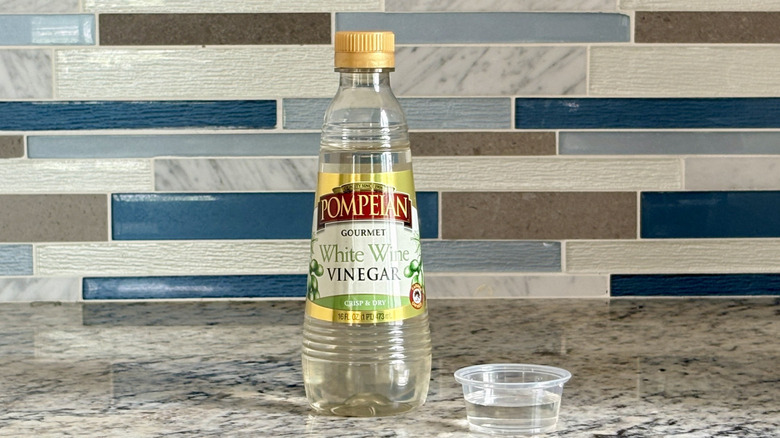
This vinegar, which costs $2.84, is ranked higher because it has a more rounded taste than Regina White Wine Vinegar. It has 5% acidity, and its bottle refers to it as "crisp" and "dry." According to the Pompeian website, it's "farmer-crafted from grapes harvested in the U.S. and Spain." After trying the vinegar, I do agree with the claim that it's nice and crisp. It also has a pleasant, soft aroma and a gentle sweetness to it.
This vinegar would pair well with fish or chicken, perhaps in a creamy sauce to drizzle over them. It would also be incredible in the marinade for grilled turkey and vegetable kebabs. However, I don't think it would be quite tangy enough to make pickled vegetables; it would leave you feeling unimpressed. Although it has good qualities overall, there are still plenty of better white wine vinegars out there. It wasn't bad, but just didn't have the pizzazz I was looking for.
3. Colavita White Wine Vinegar
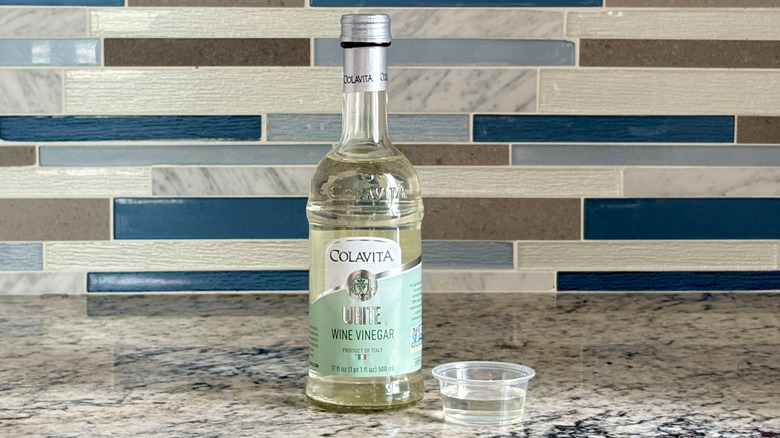
Colavita White Wine Vinegar ranks higher than Pompeian since it is more of an all-purpose vinegar. It is a product of Italy and has 6% acidity. I purchased this product for $4.46. The bottle mentions how the company makes it with 100% Italian grapes, and how it was created through traditional methods; this means the wine slowly matured over time with barrel-aging. Unlike some of the others, this item only had one ingredient: aged white wine vinegar. Several of the other brands contain a preservative or are diluted with water, but not this one.
Although it had little to no aroma compared to the other vinegars, its taste came through and was lively. This is a vinegar that would certainly brighten up various dishes and give them that extra oomph. I think it would taste wonderful in savory recipes where its complexity won't be masked, and the floral wine essence can come through. I don't necessarily have anything bad to say about this product. It was good. However, the first- and second-place vinegars had a more developed flavor.
2. Bertolli White Wine Vinegar
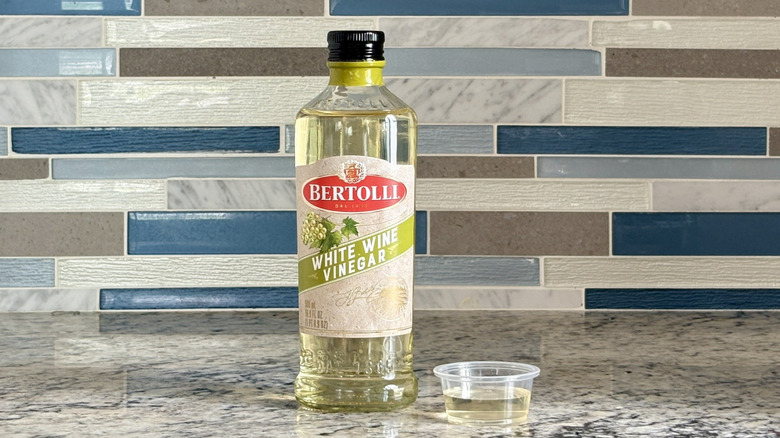
I am personally a fan of Bertolli's olive oil, so I was curious if its white wine vinegar (bought for $3.99) would also be a hit. It had a strong aroma, so before tasting it, I thought it would be too punchy. You can only imagine how happy I was when I tried it and discovered that it had a slight sweetness, and its acidity came through at just the right level. This product thoroughly impressed me with its light, fruity notes and tanginess, which complement each other well. It also had a fantastic, delicate aftertaste.
The bottle says it's best for sauces and vinaigrettes, and I agree, but it would surely work in other types of recipes just as effectively. If you were to use it in a sauce, I recommend a butter sauce where it can add a splash of zing. I admit that this product was a very close second. There wasn't a major drawback to it; it's just that the first-place product captivated me more.
1. Star Italian Kitchen White Wine Vinegar
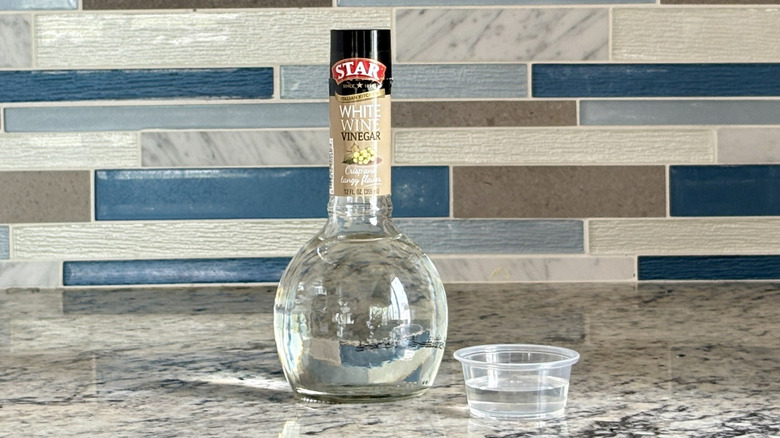
Let's take a look at the standout option: Star Italian Kitchen White Wine Vinegar, priced at $4.49. This product grabbed my attention the most because of its versatility and nuanced flavor. Even though anyone can pick up this vinegar at their local grocery store, it has a restaurant-quality taste. It's sharp but not too sour.
It also has the ideal amount of intricate fruity undertones to actually add flavor to your recipes, and I enjoyed its light aroma. In other words, all of its layers perfectly harmonize. The bottle didn't specify the product's origin, so I did a bit of investigating. I found that its origin is Spain, and the company creates it with a medley of wines instead of just one.
Honestly, this vinegar should be a pantry staple for chefs and home cooks alike, since its qualities make it ideal for general use. I'll even go so far as to say that you'd be able to use it in dessert recipes, too. For instance, you can mix a small amount of it with milk when you don't have buttermilk or add a splash to offset overly sweet macerated fruit. Needless to say, although I'd never tried this vinegar before, I'll undoubtedly make use of it in my kitchen going forward.
Methodology
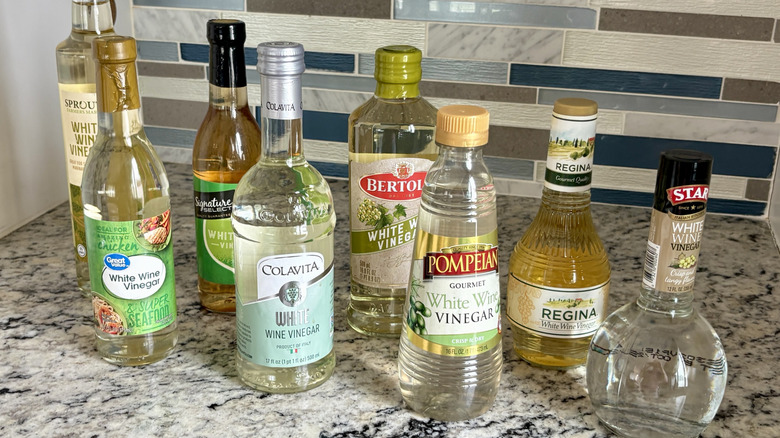
I chose these vinegar brands based on availability and popularity. When ranking the different products, I analyzed their flavor depth, which affected their order in the ranking the most. Secondly, I took their versatility into consideration, since it's good to find a vinegar that can work in several different settings. Other factors like origin and ingredients also influenced the ranking, but not as heavily. Although I mentioned the costs of the products throughout the article, they did not affect the lineup in any way.