

Cookies Spread Too Thin? Here's What It Means And How To Fix It
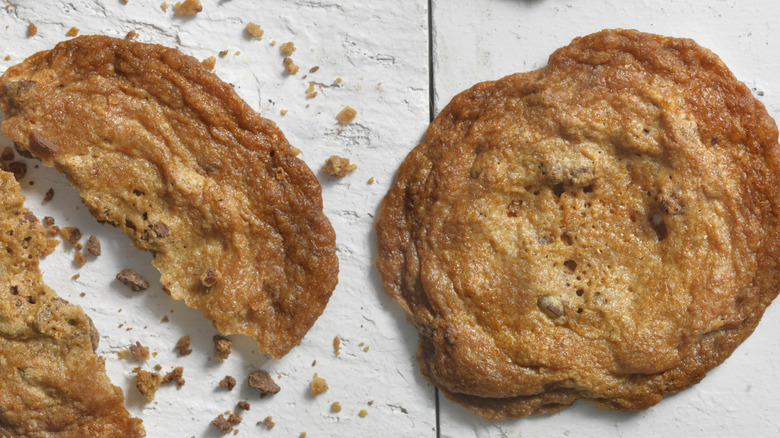
A lot of people enjoy thin cookies for their crispy crunch; but, if you prefer them thick and chewy, you're probably disappointed when your cookies spread too thin while baking them at home. Unfortunately, making cookies can be a sensitive process, and a number of things can go wrong at any stage – starting with preparing the ingredients.
Correctly measuring ingredients for cookies is important because the rise and texture, which can vary by cookie type, depend on the ratio of fat, flour, and sugar in the dough. When cookies turn out too flat, it means that you could have too much butter (fat), not enough flour, or too much sugar, all of which make the dough greasier and thinner as it warms. You can avoid that by not only pouring carefully, but also using the correct measuring tools. In fact, it's a huge mistake to measure dry ingredients in a liquid measuring cup because you can't level your elements like you would with a dry measuring cup. You could also weigh the amount with a kitchen scale.
This scale can also be used to measure butter precisely as well, but make sure that you use the correct conversion. Otherwise, pay careful attention to the labeled lines on the package or use a ruler before you slice. It's important to soften the butter correctly, too, because too warm or totally melted butter won't let enough air incorporate into the dough for the perfect rise. Rather than use the microwave, it's better to let the butter sit at room temperature for up to one hour.
Overmixed or warm dough can result in thinly spread cookies
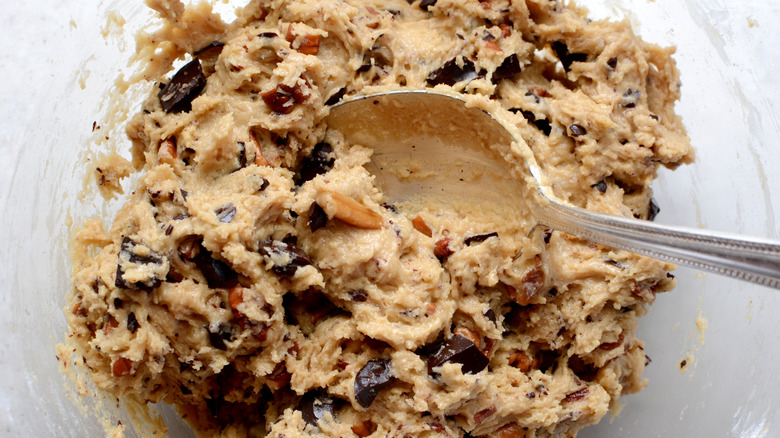
Once you have the exact amount of ingredients for a cookie recipe, you might be tempted to pour them all into a bowl and start mixing. Doing that can actually lead to denser, flatter cookies because air isn't properly incorporated into the dough so that it can rise well. To achieve the ideal cookie structure, you need to cream the eggs, soft butter, and sugar first. You want to avoid over-creaming these ingredients, though, because too much air will result in collapsing, spreading cookies. Since an over-creamed mixture will turn white, you want to stop as soon as it turns fluffy and pale.
Overmixing the dough after adding flour is one of the many cookie dough mistakes people make, too. That's because the process of mixing flour into the other ingredients is what helps develop gluten in the dough — and when the gluten is overdeveloped, the cookies can turn out tough. To avoid overmixing, you only need to incorporate the flour until you don't see any more streaks of it on the sides of your mixing bowl.
Another simple mistake that could be ruining your cookie dough is not chilling it after mixing. As a result, the fat melts so fast in the oven that the dough spreads out more before the edges can set and create nice, round cookies. It especially affects drop cookies, whether you're making chocolate chip, snickerdoodle, or sugar. When you chill the dough, the fat melts slower so that the cookies can develop a structure first. For the best results, prepare the balls or drops of dough, then refrigerate for at least two hours before baking.
The baking surface and oven temperature also affect cookie spread
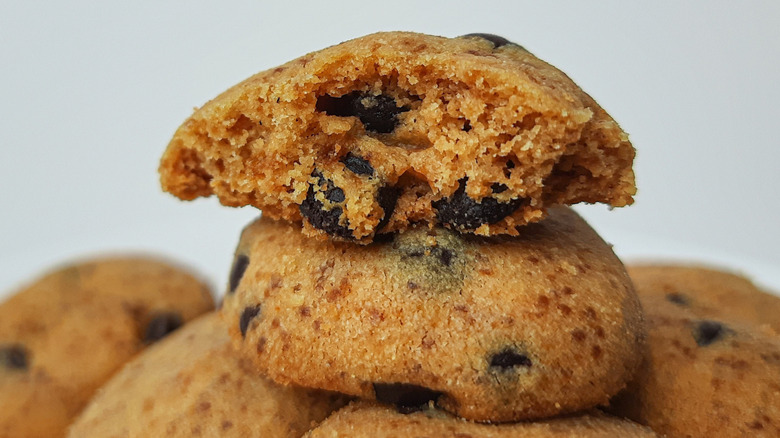
Even after you prepare your dough to achieve the perfect chemistry for fluffy, thick cookies, a few factors during the baking stage can still make it spread too thin. For instance, insulated and lightweight baking sheets can actually cause spread, so it's better to use solid aluminum pans instead. Also, aluminum foil is a convenient liner that makes clean-up a breeze, but it's not a great option for making cookies. Baking directly on the cookie sheet is better, but greasing it to avoid sticking can make cookies spread too thin as well. Instead, line your pan with parchment paper for nicely plumped results.
Temperature is another factor that affects how much cookie dough spreads. For starters, putting it on a warm or hot baking sheet starts the heating and butter-melting process before it even gets into the oven, basically undoing the refrigerated chill time. That's why you should always use a cool pan, especially when you're making multiple batches of cookies at once. You can accelerate the pan-cooling process by transferring done cookies to a cooling rack and letting the baking sheet sit under running water for a few minutes.
Possibly even more important is the oven temperature. Whether it's too hot or not hot enough, the fat in the cookie dough will spread before the other ingredients can set. If your cookies spread too much even after following the recipe temperature, the calibration or thermometer in your oven may be inaccurate. You can fix this issue by placing an oven thermometer on the center rack, preheating the oven to 350 degrees Fahrenheit, and checking the reading. If it's off by 15 degrees or more, follow your oven's manual to recalibrate the internal thermometer.