

Why Your Pyrex Baking Dish Is Raised In The Center
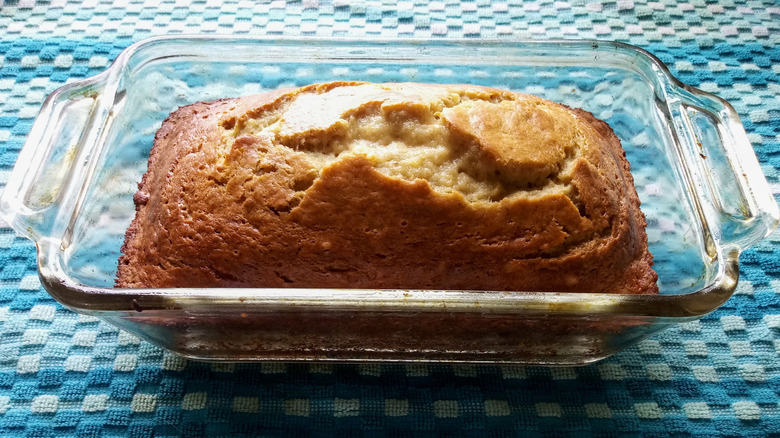
Glassware manufacturer Pyrex can trace its origins to New York in 1913, and it has been crafting durable glass bakeware ever since. The company once made products from borosilicate and now from soda lime, but both versions of glass are strong enough to go right into the oven. The brand is beloved by thrift store shoppers for its high-quality wares and intentional design. But if you have a Pyrex baking dish, you may have noticed that the bottom is not perfectly even. No, instead, there is a notable raised section in the center. Have you ever wondered why the brand designs its dishes that way, and whether it's an aesthetic or practical choice?
If you have thought about it, you're not alone. In fact, it's a common enough question that Pyrex has answered it on its website: "The raised area in the center of the Pyrex dish is called a crown and creates a more stable bottom for the dish." The indented crown prevents slipping and sliding, an outcome that is not ideal when you're trying to prepare food. "If the dish was completely flat on the bottom, it would allow the dish to spin around on a countertop, table, etc. Crowning the inside of the dish makes the outside edges a point of contact and provides a more stable surface for the dish."
As it turns out, this design decision has nothing to do with aesthetics and everything to do with practicality. But is Pyrex the only brand to employ this slip-reducing design?
Do other brands use a 'crown'?
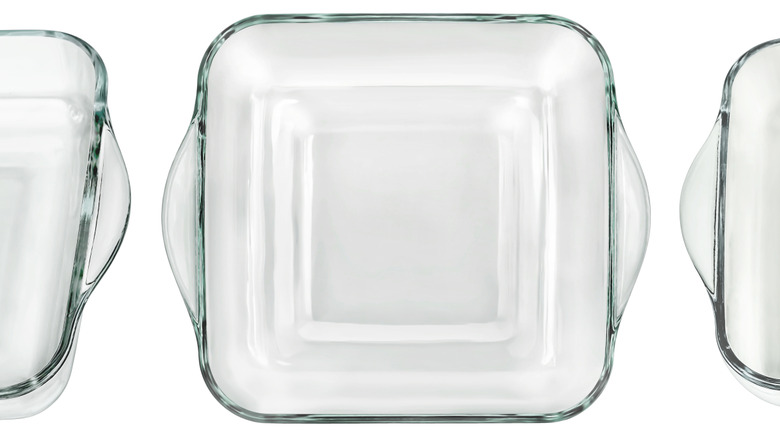
Pyrex is not the only company to use an uneven bottom. However, it may be the only company to educate the public on the decision. From looking at images of baking dishes online, it appears clear that the crown method (or something similar) is employed by a number of companies, including glassware manufacturers OXO and Anchor Hocking. Neither of these companies' websites nor corporate materials mention the slip-prevention method they're using.
Pyrex is the only brand-specific sourcing for the raised bottom we could find. And while it claims the crown is solely there to prevent slipping, some home chefs have their own theories about the use as well. One internet user theorized the convex bottom is "to compensate for baked goods that rise in the middle ... I've seen recipes for layer cakes that call for the baker to use a knife to slice off the 'dome' in the middle of the cake so that all the layers of the cake will stack evenly." Another user on the same thread offered an additional possibility, saying, "it was probably a design feature to try to reduce stress from rapid heating and cooling which could otherwise cause breakage." Pyrex dishes have been known to shatter, so if a crown helps prevent that, it would definitely be a fringe benefit.