

Not Tenderloin, Not Skirt Steak: Choose This Underrated Beef Cut For Pot Roast
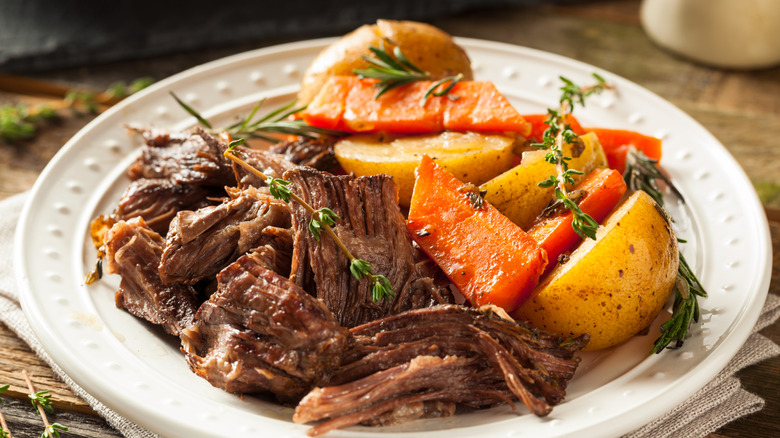
Loaded up with starchy vegetables, delicious beef, and a succulent broth, pot roast is a classic choice for a hearty, colder-weather food. Tougher cuts like chuck roast are perhaps the most common choice for a pot roast, and can certainly form the core of a good meal. But before your next pot roast, consider a more attention-grabbing cut: brisket.
Brisket works for the same reason traditional choices do. This part of the cow does a lot of work in life, making for a tough slab of meat loaded with connective tissue. But all that tissue melts into gelatin while cooking low and slow, which is what gives properly cooked brisket its fork-tender texture.
The taste can be incredible, but perhaps brisket's best advantage over chuck roast lies in presentation. The grain in brisket is more uniform than chuck roast, meaning it neatly slices into even pieces. On the other hand, chuck roast shreds into the soft meaty strings you may remember from grandma's home cooking. But there's more to consider before adding brisket to a pot roast.
Preparing the brisket
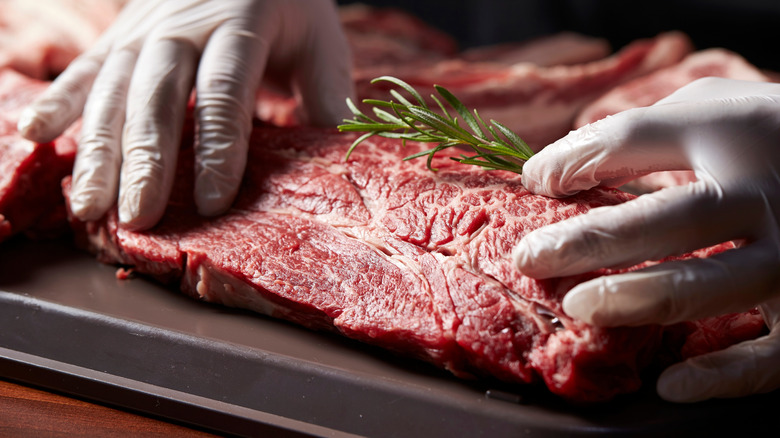
Prior to plopping a raw brisket into a roasting pan, make sure it's actually ready to cook. Most grocery stores that carry brisket sell it already appropriately trimmed, but this may not always be the case. Check for and remove any excess silverskin, hard fat (less than ¼ inch is fine), or thinner edges that would likely burn.
At some stores, you may also encounter a massive brisket that's actually two cuts in one: the point and the flat. Most grocery stores only sell larger, leaner flats. But brisket is one of the best meats to buy at Costco because it includes both the flat and the point. The latter is smaller, fattier, and can contribute unbelievably rich flavor to the final dish.
Either side of a full brisket makes a great pot roast, but if you do have both, be careful when slicing at the end. Brisket points and flats have different grain patterns, worth remembering to slice against the grain on both sides. And unless the brisket is too large to cook in one piece, preserve moisture by not cutting it until the cook is finished.
Pot roast ingredient swaps to pique the interest
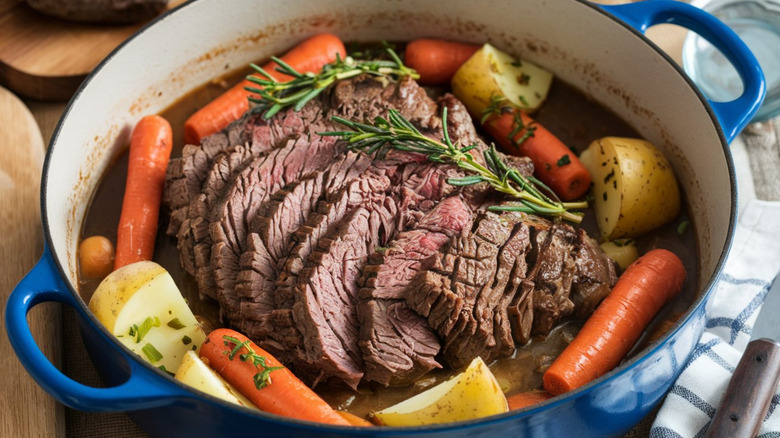
Properly prepared, brisket is hands down one of the best cuts of meat for pot roast. The robustly beefy flavor is hard to top, especially if your brisket has both the point and flat, also known as a full packer. But that's not the end of the line for changing up a classic recipe.
Some ingredient swaps that level up pot roast do so by reducing the heaviness of each bowl. For example, using white wine instead of red for the braising liquid gives the meal a certain lightness, alongside a gentle fruitiness. You can compound this effect by using vegetable stock to replace some or all of the beef stock, which may come in handy with the beefiness of a full packer.
Don't be afraid to switch up the seasoning profile, either. Give pot roast a cowboy-style makeover with southwest-inspired seasonings. Adding a mixture of chili powder, smoked paprika, cayenne pepper, and cumin imbues the dish with an earthy, smoky spiciness that's unexpected in pot roast, but will be warmly received.