

The Old-School Stovetop Coffee Maker That Still Holds Up
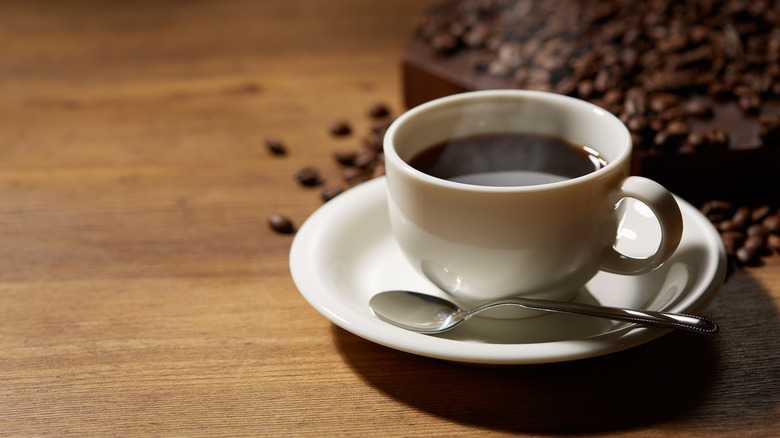
You don't have to be a nonna to recognize the little octagonal pot sitting on the stovetop, hissing away every morning. The coffee maker goes beyond nostalgia and still makes a powerful cup. To use a moka pot, you fill the bottom compartment with water, the middle basket with coffee grounds, tightly screw it all together, and place the whole thing on the stove. The heat boils the water, pushing it up into the basket, where it begins to brew. Around 0.5 to 1.5 bars of pressure builds, aiding in the extraction. Once the pressure is high enough, the water continues up through the filter above the basket, now as dark brown coffee bubbling out the top spout. The resulting cup is roughly between an espresso and a drip in strength and richness.
Don't tell the nonnas, but a Brit, former barista world champion James Hoffmann, shared tips to improve your morning cup in a video on YouTube. One common issue with a moka pot is that the grounds get burned during brewing. For some people, this extra roasting is nice; for others, it gives the coffee an acrid smell and taste. For those in the latter group, Hoffmann suggests filling the bottom reservoir with water fresh off the boil so the pot doesn't sit on the stove too long and get hot. If you are using a gas stove, he recommends not letting the flames extend past the edge of the pot. This way, only the hot water affects the grounds, and they are not burned by the pot itself while the water takes time to boil. Hoffmann also suggests using coarse grounds and an AeroPress filter placed atop the full basket to brew a cleaner cup.
How does the moka pot compare to other coffee makers?
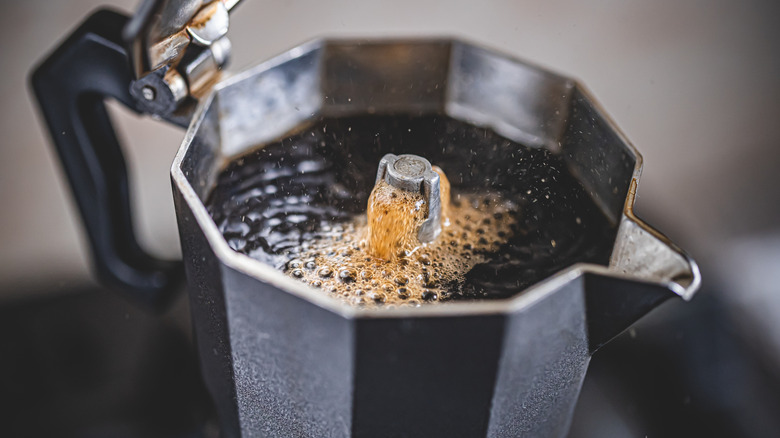
The moka pot is Italy's early entry into home coffee making. Invented by Luigi di Ponti and Alfonso Bialetti in 1933, the pot now brews concentrated cups of coffee worldwide for the half-asleep in need of a delicious jolt. The contraption makes coffee by pushing hot water up through the grounds and out the top into an upper chamber.
One oft-expressed misconception is that moka pots brew espresso. Most espresso machines brew a shot with 9 bars of pressure. The moka pot's 0.5 to 1.5 bars of pressure are not enough to match the extraction of an espresso machine. What the pot yields is stronger than a drip, though. Automatic drip machines and hand pour-over setups rely on gravity without pressure to draw the hot water poured on top through the grounds and a filter and into a receptacle below.
Another coffee maker that uses pressure is the AeroPress. While an AeroPress may seem similar to the French press thanks to the user actively pushing down after steeping, the two presses function completely differently. The AeroPress creates pressure during the press to concentrate the coffee. However, the pressure, at most, is usually half of what a moka can generate, or around 0.75 bars. So, if you're looking for a strong cup of coffee to start your day but are unable to afford an espresso machine that may cost hundreds to thousands of dollars, give a moka pot a try!