

Oven Vs Grill: Which Is Best For Cooking Beef Tenderloin?
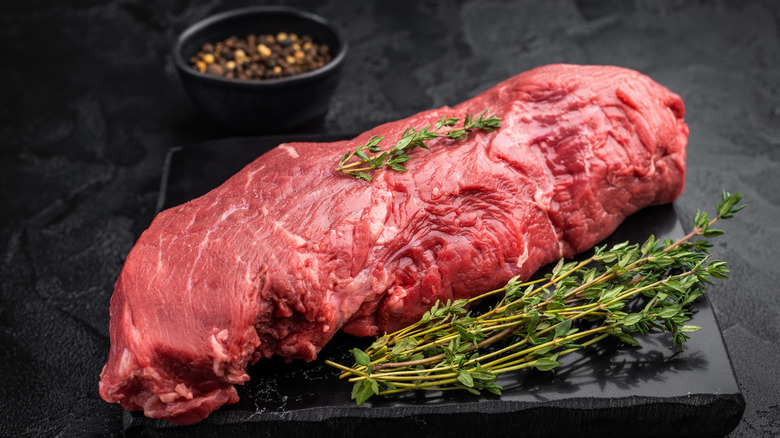
Beef tenderloin is a delicious and aptly named cut of meat. The luxuriously tender bite that makes it so sought after is made possible by muscles near the cow's spine, which do minimal work during its life. Beef tenderloin has several good options for cooking methods, but two of the most popular ones, each with its own place, are the oven and the grill.
Either one can lead to a delicious meal that wows guests, whether cooked whole or sliced into filet mignon. One method isn't uniformly better than the other, as this depends on what you want out of the cooking experience and the tenderloin itself.
As with many meats that can do both, cooking beef tenderloin in an oven is generally easier than cooking it on a grill. And if you're entertaining a group, cooking it whole will generally be easier than multiple steaks. But there are more variables to consider than simplicity: Grilling gets a better crust, but a pan sear (or a broiler) can make up some big ground. It's a complex question worth delving into.
Oven roasted beef tenderloin
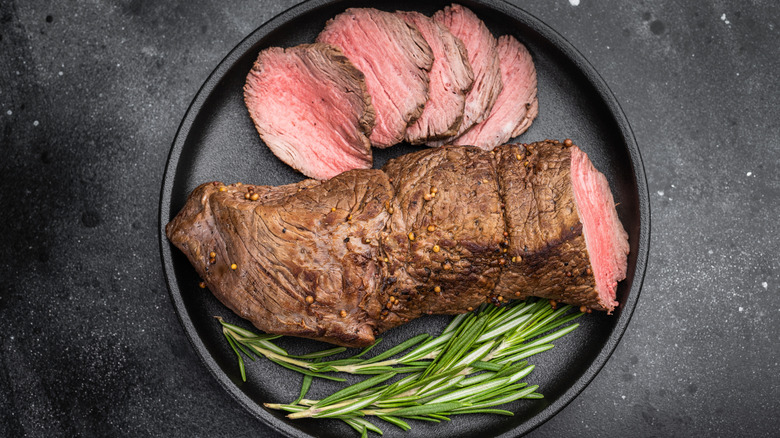
An oven can make it pretty easy to perfectly cook beef tenderloin. But before you start, use oven-safe twine to truss the meat into an even shape. Because it preserves moisture and encourages even cooking, it's one of the most important chef-approved tips for making the best beef tenderloin. From there, roasting the tenderloin at 425 degrees Fahrenheit until your preferred doneness (or slow roasting at 120 to 125 degrees Fahrenheit for medium rare) should yield perfectly cooked meat.
One relative shortcoming of a roasted tenderloin is the crust, or lack thereof. Compared to grilling, a simple oven-roast will create almost no crust on the outside. Your best remedy for this is to use tongs to pan-sear the tenderloin before finishing it in the oven, though this also dirties up an extra pan. Finishing it under the broiler is also possible, though be careful to not overcook the lean beef.
The oven can be a good choice for sliced beef tenderloin, aka filet mignon, but with similar method adjustments. Searing or reverse searing either before or after the oven produces good results, but some say the only way you should be cooking steak in the oven is under the broiler, in a pre-heated pan. It's the closest you'll likely get to a restaurant-grade crust.
Grilled beef tenderloin
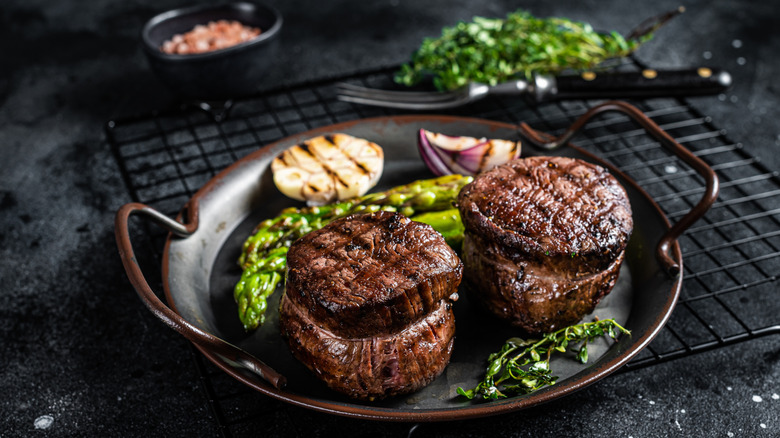
Grilling is also a great option for beef tenderloin, whether whole or sliced — though it's a bit trickier to thoroughly cook the former. Cooking directly with flames obviously produces a good crust, but leaving the whole tenderloin directly over them can burn the outside and leave the middle raw. Whole tenderloin needs to do most of its cooking on a cooler part of the grill, which still requires you to keep a close eye on timing and temperature. Again, trussing the raw tenderloin into an even cylinder will help.
For tenderloin that's been sliced into steaks, grilling is perhaps the most obvious way to cook them. After a quick sear, they'll still benefit from cooking in one of the grill's low-heat zones. But grilling individual steaks is faster and easier than grilling a whole tenderloin.
The reason that steaks cook faster is that they're cut thinner than a whole tenderloin, but don't cut them too thin. A tip to remember when shopping for filet mignon is that the raw steaks should be about 2 inches thick. That may seem like a lot, and some may be thinner, but it's a good thickness for the beefy bite that people expect.