

4 Common Complaints Customers Have About Samsung Refrigerators
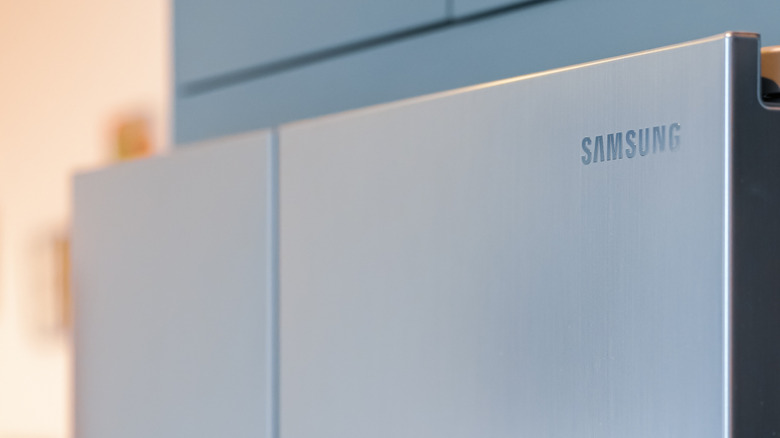
A refrigerator is among the most important major household appliances, and one of the most inconvenient to have problems with — a broken oven probably won't force you to throw out hundreds of dollars' worth of food. Consumers need refrigerators to have long and dependable lifespans, and unfortunately that's often not the case with Samsung models.
Even though Samsung is one of the largest consumer electronics companies in the world, Samsung refrigerators have a reputation for unreliable performance. It's not true of every single model, and problems seem to be more prevalent with its French door designs, including one that failed on yours truly last summer. But the preponderance of evidence suggests buyers should beware of some common issues.
Many buyers have had various issues with ice, either excessive buildup in the freezer or refrigerator, or perhaps most commonly, a malfunctioning ice maker. Another common complaint, and common issue with such designs in general, is a broken water dispenser. Many of these problems can be addressed, to varying degrees of annoyance, but Samsung fridges have displayed a bigger fatal flaw: unsafe temperatures.
Ice maker breaks
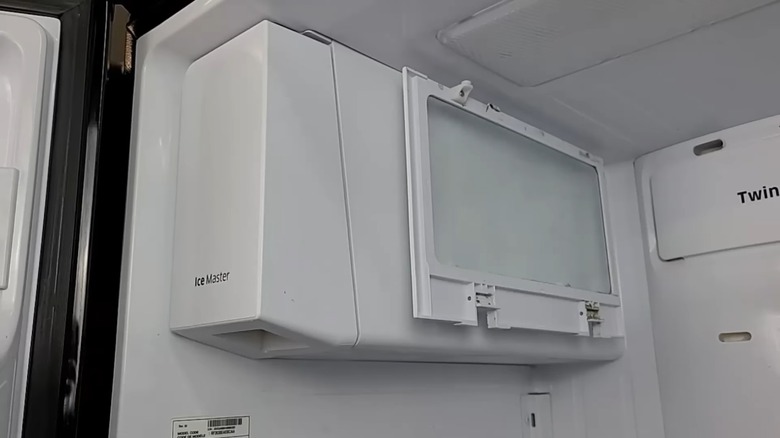
Samsung refrigerators have a common problem with the ice maker freezing into a solid block of ice. The causes can vary, but it's often traced to warm air leaking in from outside. And it was a big enough problem that Samsung redesigned its refrigerator ice makers around the year 2021. Newer models have seen some improved performance, but the problem persists.
It's an especially prevalent issue among the brand's French door refrigerators. Several disgruntled customers even filed a class action lawsuit in federal court over defective ice makers, a lawsuit that was dismissed in 2024 after the company made settlement offers to several plaintiffs.
It's easy to see why faulty ice makers make Redditors say Samsung is the least reliable refrigerator brand. However, in Samsung's limited defense, ice makers are a common failure point for all refrigerator brands (even if Samsung's may fail more than average).
Refrigerator runs too warm
It's one of the great sinking feelings that any homeowner or renter can experience: opening the fridge or freezer door and noticing it's too warm in there. Such was my misfortune last summer, when a 2-year-old Samsung French door refrigerator started dying right after a $300 grocery run. Within a day, the fridge's insides were room temperature, and most of those new groceries were unsafe to eat.
Consumer Reports found that my experience was far from unusual: there are over 200 complaints of food spoilage linked to Samsung refrigerators running too warm, including a few dozen unfortunate cases of food poisoning. This also led to a class action lawsuit against Samsung, specifically focused on French door models with a bottom freezer.
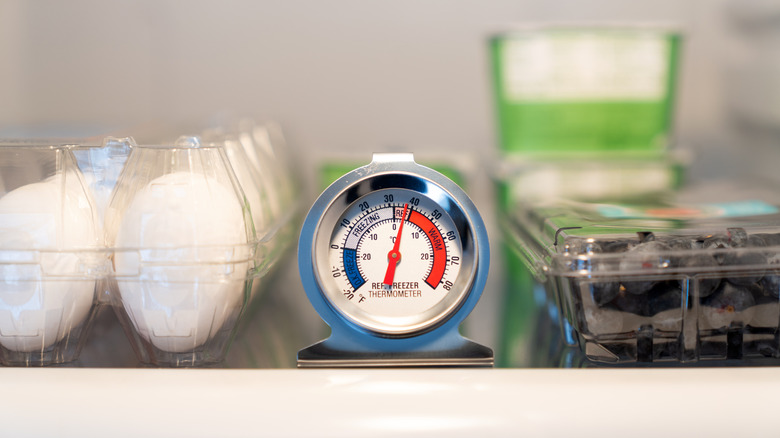
The issue with my refrigerator was a shorted-out control board, which the repair technician said was a common problem. And since a new one would take days to arrive and cost another repair bill, that was how I replaced my Samsung fridge with a different brand. And though we hope to never have this problem again, a fridge thermometer is an early warning system for spoiled food — even if your refrigerator has one built-in. Monitoring internal temperatures is essential to making sure it's working right and taking early action if not.
Water dispenser breaks
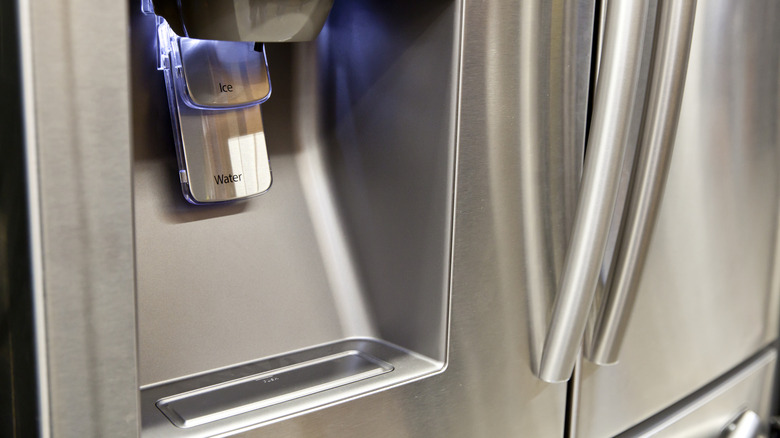
Door-mounted water dispensers can be a convenient feature on a refrigerator, so long as they keep working as designed. But this is another issue where Samsung refrigerators come up short. Online, complaints are common about the door-mounted water dispenser breaking in some way, shape, or form. And it can be unpredictable: one customer even reported a dispenser that wouldn't shut off and flooded their kitchen.
Repair bills for a broken water dispenser depend on the nature of the problem. And some of the more common ones, like a frozen water line, can be an easy DIY fix. But it doesn't change the inconvenience of the issue, especially if it repeats.
It also doesn't change the fact that you really do have to clean your fridge water dispenser yourself. Even if you think the nozzle only touches clean water, cleaning it regularly is an important part of combating mineral buildup or even potentially dangerous bacteria.
Ice builds up
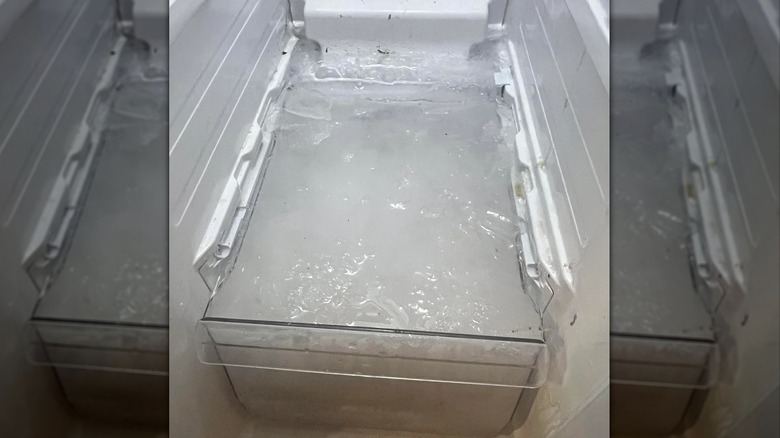
People usually want some amount of ice in the freezer, but not as much as some Samsung refrigerators make. Consumer Reports found higher-than-average complaints of ice buildup in the freezer. Not frost (though this also happens), but actual ice, ranging from a thin layer on the very bottom of the freezer to entire drawers filled to the brim with solid ice.
Samsung fridges can even see ice buildup inside the actual refrigerator, which shouldn't even be cold enough for ice to form. Solving these issues, which often trace to a poorly designed defrost valve, either means an extensive DIY project or an expensive repair job.
To prevent these icy problems from recurring, some owners recommend buying aftermarket accessories like extra insulation or a warming unit for the evaporator coils. The success of these methods may vary, but they don't overcome the insult of a poorly-designed machine. A $1,000-plus appliance should function correctly without the owner having to spend even more money on secondary parts.