

4 Disadvantages Of Using Your Slow Cooker
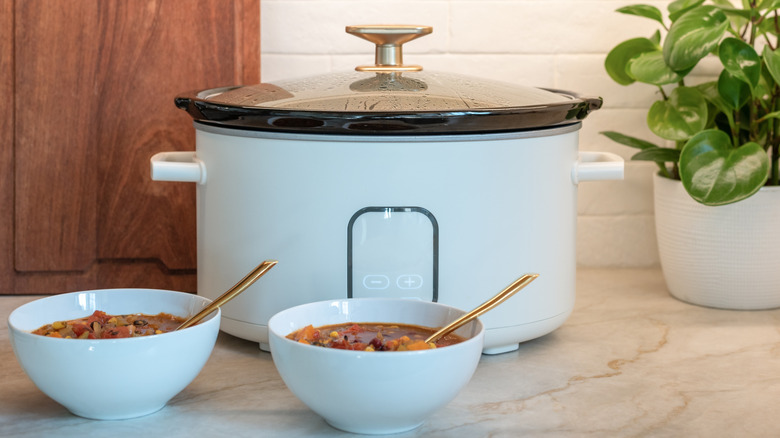
When Crock-Pot debuted its first slow cooker in 1971, it was touted as an appliance that would reduce how much time you spent in the kitchen making meals for your family. The brand maintains that its slow cookers are designed to make all kinds of recipes easy and convenient. In fact, you might be surprised at some of the unexpected foods you should be making in your slow cooker, such as monkey bread and baked potatoes. For all its benefits, though, using a slow cooker has some disadvantages that you might want to consider.
Slow cookers do exactly what the name suggests — cook foods slowly — and they do it at low temperatures, which makes it impossible to achieve the coveted Maillard reaction, browning that requires high temperatures. For a lot of recipes, you also have to wait to add certain ingredients at a certain time to avoid gummy, mushy, or poor-tasting results. On top of that, using certain ingredients and not using the appliance correctly can lead to health and safety risks. All of these downsides culminate in a fourth drawback: Slow cooker meals can take more planning and prep than you realize. Let's dive deeper into each of these disadvantages of using your slow cooker.
Slow cookers don't get hot enough to achieve the Maillard reaction
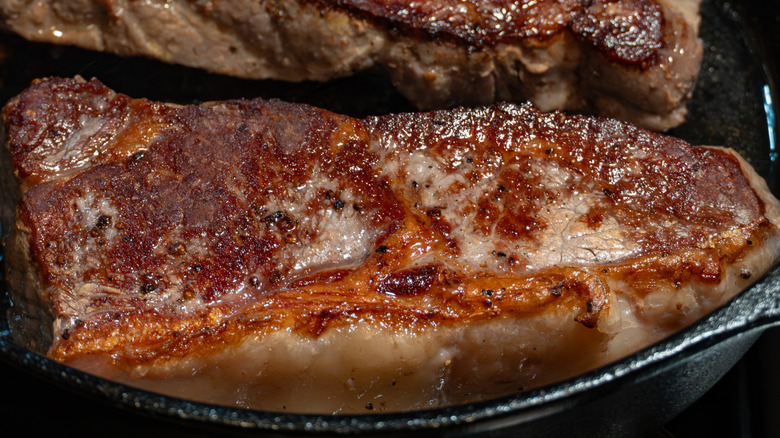
Generally, slow cooker recipes feature liquid or sauce ingredients, such as broths, condiments, or even sour cream. The problem is that liquids and juices (including those from meat) can prevent temperatures from rising above the boiling point, which is 212 degrees Fahrenheit. As a result, the Maillard reaction (caramelized-like browning) can't occur. This process requires dry heat and a temperature of at least 285 degrees so that proteins and sugars can combine, producing hundreds of flavor compounds.
Liquids aren't the only problem, though. Even if you were to cook meat in a slow cooker without any additional liquids, the appliance simply wouldn't get hot enough for the Maillard reaction to start. That's because slow cookers typically operate at between 170 and 280 degrees. Without that browning, you lose a lot of the characteristic aromas and flavors that are associated with many cooked foods — from meats to toasted bread. It's just one reason you always need to pre-sear your slow cooker chicken and other proteins beforehand.
You can't add all of the ingredients from the start
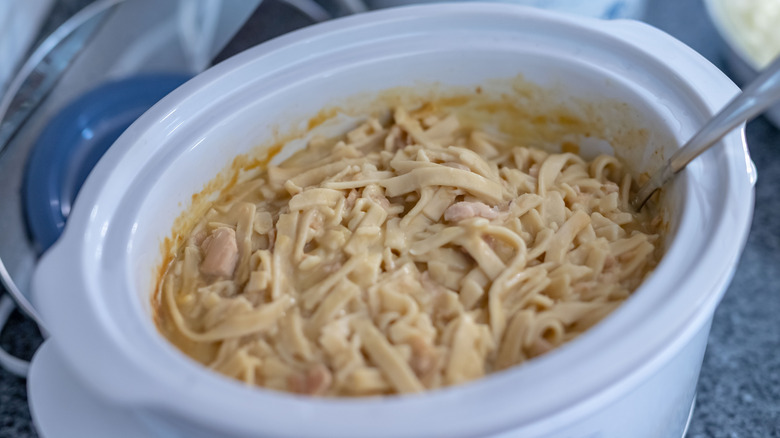
The long-promoted benefit of being able to toss in ingredients, set a timer, and forget about cooking until your meal is done isn't quite the whole truth. That's because many ingredients — such as delicate veggies (mushrooms, peas, and zucchini), pasta, and rice — can become gummy or mushy when they simmer for several hours. With slow cooker chicken noodle soup, for instance, you need to wait until the last 10 minutes of the cooking time to add the noodles.
Similarly, dairy ingredients (cheese, cream, and milk) can start to curdle and separate when they're heated for several hours. That can ruin the flavor of your dish, so it's best to wait until about the last 30 minutes of the cooking time when adding milk to your slow cooker meal. Also, it's not ideal to add fresh herbs at the beginning because the longer they cook, the more flavor they lose. You can either add them at the end of cooking, use them as garnish, or swap fresh for dried herbs instead.
Slow cookers can enhance bacterial growth and risk safety with improper use
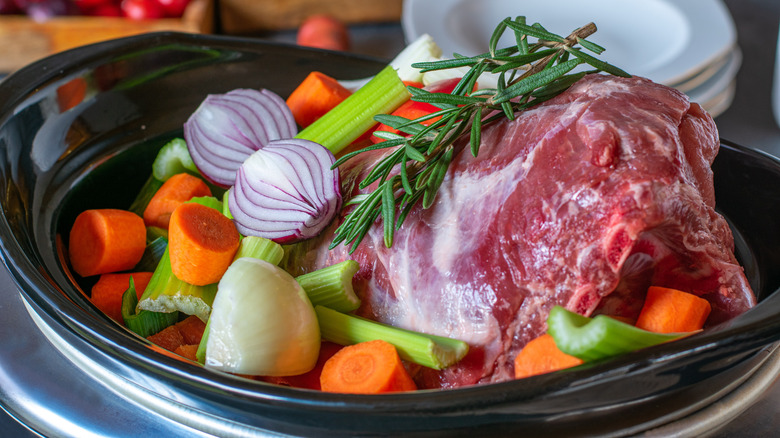
With any kitchen appliance, it's important to use it properly to avoid safety risks. It can be easy to use slow cookers incorrectly, though, especially if you follow the set-it-and-forget-it motto. Although slow cooker brands design their products to run for hours at a time without supervision, there's always a fire risk when using electrical devices, particularly when cords are frayed or outlets spark. It's always better to be safe than sorry, so don't leave a slow cooker unattended.
It can also be tempting to toss frozen and raw ingredients straight into a slow cooker, particularly when the ingredients come in a prepared meal kit. However, that's one of the biggest slow cooker mistakes to avoid. It takes a while for slow cookers to reach cooking temperatures, which leaves frozen and raw ingredients at risk of sitting in the "danger zone" — 40 to 140 degrees Fahrenheit — for too long. As a result, illness-causing bacteria can multiply rapidly and put you at risk of food poisoning. You can avoid that by always thawing ingredients and keeping them refrigerated until you're ready to use them. Spending about one hour preheating your slow cooker before you add ingredients can help keep food out of the danger zone as well.
Making a slow cooker recipe can take more prep work than you think
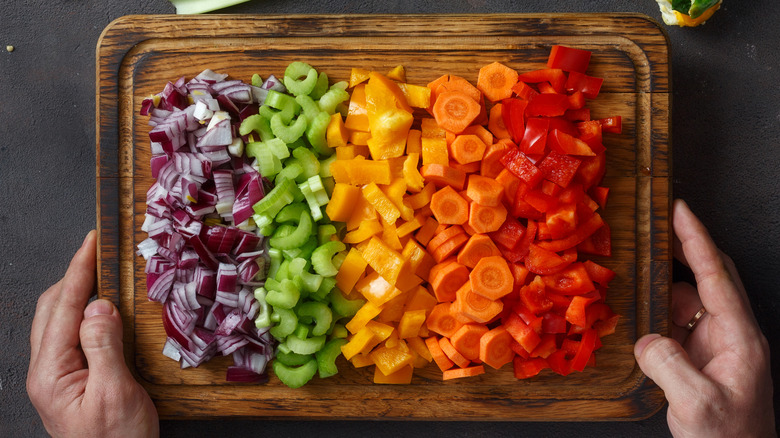
When you consider getting the ingredients you need, searing or thawing them ahead of time, and timing when to add certain ones at the optimal moment, the planning and prep that goes into using a slow cooker is more involved than it seems. To play devil's advocate, let's look at some possible time-saving measures and why they don't necessarily work.
Even if you only use fresh, fibrous vegetables — like carrots and onions that can go in at the start of the cooking process — it's best to chop them into dice-sized (or larger) pieces so that they hold their structure and don't turn to mush. You might be thinking that canned vegetables are a good alternative so that you don't have to spend time chopping fresh veggies or thawing frozen ones. While there's nothing wrong with that from a flavor or quality standpoint, one of the big mistakes you could make with canned vegetables is adding them too early, which basically leads to overcooked, inedible veggies. You'll still need to plan ahead to add them to your slow cooker when you only have about 30 minutes of cooking time left.
Additionally, you could certainly save time by preparing your ingredients while you wait for the appliance to preheat, but that still takes about an hour. Perhaps you don't mind the prep time because you'll be able to do other things while the slow cooker does the cooking for you. However, it's not entirely safe to leave the appliance running all day and totally unattended. Because of these disadvantages, maybe using a slow cooker isn't meant for everyone.