

8 Foods Customers Steal The Most From Grocery Stores
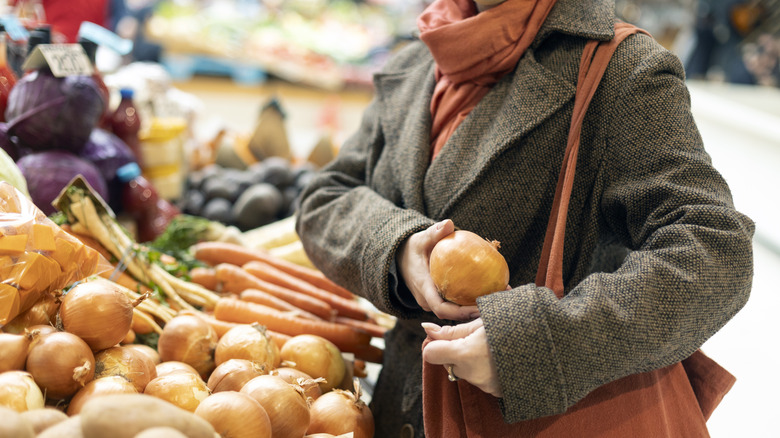
It's no secret that food prices are on the upswing. We all know the pain of realizing our favorite cut of meat or brand of coffee now costs several dollars more than it did just a few years ago. For some of us, this is annoying but survivable. For others, those extra dollars can make the difference between serving and skipping a meal — it's a big reason why 3 out of 10 Americans admit to shoplifting, according to a survey by Lendingtree. But shoplifters steal for other reasons too, including to acquire goods for resale (which can be surprisingly profitable) or just for the thrill of it.
Stores like Whole Foods are often targeted by shoplifters, and supermarket staff have noticed that some foods are more attractive targets for shoplifters than others because they're easy to hide, profitable to resell, or simply tasty but expensive. But if you're thinking of using this list to steal groceries yourself — don't. We get that food is pricey and your favorite meals especially so. If you want to make the most of your grocery budget, check out our list of the best budget grocery store chains. If you're in a really tough spot, check out your local food pantries or mutual aid groups.
1. Baby formula
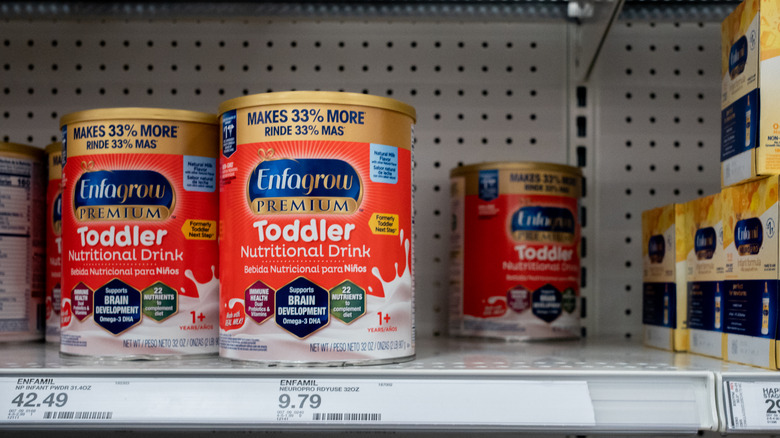
Breast-feeding advocates insist breast is best, and in principle, it is — human milk evolved to be the optimum food source for babies, and best of all, it's free. But not all moms can nurse, for either medical or practical reasons, and for them and their babies, baby formula is a non-negotiable necessity. This makes it a lucrative black-market item, and thus a popular target for thieves looking to sell to a captive audience.
Formula thieves aren't just working for pocket money, either. In September 2026, two men were arrested and charged in Florida for leading a ring of thieves who stole formula from major grocery chains including Target, Publix, and Winn-Dixie. The thieves sold cans of formula to the men for $10 apiece, and the two men stored and sold the formula, netting around $1.1 million in illicit profits. Worse than the thefts themselves were the temporary shortages they triggered in some stores, which sent worried parents to hoard whatever formula they could find. Some chose to seek it elsewhere, such as on the black market.
2. Cheese
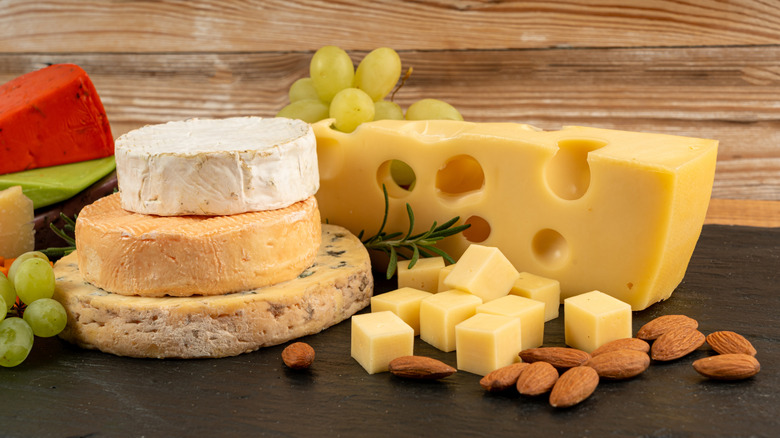
Cheese is the world's most-stolen food item for one basic reason: People love it. But like other foods, it's becoming increasingly expensive, and because most supermarket cheese comes in compact, sealed packages, it's dangerously easy to grab and hide in a large pocket or purse. While some pilfer cheese for their own use, it's also sought after by thieves planning to resell it, with high-end cheeses such as Parmigiano Reggiano being especially attractive targets for black marketers.
Believe it or not, organized cheese theft is a thing. While some large-scale thefts start with thieves impersonating wholesale buyers or shipping companies to steal large quantities of cheese from manufacturers, smaller operations start with shoplifters grabbing cheese from supermarkets for resale. In May 2026, a man in Ontario, Canada was arrested with $1500 (Canadian) of stolen artisanal cheese and chocolate in his car. He'd been running a business selling stolen cheese to other local businesses. According to Andy Quinn of England's National Food Crimes Unit, there's a good reason career criminals choose to work with cheese, which European crooks smuggle into Russia to sell at a premium. "They know crimes involving food result in less severe convictions than for importing drugs," Quinn told BBC News, "but they can still make similar amounts of money."
3. Packaged meat
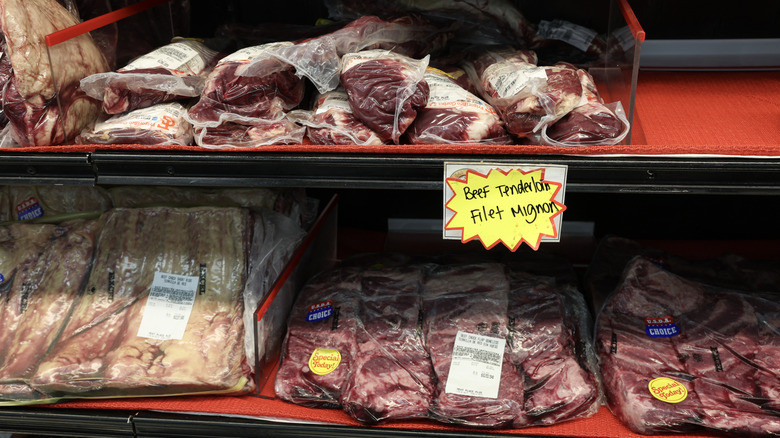
In many households, dinner isn't really dinner unless it's anchored by a meaty main dish. But with meat prices rising at jaw-dropping rates, even traditional weeknight standbys such as meatloaf have shifted into special treat status for some families. This hasn't slowed the demand for meat, however. It's become a popular target for shoplifters, either eager to shave a few dollars from their own grocery budgets or to resell it to unscrupulous businesses — or even door to door. Meat theft has become such a problem that one California Walmart has taken to putting its meat, including traditionally inexpensive items such as chubs of ground beef, in metal security mesh that can only be removed at checkout.
For some thieves, meat is serious business. In 2015, one thief broke into a grocery store through the ventilation system and made off with over $4000 of beef, pork, and chicken. Rising meat theft isn't just an American trend, either. Australian grocers are also feeling the pinch. There, meat thievery is often associated with older adults: Some seniors struggling with rising prices and fixed incomes have taken to hiding meat under other items in their mobility scooters, while others knowingly purchase stolen meat for less than its original retail price. "[Shoplifters] target the older generations and say, 'I can get this for you for this price,'" Sebastian Brown, director of Retail Crime Prevention Australia, told The Sydney Morning Herald.
4. Frozen foods
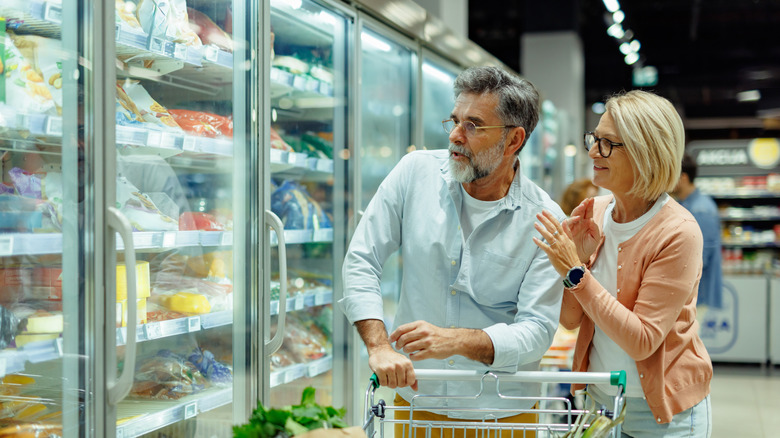
Frozen food may seem like an odd choice for shoplifters, but it's a surprisingly popular one — so much so that some stores in high-traffic areas even keep their freezer doors locked, so customers must ask a store employee to open them if they want frozen goods. Thieves take advantage of the durable packaging of most frozen foods, which is designed to be durable and withstand wide fluctuations in temperature, making it neat and easy (albeit chilly) to carry.
Ice cream theft is an especially conspicuous problem for supermarkets, some of which have grown so desperate that they put $5 plastic lid locks on $6 pints of Haagen-Däz, with cashiers removing the locks at checkout. All of this not only puts a strain on stores' bottom lines, but on store employees. Their heavy workloads are becoming even more stressful, with interruptions to unlock and relock freezer cases every time a customer wants a frozen pizza or a bag of frozen vegetables, together with the fiddly work of detaching and deactivating anti-theft devices at checkout.
5. Top-shelf alcoholic beverages
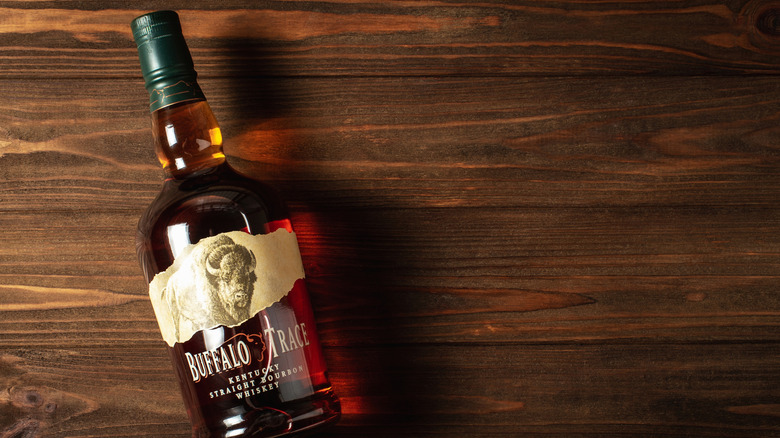
There's a good reason you might have seen cap locks on bottles of liquor in your local supermarket, or noticed that all the good stuff is tucked behind locked glass doors or a customer service counter. It's a popular target for thieves. There are several reasons for this, and one is logistical. If you want to steal booze, a bottle of Scotch or wine is easier to slip into a backpack than a 12-pack of beer. In addition, prestige-brand bottles are easy to resell on the black market. In addition, for underage drinkers, stealing is sometimes the only way to get a buzz without getting caught.
Store staffers report that alcohol theft is not only common — and brazen — but hard to stop. One store manager reported stopping a would-be thief who was casually walking past the cash registers towards the exit with over $1000 of top-shelf liquor and wine, likely not for the first time. Another store manager wrote on Reddit, "We get theft daily in the store I manage." They explained that a frequent target is high-end gin, saying, "It's gotten so bad recently they know we can't do anything to stop them so they come with two friends and empty shopping bags." Even more frustrating for shopkeepers, some thieves even carry specialized magnets that can deactivate and detach anti-theft devices on bottles.
6. Coffee
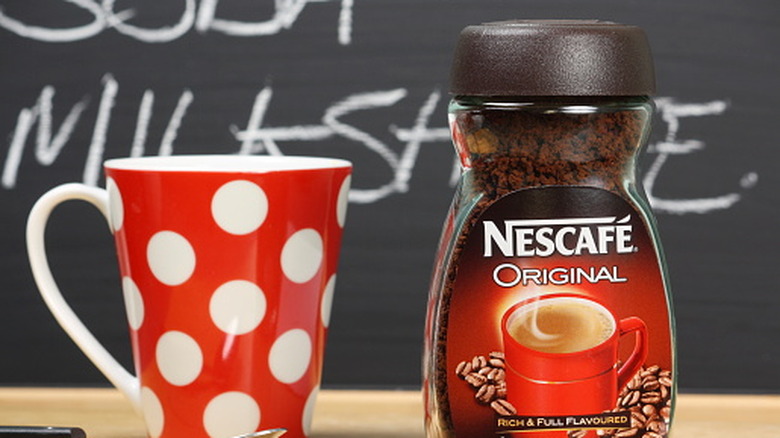
Those of us who need our morning cup of coffee to function properly can understand why some thieves would be desperate enough to steal it from grocery stores. This doesn't make it right, but the desperation for caffeine is real, especially since good coffee is expensive and only getting pricier. Even the cheap stuff is vulnerable to theft, though.
In some stores, instant coffee is kept on locked shelves. In one Southern California supermarket, instant Nescafé is not even kept on the shelves, even though other brands of instant coffee are. Shoppers who specifically want instant Nescafé need to request it from a cashier at checkout.
Since it's lightweight, compact, and usable by those without access to coffee makers, it's easy to see why instant coffee would tempting target for the cash-strapped. As one Reddit commenter observed, "No homeless guy is gonna hand grind his beans and push it through an Aeropress." As for why Nescafé specifically is sought after by shoplifters, some people suspect that because it's the most popular brand in Latin American communities, it's likely easy to resell on street corners.
7. Energy drinks
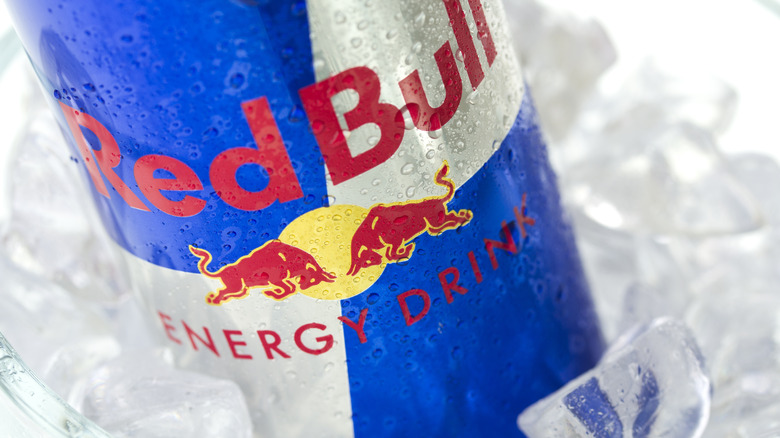
Americans have long loved sweet, bubbly drinks, and for many, energy drinks filled a need they didn't know they had — all the sweetness, bubbles, and fun flavor of a soft drink, plus a big shot of productivity-boosting caffeine. For busy adults trying to squeeze more into their busy workdays, they're a godsend. For teens, they offer a tasty and legal (albeit medically risky) way to get a buzz. Their popularity and steadily rising prices, though, make energy drinks another tempting target for shoplifters. One gas station owner commented that Red Bull was by far the most frequently stolen item from his store, blaming the thefts on kids taking it for their own consumption.
Other thieves, however, are even more dedicated to pilfering energy drinks. In 2024, Washington D.C. police arrested a local man known as the Red Bull guy, who'd stolen thousands of dollars worth of merchandise, mostly Red Bull, from three CVS stores over a four-month period. He sometimes managed to grab several hundred dollars' worth of Red Bull during his brief trips into the stores, where he was typically in and out in under 2 minutes. It's unclear whether he was stealing it for himself or for black market resale.
8. Produce
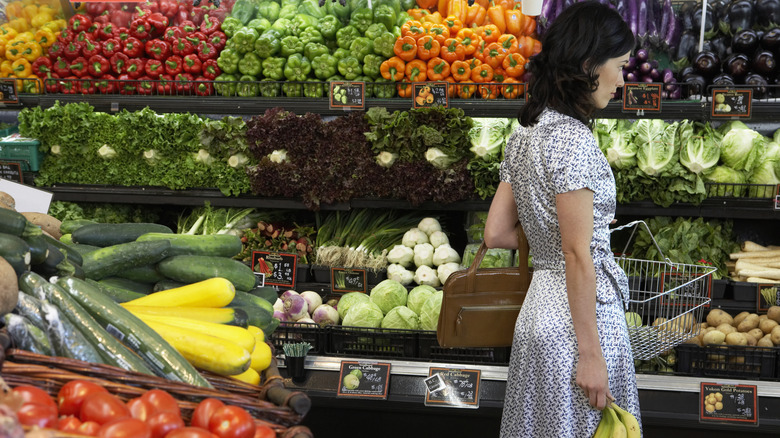
Our parents (and pediatricians) all reminded us always to eat our fruit and vegetables. This was (and still is) nutritionally sound advice, but for many of us, it's increasingly hard to follow as prices of fresh produce steadily increase. Thanks to a combination of labor shortages, rising fuel and shipping costs, and bad weather, ordinary veggies such as tomatoes and lettuce have grown increasingly expensive, forcing some consumers to cut down or go without. This has driven some to steal their fruits and veggies instead.
For would-be shoplifters, hiding a head of lettuce or a fragile bag of tomatoes under one's coat or in one's purse would be a nonstarter. But with the rise of self-checkout, stealing produce without having to hide it has gotten easier for desperate (or unethical) shoppers. One common technique is to ring up more expensive items using codes for cheaper ones. Grocery stores in Australia and the UK reported a puzzling observation of more recorded sales of carrots than they ever had in stock — only to find that shoppers were using the code for carrots to ring up pricier produce such as avocados or cherries.