

The Difference Between How Toaster Ovens And Microwaves Heat Food
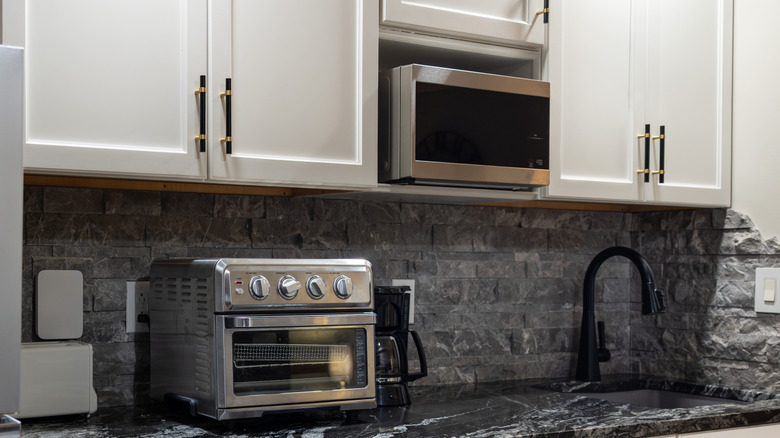
Microwaves and toaster ovens share a lot in common. They're both popular kitchen appliances. They're both roughly the same size. And they're both metal boxes that heat food. But if you've ever tried, say, putting bread in the microwave to try and make toast, or attempted to heat up soup in the toaster, you'll know that these two appliances don't work in the same way.
One major difference is the way these two appliances heat food. A toaster oven, like a regular oven, heats food from the outside in. The coils on the toaster's top and bottom heat up, radiating heat out to the food inside the oven. The surface of the food gets heated first, leading to crispy, crackly edges, while the inner layer remains softer (this can sometimes lead to uneven cooking, which is one of the disadvantages of toaster ovens).
By contrast, a microwave heats food from the inside out. The waves that the microwave oven emits penetrate the food and make the molecules inside vibrate, creating heat. And while these waves are technically classified as radiation, it's not the scary, nuclear type of radiation, but just a form of light with longer wavelengths (check out our microwave myths you can stop believing for more on this).
How does a toaster heat food?
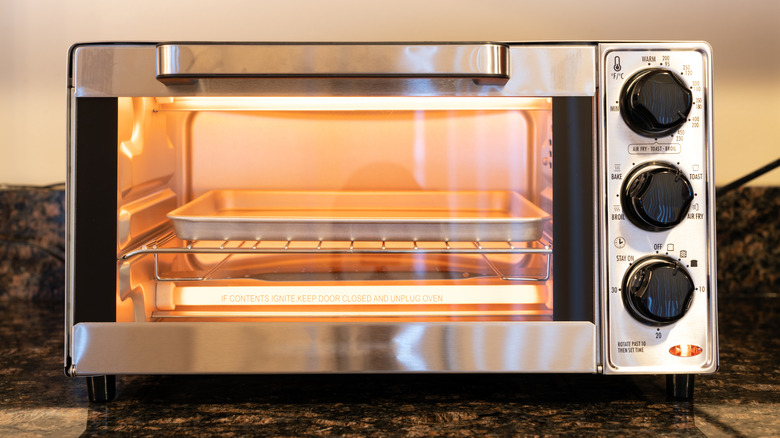
As it turns out, there are three basic ways that heat is transferred. They are conduction, convection, and radiation. Toaster ovens actually use all three of these heat sources. Let's break them down, shall we?
Radiation happens when electricity flows through the heating element in the toaster oven. Heat flows out from the wires in the form of infrared radiation, hitting the outside of the food first. Conduction is heat by direct contact. So, when the wire rack or metal tray heats underneath your food heats up and warms the food directly, that is the conduction method.
Convection, the last method, is when the hot air or water surrounding the food heats it. This also happens in a toaster oven because the heating element warms the air as well. Perhaps you've heard of a convection oven? There are also convection toaster ovens, which are the same as regular toaster ovens with an added fan that helps supercharge the convection function.
How does a microwave heat food?
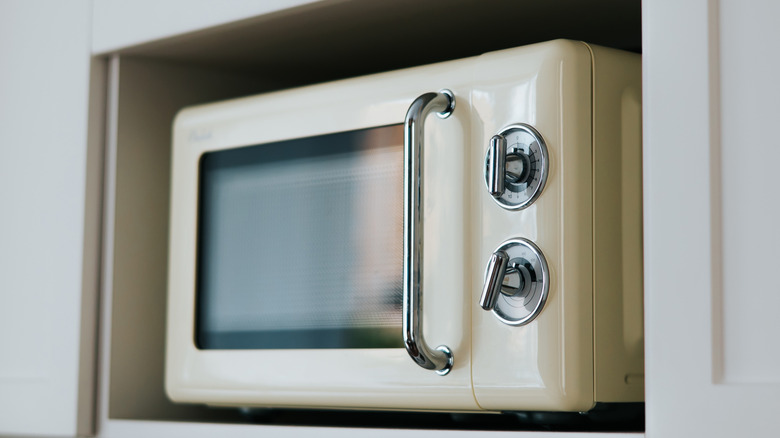
While toaster ovens utilize all three kinds of heat, microwaves just use radiation. When you press "Start" on the microwave oven, the electromagnetic waves known as microwaves begin radiating around the interior of the oven. As they bounce around, some of them enter the food, making the water and fat molecules inside vibrate. This vibration causes friction, which generates heat. Most microwaves operate at 2.4 GHz, which is just below the spectrum of visible light.
By the way, these electromagnetic waves are the reason that you shouldn't put metal in the microwave, especially if it's steel, iron, or copper. These metals are very good at reflecting electromagnetic waves, which can lead to the temperature in the oven increasing drastically. But even other metals, like aluminum foil, come with the risk of arcing — or producing sparks — which is why foil is one of the everyday items you should never put in the microwave. Sparking can cause damage to your food, and the microwave itself, so steer clear of anything metallic that's not specifically described as microwave safe.