

6 Microwave Myths You Can Stop Believing
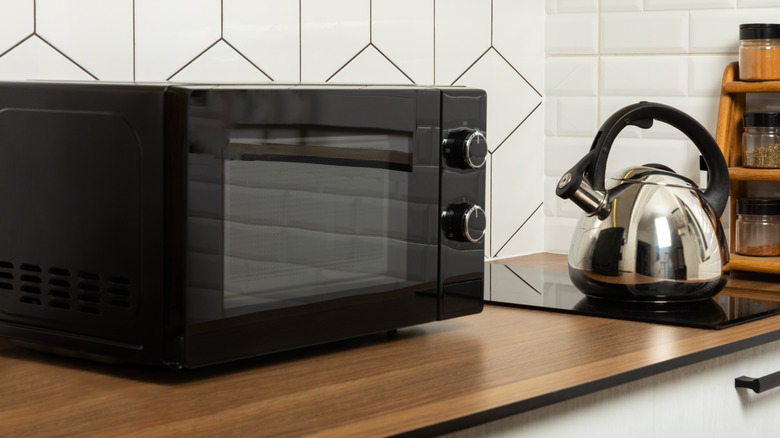
Serious cooks have a love-hate relationship with microwave ovens. On one hand, the very word "microwave" has become shorthand for culinary corner-cutting of the worst kind — the mere sight of a microwave in a high-end restaurant raises questions about the kitchen's seriousness and attention to craft. On the other hand, we have to admit it's the most-used appliance in our own home kitchens. After all, if you had to choose between spending half an hour reheating that casserole from your mom in the oven or zapping it in the microwave for 2 or 3 minutes, which would you choose?
But much as we rely on microwaves, most of us don't really understand them and their behavior. It's not intuitively obvious how an unheated box makes cold food hot, and the strange distribution of hot and cold spots in some microwaved food only adds to the mystery. So it's no wonder so much lore has developed about the safety of microwaves and their effects on food. Fortunately, you don't have to live in fear of your microwave — here to debunk some common myths is Bryan Quoc Le, food scientist and founder of Mendocino Food Consulting.
Myth: Microwaves destroy the nutrients in food
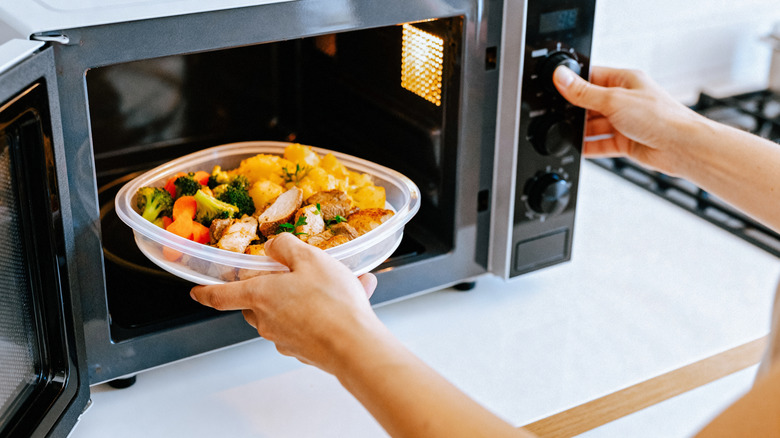
A pervasive myth in some circles is that microwaving food degrades its nutrients. It's unclear where this belief comes from. Perhaps guilty cooks think something as convenient as a microwave must come with a catch, or maybe they think of the microwave as something like radiation therapy for their food — useful, but not without a cost.
According to Bryan Quoc Le, there's some truth to the myth, since some nutrients, such as vitamin C and the B vitamins, are heat-sensitive, which means cooking of any sort will degrade them. Thus, the problem is not unique to microwaves, and microwaves aren't any harder on nutrients than other methods of cooking. In fact, they may be better at preserving nutrients. "They are able to retain nutrients, in fact, because the food is not spending more time cooking than it needs to," Le explained. "And so those nutrients are not subjected to thermal damage for longer periods of time."
Myth: Microwaves work by irradiating food
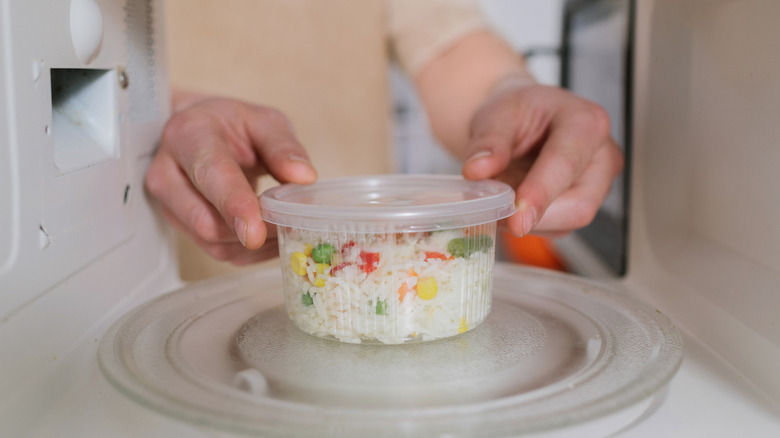
Most of us have heard at some point that microwaves work by targeting food with radiation. While this is technically true, get those scary images of X-ray machines and nuclear power plants out of your head — it's not that type of radiation, and it doesn't have the same effects as these types of radiation on food — or on you.
"Microwaves are a type of radiation in the same sense that sunlight is radiation," Bryan Quoc Le explained. "These are not the kind of radiation normally created from radioactive substances. It is simply another form of light, one that has a much longer wavelength than visible light."
It is, in fact, the same type of electromagnetic wave used in aviation radar – in the 1940s, an engineer accidentally discovered its food-warming potential when a candy bar in his pocket melted while he was working with a live radar set. The size of this wavelength allows it to penetrate food and heat its water molecules quickly and safely, allowing you to enjoy a hot and satisfying desk lunch in just minutes.
Myth: It's dangerous to stand in front of a microwave while it's on
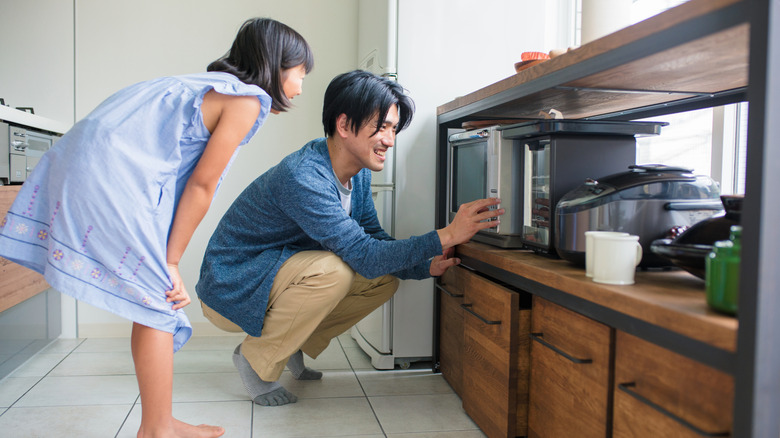
Many of us associate microwaves with radiation and thus treat our microwaves like radioactive devices when they're running. For some home cooks, this means taking care to keep a safe distance from their microwaves while food is heating. After all, if you have to wear a lead apron when you're getting your teeth X-rayed, shouldn't you exercise the same due diligence with your microwave?
You may be surprised (and relieved) to learn the answer is no. Microwave doors and windows are designed to hold radiation in — and the radiation inside the oven isn't the same type used for X-rays or nuclear power. "The microwave door is designed to block the larger microwave radiation wavelengths," Bryan Quoc Le said.
This is good to know, since you should probably stay close to your microwave while you're using it. Your food won't take long to heat up, and for bigger or frozen portions, you're going to need to stop the cooking every few minutes to turn or stir the food for more even heating. And if your not-so-guilty pleasure is watching a bag of your favorite brand of microwave popcorn puff up as it slowly turns in your microwave, keep doing it — it's perfectly safe.
Myth: Anything you can cook on a stove, you can cook in a microwave
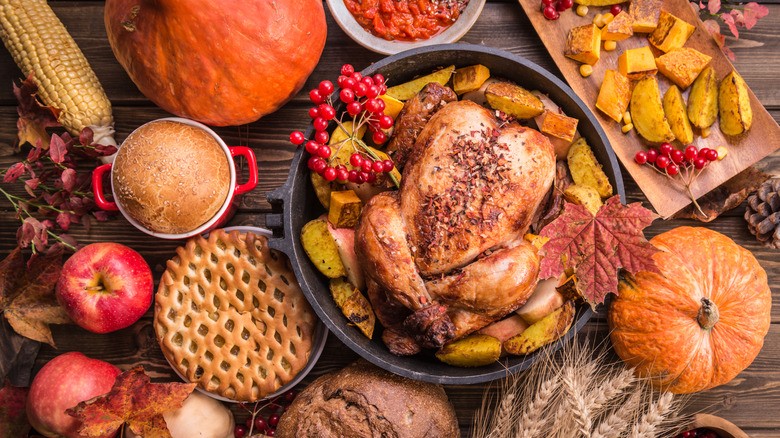
Not everyone has the time, skill, or inclination to become a serious cook. But everyone still needs to eat, and efficiency-minded home cooks turn to their microwaves to get food on the table fast. In the '70s and '80s, when microwaves were still considered prestige items, cookbooks even touted convenient, microwave-only recipes for dishes ranging from Boeuf Bourguignon to enchiladas.
If the idea of making a classic French stew from scratch with just a microwave sounds too good to be true, it's because it is. "Microwaves work by exciting water molecules directly, causing them to vibrate faster in place. It's essentially boiling the water within the food matrix," Bryan Quoc Le explained. "You are not going to see foods experience the Maillard reaction through microwaving, or not very efficiently, which is the reaction between sugars and amino acids that produces the distinct flavors of foods that have been evenly seared, baked, or roasted."
So that microwaved stew may be cooked through and decently seasoned (and may save you a bit of kitchen cleanup), but don't expect the appealing toasty, caramelized notes or attractive browning you'd get from old-fashioned stovetop cooking.
Myth: Microwaved food behaves like conventionally heated food
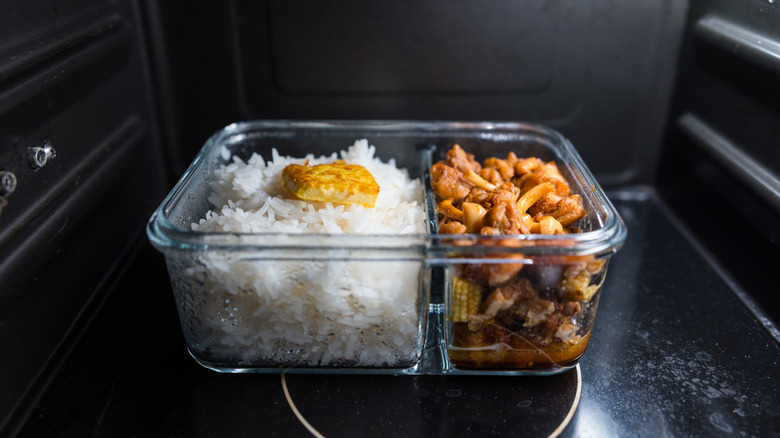
Microwaves do the same thing as stovetop burners and ovens — they heat food up. But while a cup of classic soup from childhood will get equally hot with both microwave and stovetop cooking, don't expect them to heat in the exact same way. If you've ever pulled food from a microwave oven and found random cold and hot spots, there's no need to shop for a new microwave model – that's just how the physics of microwaves works.
Electromagnetic waves don't fill the oven or penetrate your food evenly – instead, they travel in waves, which bounce off the surfaces of the oven and collide with each other, creating an uneven distribution of energy. The turntable in your microwave helps mitigate this by moving your food constantly, so all of it gets equal exposure to high and low energy zones — but the shape and thickness of your food can also contribute to uneven heating.
Annoying as this is, you just have to accept it and work around it. Luckily, this isn't hard to do. "It's best to try to heat foods in 30 to 60 second increments and then stir or rotate the food, so that heat is distributed more evenly," Bryan Quoc Le said. For the same reason, Le said, it's best to let liquid-heavy microwaved foods, such as soups, rest for a few minutes before eating them — this will give the heat time to redistribute itself evenly.
Myth: Microwaves have no effect on plastic containers and utensils
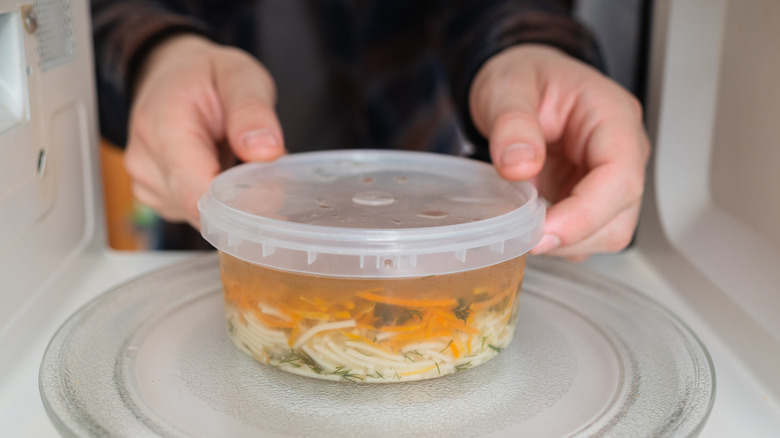
One of the first things kids learn to do in the kitchen is heat things in the microwave, and one of the first rules they learn is microwaves and metal don't mix. This is because microwaves energize electrons in metal, causing an electrical arc, which can damage the microwave. Instead, we turn to glass or porcelain containers to heat our leftovers — or even more commonly, the plastic containers in which the food was stored.
While this is super convenient, especially if you want to enjoy a hot, homemade lunch at work, it's not a totally safe option. "Microwaves can create regions where the temperature rises very quickly, especially if there are fats or oils," Bryan Quoc Le said. "This results in the fats dissolving many of the plasticizers found in plastic."
These substances, which can include BPA (which hardens plastics) and phthalates (which make plastic soft and flexible), are potential endocrine disruptors, meaning they act like human hormones and can interfere with normal hormonal function. If plastic is your only option, avoid old or cracked containers or those that have undergone frequent microwaving — they're more likely to release particles when heating.