

Make Cheap Beer Taste 10x Better With These 11 Additions
Cheap beer has a certain place in society. It's known for fueling college-age parties, but (and perhaps as a result) even older beer drinkers with more sophisticated palates may still have some cheap beer brands to which they are partial. For people who like a cold can of swill, or even for those who don't, it's worth experimenting with their flavor.
Various ingredients can easily add depth and complexity to simple, mass-market beers. The Michelada is a famously spicy-savory beer cocktail, but it doesn't have to be that involved: Most of these flavor boosts come from just one ingredient added to the beer or the rim of the glass.
Many of the best ways to improve cheap beer are specific to beer types, a natural consequence of the range of inherent beer flavors. Some may seem familiar from common bar service or beer menus, while others are regional specialties or trendy beer cocktails. There's nothing wrong with a purist preferring just the beer and nothing else, but for those interested, these examples make it clear that cheap beer is as easy to improve as it is affordable.
Lime wedge
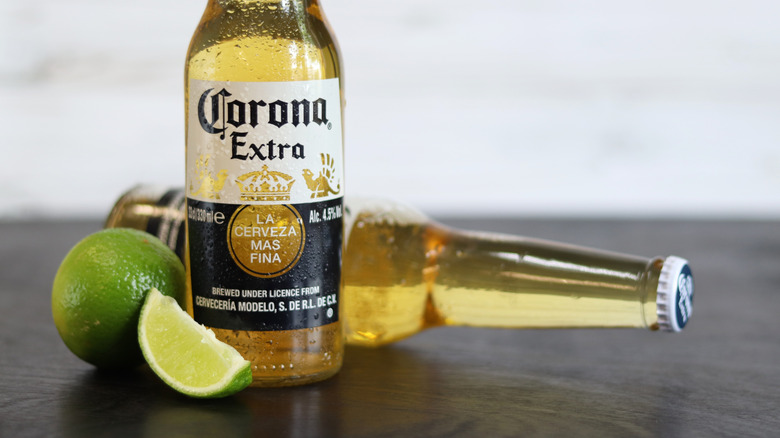
It's unclear exactly why Corona is always served with a lime wedge, though perhaps the most plausible (yet vague) theory credits an anonymous bartender in the early 1980s. Regardless, Corona seized a golden branding opportunity, and after years of lime-forward ads, the two are inextricably tied. Don't let the marketing fool you, though: This works with other beers too.
Citrus adds a bit of brightness and acidity to what can otherwise be a one-note drinking experience. It works for a simple lager, though it's also worth trying in pilsners, wheat, or sour beers.
Orange slice
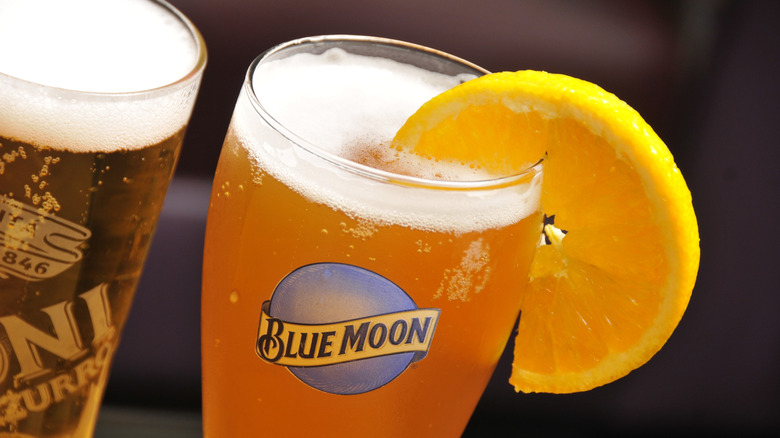
Almost as iconic as a Corona longneck with a lime wedge is a pint of Blue Moon with an orange slice hanging on the rim. And like Corona and its famous partner, oranges don't only go with Blue Moon.
Belgian or Belgian-style witbiers like Blue Moon, Shock Top, and Hoegaarden are traditionally brewed with bitter orange peel, but that's not why an orange slice works. These beers get their inherent citrusyness from coriander, off of which the sweet fruit wedge plays.
Pinch of salt
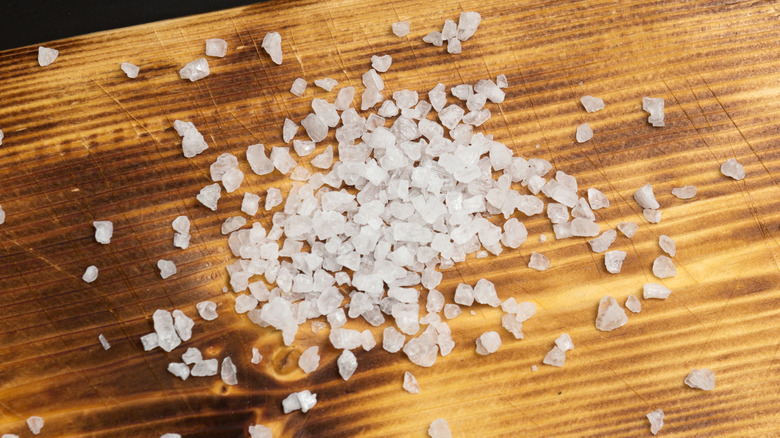
A bit of salt can massively improve the flavor of virtually any food, and the same is true of beer. Much like a salty rim on a cold margarita, sodium cuts the bitterness of cheap beers and makes their overall flavors more well-rounded. In some communities in or near Mexico, it's a standard way to serve cheap lagers, but this refreshing tip is also well-suited for other lighter fare like pilsners, pale ales, and Belgian-style wheat beers.
Lemonade
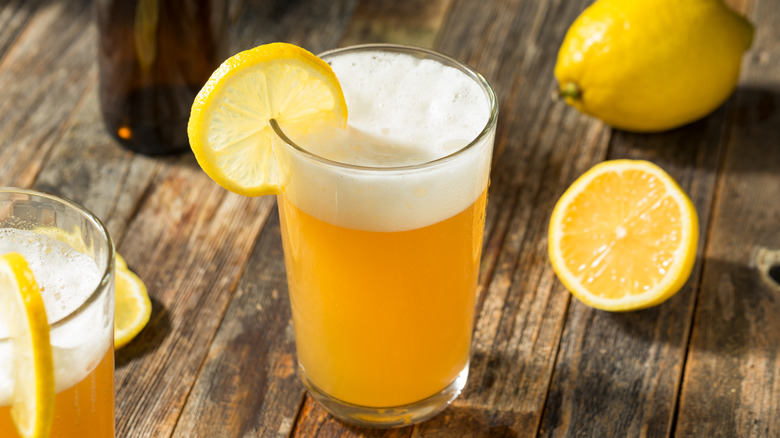
Lemonade is such a popular addition to wheat beers that this drink has its own name: a shandy. Traditionally, this term strictly means lemonade (which may or may not be carbonated) added to wheat beer, though modern usage may sometimes include any nonalcoholic beverage, especially a carbonated one.
Classic shandies are often bottled and sold on their own, with a popular example being Leinenkugel Summer Shandy. But there's no reason you can't try adding lemonade to any wheat beer; just don't exceed 50% lemonade so you avoid overwhelming the beer.
Fruit juice
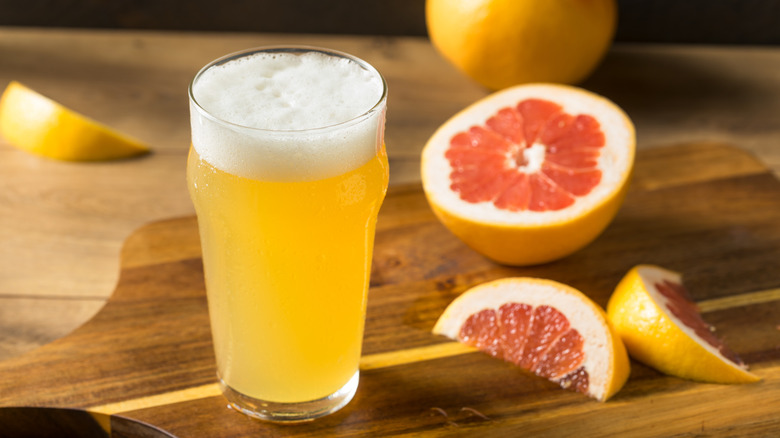
The popularity of lemonade in wheat beer is a good sign that mixing fruit juice and beer leads to incredible flavor as well. Easy-drinking wheat beer mixed with non-lemon fruit juices is traditionally known as a radler, though today's bar lexicon often uses it interchangeably with "shandy." No matter the name, the flavor possibilities are endless.
Common choices include raspberry, blood orange, or grapefruit radlers, but you can also make more complex concoctions by adding multiple fruit juices, as in a cherry-lime or ginger-lemon radler.
Tajín
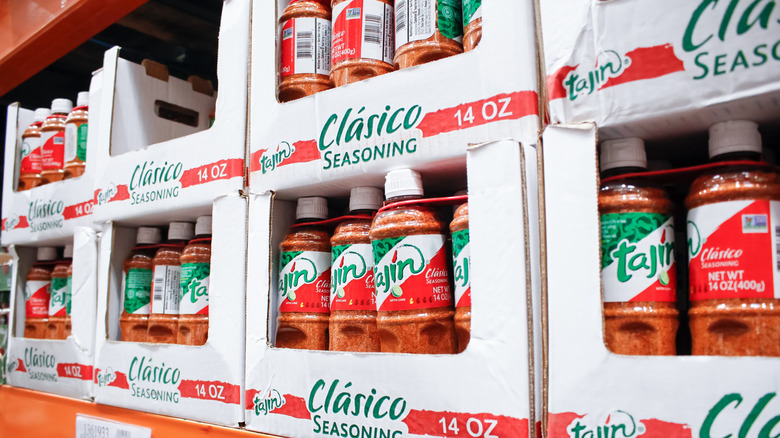
Tajín is an essential spice in many households because it seems to be good on everything, even beer cocktails. It's a common ingredient in michelada recipes, but also good on its own, perhaps with a lime wedge. Tajín's flavor profile is heavy on two tips from earlier in this list, salt and lime, with a kick of heat. If you like a spicy margarita or bloody mary, try a Tajín-rimmed Tecate sometime.
Cocktail bitters
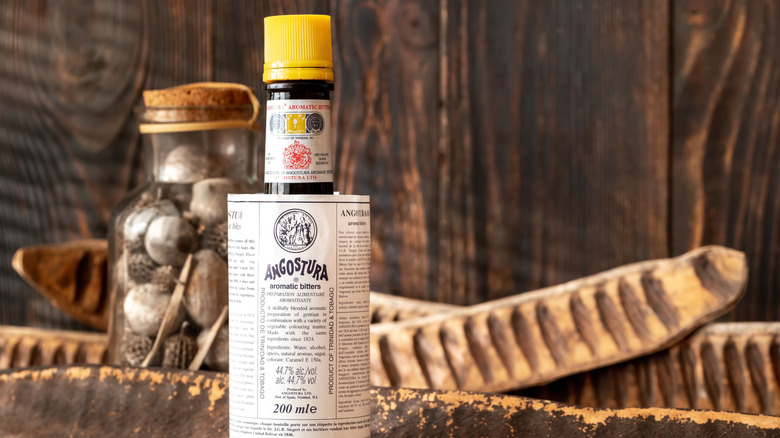
Bitters in cheap beer is a bartender trick for releasing unexpected flavors in unassuming beers. It's based on the Picon Bière, a lesser-known French cocktail of lemon juice, lager, and Picon, a bitter orange aperitif.
There's a near-infinite number of beers and bitters to mix, and results will vary depending on which bitters suppress or elevate which flavors in which beers. But some good starting points include Peychaud's and Angostura in lagers or pilsners, and grapefruit bitters in IPAs.
Peanuts
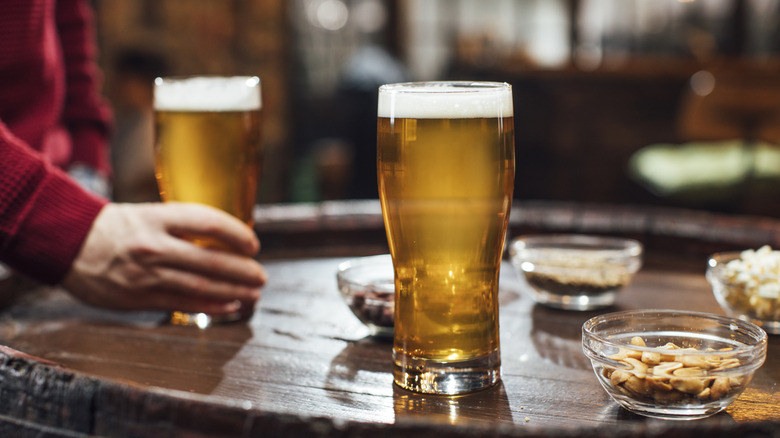
You may have heard of the Southern tradition of putting peanuts in Coca-Cola, which dates to sharecroppers and other farm workers in the 1920s. The origin of peanuts in beer is less clear, but is done for similar reasons: Peanuts make both seem sweeter, as their salt content makes us perceive more of the drink's own sweetness.
But with beer, peanuts also reduce that unpleasant cheap beer aftertaste. And as a fun bonus, because of bubble formation on their surfaces, peanuts in a glass of beer will repeatedly float and sink.
Old Bay
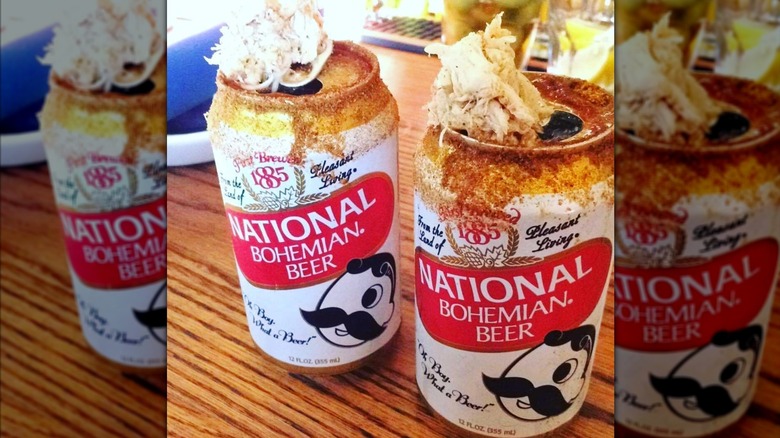
If you're guessing that this beer addition is a Baltimore thing, you're absolutely right. When the city's famous National Bohemian Beer lager gets an Old Bay rim, it becomes a Boh-tini. And because this is Maryland, Boh-tinis (which may also be called Boh-ritas) are sometimes made with steamed shrimp or crab meat as a garnish.
You're unlikely to find one outside of the region, and even there a bartender may be annoyed by the order. But between the wide availability of Old Bay and the interchangeability of cheap lagers (sorry, Mr. Boh), it's an easy concept to try anywhere.
Aperol
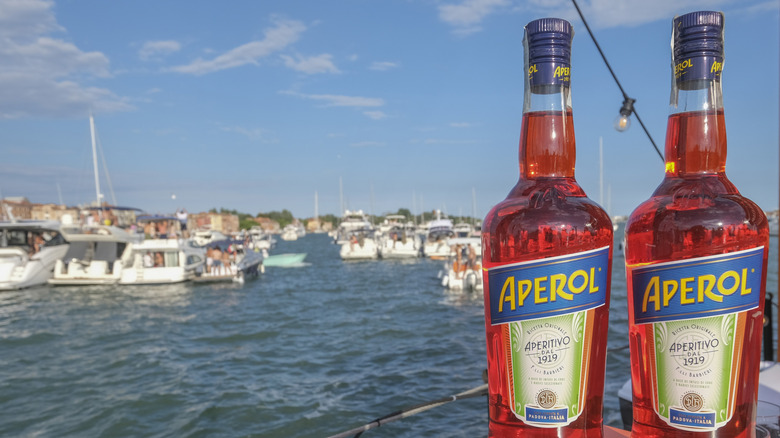
An Aperol spritz is a classic cocktail of club soda, the orange aperitif Aperol, and what some might call the Italian version of Champagne, Prosecco. But you can also build essentially the same drink with The Champagne of Beers.
Aperol, lemon juice, and Miller High Life is all you need to make a Spaghett, a trendy, easy-drinking cocktail that tastes like a budget beer negroni. It's an easy way to level up a Miller High Life, and it freezes into a slushie in just two hours.
Campari
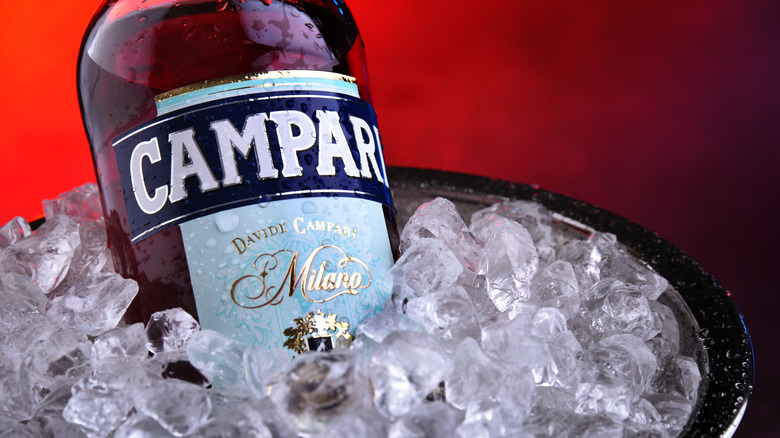
Like other trendy cocktails, there's more than one way to make a Spaghett. Start with the same base of Miller High Life and lemon juice, and add Campari instead of Aperol. This drink is appropriately known as a Campari Spaghett, and has a much more bitter-forward flavor profile than the original beer cocktail.