

7 Classic Foods Gold Miners Ate Back In The Day
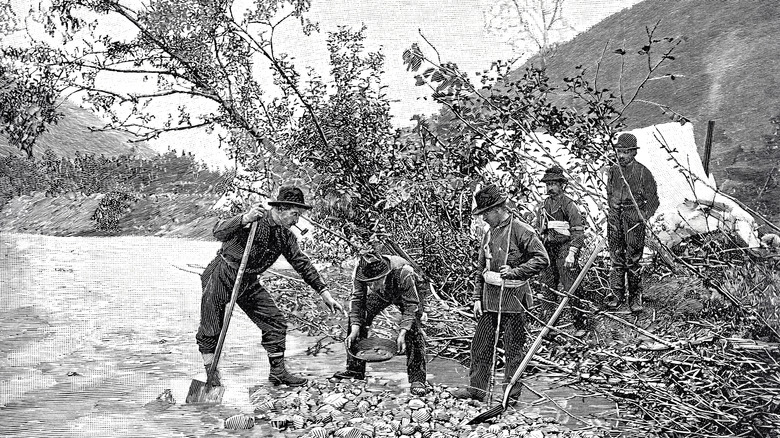
The California Gold Rush, which began around 1849, is one of the most romanticized events in American history — after all, what's more quintessentially American than abandoning a comfortable, familiar life and launching oneself into the unknown in search of fame and fortune? Alas, most miners found disappointment rather than riches at the end of their journeys. Mining gold was grueling work, and miners lived in squalid, dangerous conditions. Malnutrition was another threat — food could be scarce and expensive, and what was available was often monotonous and had limited nutritional value.
Despite all this, the Gold Rush played a big role in launching California's reputation as a culinary mecca. Hopeful miners from a range of backgrounds brought their culinary traditions with them, and imported foods (ranging from Chinese rice to Atlantic salt cod and even Galapagos tortoises) poured in to sustain communities built around the miners. Challenging conditions forced miners and the cooks supporting them to get creative when planning meals, sometimes with good results. And many of the foods enjoyed during this tumultuous time are still worth eating today. Sharing his knowledge of Gold Rush cuisine is historian and writer Alan J. Wiener, who helps us dive deep into this famous time period's culinary significance, which is often put on the back burner.
Whiskey
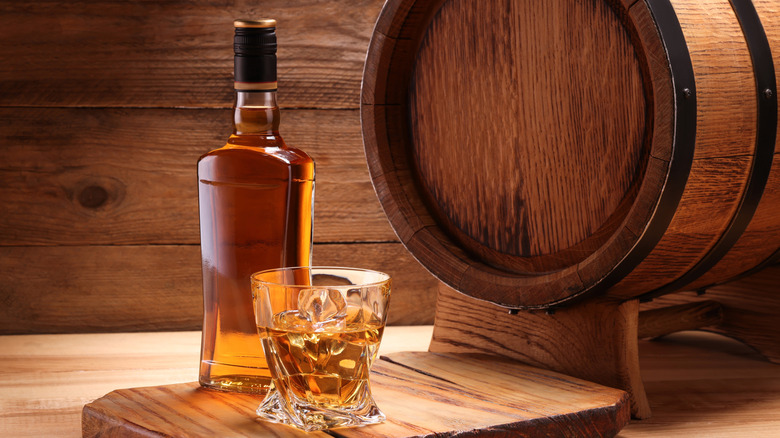
Annoying as old clichés can be, they often contain a grain of truth. The stereotype of grizzled miners wielding flasks of whiskey wasn't just a product of a lazy screenwriter's imagination. Miners truly valued the stuff, for multiple reasons. First, it's not hard to imagine why people who spent backbreaking days lugging heavy tools through cold, hip-deep water would welcome a shot of whiskey drunk straight at the end of the day.
Also, as Alan Wiener explains, whiskey was much more than a beverage. It was an all-purpose pain killer, antiseptic and cure-all, as well as valuable currency for bartering — so valued that it served as a standard economic benchmark. "Merchants and traders accepted gold dust in exchange for goods, using whiskey as a baseline metric for pricing," Wiener explained. So if you were a miner, a good store of whiskey could not only offer a relaxing end-of-the-day tipple, but also cure a toothache and buy you a new shovel or much-needed food or clothing — what's not to like?
Beans
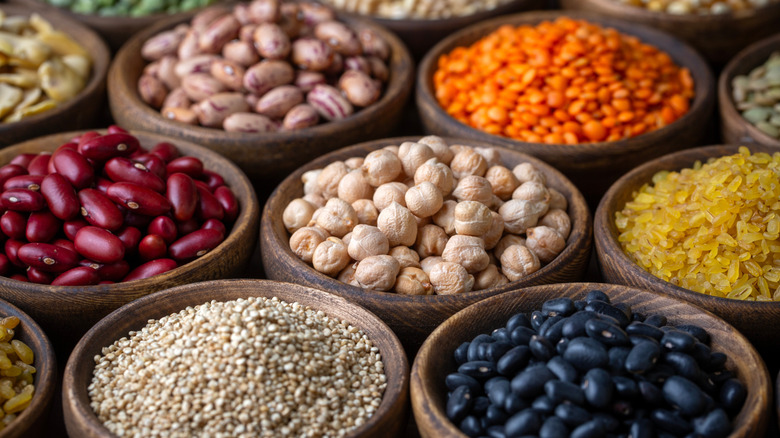
The standard diets of cowboys and ranchers — lots of beans, dried meat, and coffee — largely overlapped with gold miners due to their similar working conditions and logistical constraints. "Keeping food edible during long stretches in mining camps was a challenge," Wiener explained. With no practical way to transport and store perishable fresh foods, both groups depended on non-perishable, durable, easy-to-carry staples. This meant plenty of dried beans, which provided a dependable and affordable protein source — one that still meets modern dietary standards and pleases modern palates.
The only catch, however, is that dried beans need several hours to cook, so a bean dinner required planning and a plentiful supply of cooking fuel. Chuckwagon cooks, who worked under similar constraints as cooks in mining camps in the same era, soaked the beans during the day and had them cooked by the time everyone returned to camp for the night. If the cook was lucky enough to procure a bag of savory dried chiles, these went into the pot to add extra flavor. In mining camps, dried, cured meats such as bacon, salt pork, and salted beef were common staples, and likely made their way into the pot as well. This would not only add flavor and richness to the beans, but make the tough, heavily salted meat palatable.
Sourdough bread
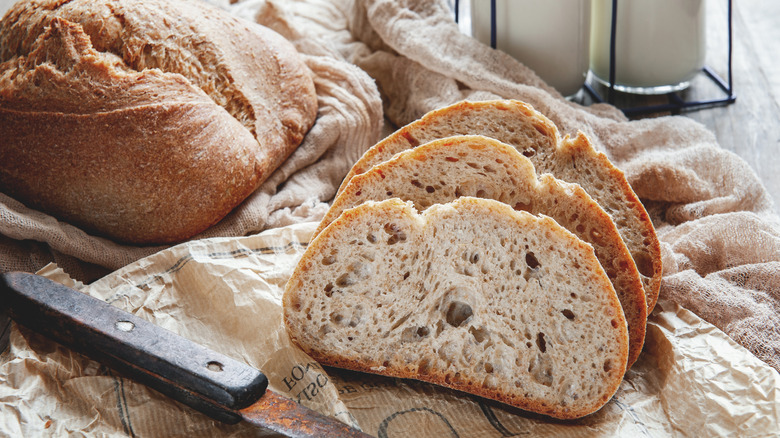
Now a regional point of pride in California, sourdough bread emerged as a way to solve a real problem. Bread was a dietary staple that miners depended on, but buying yeast was not an option in isolated mining camps. Some miners got around this by relying on hardtack, a thick, dry, unleavened cracker, for their carb fixes. While hardtack was convenient and durable, it was dense, rock hard, and far from appetizing — people ate it because they had to, not because they wanted to.
Other miners, however, found a resourceful way to enjoy fresh bread even without commercial yeast: They created cultures of wild yeast, flour, and water that not only provided leavening, but gave their bread a distinctive tangy flavor. Miners kept their sourdough starters close at hand as they traveled, carrying them in durable canvas bags or wooden boxes (instead of fragile glass), to be mixed with flour and water to make fresh loaves, which were then baked in skillets. And like today's artisanal bakers, sourdough-loving miners kept a close eye on their starters, which could last a remarkably long time (in fact, the oldest sourdough starter in the world was 4,500 years old) if well maintained. "Miners zealously guarded their starters because they were literally a lifeline," says Alan J. Wiener.
Small game
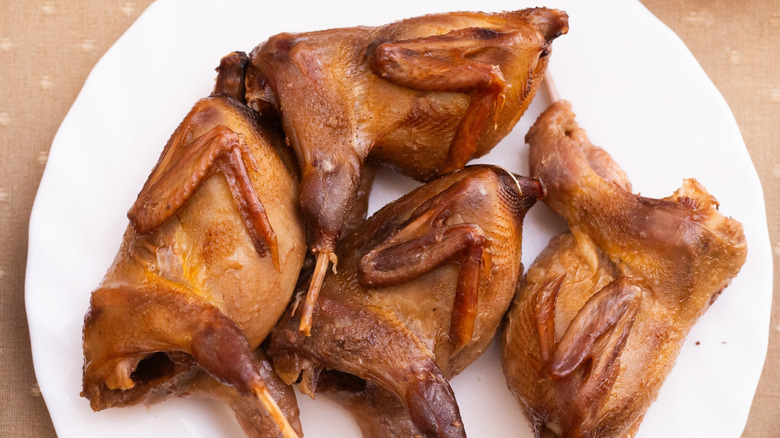
While miners couldn't carry fresh foods such as vegetables and meat with them, they could take advantage of opportunities for foraging once they set up camp. While they occasionally hunted for and enjoyed large game such as deer — or acquired them by trade with local Native Americans — the work required for dressing large animals (and storing any leftovers) made this impractical.
Instead, hunters focused on smaller but equally tasty prey such as rabbits, game birds, or fresh fish, which were easier to prepare and a welcome change from their usual dried and salted meats. But acquiring these was often easier said than done. Many miners resorted to hunting only when their other food supplies had been depleted, so they often weren't in the best shape for hunting. "I am too weak to attempt travelling," an exhausted prospector, Joseph Bruff, wrote, as cited in The New Inquiry. "Maybe I can shoot a bird." After several failed attempts, he managed to shoot "a very poor and tough blue-bird, about the size of a brown sparrow." It probably wasn't anything like today's commercially farmed meat, but it was better than going hungry.
Chinese cuisine
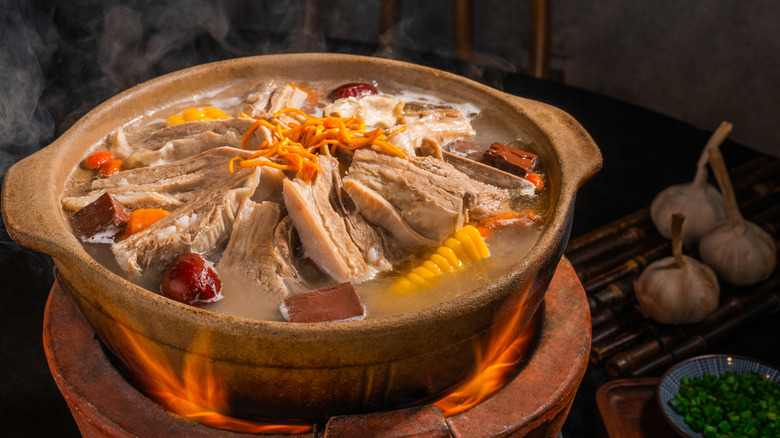
Not all who traveled to the American frontier were from the Eastern part of the U.S.; many were Chinese immigrants. While prevented from seeking gold themselves, they played a major role building mines along with the railroads that emerged following the Gold Rush. They also brought their culinary traditions with them. "Ironically, the Chinese ate healthier meals than their American counterparts, despite being systematically excluded from mining," Wiener explained. "They boiled water for drinking and tea and ate fresh or preserved foods."
They also launched California's first Chinese restaurants, and miners quickly embraced the new cuisine. "They offered all-you-can-eat combinations of pork, rice, and vegetables," Wiener explained. "Their establishments were wildly popular with miners because they were cleaner, cheaper, and faster than American restaurants." These restaurants also introduced new ingredients into California's culinary landscape. Among these were bamboo shoots, the tender shoots of young bamboo plants. According to Wiener, the Chinese also brought over recipes for dried fish, dried duck, and different soy-based and pickled sauces, and sometimes they procured rice, fresh poultry, or pigs.
Hangtown Fry
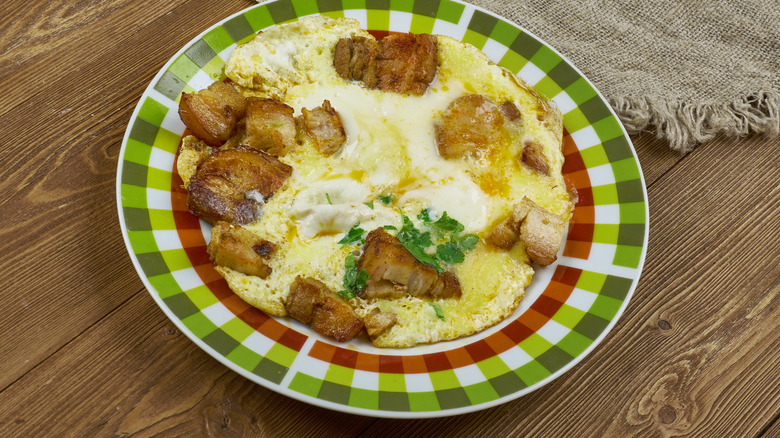
An old-school California favorite, Hangtown Fry is a hearty mix of creamy scrambled eggs, crispy bacon, and briny fried oysters. While far from trendy, it still makes a decadent brunch or late-night supper. And the legends surrounding its origins are as memorable as the dish itself. In one account, according to Wiener, a miner passing through a town called Hangtown (now more sedately named Placerville) had struck it rich and, wanting to show off, strutted into a hotel and ordered the most expensive thing the kitchen could give him.
Given that eggs were rare and expensive in mining communities (a dollar apiece even in 1849), it's easy to see why the cook decided to make this. A different origin story asserts that it was the last meal requested by a condemned man, who knew it would take several days for his jailers to procure oysters — which would give him and his friends enough time to draw up and execute an escape plan.
Miner's lettuce
The typical miner's diet was not only bland and monotonous, but dangerously unbalanced. Apart from the occasional bit of rehydrated dried fruit, it contained almost no fruits or vegetables. As a result, many miners contracted scurvy, a painful disease caused by vitamin C deficiency. It wasn't pretty. Sufferers experienced irritated eyes, blackened legs, and bloody gums.
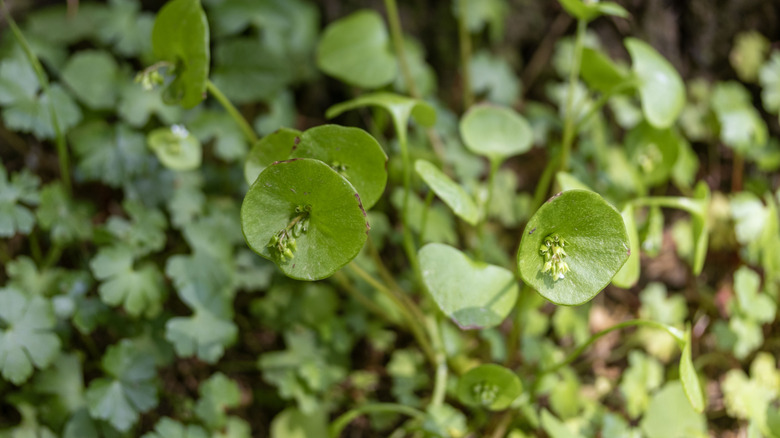
Some lucky miners, however, learned from local Native Americans that the solution was hiding in plain sight: winter purslane, also known as miner's lettuce, which grows wild in western North America. A prolific, low-growing plant with thick, disc-shaped leaves, it's rich in vitamins C and A, and young leaves can be eaten like spinach, either cooked or raw. And if you live in the western U.S., it may well be growing in your yard. Use it raw as a salad green – it pairs well with spicy greens such as arugula or mizuna and a tart vinaigrette. If you have large quantities, use it to make a creamy soup or toss it into a veggie pasta.