

5 Differences Between A Blackstone And A Weber Slate Griddle
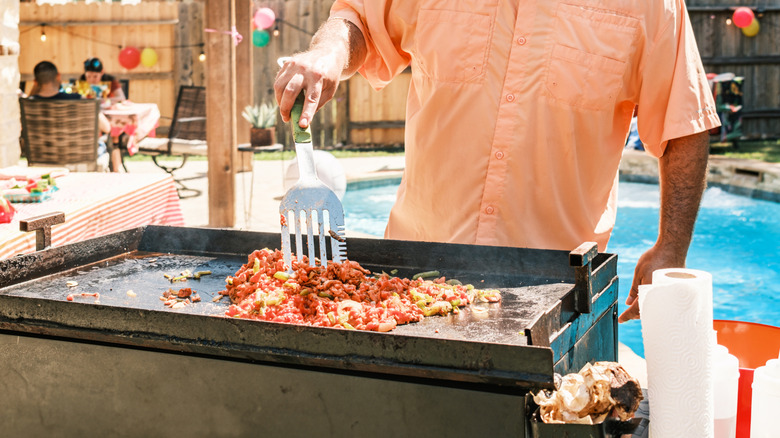
Functionally, an outdoor griddle is a simple machine, but they can still be major investments. Some brands like Blackstone seem to be everywhere, but don't let ubiquity become an argument for necessity. There are other options on the market, and it's worth comparing them before making the commitment.
Blackstones are common and popular, but one of the biggest names in grilling has also entered the market. Weber offers a line of Slate griddles that, although they perform the same role as a Blackstone, are different buys in very important ways, from form to function to warranty coverage.
Shoppers on a budget will certainly appreciate one brand over the other, as there can be a vast gulf in prices between the two. Similarly expansive is the gap between sizes and models offered by each company. They're also constructed differently, where only one manufacturer ships them pre-seasoned, and only one features a rust-resistant surface. And you may or may not be surprised to learn that the one without inbuilt rust resistance is also the one with the shortest warranty.
Price
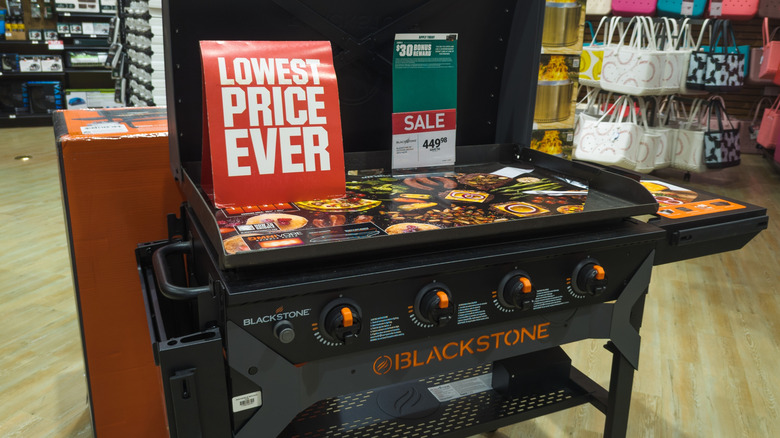
A sleek portable Blackstone griddle for just $97 is among the Walmart grilling finds that look more expensive than they are, but this is typical for the brand. A new Blackstone griddles looks sleek and professional-grade, and for relatively affordable prices depending on which model you want. Weber Slate griddles, on the other hand, can cost a pretty penny.
One of Weber's basic 36" Slate griddles commands a full retail price of $849, while a comparable 36" Blackstone sells for $499 — over 40% less than the Weber. This price discrepancy isn't just for each brand's larger-sized griddles, either. A 28" Slate griddle retails on Weber's website for $599, compared to a 28" Blackstone for $349, another 40%+ difference.
An outdoor griddle is often a significant purchase, though the price tag isn't everything. But Blackstones being nearly half the cost of some Webers is a big enough difference that it might be the deciding factor for some buyers, especially those who are unsure of how often they'll actually use it. But a good griddle is far more than its price tag, even a large one.
Griddle varieties
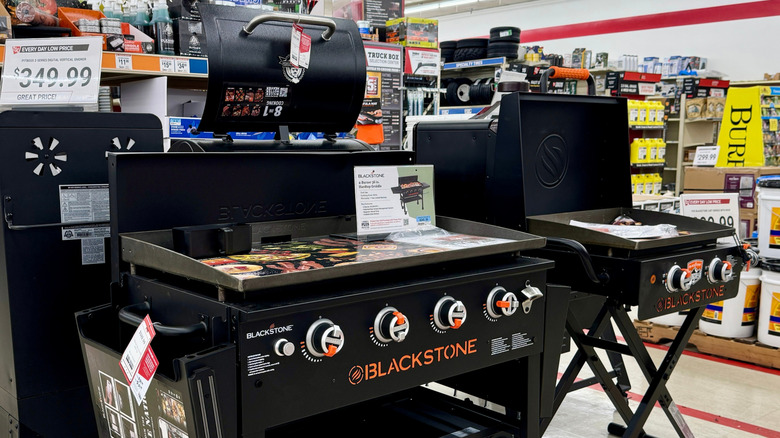
Anyone prone to feeling paralyzed by choice will appreciate Weber's Slate griddle lineup. There are only 9 stand-up griddles on offer, plus two portable models Weber styles as tabletop griddles. And this not-quite-dozen of designs is distinguished primarily by size (36", 30", or 28"), fuel (natural gas or propane), and cabinetry or lack thereof.
On the other hand, shoppers who love to pore through many options will like Blackstone's slate of 26 different griddle designs. They come in more sizes than Webers do — 36", 28", 22", and 17" — and more fuel options. 4 of Blackstone's two dozen-plus designs are fully electric and safe to use indoors, unlike any Weber Slate griddle.
Blackstone also offers some models with smaller details that Webers lack but may come in handy. A 28" XL design has an extendable side shelf for a customizable amount of workspace. Two different models also have built-in air fryers that can cook french fries, chicken tenders, and more while you flip burgers on the griddle. Both brands have respectable lineups, but Blackstone offers more to choose from.
Pre-seasoning
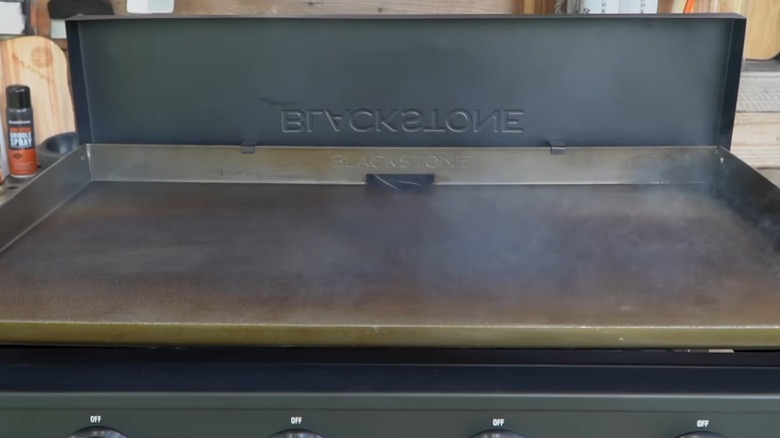
Owners of certain cookware are already familiar with the process of seasoning a pan. Carbon steel and cast iron pans both require coatings of oil that are heated until they molecularly bond with the metal itself. Over time, this helps maintain the integrity of the cooking surface and also contributes excellent flavor to the food.
All Weber Slate griddles have the benefit of being pre-seasoned during the manufacturing process. Griddling purists may scoff at the idea, but pre-seasoned metal cookware is hugely popular with consumers who often want to use their new toys right out of the box. Perhaps Weber is trying to emulate the success of Lodge, which introduced pre-seasoned cast iron pans in 2002 and spawned an industry standard.
Blackstones, however, are not ready to cook when new. The proper way to clean and care for a Blackstone includes guidelines for the essential first seasoning; without it, the food will not cook right and the metal surface will soon begin rusting. It's good to get used to the seasoning process though, as both Webers and Blackstones require regular seasoning to stay in good shape. But the learning curve is a bit more relaxed on Webers, for one big reason.
Rust resistance

Rust is the natural enemy of anything metal,and it's a particular concern with a cooking surface that is just a large slab of metal that has no inbuilt rust resistance. That's why one huge benefit you pay for with a pricier Weber Slate griddle is factory-added rust resistance.
Every Weber Slate griddle comes with a rust-resistant cooking surface. The company attributes this to the incredible heat and pressure of the carbon steel cooktop's manufacturing process, which it claims reduces the ability for moisture buildup. On top of that, Weber's pre-seasoning literally adds more layers of rust protection, as properly seasoned cookware is more resistant than bare steel.
On the other hand, an unseasoned Blackstone griddle has zero rust protection beyond whatever benefits may have been gained in its own hot and high-pressure manufacturing. This is why seasoning is a more pressing issue on Blackstones, and should be done as soon as possible when new. But if a small amount of rust appears, it's not the end of the world: scrubbing away rust with a little bit of aluminum foil works wonders on cast iron, and other afflicted metal surfaces.
Warranty
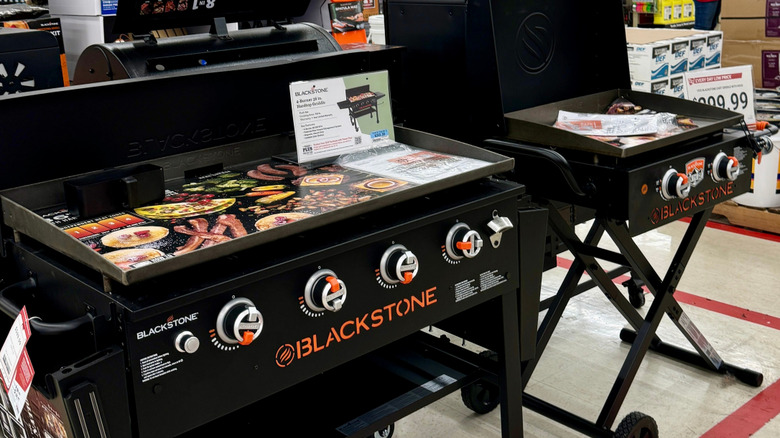
Nobody hopes to have to use their manufacturer warranty, but a good one is a nice thing to have, and it may be a lifeline amid an otherwise expensive disaster. And while both of these griddle brands offer warranties as standard, it's important to know that Weber's warranty lasts 5 years, while Blackstone's is only effective for one.
Barring excessive rust or burn through, Weber's 5 year warranty covers the cookbox, hard cover assembly, stainless steel burner tubes, cooktop, and all remaining parts. A notable exception to this is only 2 years' coverage for the paint on the cookbox and hard cover, excepting any fading or discoloration. Regardless, that is still twice the coverage of the competition.
The Blackstone warranty is similar, only much shorter. Under the terms, Blackstone is obligated to provide free repair or replacement to any component that it agrees proved defective under normal home use conditions. These terms cover all components, craftsmanship, and coatings.