

The Difference Between Granite And Marble Countertops

Granite and marble countertops can both make a statement in the kitchen, but they react very differently to cooking, cleaning, and everyday use. One is generally more forgiving of the inevitable wear and tear that happens in the kitchen, while the other can require a little more attention to keep it looking and functioning at its best.
The two natural stones have distinct looks, maintenance needs, and reactions to common kitchen messes. Marble contains calcite, which reacts with acidic ingredients like lemon juice, vinegar, tomatoes, and wine, but its naturally cooler surface can be a major plus for baking. Granite is harder and more resistant to heat, scratches, and accidental impact, making it a good choice for a busy kitchen.
If you're building your kitchen from scratch or finally replacing worn-down counters, comparing the best kitchen countertop materials based on how you use your space can help you decide which one belongs in yours.
Granite offers durability with less upkeep
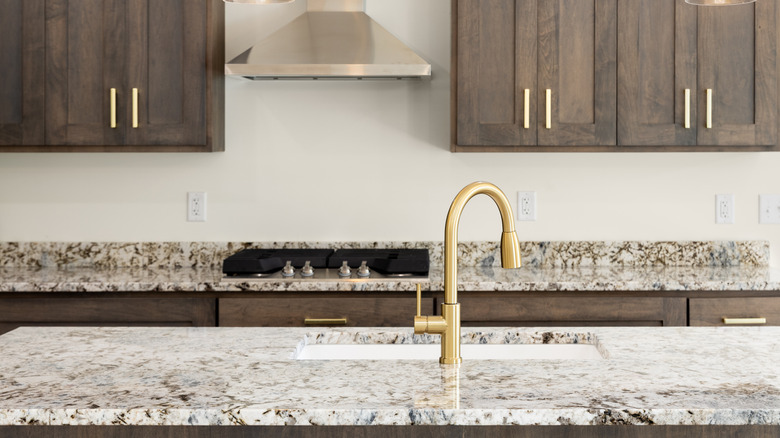
One of granite's biggest selling points is its durability, especially in a high-traffic kitchen. The natural stone is resistant to scratches and heat, so the occasional dropped utensil or busy day of meal prep is less likely to leave evidence behind. Resistant doesn't mean indestructible, though. A heavy pan dropped near an edge can still cause a chip or crack, and placing hot pots and pans directly on the counter isn't recommended.
Since it's a natural stone, no two slabs have exactly the same veining, colors, or patterns, and options range from minimalist neutrals to dramatic designs. This natural veining means options for granite are plentiful, but seams can be more noticeable when a larger countertop requires multiple pieces.
Once dinner is over, granite is fairly easy to clean. Its low absorption rate means an accidental splash of oil, sauce, or wine is less likely to soak into the stone and leave a lasting reminder of dinner behind. Mild soap and water can handle everyday cleanup, and some slabs may be sealed during installation for added stain resistance. There are still a few more things to know before putting granite counters in your kitchen, but you won't need to worry about quickly cleaning up every splash of lemon juice or spill of red wine.
Marble's luxury look requires more maintenance
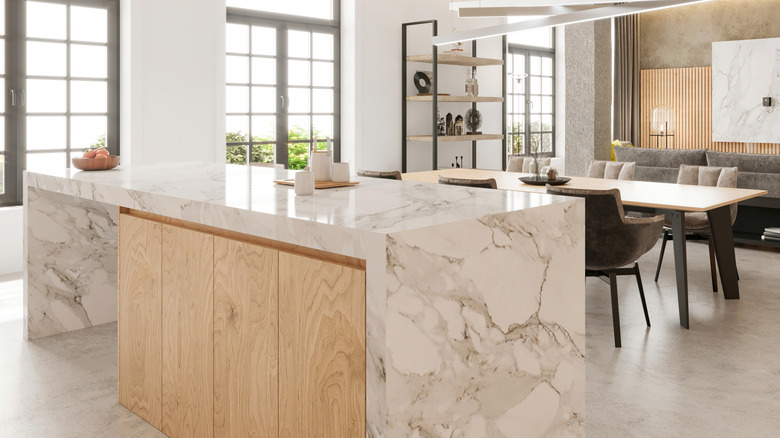
There's a reason marble continues to show up in designer kitchens and renovation inspiration despite requiring more care. Its veining and color variations range from subtle to dramatic, and each slab has natural variation that makes the countertop one of a kind. Marble's smooth surfaces also have an advantage for serious bakers: they stay relatively cool, making it easier to roll out dough, prevent butter from softening too quickly when working with pastry, and keep chocolate from melting.
However, its beauty and cooler surface come with a few trade-offs. Since marble is softer than granite, cutting directly on the counter or dragging heavy cookware can leave a mark. Sealing marble can help protect it from stains, but it won't protect it from etching. Etching happens when the calcium carbonate in marble reacts with an acid — like a splatter of tomato sauce or a spill of balsamic vinaigrette — dissolving the surface layer and leaving behind a permanent dull or cloudy spot. Keep vinegar, lemon-based cleaners, and abrasive products out of your marble cleaning routine, since they could further damage the finish instead of leaving you with clean counters.
The extra maintenance doesn't automatically rule marble out. Over time, etching, small scratches, and other signs of a well-used kitchen create a patina that becomes part of the stone's character — and adds even more uniqueness to your countertops. But if you'd rather keep your countertop looking as close to new as possible, marble might not be the best choice.